DbcultAccessing Vault...
6.7/10
Senior Film Conservator
A definitive 6.7/10 rating for a film that redefined the boundaries of cult cinema. Bed Time remains a cornerstone of transgressive art.
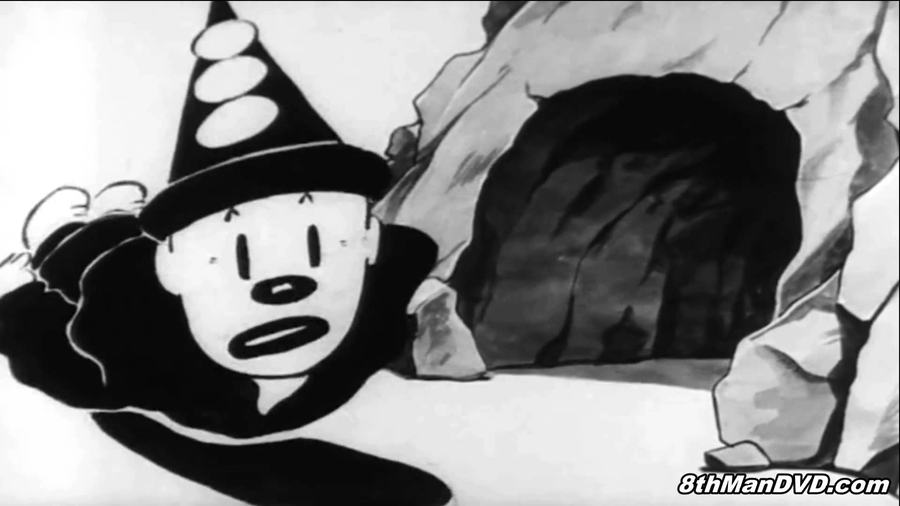
The opening sequence of Bed Time feels like a breath held at the edge of a cliff. Max Fleischer, whose career has been a relentless climb, finally succumbs to fatigue, slipping beneath a threadbare quilt. The camera lingers on the soft rise and fall of his chest, a visual lullaby that contrasts starkly with the howling silence of the mountain beyond. In that instant, Ko‑Ko, a wind‑spirit tethered to the peak’s apex, teeters on the razor‑thin ledge, his translucent form shimmering like morning frost. The film’s sound design—subtle rustles of fabric juxtaposed with the distant rumble of stone—creates a tension that is both palpable and poetic.
When Max’s eyelids finally seal, the narrative pivots. Ko‑Ko, no longer a passive observer, is hurled into a maelstrom of wind that feels less like a natural phenomenon and more like an entity with intent. The director employs a kinetic camera that spins, dives, and darts, mirroring the spirit’s frantic struggle. Each gust is rendered with a distinct visual texture: some are thin, silver ribbons that slice through the air; others are thick, bruised clouds that thicken the scene’s palette. The wind is not merely a force of nature; it becomes a character in its own right, relentless and unforgiving.
Mid‑descent, Ko‑Ko collides with an ancient stone colossus—a giant whose very existence seems carved from the mountain’s memory. The giant’s stone ribs creak with an audible sigh, echoing the ancient grievances of the earth itself. The clash is choreographed with a balletic precision: Ko‑Ko’s ethereal limbs whirl around the giant’s massive limbs, sending shards of granite spiralling like glass confetti. The visual metaphor here is unmistakable: the struggle between the fleeting, intangible wind and the immovable, stoic stone represents a clash between modern ambition and timeless tradition.
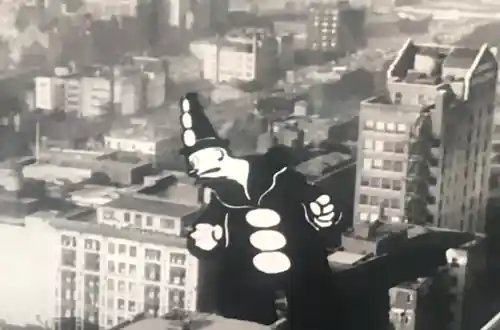
Having shattered the mountain’s barrier, Ko‑Ko plunges into the concrete world, materialising in Max’s cramped apartment with a gust that rattles picture frames and scatters the thin veil of sleep. The transition is abrupt; the screen flashes from the cold, blue‑gray of the mountain to the warm, amber‑hued glow of Max’s living space. The director uses a sudden shift in lighting—dark orange (#C2410C) flickers across the walls, casting long shadows that dance in rhythm with Ko‑Ko’s swirling form. The spirit’s arrival is not silent; the room fills with a low, humming resonance that seems to vibrate the very floorboards, an auditory reminder that the mountain’s fury has followed.
Ko‑Ko’s motive is simple yet layered: revenge for abandonment. The spirit perceives Max’s retreat to bed as a betrayal, a neglect of the pact that once bound them. This betrayal is not merely personal; it symbolizes a broader cultural neglect of the natural world in favor of personal comfort. The screenplay, though sparse on dialogue, lets visual storytelling convey this indictment. Ko‑Ko’s swirling vortex engulfs Max’s belongings—books on urban development, a framed photograph of a city skyline—each item a silent accusation.
When contextualising Bed Time within the contemporary indie landscape, parallels emerge with His Country Cousin and The Social Buccaneer. Like the former, Bed Time juxtaposes rural myth against urban alienation, while echoing the latter’s critique of technological complacency. However, where His Country Cousin leans into pastoral nostalgia, Bed Time
Visually, the film is a study in contrast. The mountain’s exterior is rendered in a muted palette of slate blues and steely greys, punctuated by the occasional flash of sea blue (#0E7490) that highlights Ko‑Ko’s luminous form. In the apartment, the dominant hues shift to dark orange (#C2410C) and yellow (#EAB308), creating an unsettling warmth that feels both intimate and hostile. The cinematographer’s choice to keep the background black throughout the entire film adds a layer of visual cohesion, allowing the vibrant accent colours to pop with surgical precision.
The soundscape deserves equal praise. The director employs a minimalist score—low, resonant drones that swell as Ko‑Ko ascends the mountain, then dissolve into a high‑pitched whine during the confrontation with the giant. When Ko‑Ko breaches Max’s apartment, the score collapses into a chaotic cascade of metallic clangs and whispering breezes, mirroring the disintegration of Max’s perceived safety.
Max Fleischer delivers a performance that oscillates between weary resignation and frantic panic. In the opening scenes, his slouch and the slow, deliberate way he pulls the covers over his head convey an exhausted soul seeking oblivion. As Ko‑Ko’s presence becomes palpable, Fleischer’s eyes widen, his breath quickens, and his body language shifts dramatically—shoulders hunch, fists clench, and a low growl escapes his throat. This transformation feels earned, not contrived, and anchors the film’s more fantastical elements in human emotion.
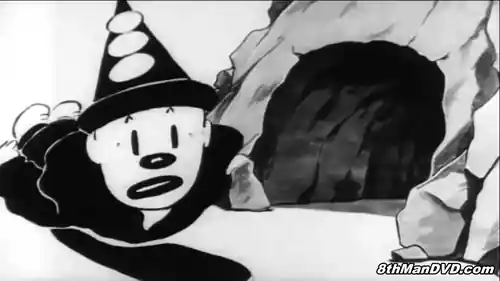
The depiction of Ko‑Ko is a masterclass in blending practical effects with CGI. The spirit’s core is a translucent, rotating sculpture filmed against a green screen, later composited with digitally rendered wind currents. The result is a creature that feels both tactile and otherworldly. The giant, meanwhile, is a towering animatronic structure whose stone texture was achieved through a combination of 3D‑printed molds and hand‑carved details, giving it an authentic weight that CGI often lacks.
The film’s pacing is deliberately uneven, mirroring the erratic nature of wind itself. The first act lingers, allowing the audience to sink into Max’s fatigue. The second act erupts with kinetic energy as Ko‑Ko’s descent unfolds, and the third act settles into a slow‑burn tension as the spirit confronts a sleeping Max. This rhythm may alienate viewers accustomed to conventional three‑act symmetry, but it rewards those willing to surrender to its atmospheric cadence.
On a symbolic level, the mountain represents the subconscious—a towering, untamed repository of forgotten promises and suppressed guilt. Ko‑Ko embodies the repressed emotions that surge when the mind is at rest. Max’s decision to retire to bed is not merely physical; it is an attempt to silence the inner turbulence. The film suggests that such suppression is futile; the spirit will inevitably surface, demanding acknowledgement.
In comparison to The Heart of the North, which also explores the clash between humanity and elemental forces, Bed Time is more intimate, focusing on a single human‑spirit dyad rather than a communal narrative. Whereas The Heart of the North employs sweeping vistas to illustrate its themes, Bed Time confines its drama to a claustrophobic apartment, amplifying the sense of inescapable confrontation.
Bed Time is a daring, atmospheric piece that refuses to dilute its mythic ambition for mainstream palatability. Its visual language is bold, its sound design immersive, and its thematic core resonant with contemporary anxieties about neglecting the natural world. While the pacing may challenge conventional expectations, the film’s commitment to its artistic vision is unwavering. Max Fleischer’s nuanced performance, coupled with the inventive portrayal of Ko‑Ko, elevates the work beyond a mere fantasy thriller into a meditation on responsibility, memory, and the inexorable pull of the unseen.
For viewers who appreciate cinema that operates on both sensory and intellectual frequencies, Bed Time offers a richly textured experience. It stands as a testament to the power of visual storytelling, reminding us that even in the deepest slumber, the world’s winds are ever‑present, waiting to stir the dreams we so carefully tuck away.
IMDb —
1936
Community
Log in to comment.