DbcultAccessing Vault...
Cult Review
Senior Film Conservator
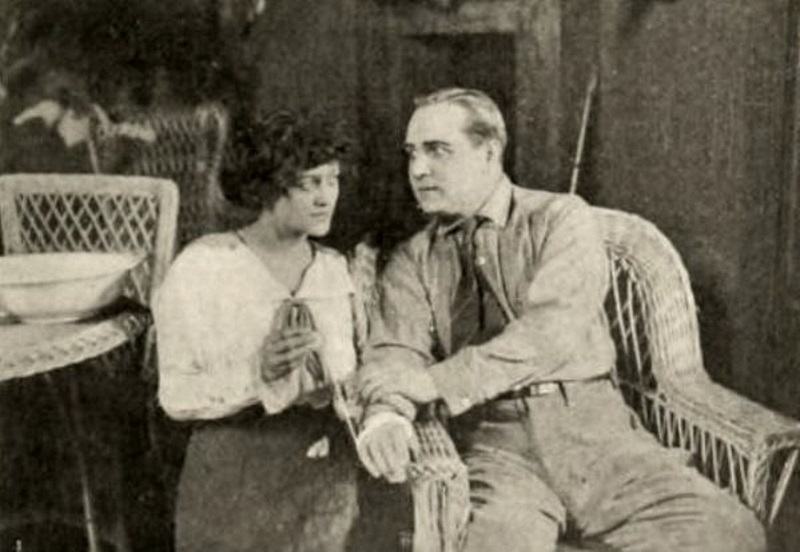
A banker’s folly, a painter’s hunger, a count’s venom—three blades that keep cutting the same wound.
The first time we see Lawrence Westbrook he is reclining inside a mahogany sarcophagus of a library, boots on antique Persian silk, telephone off the hook. William Bailey lets the man’s eyelids droop with the arrogance of someone who believes time itself is a butler awaiting dismissal. Outside, ticker tape crawls past the window like a serpent spelling ruin; inside, he opens another bottle somebody else will pay for. This is not mere decadence—it is an autopsy of capitalism performed while the corpse still pretends to sip claret.
Enter Lillian, Kitty Baldwin’s face a porcelain cameo animated by the flicker of a soul too honest for velvet headbands. She glides down the grand staircase clutching a letter that smells of turpentine and linseed: Harold’s world, an attic smelling of hope and unpaid rent. Baldwin plays her first close-up like a soldier decoding a battlefield map—eyes racing, lips parting, the realization that love might be a country one can emigrate to but never naturalize within.
Harold Routledge, essayed by Harry Spingler with paint under the fingernails he can’t scrub clean, is introduced in a cramped Montmartre garret that Bronson Howard’s intertitles call "a cathedral for those who worship light." The camera lingers on an unfinished canvas: Lillian’s neckline rendered in vermilion slashes. Art and hunger share the same skeleton here; the only thing emptier than the cupboard is the space between the couple when the Count insinuates himself.
Raoul Walsh, years before he would chase bandits across the Mojave, embodies de Carojac as a velvet virus: gloves lifted to conceal yawns, voice a cello strung with barbed wire. The flirtation scene in the opera box is staged like a chess problem—every fan flick a feint, every smile a discovered check. Lillian, stung by Harold’s jealousy, leans into the game until the board overturns.
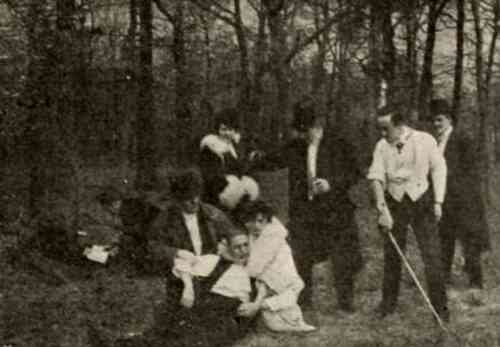
The Maine interlude arrives like a gasp of boreal oxygen. Cinematographer David Wall swaps chandeliers for lantern light; birch trunks strobe past the lens as if the film itself is trying to outrun its own intrigues. When Strebelow gashes his hand on a bear trap, blood spurts onto white moss—an eruption of scarlet that prefigures the Paris duels to come. Lillian’s ministration is filmed in chiaroscuro: her fingers, backlit, become a cathedral of tendons against his wound. In that instant Spingler’s eyes shift from gratitude to ownership, a subtle metamorphosis the camera catches in profile.
Back in New York, the banker’s panic is staged inside a boardroom as cavernous as a mausoleum. Shadows of suspended green-shaded lamps stripe the men’s faces like prison bars. Westbrook begs Strebelow—now the family’s financial savior—to accept his daughter as collateral. The proposal scene is played in a single take: the camera pivots from father to daughter to fiancé, each rotation tightening the garrote of duty. Baldwin lets her tears arrive a split-second late, as though even her body hesitates to obey.
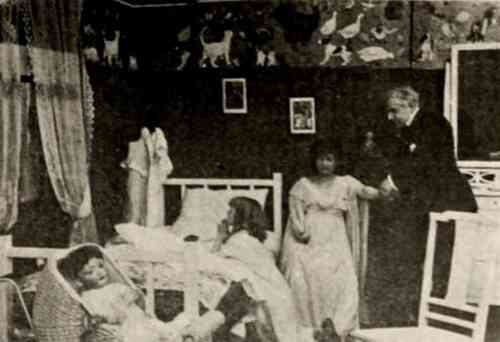
The Parisian act, six years later, is drenched in Belle Époque splendor: cafés gas-lit like secular chapels, carriages rolling over cobblestones with the cadence of distant artillery. Harold, famous now, wears success like an ill-fitting coat; when he spots Lillian across the crush at the American Embassy reception, the film superimposes a translucent image of the Maine woods over his face—memory haunting the present. Their conversation is never shown; instead, Howard cuts to a close-up of Natalie’s rag doll abandoned on a settee, a visual shorthand for the childhood innocence that will soon be orphaned.
The duel obeys the ritual of a passion play. Fog slithers along the grass; seconds count paces as if measuring a grave. Walsh’s Count fires first; Harold spins, palette-knife still in his pocket, and collapses beside his own toppled easel. The camera tilts—an early, unconscious Dutch angle—suggesting a world unmoored from moral plumb. Strebelow’s subsequent revenge is staged off-camera; we only hear the report echo under the Arc de Triomphe, a sonic ellipsis that lets imagination sketch the horror.
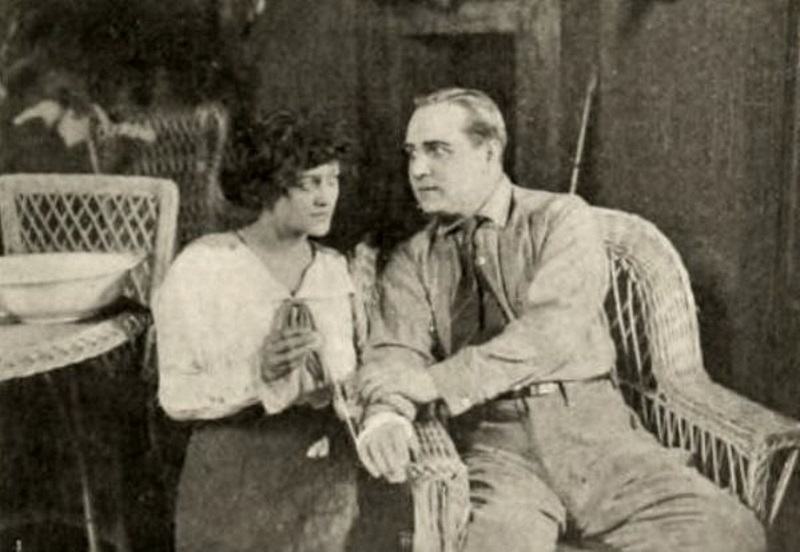
Separation follows like a protracted illness. Strebelow, believing Lillian’s heart still roams the cemetery where Harold lies, exiles himself to North Africa. Letters crisscross the Mediterranean—some real, some forged by Aunt Fannie’s maternal desperation. Howard’s script weaponizes handwriting: the angular slant of Strebelow’s grief, the rounded innocence of Natalie’s crayon scrawl, the copperplate deceit of Fannie’s forgeries. Each epistle is introduced with a macro shot of ink bleeding into paper, the blot becoming a Rorschach of familial fracture.
The reconciliation is not granted by the adults but by the child. Natalie, played by Katherine La Salle with the unselfconscious gravity only a seven-year-old can muster, confronts her father in a Tangier hotel room cluttered with unpacked trunks—lives suspended mid-transit. She reads aloud her mother’s true letter, voice piping over the distant call to prayer. Strebelow’s face, half-shadowed by lattice-work shutters, trembles like a leaf in a drought. The film ends not on a kiss but on the couple walking hand-in-hand down an alley painted ochre by the setting sun, their silhouettes shrinking into a horizon that suggests, without promising, continuity.
Visually, the picture borrows the tableau aesthetic of Ingeborg Holm yet spikes it with the kinetic editing rhythms that would later energize The Perils of Pauline. Compare its use of child perspective to Chained to the Past, where offspring serve as moral barometers; here, Natalie is not merely witness but catalyst, her innocence the fulcrum that shifts adult guilt.
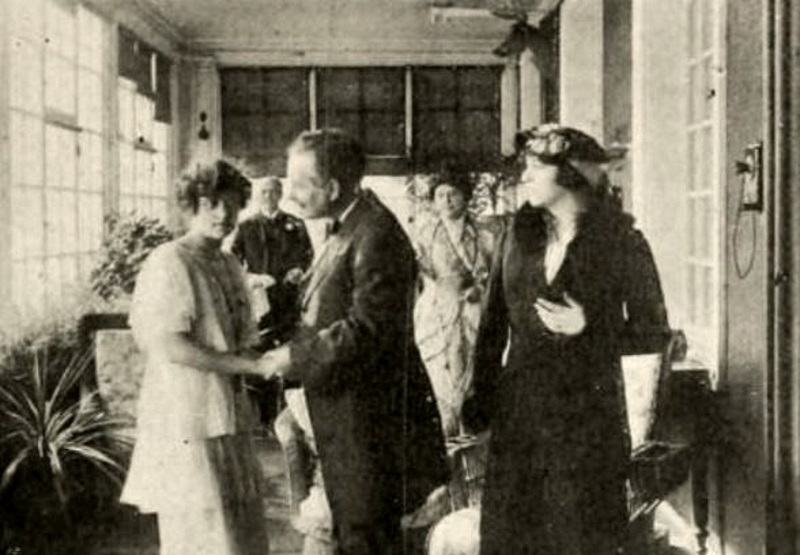
The performances vibrate with pre-method rawness. Kitty Baldwin’s micro-gestures—an eyelash flutter that arrives half a second too late, the way her fingertips linger on a letter’s wax seal—conjure an entire inner libretto without intertitles. Spingler counterbalances her fragility with a granite stoicism that cracks only in the final shot, his sob swallowed rather than released, a choice that makes the emotion more combustible.
William Bailey, meanwhile, sketches patriarchal decay with the economy of a charcoal sketch: a tremor of the jowl when the stock numbers arrive, the way his hand hovers over a brandy glass as though it might levitate. By the time he begs on bended knee in a candlelit chapel, we no longer see the tycoon—only a penitent bargaining with ghosts.
Bronson Howard’s screenplay, adapted from his own stage success, streamlines the soliloquizing tendencies of 19th-century melodrama. He trades declamation for ellipsis: whole years pass in a fade-out, affairs are implied by a glove left on a chair. The result feels startlingly modern, a harbinger of the laconic storytelling that would flower in Sperduti nel buio.
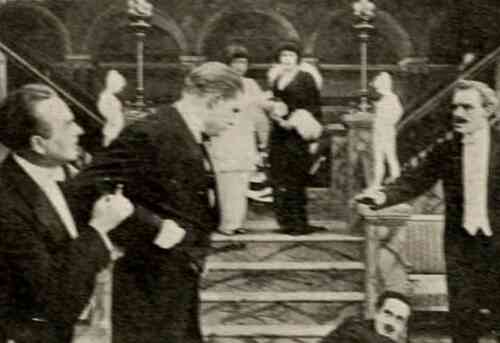
Thematically, the film is a scalpel dissecting the transaction of women as social capital. Lillian’s sacrifice is not presented as noble but as obscene; the camera lingers on her wedding veil trailing across the floor like a shroud. Yet Howard complicates the feminist reading: Lillian’s eventual return to Strebelow is not submission but reclamation, a choice earned through the crucible of loss. The final image—her hand slipping into his, filmed from behind so we see only the interlaced fingers—argues that love can be both currency and covenant, depending on who holds the purse strings.
Composer Philip Robson’s original score, reconstructed for the recent 4K restoration, underlines the emotional oscillations with leitmotifs: a solo cello for Harold’s artistic yearning, militaristic snares for the duels, a hesitant celesta for Natalie’s innocence. During the reconciliation scene, the orchestra drops to a heartbeat pizzicato, letting the child’s voice carry the melody—a sonic void that feels almost contemporary in its restraint.
For modern viewers, the film’s pre-Hays candor startles: adulterous desire is confessed rather than punished, the duel fatalities are graphic, and the Count’s cynicism is allowed a seductive glamour. In an era when Uncle Tom’s Cabin still traded in racial caricature, The Banker’s Daughter offers a morally polyphonic universe where villains sip champagne and heroes carry murder on their conscience.
Restoration-wise, the nitrate elements preserved at the Library of Congress were scanned at 4K, revealing textures previously lost: the herringbone pattern on Strebelow Norfolk jacket, the opalescent shimmer of Lillian’s Paris gown, the way morning light kisses the Maine river like spilled coins. The tinting follows archival notes: amber for interiors, cyan for night exteriors, rose for the romantic flashbacks—a language of color that speaks louder than any speech.
Ultimately, the picture endures because it refuses the palliative lie that time heals all wounds. Time here is an inept physician, stitching scars over abscesses. What redeems is not chronology but testimony—Natalie’s unwitting voice reciting her mother’s truth, a child becoming the stenographer of adult absolution. In that moment the film transcends its melodramatic roots and joins the ranks of Hamlet (1911) and Beatrice Cenci, tragedies that know the only antidote to poison is a story told aloud, even if the telling costs everything.
Verdict: a bruised jewel of the silent era, gleaming sharper with each new century that discovers it.
IMDb —
1920
Community
Log in to comment.