DbcultAccessing Vault...
4.7/10
Senior Film Conservator
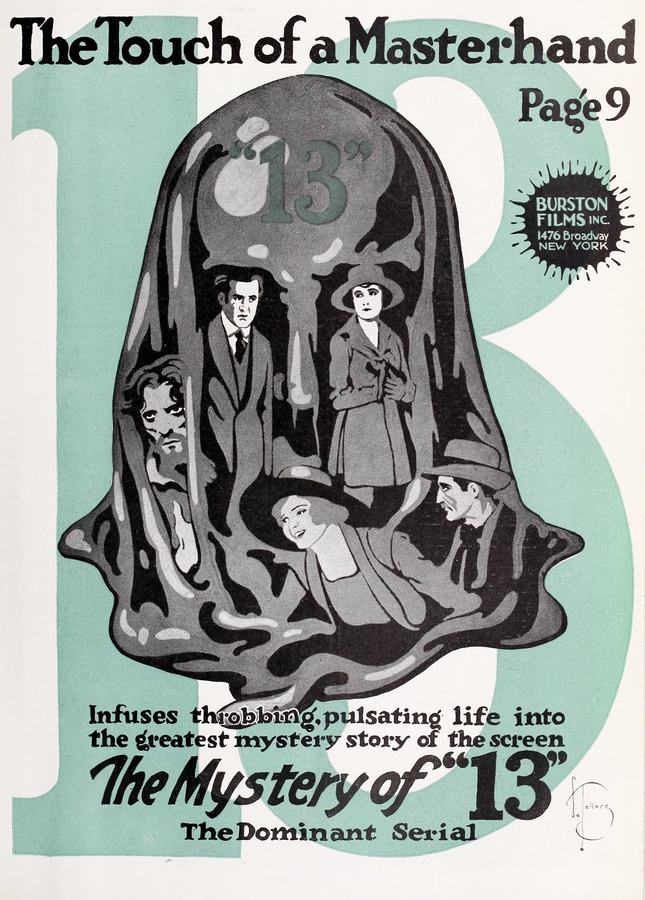
A definitive 4.7/10 rating for a film that redefined the boundaries of cult cinema. The Mystery of 13 remains a cornerstone of transgressive art.
From the moment the opening title card flickers into view, 'The Mystery of 13' immerses its audience in a meticulously crafted world of suspense and gothic intrigue. This cinematic gem, a testament to the narrative prowess of Elsie Van Name and John B. Clymer, transcends the mere whodunit, evolving into a psychological exploration of avarice, legacy, and the spectral echoes of a dark past. It's a film that doesn't just tell a story; it weaves a tapestry of dread, punctuated by moments of startling clarity and profound human drama. The directorial vision, though often understated, is undeniably potent, utilizing the unique language of silent cinema—exaggerated expressions, evocative intertitles, and stark visual contrasts—to build an atmosphere thick with foreboding.
The narrative spine of 'The Mystery of 13' is rooted in the venerable, if clichéd, trope of the cursed inheritance, yet it elevates this familiar framework with such nuanced execution that it feels fresh and compelling. Lord Alistair Ashworth’s demise, occurring on the titular thirteenth day, is merely the genesis of a far more sinister game. His will, a masterstroke of dramatic tension, sets forth a macabre challenge: thirteen nights in the haunted Ravenwood Manor or the deciphering of the 'Riddle of the 13th Raven.' This isn't just a quest for wealth; it's a descent into a family's buried secrets, a crucible for the souls who dare to participate. Evelyn Ashworth, portrayed with remarkable grace and resilience by Dorris Dare, emerges as a heroine of uncommon fortitude. Her arrival at Ravenwood, initially an act of familial duty, quickly transforms into a desperate struggle for truth and survival. Dare’s performance is a masterclass in silent film acting, conveying a spectrum of emotions—from initial skepticism to burgeoning terror, and finally, to resolute determination—with a subtlety that belies the genre’s usual theatricality. Her fiancé, Richard, played by Peter Gerald, serves as the audience’s pragmatic anchor, his initial disbelief slowly eroded by the manor’s relentless psychological assault.
The supporting ensemble is equally pivotal in establishing the film's pervasive sense of unease. Nigel De Brulier, as Professor Silas Thorne, is a captivating presence, his gaunt features and piercing gaze perfectly suited to the role of the cryptic scholar. He delivers pronouncements that are less exposition and more ominous portents, his every gesture dripping with a knowledge he seems both eager and fearful to impart. Thorne’s character is reminiscent of the enigmatic figures in early horror, a man who understands the unseen forces at play, much like the haunted observer in The Ghosts of Yesterday, though with a more active, almost prophetic, role. Rosemary Theby, as the perpetually distraught housemaid Eleanor Vance, embodies the pervasive fear that saturates Ravenwood. Her hushed whispers and furtive glances are not merely character quirks; they are narrative devices, signposting dangers and fueling Evelyn’s growing apprehension. Theby’s ability to convey profound anxiety without uttering a single word is a testament to her skill, making Eleanor a tragically sympathetic figure.
The genius of 'The Mystery of 13' lies in its meticulous construction of atmosphere. The cinematography, though rudimentary by modern standards, is employed with remarkable artistry. The flickering gaslights, casting dancing shadows that seem to writhe with malevolent intent, are not just practical illumination but psychological tools. The shifting objects, the disembodied whispers—these are not cheap jump scares but carefully orchestrated moments designed to erode the characters’, and the audience’s, sense of reality. The recurring motif of thirteen raven feathers, each a dark, tangible symbol of the impending doom, is a particularly effective visual metaphor, elevating the number from a mere count to a harbinger of supernatural dread. This film understands that true horror often resides in the unseen, the implied, the suggestion of something ancient and malevolent lurking just beyond the frame.
The screenplay, penned by Elsie Van Name (who also delivers a memorable performance as Agnes Periwinkle) and John B. Clymer, is a marvel of concise yet evocative storytelling. The intertitles are not merely dialogue surrogates; they are lyrical fragments, poetic observations, and urgent warnings that deepen the narrative’s thematic resonance. Van Name’s dual role, both behind the typewriter and in front of the camera, is particularly noteworthy. As Agnes Periwinkle, the venerable family retainer, she exudes an air of ancient wisdom and palpable fear. Her fragmented clues are delivered with a gravitas that suggests a profound understanding of the manor’s dark history, positioning her as a tragic Cassandra figure, burdened by secrets she can barely articulate. Her performance provides crucial exposition without ever feeling forced, a testament to her intuitive grasp of both character and plot mechanics.
The supporting cast, a veritable who’s who of early cinema talents, contributes significantly to the film’s rich texture. Francis Ford, as the menacingly astute family solicitor Arthur Finch, is a study in controlled malevolence. His every calculated glance and subtly predatory movement suggests a man with a deeper agenda, a figure whose presence alone is enough to inspire distrust. His performance adds a layer of human villainy that grounds the supernatural elements, reminding us that the most terrifying monsters often wear human faces. Finch’s machinations create a tangible threat that complements the ethereal dread of Ravenwood Manor, blurring the lines between the spectral and the conspiratorial. The tension he cultivates is palpable, echoing the intricate deceptions found in films like The Frame-Up (1917), where human treachery is the true antagonist.
Other notable performances include Ruth Maurice, whose character, though perhaps less central, contributes to the tapestry of suspicion and fear, and Philip Ford, who, like his elder brother Francis, brings a gravitas to his role, however brief. Jack Saville and Olive Valerie, alongside V. Orilo, Mark Fenton, and Jack Lawton, each contribute to the dense atmosphere, their presence, however fleeting, adding another brushstroke to the film’s grim portrait of a family entangled in its own dark legacy. The collective anxiety they project serves to amplify Evelyn’s isolation and the daunting nature of her task. Their reactions, ranging from overt fear to veiled suspicion, are crucial in building the sense that everyone within Ravenwood Manor is both a potential victim and a potential suspect.
'The Mystery of 13' is more than just a suspenseful thriller; it's a commentary on the corrosive nature of greed and the enduring power of family secrets. The 'Coven of Thirteen,' a clandestine society woven into the Ashworth lineage, serves as a potent symbol of inherited sin and the spectral weight of ancestral misdeeds. The film suggests that some curses are not supernatural, but rather the cumulative result of human choices, passed down through generations. This thematic depth elevates it beyond many of its contemporaries, offering a more profound reflection on human nature than a simple tale of ghosts and ghouls. It invites comparison to films like The Golden Lotus, which also explores the dark underside of familial ambition and hidden histories, though 'The Mystery of 13' wraps its moral questions in a shroud of gothic horror.
The resolution, revealing a meticulously manipulative individual orchestrating the 'curse' for personal gain, is both satisfying and chilling. It reinforces the film’s central tenet: that the most profound horrors often emanate not from the supernatural realm, but from the dark recesses of human avarice and deceit. The film’s ability to sustain ambiguity between genuine supernatural phenomena and calculated human manipulation is one of its greatest strengths. Just when the audience leans towards a spectral explanation, a cunningly placed clue or a suspicious glance pulls them back to the realm of human perfidy. This delicate balance ensures that the suspense never wanes, keeping viewers on the edge of their seats until the final, shocking revelation.
In an era of cinematic experimentation, 'The Mystery of 13' stands as a testament to the power of well-executed genre filmmaking. It takes familiar elements—the secluded manor, the contested will, the enigmatic occurrences—and imbues them with a freshness and psychological depth that few films of its time achieved. It’s a film that speaks not only to the intellect but also to the primal fears within us, proving that the silent era was anything but quiet in its ability to provoke profound emotional responses. Its influence can be seen in later thrillers, demonstrating its pioneering approach to psychological suspense. It’s a foundational text for anyone interested in the evolution of the mystery genre, showcasing how early filmmakers mastered tension through visual cues and character interaction.
The film’s legacy is not merely its historical significance but its enduring watchability. Even today, its carefully constructed narrative, compelling performances, and palpable atmosphere continue to captivate. It’s a work that demands re-evaluation, a reminder that true artistry transcends technological limitations. For those who appreciate the subtle craft of silent cinema, or simply a meticulously plotted mystery, 'The Mystery of 13' offers an experience that is both intellectually stimulating and viscerally thrilling. It’s a film that leaves an indelible mark, much like the thirteen raven feathers scattered throughout Ravenwood Manor, each a poignant reminder of a mystery brilliantly conceived and flawlessly executed.
The interplay between light and shadow, a hallmark of early cinema, is utilized here with an almost poetic sensibility. The stark contrasts not only serve to highlight the actors’ expressions but also to create an oppressive visual landscape that mirrors the internal turmoil of the characters. The pervasive gloom of the manor is periodically broken by flashes of brilliance from Evelyn’s investigative prowess, symbolized by shafts of light piercing the darkness—a visual metaphor for truth cutting through deception. This sophisticated use of visual language is what elevates 'The Mystery of 13' beyond a simple genre piece into a work of art. The film’s pacing, a deliberate, slow burn, allows the tension to coil tighter and tighter, eschewing rapid-fire cuts for sustained, unsettling tableaux. This deliberate rhythm immerses the viewer more deeply into the psychological labyrinth, making every creak of the floorboard and every whispered secret feel profoundly significant.
Furthermore, the film’s exploration of class and power dynamics, subtly woven into the narrative fabric, adds another layer of intrigue. The desperation of some characters to secure the Ashworth fortune speaks volumes about the societal pressures of the era, where inherited wealth could dictate one’s entire future. This social commentary, though not overtly political, provides a rich subtext that enhances the film’s realism and emotional resonance. It’s a reminder that even in the most fantastical of settings, human motivations often remain rooted in tangible desires. The film’s exploration of these themes aligns it with other works of social observation, albeit cloaked in mystery, such as The Corner or Herr und Diener, which also delve into the intricate dance of societal roles and ambitions.
In conclusion, 'The Mystery of 13' is a triumph of silent cinema, a film that continues to resonate with audiences due to its masterful storytelling, compelling performances, and enduring themes. It is a vital piece of film history, not just for its entertainment value, but for its pioneering approach to psychological suspense and its profound understanding of the human condition. It remains a powerful testament to the artistry and ingenuity of early filmmakers, proving that a well-told story, executed with vision and passion, can transcend the limitations of its medium and era. It stands proudly alongside other classics of the era, a beacon of creative excellence that continues to inspire and enthrall.
IMDb —
1921
Community
Log in to comment.