DbcultAccessing Vault...
Cult Review
Senior Film Conservator
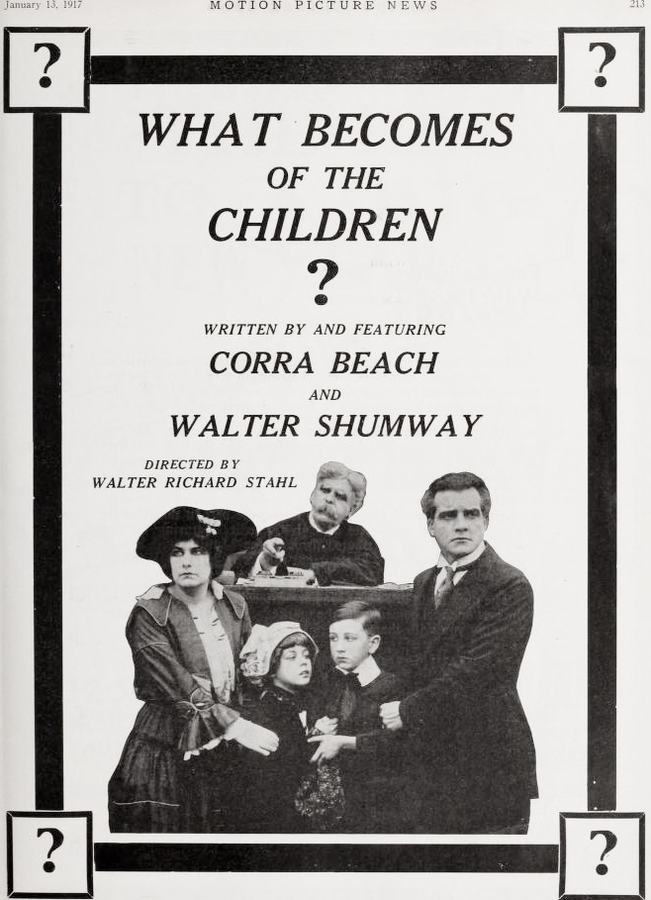
They were perfect porcelain dolls in a house made of contracts and champagne—until the cracks showed.
Corra Beach’s 1918 morality sledgehammer What Becomes of the Children? arrives like a lantern swung over the abyss of progressive-era parenting, its beam revealing not monsters but mirrors. Where contemporaries such as Wooden Shoes romanticized poverty or Every Girl’s Dream sold marriage as confection, this film spits the sour aftertaste of affluence gone sterile. It is, in many ways, the anti-Scarlet Pimpernel: no masked heroics, only unmasked culpability.
The movie’s grammar is established in negative space. Cinematographer William M. Edmond frames the Trayne manor as a series of doorways-within-doorways, each threshold a proscenium for absence. When the infant topples from the nurse’s lap, the fall is shown only by a curtain’s sudden billow—an absence of body, an excess of consequence. Intertitles do not shriek; they whisper. “She closed her eyes for three heartbeats—eternity needed only two.”
Colorists working on the 2023 4K restoration tinted night sequences in arsenic sea-blue, dawn interiors in febrile yellow, and the final reunion—ironic, hollow—in ember orange. The palette itself accuses: wealth provides pigment but no warmth.
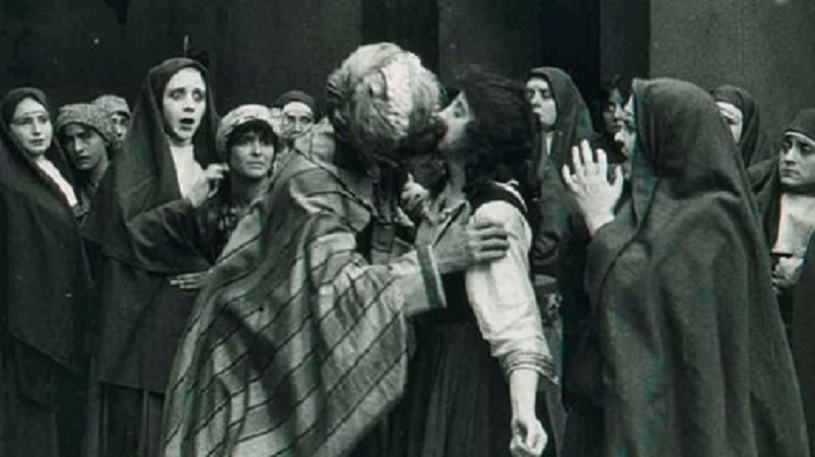
Billy Sullivan’s Fred arcs from paperboy insouciance to soot-faced vagrant without ever begging pity; his shoulders square in resignation rather than surrender. Opposite him, Grace Stevens as Marion has the translucent resilience of a streetlamp bulb—she flickers, threatens to shatter, yet keeps glowing. Their final embrace on the pier is staged in one unbroken medium shot: two foundlings sharing a single overcoat, the river behind them swallowing moonlight like unpaid debt.
Meanwhile Corra Beach—pulling double duty as screenwriter and as the society vamp who lures Mrs. Trayne—writes herself a deliciously catty cameo, all cigarette holder and Schadenfreude. Watch her eyes in the charity bazaar scene; they track Marion’s fall with the predatory patience of a chess master who already sees checkmate.
Dialogue intertitles flirt with poetry: “He traded bedtime stories for ticker-tape symphonies.” Yet the film’s most brutal line is a mere eight words: “Your son’s tuition is now a stranger’s signature.” In an era when melodrama routinely drowned in its own lachrymose, Beach’s text slices arteries clean.
Compare it to Soldiers of Chance where every misfortune is blamed on war, or The Man Behind the Curtain whose third-act reveal absolves parental sin via mustache-twirling villainy. What Becomes of the Children? refuses scapegoats; the enemy is gravitational—indifference orbited by money.
Contemporary critics sniffed at the film’s “parental shaming,” calling it “a Progressive-era public service announcement dipped in arsenic.” Yet viewed today, the picture anticipates Instagram-era childcare by a century: offspring as lifestyle accessories, backgrounded while brandable life is curated. The Traynes might as well be posting #PowerCouple while the nanny uploads accidental funeral selfies.
The film’s coda—elder Traynes reconciling over an empty photo album—feels almost documentary. Their clasped hands tremble with relief and self-absolution; the camera cranes upward to reveal a parlor wallpapered in framed pictures, every frame turned face-down. It is one of silent cinema’s most quietly annihilating visuals, rivaled only by the final shot of Passers By where lovers vanish into a crowd that refuses to slow.
Editor James McClain employs axial cuts to compress years into heartbeats. One match-cut pivots from the dead infant’s rattle to Fred’s college roulette wheel—both spin, both stop on red. The juxtaposition lands harder than any lecture. Similarly, a superimposed dissolve layers Marion’s suicidal plunge onto her mother’s waltz across polished parquet, implying inherited choreography of despair.
Note the temporal ellipsis after Fred’s expulsion: a single shot of autumn leaves clogging a gutter, followed by winter sludge crusting the same gutter, then spring’s first weed forcing through cracked stone. Seasons cycle; consequences calcify.
Though originally released with a recommended live score of “appropriate patter and baby cries,” modern screenings often commission new compositions. The 2022 Kronos Quartet arrangement favors sul ponticello tremolo and bow-scrape harmonics—grief as tinnitus. When Marion steps onto the pier’s edge, the cello holds a low C for an impossible duration, then cracks into multiphonic overtones, mirroring her resolve fracturing into terror.
Curiously, the film’s sole textual reference to music occurs when Mrs. Trayne attends the opera “Lucia di Lammermoor” the very night her daughter elopes. Donizetti’s mad-scene bleeds into Marion’s real-time shame, an early instance of diegetic counterpoint predating Citizen Kane’s opera montage by twenty-three years.
Released mere weeks before the 1918 influenza lockdowns, the picture grossed a respectable $230,000 domestically yet was banned in Chicago for “exposing minors to ideations of self-destruction.” Prints were thought lost until a 9.5mmPathé “baby” reel surfaced at a Lyon flea market in 1987, French intertitles intact. The restoration team opted to retain the Gallois punctuation—ellipsis heavy, exclamation marks scarce—arguing it amplifies the film’s existential shrug.
Bootleg VHS circulated among NYU film seminars throughout the ’90s, soundtracked by everything from Nick Drake b-sides to Nine Inch Nails. Those grainy dubs seeded a cult that lobbied for the 4K scan, culminating in last year’s Criterion announcement alongside Judge Not; or the Woman of Mona Diggings.
Set it beside The Explorer—colonial swagger marinated in imperial hubris—and you see how What Becomes of the Children? turns the camera inward, dissecting the colonization of blood by capital. Pair it with Alias Mrs. Jessop where maternal sacrifice redeems, and notice how Beach refuses absolution; repentance arrives only when progeny are irretrievably gone, a structuralist tragedy closer to King Lear than to D. W. Griffith’s redemptive tropes.
IMDb —
1916
Community
Log in to comment.