DbcultAccessing Vault...
7.4/10
Senior Film Conservator
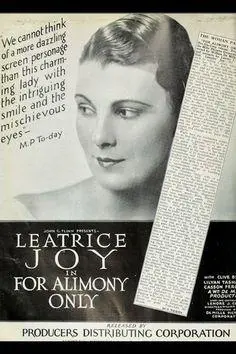
A definitive 7.4/10 rating for a film that redefined the boundaries of cult cinema. For Alimony Only remains a cornerstone of transgressive art.
Is For Alimony Only still worth your time in an age of digital blockbusters? Short answer: yes, but only if you appreciate the sharp, cynical edge of 1920s social satire. It’s a film for those who enjoy watching the upper class dismantle themselves over bank statements and bad decisions.
This is not a film for people who require high-speed action or a moral compass in their protagonists. It is a calculated, often cruel look at how money poisons the well of romance. If you come for the love story, you’ll stay for the tax law.
This film works because it refuses to sugarcoat the transactional nature of its characters' relationships, making it feel surprisingly modern despite being nearly a century old.
This film fails because the third act relies on a series of coincidences that feel less like organic storytelling and more like a writer frantically trying to meet a deadline.
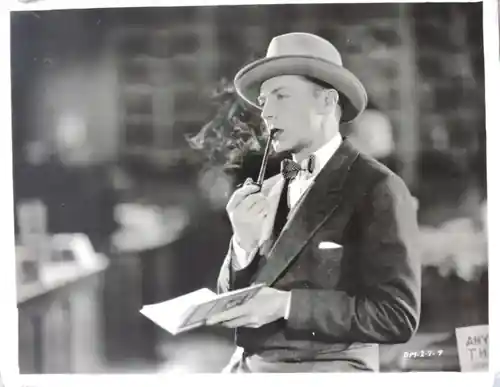
You should watch it if you are a fan of pre-Code sensibilities or the work of screenwriter Lenore J. Coffee, who always knew how to put a sting in the tail of a script.
For Alimony Only is absolutely worth watching for fans of silent cinema who are tired of melodrama. It provides a refreshing, if somewhat bleak, look at the economics of marriage. The performance by Lilyan Tashman alone justifies the runtime.
It’s a sharp contrast to the more whimsical comedies of the era like Her Night of Romance. While that film plays with the fluff of mistaken identity, this one plays with the grit of financial ruin. It’s a movie with teeth.
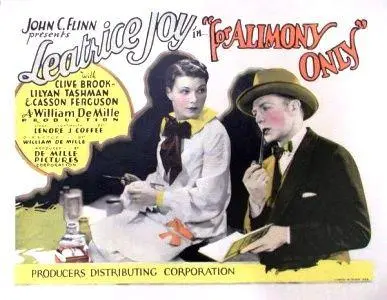
The central conflict of For Alimony Only isn't really about who Peter loves. It’s about how much that love costs per month. Peter, played with a stiff-upper-lip desperation by Clive Brook, is a man who buys his freedom with a checkbook he hasn't balanced.
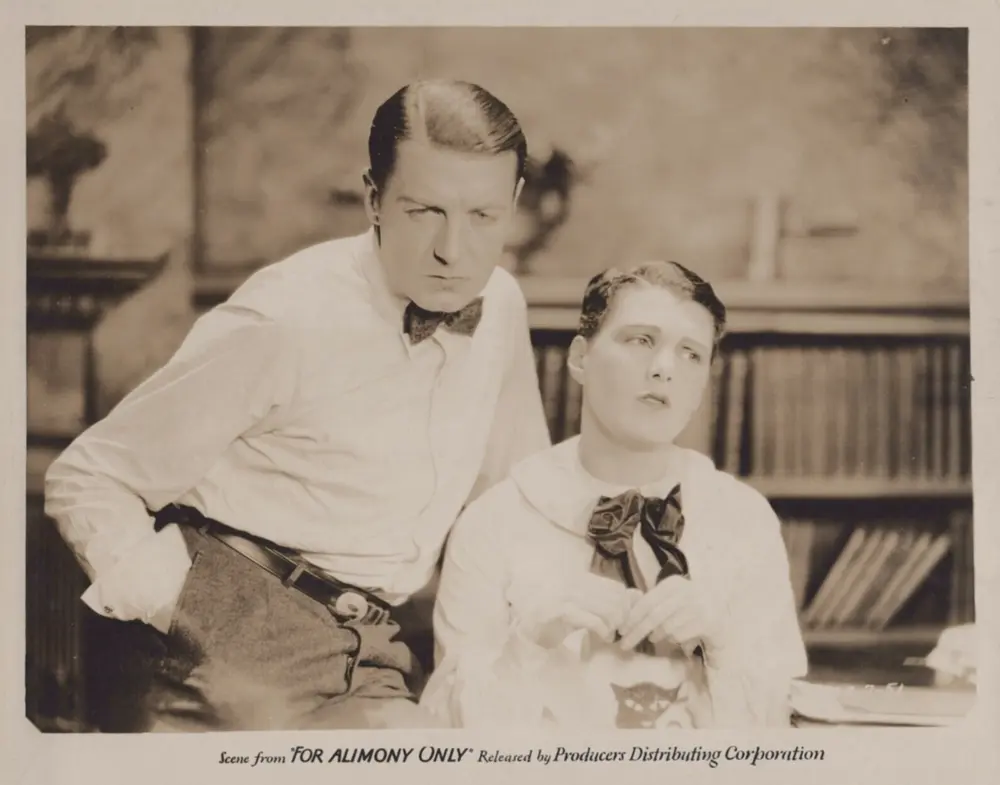
When he meets Mary (Leatrice Joy), the film attempts to pivot into a traditional romance. But the shadow of Narcissa (Lilyan Tashman) is always present. Narcissa is the 'alimony drone' archetype personified, and Tashman plays her with a terrifying, icy elegance.
Consider the scene where Narcissa lounges in her apartment, supported by Peter’s hard-earned cash. She isn't just a villain; she’s a business woman whose business is her ex-husband’s failure. It’s a brutal depiction of post-marital spite.
Lilyan Tashman was often the best thing in any movie she appeared in, and this is no exception. While Leatrice Joy is tasked with playing the 'pure' wife, Tashman gets to have all the fun. She is the engine that drives the plot forward.
Her interactions with Bertie, the 'sofa-hound,' are particularly telling. She isn't in love with him; she’s just using Peter’s money to buy a companion. It’s a cycle of exploitation that the film manages to make both funny and deeply uncomfortable.
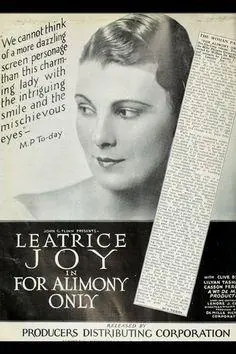
One specific moment stands out: when Narcissa realizes Peter is falling behind on payments. The look on Tashman’s face isn't one of heartbreak, but of a landlord about to issue an eviction notice. It’s a performance devoid of sentimentality, and it’s brilliant.
William C. deMille, often overshadowed by his brother Cecil, shows a much more restrained hand here. He focuses on the interiors—the gilded cages that these characters inhabit. The cinematography emphasizes the distance between people even when they are in the same room.
However, the film does struggle with its pacing in the middle act. After the initial setup of the divorce, the narrative meanders through Peter’s financial woes. It lacks the tight comedic timing found in contemporary hits like Laughing Gas.
The transition from domestic drama to the roadhouse farce is jarring. It feels like two different movies stitched together. One is a somber look at debt, and the other is a slapstick chase. The gear shift is clunky, but the destination is worth it.
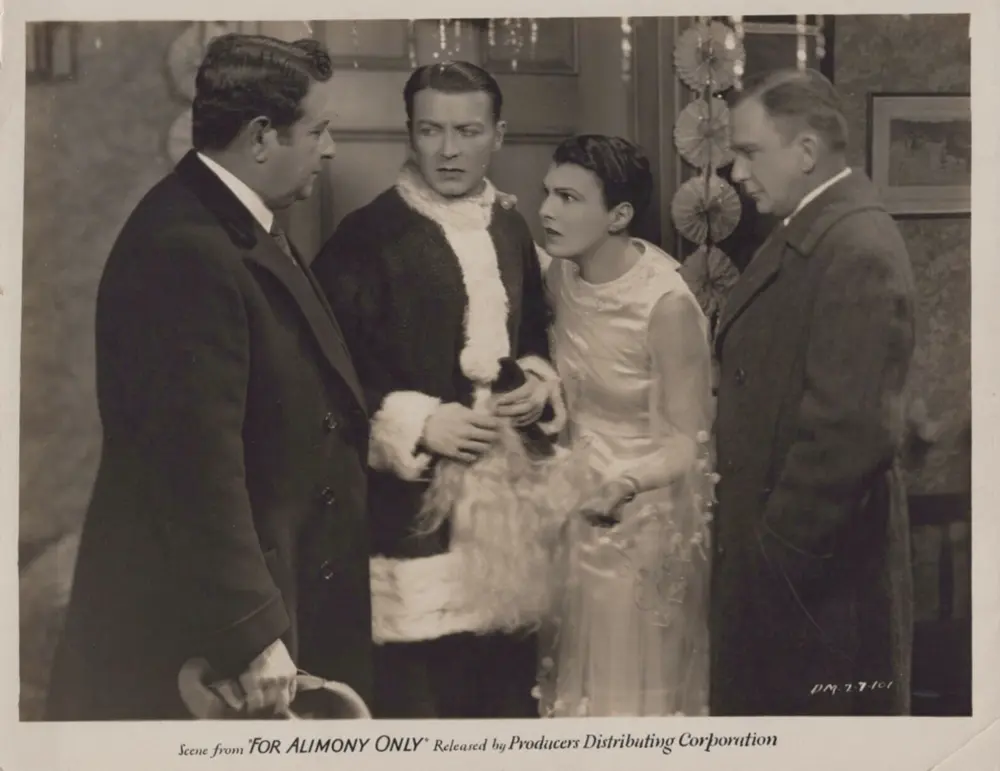
The ending of For Alimony Only is where the film finally takes a stance. The police raid on the roadhouse serves as a catalyst for a very clever piece of social manipulation. Mary, the 'good' wife, finally shows she has a backbone—and a brain.
By tricking Narcissa into a marriage with Bertie, she doesn't just win her husband back; she cuts off the financial blood supply that was killing them. It’s a cold-blooded move that the film presents as a happy ending. I love that ambiguity.
Is Mary any better than Narcissa? She uses the same legal systems to her advantage. The film doesn't answer this, and that’s why it lingers in the mind. It’s a movie about survival, not morality. It’s a trap. And everyone falls into it.
Pros:
The writing by Lenore J. Coffee is sharp and avoids the usual clichés of the era. The film’s take on alimony is surprisingly nuanced. The set design is opulent and serves the story’s themes of wealth and waste.
Cons:
Clive Brook is a bit too wooden to be a truly sympathetic lead. The 'sofa-hound' character of Bertie is underdeveloped and serves mostly as a plot device. Some of the title cards are a bit long-winded.
For Alimony Only is a fascinating artifact. It captures a moment in American culture where the rules of marriage were changing, and the law was struggling to keep up. It’s a comedy, but it’s a dark one. It works. But it’s flawed.
Compared to other films of the period like So Long Letty, it feels much more grounded in real-world anxieties. It’s not a masterpiece, but it’s a shrewd, biting piece of work that deserves more recognition than it currently gets in the silent film canon.
If you can overlook the creaky plot mechanics of the finale, you’ll find a movie that has a lot to say about the price of freedom. Just don't expect a fairytale. In the world of For Alimony Only, the only thing that lasts forever is a debt. And maybe a grudge.
IMDb 6.3
1921
Community
Log in to comment.