DbcultAccessing Vault...
Cult Review
Senior Film Conservator
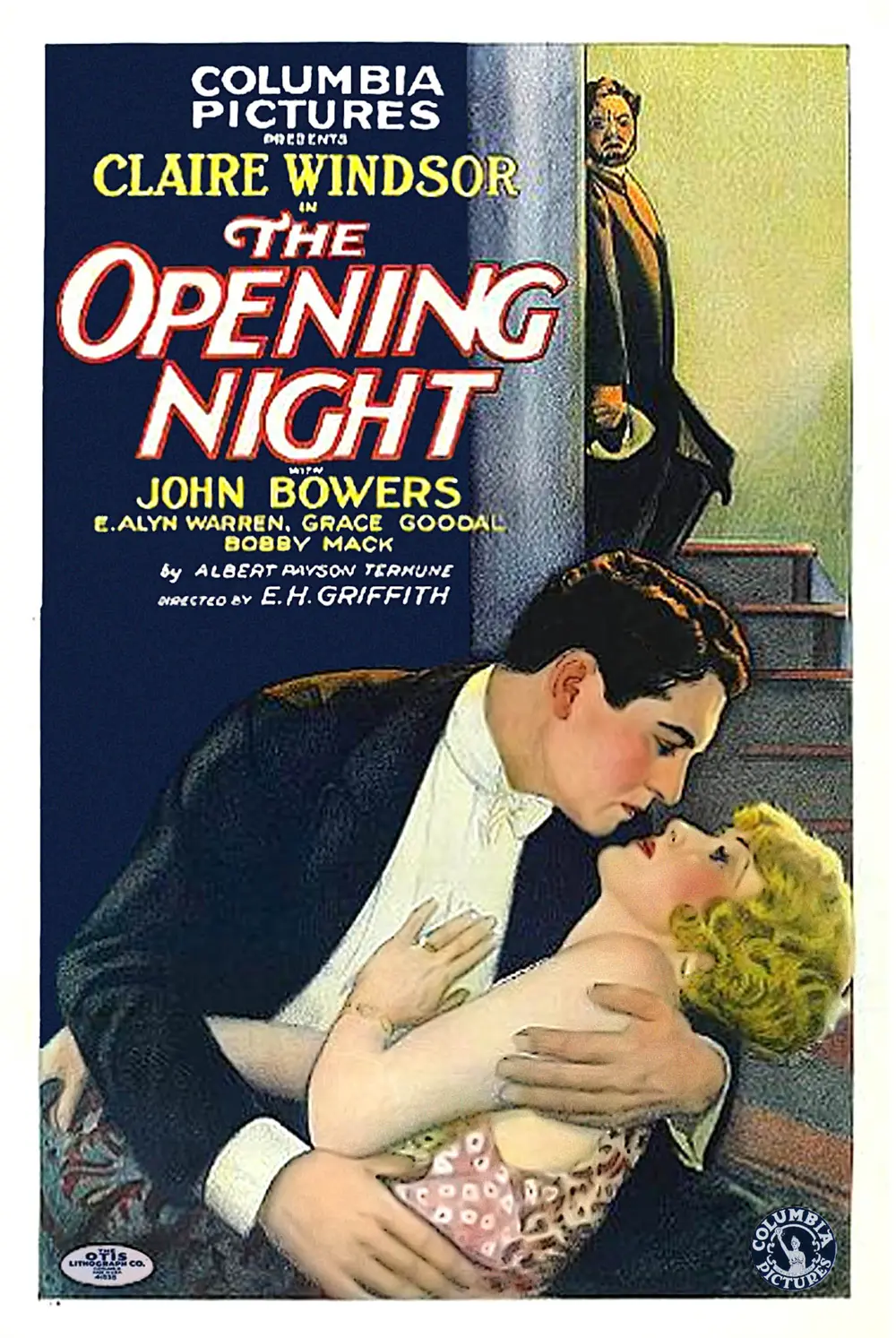
Is this film worth watching today? Short answer: No, unless you are a die-hard silent film historian or a fan of high-octane melodrama. While it offers a fascinating look at 1920s theatrical culture, the plot hinges on coincidences so massive they threaten to collapse the entire narrative.
This film is for viewers who enjoy the 'Enoch Arden' trope—the returned husband who finds his place taken—and those who appreciate the subtle, emotive acting of the late silent era. It is absolutely NOT for anyone who demands logical character motivations or a fast-paced, modern narrative structure.
The Opening Night works because of E. Alyn Warren’s surprisingly grounded performance as a man losing his grip on his own identity. It fails because it asks the audience to believe that New York City functions with the social density of a tiny village where everyone eventually ends up at the same car wash. You should watch it if you want to see how 1927 cinema handled the transition from stage-bound drama to more cinematic, urban storytelling.
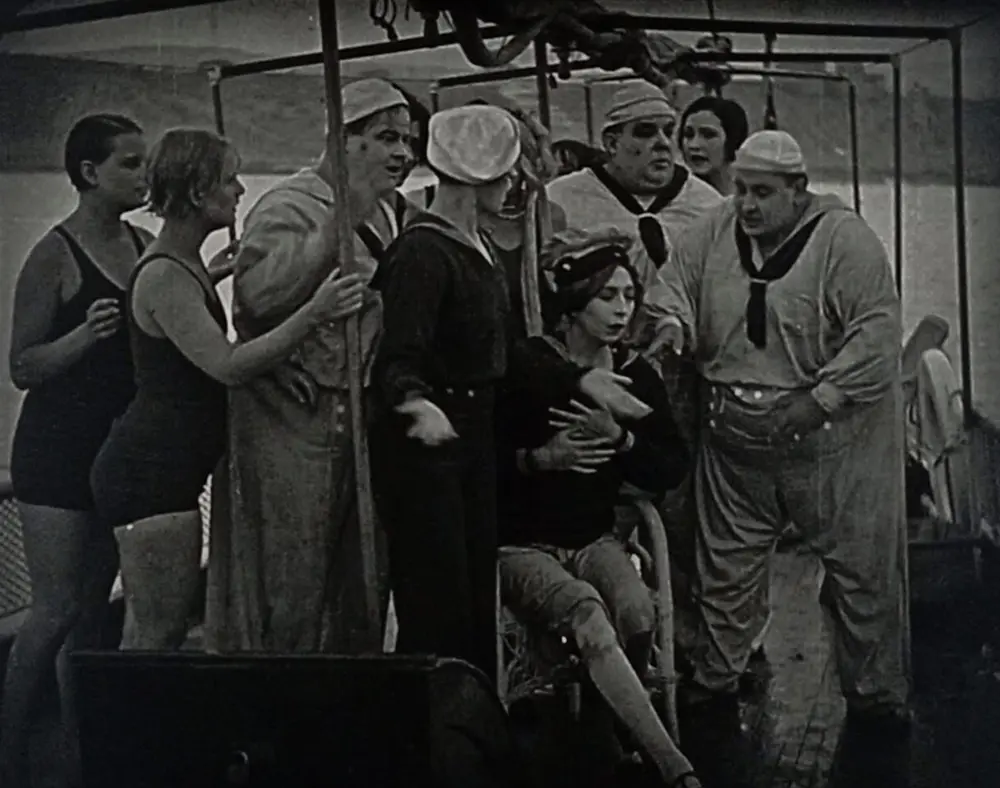
The core of The Opening Night is a question of ego versus love. When Robert Chandler (E. Alyn Warren) realizes his wife, played with a somewhat stiff elegance by Claire Windsor, has moved on, he doesn't fight for his life. He disappears. This isn't just a plot point; it’s a character study in extreme self-abnegation. The film spends a significant amount of time in the grime of the garage, contrasting the sparkling lights of Broadway with the damp, dark reality of Robert’s new existence. It’s a thematic choice that works, even if the execution is heavy-handed.
Take, for instance, the scene where Robert first sees Carol and Jimmy together. The camera lingers on Warren’s face, capturing the slow realization that his 'resurrection' would be a catastrophe for the woman he loves. It’s a moment of genuine pathos that elevates the film above standard melodrama. However, the film quickly reverts to type. The 'small town' logic of NYC is its biggest hurdle. In a city of millions, the idea that Carol would happen to bring her car to the exact stall where her amnesiac ex-husband is scrubbing tires is a bridge too far for modern sensibilities. It makes the world feel small, rather than intimate.
Edward H. Griffith directs with a steady hand, but he lacks the visual flair found in contemporaries like Murnau or Borzage. The film feels more like a filmed play than a cinematic breakthrough. Compared to a film like Guilt, which uses its silent medium to explore internal psychological states, The Opening Night relies heavily on title cards to explain the complex emotional shifts Robert undergoes.
Claire Windsor was a major star of the era, but here she is given little to do other than look radiant and conflicted. The heavy lifting is left to E. Alyn Warren. His transition from the confident Robert Chandler to the broken, nameless laborer is the film’s strongest asset. He avoids the eye-rolling histrionics common in the 1920s, opting instead for a slumped posture and a vacant stare that communicates his amnesia effectively. John Bowers as Jimmy Keane is serviceable, though he lacks the charisma needed to make us believe he could truly replace a giant like Chandler.
The screenplay, co-written by Albert Payson Terhune, treats Manhattan like a high school hallway. This was a common trope in silent films—the 'chance encounter'—but here it is the entire engine of the second act. If you’ve seen Sally in Our Alley, you know how these urban coincidences are used to drive emotional stakes. But in The Opening Night, it feels less like fate and more like lazy writing. The film doesn't earn its climax; it stumbles into it because the script demands a confrontation.
"The Opening Night is a film that wants to be a tragedy but settles for being a soap opera with better lighting."
There is an unconventional observation to be made about the film's title. 'The Opening Night' refers to the play within the film, but it also serves as a metaphor for Robert's new life. Every day at the car wash is an 'opening night' for his new persona—a performance he has to maintain to keep his wife's happiness intact. This layer of meta-commentary on the nature of acting is the most interesting thing about the movie, even if Griffith doesn't fully lean into it.
For the casual viewer, the answer is a firm no. The pacing is deliberate, and the payoff is predictable. However, for those interested in the evolution of the 'lost identity' genre, it provides a crucial link between Victorian stage plays and the noir-infused amnesia films of the 1940s. It lacks the grit of Dark Secrets or the kinetic energy of A Fight for Millions, but it possesses a quiet, somber dignity.
The Opening Night is a respectable but ultimately unremarkable entry in the late silent era. It works. But it’s flawed. While it captures a specific type of urban melancholy, its reliance on tired tropes prevents it from being a lost classic. It is a film of moments—a look, a shadow, a choice—rather than a cohesive masterpiece. If you find yourself watching it, do so for Warren's performance. He turns a mediocre script into a haunting portrait of a man who decided that being dead was easier than being a memory.
IMDb —
1926
Community
Log in to comment.