DbcultAccessing Vault...
7.8/10
Senior Film Conservator
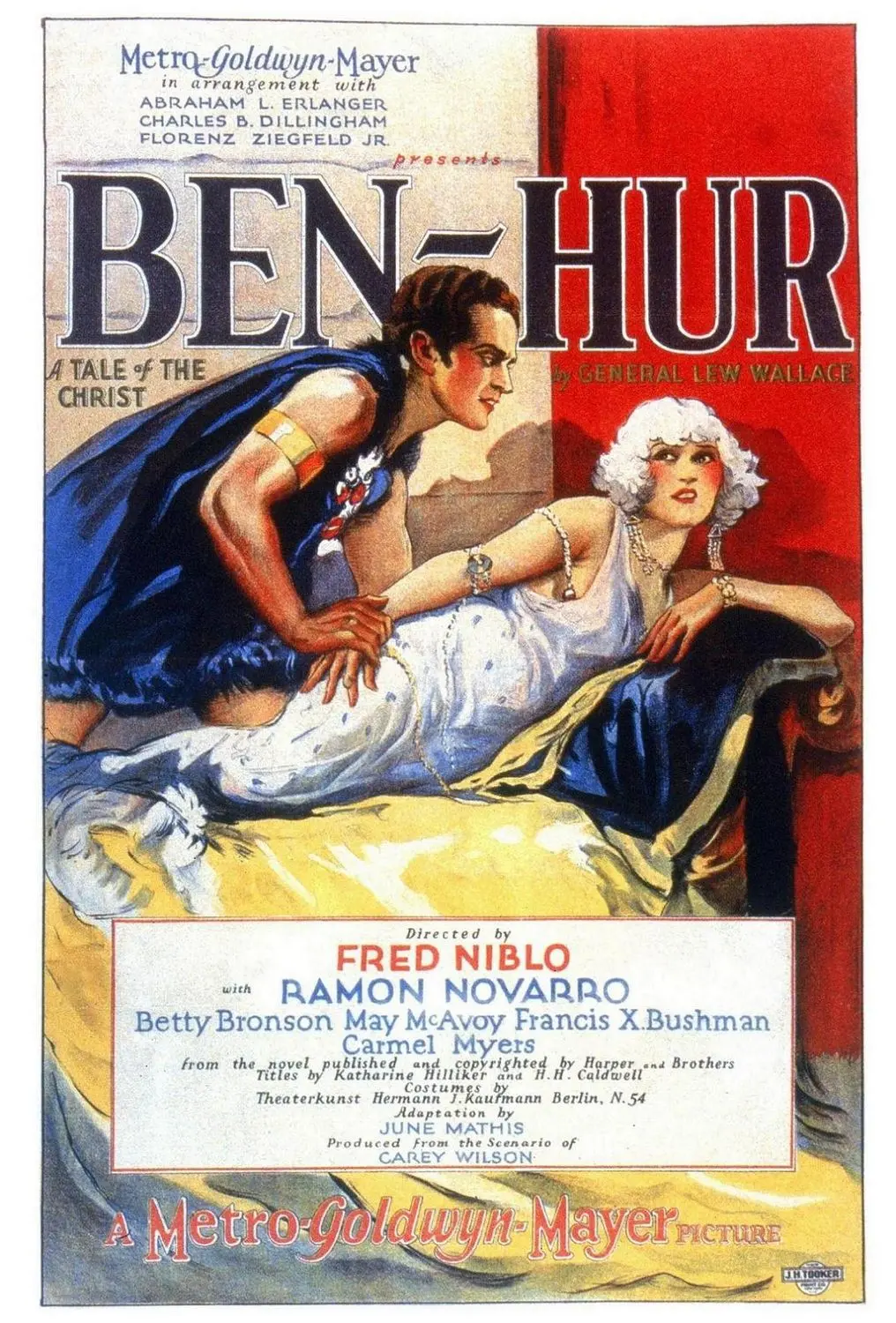
A definitive 7.8/10 rating for a film that redefined the boundaries of cult cinema. Ben-Hur: A Tale of the Christ remains a cornerstone of transgressive art.
To approach the 1925 iteration of Ben-Hur: A Tale of the Christ is to confront the very definition of the word 'epic' before it was diluted by the hyperbole of modern marketing. This production, a behemoth of the silent era, represents a moment in cinematic history where ambition was matched only by the sheer, terrifying physical labor of thousands of artisans, extras, and visionaries. While modern audiences might be more familiar with the 1959 Charlton Heston vehicle, this earlier tapestry—woven with the threads of early Technicolor and the sweat of a cast featuring the likes of Ramon Novarro and Francis X. Bushman—possesses a raw, visceral energy that its successors often struggle to replicate.
The narrative arc, based on Lew Wallace’s seminal novel, is a labyrinthine journey through betrayal and redemption. Unlike the more focused survivalist themes of Miss Crusoe, Ben-Hur operates on a scale that attempts to capture the entirety of human experience under the weight of empire. It is a film that breathes through its set pieces, yet finds its heartbeat in the quiet, sepulchral moments of personal tragedy. The casting is a fascinating time capsule; seeing a young Gary Cooper, Joan Crawford, and Carole Lombard in various capacities reminds us that this was the definitive training ground for the Golden Age of Hollywood.
One cannot discuss this film without acknowledging the staggering technical achievement of the sea battle. In an era devoid of CGI, the collision of full-scale Roman triremes was not a digital trick but a logistical nightmare realized on the open water. The sequence vibrates with a claustrophobic intensity, capturing the plight of the galley slaves with a gritty realism that stands in stark contrast to the more romanticized depictions of the era, such as those found in The Yellow Traffic. The camera work here is revolutionary, plunging the viewer into the spray and the splintering wood, creating a sense of peril that feels dangerously authentic.
"The chariot race is not merely a scene; it is a violent symphony of dust, hooves, and desperate ambition that remains the high-water mark of practical stunt work."
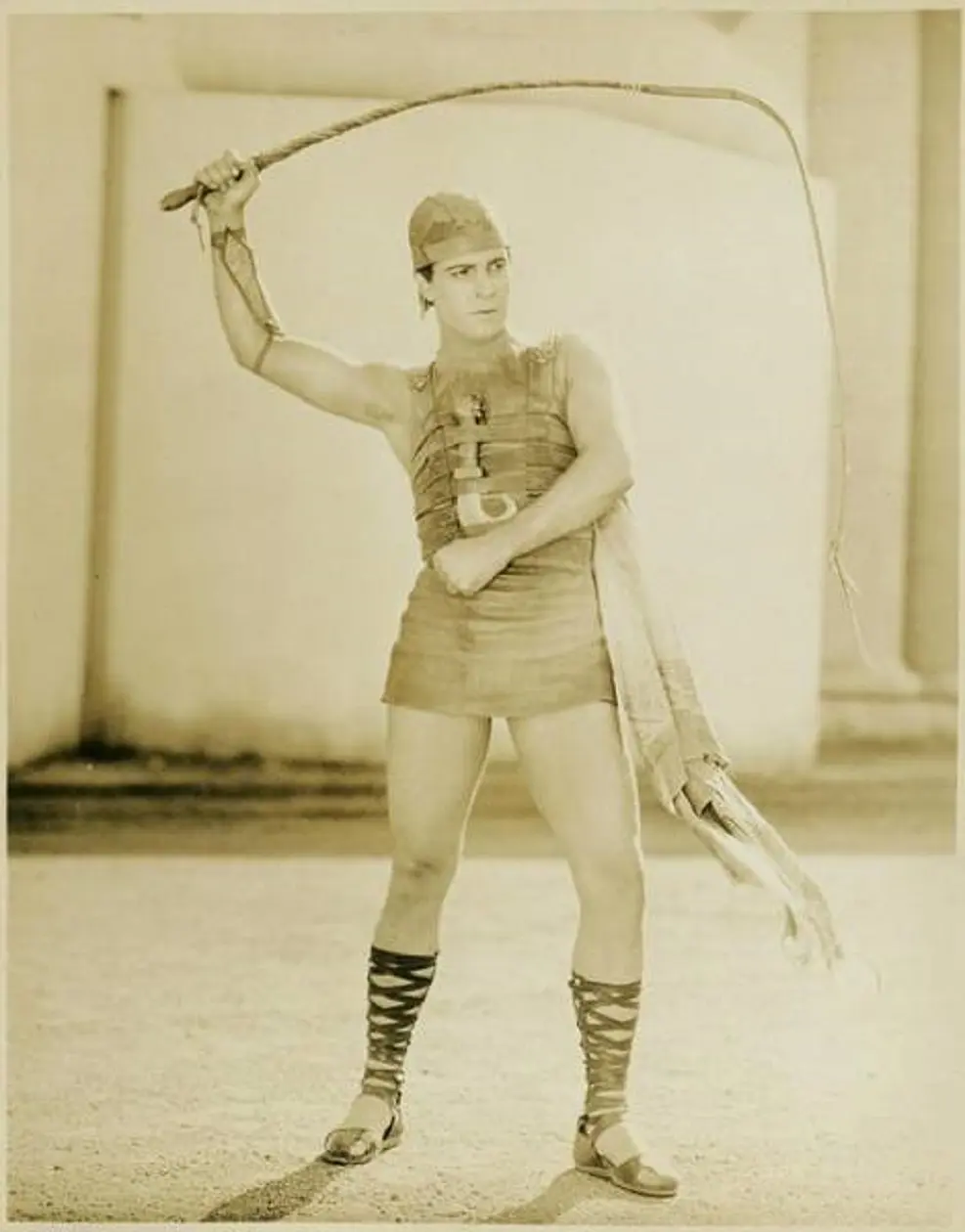
The transition from the galley slave to the Roman citizen is handled with a deftness that avoids the melodramatic pitfalls often associated with silent cinema. The performance of Ramon Novarro as Judah is a study in physical transformation. He carries the weight of Judea’s sorrow in his brow, contrasting sharply with the arrogant, sculpted villainy of Francis X. Bushman’s Messala. Their chemistry is the engine of the film, a toxic brew of lost brotherhood and ideological friction that mirrors the larger conflict between the burgeoning spirit of Christianity and the rigid, iron-fisted governance of Rome.
The sheer density of the cast is worth a scholarly dissertation in itself. From Dorothy Gish to John Barrymore and Lillian Gish, the film serves as a celestial map of 1920s stardom. Even in bit parts or cameos, the presence of these icons lends the production an air of gravitas. This isn't just a movie; it's a cultural summit. When we compare the ensemble weight to contemporary works like Foolish Lives or Two-Gun Betty, the sheer scale of Ben-Hur becomes even more apparent. It was a project that seemingly emptied the studios of their talent to create something permanent.
The use of two-strip Technicolor for the Nativity and the entrance into Jerusalem provides a dreamlike, ethereal quality that elevates the film from a historical drama to a hagiographic experience. These sequences are handled with a reverence that avoids the saccharine, focusing instead on light and shadow to convey the divine. It is a far cry from the more grounded, often bleak narratives of Dangerous Days or the rural simplicity of Australia's Own. Here, the film dares to reach for the sublime, using the limitations of its era to create a visual language of holiness.
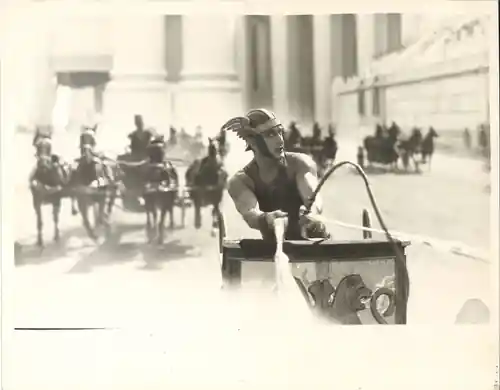
If the sea battle is the film’s soul, the chariot race is its heart. This sequence, directed in part by an uncredited B. Reeves Eason, utilized forty-two cameras and miles of film to capture a race that was, by all accounts, as dangerous as it looks on screen. The editing is frantic yet coherent, a precursor to the modern action aesthetic. We see the wheels grinding against each other, the horses foaming at the bit, and the spectators’ faces—a sea of thousands—blurring into a mosaic of Roman decadence. It is a sequence that justifies the film's existence on its own, far surpassing the action beats of The Lone Star Ranger or the maritime tensions of Mutiny.
What sets this race apart from the 1959 version is the lack of safety. There is an inherent, unpolished chaos to the 1925 race. When a chariot flips, it isn't a controlled stunt; it’s a terrifying moment of real-world physics. This sense of tangible danger permeates the entire final act, grounding the spiritual themes in a world of blood and dust. It makes the eventual message of peace and forgiveness feel earned, rather than merely preached. The film understands that for redemption to mean anything, the suffering must be palpable.
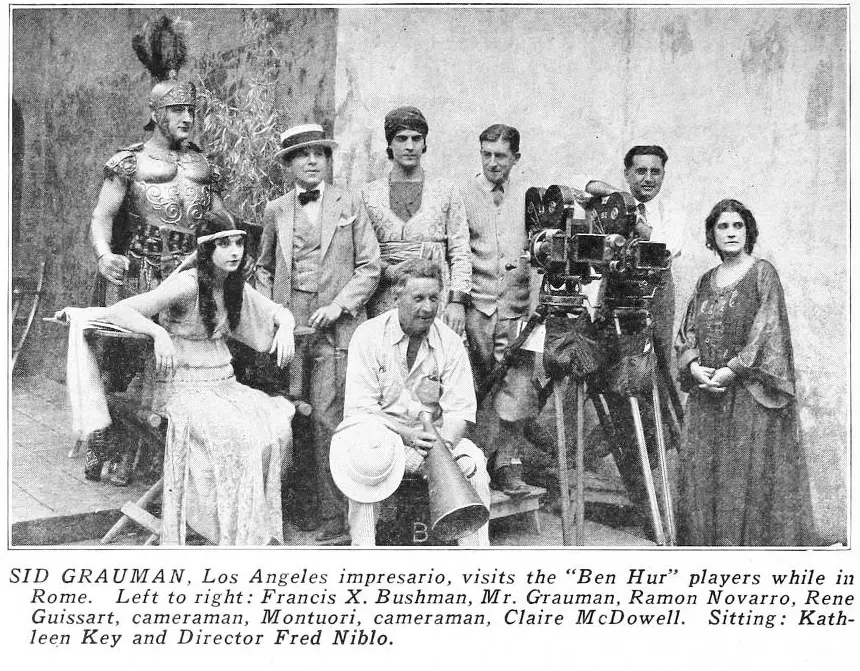
The portrayal of Christ in the film is a masterclass in restraint. By showing only a hand, a shadow, or a distant figure, the directors (Fred Niblo and his massive team) allow the audience to project their own faith and awe onto the screen. This technique is far more effective than the literalism found in many later religious epics. It creates a sense of the 'other' that contrasts beautifully with the very human, very flawed journey of Judah. This thematic depth is something that sets Ben-Hur apart from the more straightforward moral tales like Lest We Forget (1924) or the floral melodrama of The Flower Girl.
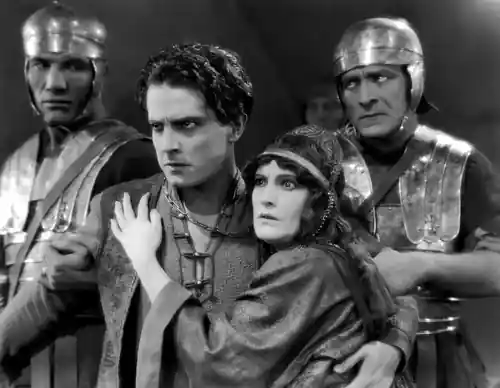
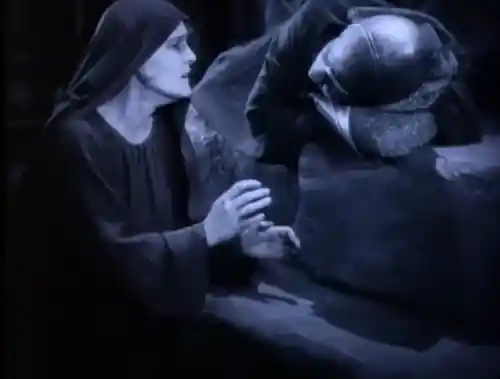
The subplot involving the Lepers' Valley is perhaps the most emotionally resonant section of the film. The reunion between Judah and his mother and sister, played with heartbreaking sincerity by Claire McDowell and May McAvoy, is a sequence of pure, unadulterated pathos. The makeup and lighting work together to create a haunting, sepulchral atmosphere that feels like a descent into the underworld. It is here that the film’s title, A Tale of the Christ, finds its true meaning—not in the grand battles, but in the healing of the broken.
Comparing Ben-Hur to international efforts like A napraforgós hölgy or the exoticism of The Jungle Child highlights just how uniquely American this production was in its industrial might. It was a statement of intent from MGM, a declaration that the motion picture was the supreme art form of the 20th century. The film’s influence can be seen in everything from the historical dramas of the 1950s to the modern blockbusters of today. It possesses an 'inner voice'—to borrow a title from The Inner Voice—that speaks of the eternal struggle between the temporal power of man and the enduring power of the spirit.
While some may find the pacing of silent film challenging, Ben-Hur rewards the patient viewer with a density of imagery that is almost overwhelming. Every frame is packed with detail, from the intricate Roman costumes to the sprawling Judean landscapes. It lacks the intimate, epistolary charm of The Love Letter, but it replaces it with a thunderous, Wagnerian scale. Even the documentary-like intensity of The Battle of the Ancre feels small in comparison to the orchestrated chaos of the Judean uprising depicted here.
In the final analysis, Ben-Hur: A Tale of the Christ is more than a film; it is a monument. It stands as a testament to a time when the cinema was discovering its own god-like power to recreate the ancient world and to move the hearts of millions through the simple flickering of light on a dark screen. It remains an essential experience for anyone who claims to love the medium, a reminder of what can be achieved when imagination is backed by an uncompromising will to create the impossible. The film does not merely tell a story; it carves it into the consciousness of the viewer, leaving an indelible mark that remains long after the final intertitle fades to black.
IMDb 6.4
1934
Community
Log in to comment.