DbcultAccessing Vault...
Cult Review
Senior Film Conservator
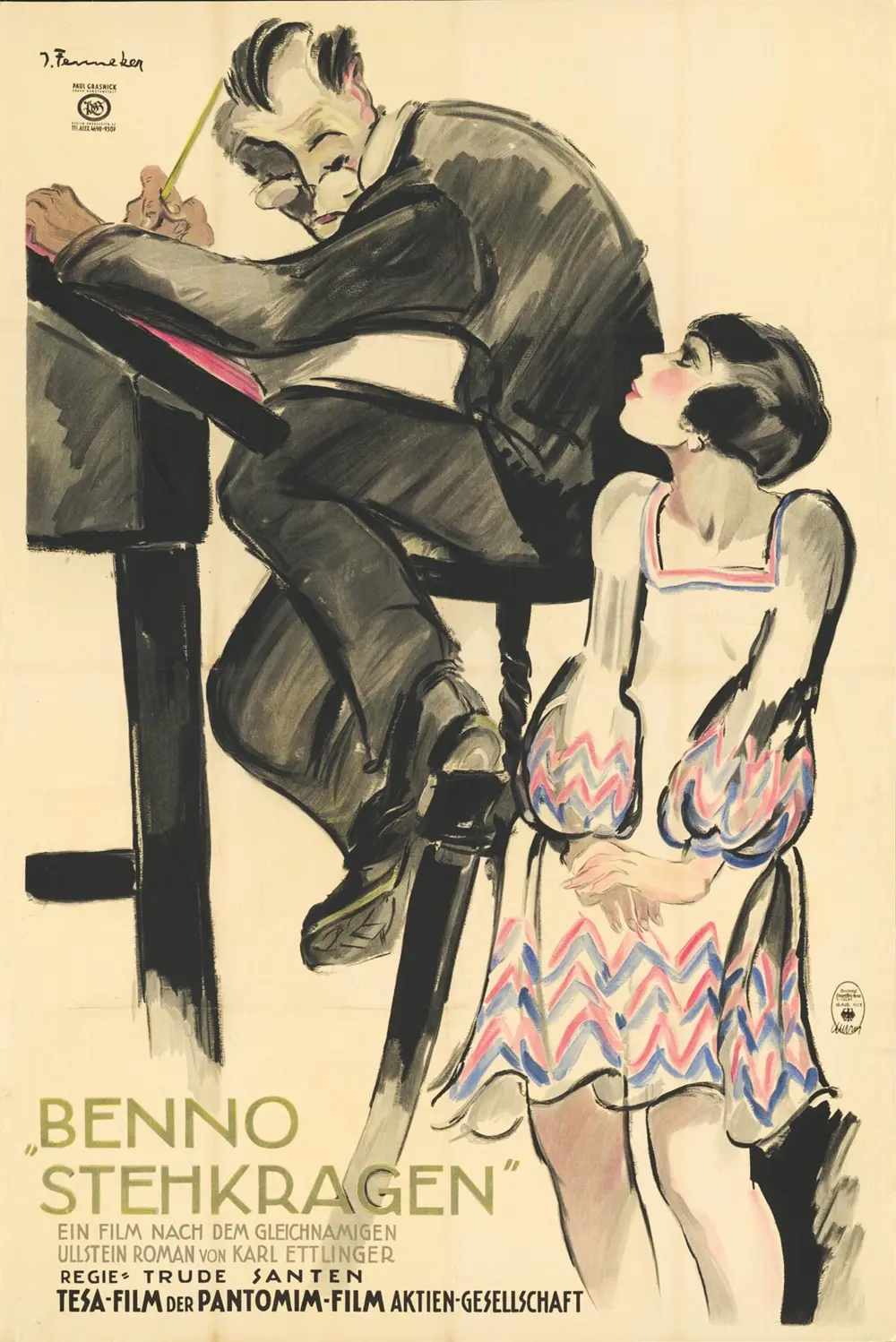
Is "Benno Stehkragen" a silent film worth unearthing in today's crowded cinematic landscape? Short answer: yes, but with significant caveats that demand a particular kind of viewer. This film is an essential watch for cinephiles, historians of early German cinema, and those fascinated by character-driven narratives from the silent era, but it will likely prove a challenging, perhaps even tedious, experience for casual viewers accustomed to modern pacing and narrative conventions.
Let's get straight to it. For a film of its vintage, "Benno Stehkragen" certainly has a pulse, albeit a faint one at times. It works. But it’s flawed.
This film works because: It presents a surprisingly intricate character study, leveraging the expressive power of its lead actors to convey internal conflict without a single spoken word. Its visual storytelling, while occasionally ponderous, often achieves moments of striking clarity and emotional depth, particularly in its depiction of urban alienation and the pressure to conform.
This film fails because: Its pacing can be excruciatingly slow by modern standards, demanding immense patience from the audience. The narrative, while conceptually rich, often meanders, losing focus on its central themes amidst prolonged, less impactful sequences. Some of the visual humor and dramatic beats have not aged gracefully, feeling dated rather than timeless, which can detract from its intended impact.
You should watch it if: You possess a deep appreciation for silent cinema, are interested in the works of Kurt Gerron, or seek to understand the stylistic evolution of German filmmaking before the sound era. It's a historical document as much as an entertainment piece, offering unique insights into the social fabric of its time.
"Benno Stehkragen" stands as a peculiar artifact from a vibrant, experimental period in German filmmaking. Released at a time when the industry was grappling with its identity, oscillating between grand Expressionist visions and more grounded social dramas, this film leans heavily into the latter, albeit with an undercurrent of the former's psychological depth.
The director, whose name unfortunately isn't provided but whose vision is palpable, demonstrates a keen eye for framing and composition, even if the overall rhythm feels more like a leisurely stroll than a brisk narrative march. There are moments of genuine visual poetry, particularly in the way the bustling city streets are contrasted with the quiet, internal world of Benno.
One striking example is a recurring motif involving Benno's reflection in shop windows. These shots, often brief, subtly highlight his self-consciousness and the way he perceives himself through the lens of public scrutiny. It’s an effective, almost proto-Hitchcockian use of visual metaphor, hinting at a fragmented identity long before such concepts became common cinematic fodder.
The strength of "Benno Stehkragen" lies undeniably in its ensemble, particularly the nuanced performance of Kurt Gerron in the titular role. Gerron, a powerhouse of early German cinema and later a victim of the Holocaust, imbues Benno with a profound sense of vulnerability beneath his stiff exterior. His facial expressions, a subtle twitch of the lip or a momentary widening of the eyes, communicate volumes without the need for intertitles. He truly carries the film.
Consider a scene where Benno, having just received a social slight, retreats to a park bench. Gerron doesn't resort to theatrical overacting; instead, he conveys Benno's internal turmoil through a series of small, defeated gestures: a slump of the shoulders, a slow removal of his hat, a lingering gaze at his own reflection in a puddle. It's a masterclass in understated silent film acting, proving that less can indeed be more, even in an era often characterized by broad gestures.
Olga Engl, portraying a character who serves as both a societal mirror and a potential confidante for Benno, delivers a performance of quiet dignity. Her presence is grounding, providing a counterpoint to Benno's anxieties. Käthe Haack and Margit Barnay, too, contribute solid, if less central, portrayals that flesh out Benno's social circle, each adding a distinct flavor to the film's tapestry.
However, Gerhard Ritterband’s portrayal, while energetic, occasionally veers into caricature. His youthful exuberance, intended perhaps as comedic relief or a foil to Benno's reserved nature, sometimes feels out of sync with the film's otherwise delicate tone. It’s a minor quibble, but one that occasionally pulls you out of the film's immersive, if slow, world.
The central metaphor of the 'stand-up collar' is a surprisingly potent one. It represents not just a fashion statement of the era but a societal straitjacket, forcing Benno into a mold that stifles his true self. The film, in its quiet way, is a critique of bourgeois aspirations and the performative nature of identity in urban environments.
This theme of outward appearance versus inner reality is timeless. While the specific sartorial elements are dated, the core struggle to belong, to be accepted, and to maintain one's individuality in the face of immense social pressure remains profoundly relevant. "Benno
IMDb 5.4
1933
Community
Log in to comment.