DbcultAccessing Vault...
Cult Review
Senior Film Conservator
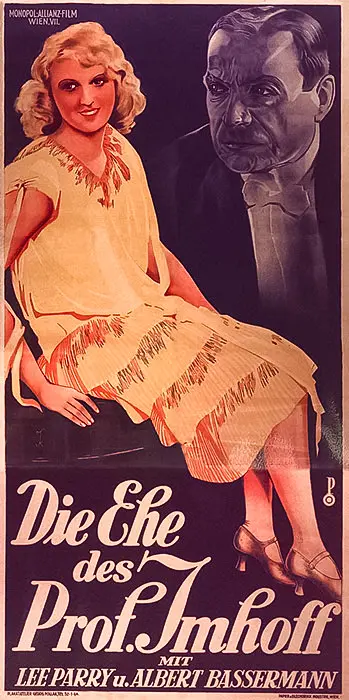
Is 'Wenn das Herz der Jugend spricht' a film that demands your attention in the 21st century? Short answer: yes, but with significant caveats. This early German silent drama offers a fascinating glimpse into cinematic storytelling from a bygone era, particularly for enthusiasts of film history and those curious about the roots of emotional narrative. However, it is decidedly not for everyone.
This film works because it distills universal themes of young love and generational conflict into a raw, unfiltered emotional experience, driven by powerful performances from its lead actors. It fails because its pacing, typical of its time, can feel glacially slow to modern audiences, and the narrative, while poignant, lacks the intricate layering we expect today. You should watch it if you appreciate the artistry of silent cinema, are a fan of classic German actors like Albert Bassermann, or want to understand the evolution of romantic drama. You should likely skip it if you demand fast-paced plots, complex character arcs, or modern production values.
"Wenn das Herz der Jugend spricht" is a testament to the enduring power of simple, heartfelt stories, even when delivered through the silent medium.
'Wenn das Herz der Jugend spricht,' penned by Max Jungk and Hans Land, is a title that promises a certain kind of narrative, and it largely delivers. This is a story steeped in the universal language of nascent affection, the fervent desire for autonomy, and the inevitable clash with the established order. It’s a narrative blueprint that has been replicated countless times since, but here, it possesses a raw, unpolished charm that feels refreshingly authentic.
The film's strength lies in its ability to take a seemingly straightforward premise – young love thwarted by parental disapproval – and infuse it with a palpable sense of emotional stakes. We witness Lotte's internal struggle, beautifully conveyed through Lee Parry's expressive face, as she navigates the chasm between her heart's yearning for Hans and her duty to Herr Bergmann. It’s a conflict that, despite the passage of a century, remains remarkably resonant. The writers, Jungk and Land, craft a world where societal expectations are as formidable as any physical barrier, making the lovers' quest feel genuinely arduous.
One could argue that the plot, in its broad strokes, is entirely predictable. Indeed, the tropes of the disapproving father, the meddling rival, and the secret rendezvous are all present and accounted for. Yet, to dismiss the film on these grounds would be to miss its true value. The genius here is not in narrative innovation, but in the meticulous execution of familiar themes. The story doesn't try to reinvent the wheel; it simply aims to show how beautifully a well-crafted wheel can turn.
Consider the subtle yet profound shift in tone as the narrative progresses. What begins as a lighthearted portrayal of youthful infatuation gradually deepens into a more serious exploration of commitment, sacrifice, and the often-painful process of growing up. This evolution is handled with a delicate touch, allowing the audience to feel the weight of each decision alongside the characters. The emotional landscape is painted with broad strokes, yes, but the colors are vibrant and true.
The film’s central conflict, while simple, is effective. It leverages the audience's innate empathy for the underdog, for the pure-hearted lovers against the unfeeling world. The character of Herr Bergmann, in particular, is not a mustache-twirling villain but a man convinced of his own righteousness, making his opposition all the more compelling and, at times, frustratingly human. This nuanced portrayal elevates the narrative beyond mere melodrama, hinting at the complex tapestry of familial duty and personal happiness.
For a film relying solely on visual storytelling and intertitles, the performances are paramount, and the cast of 'Wenn das Herz der Jugend spricht' rises to the occasion with an impressive display of silent era acting. At the heart of it all is Albert Bassermann as Herr Bergmann, delivering a masterclass in controlled, authoritative presence. Bassermann doesn't merely play the role; he inhabits it. His eyes, even in grainy black and white, convey a multitude of emotions – sternness, concern, a flicker of paternal love hidden beneath a rigid exterior. There’s a scene where he confronts Lotte after discovering her secret correspondence with Hans; Bassermann’s posture, the slight tremor in his hand, speaks volumes about his internal conflict, far more than any lengthy intertitle ever could.
Lee Parry, as Lotte, is the film's beating heart. Her performance is a delicate balance of youthful exuberance and burgeoning maturity. She navigates Lotte's emotional arc from wide-eyed innocence to determined defiance with remarkable grace. Her gestures are grand, as was the style of the era, but never feel artificial. One particular moment, where she silently pleads with her father, her face a canvas of despair and hope, is genuinely moving. It’s a performance that reminds you why certain actors became stars in the silent era – their ability to project complex emotions without uttering a single word.
Gyula Mészáros, as Hans, complements Parry perfectly. His portrayal of the earnest, slightly reckless suitor is endearing. Mészáros brings a youthful energy that makes Hans's romantic overtures feel sincere, even when his actions are somewhat ill-advised. His interactions with Bassermann are particularly strong, creating a palpable tension that defines much of the film's drama. The contrast between Mészáros's youthful impetuousness and Bassermann's seasoned gravitas is a dynamic engine for the plot.
The supporting cast, while given less screen time, also contributes significantly. Frieda Lehndorf as Lotte's mother provides a quieter, more sympathetic counterpoint to Bassermann’s severity, often communicating her unspoken concern through subtle glances. Even S.Z. Sakall, later known for his comedic roles, offers an intriguing performance as the gossipy Frau Meier, adding a layer of social commentary to the proceedings. It’s a testament to the period’s acting talent that even smaller roles feel fully realized.
The collective chemistry, especially between Parry and Mészáros, is undeniable. Their stolen glances, their shared smiles, and their desperate farewells all contribute to a believable, deeply felt romance. The filmmakers clearly understood the power of the close-up in capturing these intimate moments, allowing the audience to connect directly with the characters' inner lives. It’s a powerful demonstration of how effective silent acting could be, relying on universal human expressions rather than spoken dialogue.
Directing a silent film presents a unique set of challenges, and the creative team behind 'Wenn das Herz der Jugend spricht' demonstrates a keen understanding of the medium. While specific directorial credits aren't always clear for films of this vintage, the overall vision is cohesive and effective. The cinematography, though rudimentary by today's standards, serves the narrative admirably. The use of natural light in outdoor scenes, combined with the moody chiaroscuro of interior shots, establishes a visual tone that underscores the film's emotional beats.
Pacing, often a contentious point for modern viewers of silent films, is deliberate. It allows moments to breathe, enabling the audience to fully absorb the characters' expressions and the implications of each scene. While some might find it slow, this measured rhythm is crucial for building suspense and emotional impact without dialogue. The film doesn't rush its story; it lets it unfold organically, much like life itself. This choice, while potentially alienating for some, is undeniably effective for those willing to adjust their expectations.
The tone oscillates effectively between lighthearted romance and dramatic tension. Early scenes between Lotte and Hans possess a charming innocence, often punctuated by playful gestures and longing glances. As Herr Bergmann's opposition solidifies, the tone darkens, introducing elements of melodrama and genuine despair. The filmmakers manage this shift without jarring the audience, creating a coherent emotional journey. This balance is a testament to the skill of the entire production, from the writers to the camera operators.
One particularly striking aspect is the use of visual metaphors. While not overly abstract, there are moments where the framing or the composition of a shot subtly reinforces the film's themes. For instance, the recurring motif of Lotte looking out of a window, gazing longingly at the world beyond her father's control, speaks volumes about her yearning for freedom. This kind of visual storytelling is economical and powerful, a hallmark of well-executed silent cinema.
The intertitles, often overlooked, are also handled with care. They are concise, providing just enough information to advance the plot or clarify dialogue without becoming overly verbose. They serve as a bridge, connecting the emotional performances to the narrative context, and are integrated seamlessly into the visual flow of the film. This careful balance ensures that the audience remains immersed in the story, rather than being pulled out by clunky exposition. For a comparison of how different silent films handled narrative, one might look at the innovative storytelling in Il castello del diavolo, which similarly relied on visual ingenuity.
Yes, 'Wenn das Herz der Jugend spricht' is worth watching for specific audiences. It offers a unique historical perspective. It showcases the foundational elements of dramatic storytelling. The performances, especially Bassermann's, are compelling. It's a valuable piece of early German cinema. However, it requires patience. Modern viewers accustomed to rapid cuts and complex plots may struggle. It's a journey into cinema's past, not a contemporary blockbuster.
'Wenn das Herz der Jugend spricht' stands as a compelling artifact from the dawn of cinema. It's a film that, despite its age and the inherent limitations of the silent medium, manages to communicate its themes of love, rebellion, and familial duty with remarkable clarity and emotional force. The performances are often breathtaking, particularly from Bassermann and Parry, who manage to convey an entire spectrum of human experience without uttering a single word. It works. But it’s flawed.
While its pacing may feel like a test of endurance for those unaccustomed to the rhythms of early cinema, the rewards for the patient viewer are considerable. This isn't just a historical curiosity; it's a testament to the enduring power of storytelling, a reminder that the fundamental human experiences captured on screen transcend time and technological advancement. It’s a film that asks you to lean in, to observe, and to truly feel, rather than simply consume. For its historical significance, its powerful acting, and its surprisingly enduring emotional core, 'Wenn das Herz der Jugend spricht' earns a respectable, if niche, recommendation. It might not set your world on fire, but it will certainly warm your heart with its quiet, insistent whisper of youth's eternal song.
IMDb —
1921
Community
Log in to comment.