DbcultAccessing Vault...
5.6/10
Senior Film Conservator
A definitive 5.6/10 rating for a film that redefined the boundaries of cult cinema. Napoleon, Jr. remains a cornerstone of transgressive art.
Is Napoleon, Jr., a relic from the silent era, still worth your precious viewing time today? Short answer: yes, but with significant caveats that speak more to its historical curiosity than its enduring cinematic brilliance. This early 20th-century adventure-comedy is a peculiar snapshot of filmmaking, offering glimpses into the nascent forms of storytelling and the burgeoning appeal of child and animal stars.
It's a film for those with a deep appreciation for silent cinema, film historians, or anyone curious about the foundational elements of slapstick and adventure before sound took over. Conversely, it is decidedly not for audiences seeking modern pacing, sophisticated narratives, or high-fidelity production values. Approach it as an archaeological dig, not a contemporary blockbuster.
In the landscape of early cinema, Napoleon, Jr. stands as a fascinating artifact. Released at a time when film was still discovering its voice, it embodies the era's unbridled experimentation and its often quaint, yet ambitious, narrative structures. The film’s premise, revolving around a plucky young protagonist and an animal sidekick, was a proven formula even then, designed to captivate a broad audience, particularly families.
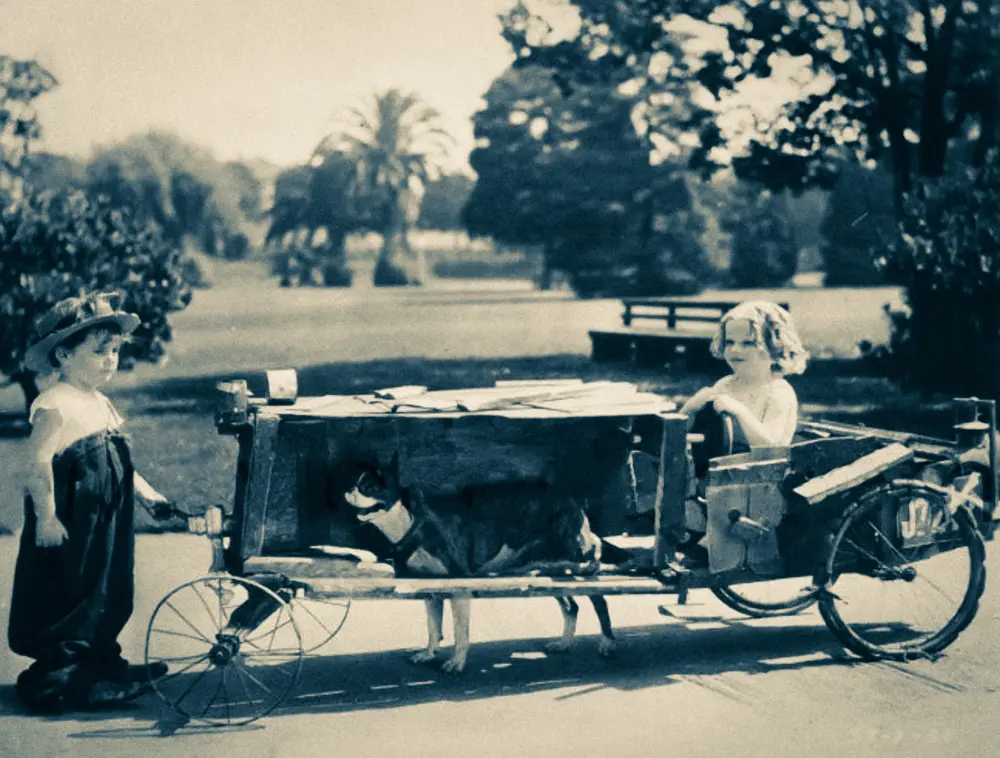
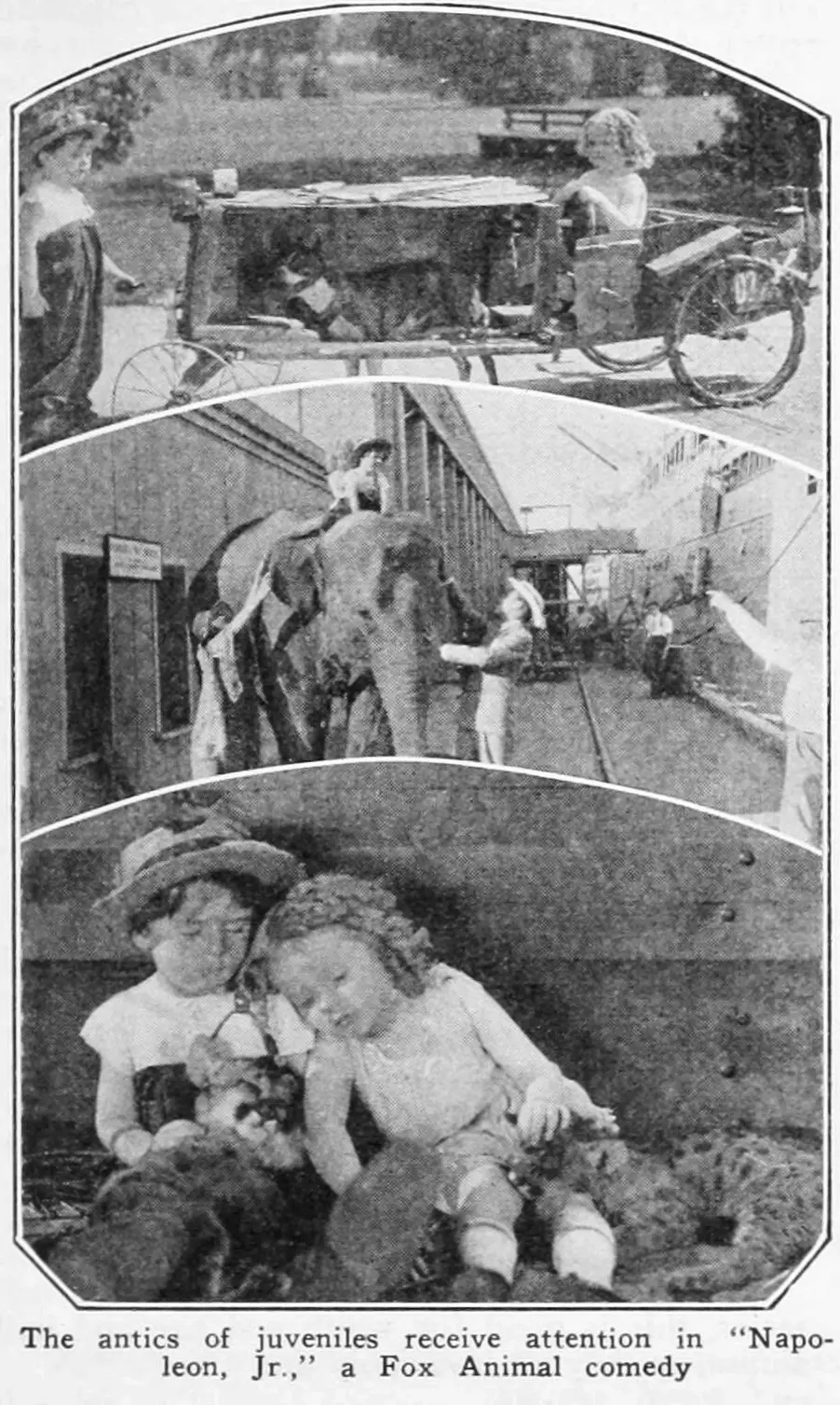
It’s a testament to the universal appeal of charm and chaos, a blend that filmmakers Eddie Moran and Edward Marshall clearly understood. The very idea of a “speed bus with dog power” is inherently whimsical, a visual gag that transcends the lack of dialogue, relying entirely on the viewer’s imagination and the on-screen antics.
This film works because it taps into a primal sense of adventure and the undeniable charisma of its young lead, Jerry Madden, paired with the intelligent Pal the Dog. The central conceit of a child solving adult problems, amplified by the exotic chaos of leopards on a ship, provides a unique, if rudimentary, spectacle.
This film fails because its narrative, while charming, lacks the depth and thematic resonance that even some of its silent contemporaries managed to achieve. The plot, while engaging, feels more like a series of loosely connected incidents rather than a cohesive, escalating journey. The resolution, while sweet, feels somewhat convenient, relying heavily on Jerry’s inherent goodness.
You should watch it if you're a devotee of early cinema, keen to explore the roots of comedic storytelling and adventure, or if you simply enjoy the unique charm of animal performers and child stars from a bygone era. It offers a valuable window into cinematic history.
The story of Napoleon, Jr. is, at its heart, a fable of innocence intervening in adult turmoil. Jerry Madden’s character, the titular ‘Napoleon, Jr.’ in spirit, is presented as an unassuming hero, a boy whose playful flirtations with a girl whose parents are consumed by a divorce court drama lead him into a far grander adventure. The film subtly critiques the often-overlooked impact of adult conflicts on children, positioning Jerry as a beacon of uncomplicated joy and agency.
The ‘speed bus with dog power’ is not merely a mode of transport; it’s a symbol of childhood ingenuity and the boundless energy of youth. Pal, the canine co-star, is more than a pet; he’s an active participant, an extension of Jerry’s adventurous spirit, embodying loyalty and an almost human-like understanding. This early sequence sets a tone of lighthearted escapism, a common thread in silent comedies that aimed to provide audiences with a temporary reprieve from their own realities.
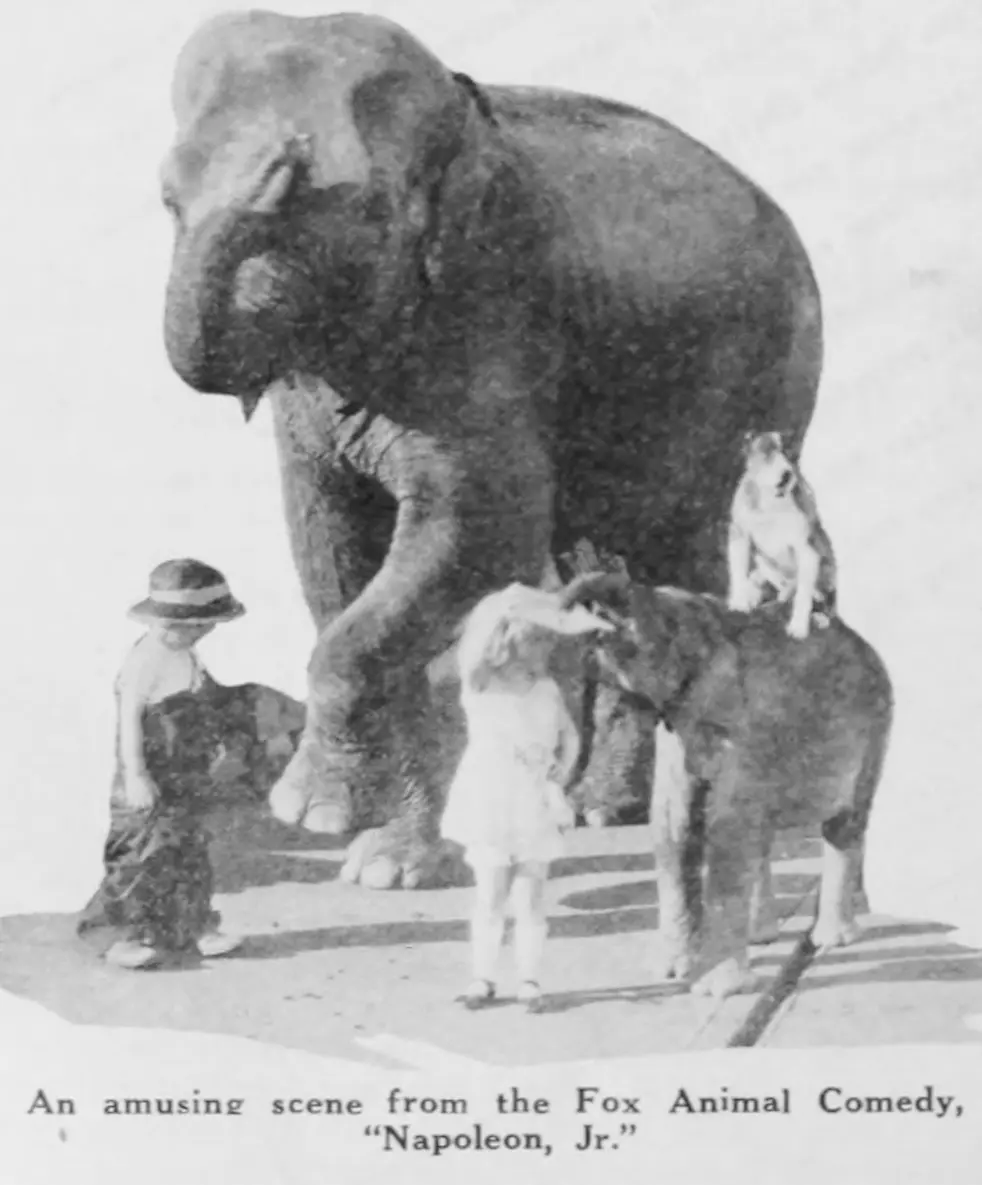
The abrupt transition to a boat bound for Europe, with the children concealed in a leopard crate, introduces an element of grand adventure that feels both whimsical and, for the time, quite daring. It’s a narrative leap that prioritizes spectacle over strict realism, a hallmark of early cinematic storytelling. The ensuing chaos when the leopards break loose is the film’s central set piece, a masterclass in physical comedy and controlled pandemonium. Jerry’s ability to ‘coax’ the wild animals back into their cages speaks to a recurring trope in children’s literature and film: the special bond between children and animals, often portrayed as purer and more intuitive than adult relationships.
Finally, the resolution of the parents’ custody battle, orchestrated by Jerry’s indirect influence, feels like a narrative bow tied neatly, perhaps too neatly, by the conventions of early film. It reinforces the idea that sometimes, the simplest acts of kindness or the most unexpected adventures can mend even the deepest rifts. The plot, while straightforward, is an excellent example of how silent films communicated complex ideas through visual metaphor and performance.
In silent cinema, acting is a delicate art, relying heavily on exaggerated facial expressions, precise body language, and pantomime to convey emotion and intent without a single spoken word. Jerry Madden, as the eponymous 'Jr.', delivers a performance that is both energetic and endearing. His youthful exuberance is palpable, and he carries the film with an impressive screen presence for a child actor of that era. One can almost feel his mischievous grin and determined spirit through the sepia tones.
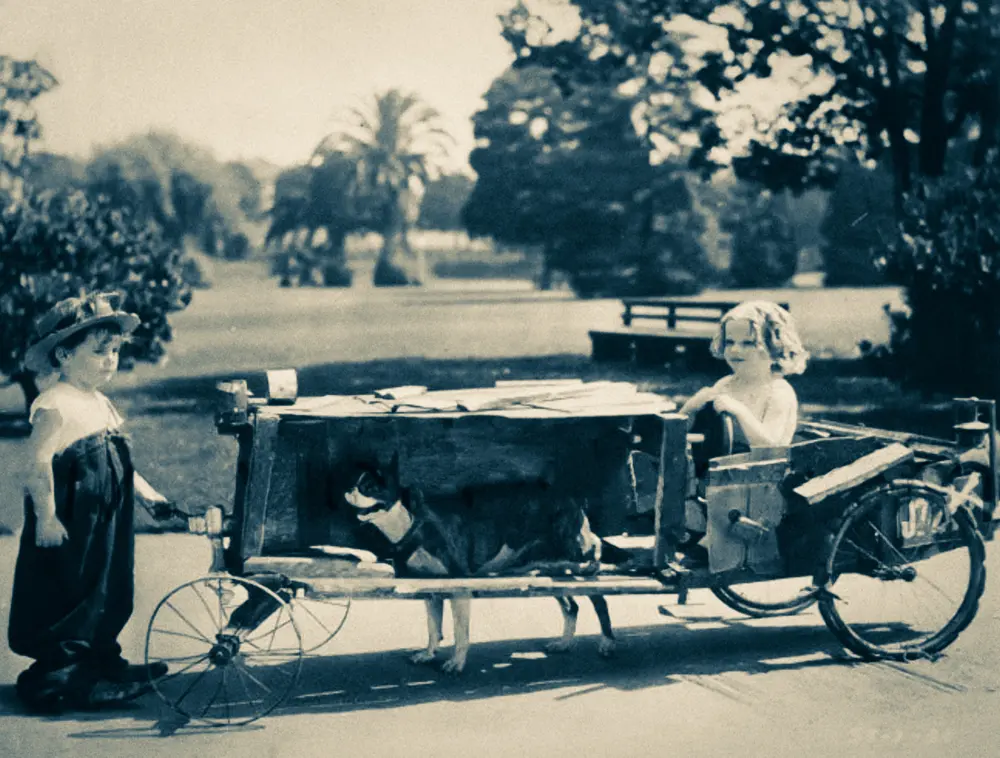
His interactions with Dora Dean, who plays his young miss, are charmingly innocent, laying the groundwork for the adventure that follows. Their dynamic is the emotional core, however lightly sketched, of the film. The adult actors, including Flora Mae Moore and Bill Elliott, tasked with portraying the feuding parents, use broad gestures to convey their marital discord, a style that might seem over-the-top today but was essential for clarity in silent film.
But let’s be brutally honest: the true star of Napoleon, Jr. isn’t Jerry Madden, it’s Pal the Dog. Pal’s performance is nothing short of remarkable. From powering the 'speed bus' to navigating the ship, Pal exhibits an intelligence and responsiveness that elevates the film beyond simple novelty. There’s a particular moment during the leopard escape where Pal’s reactions convey genuine alarm and protective instinct, a testament to the skill of the animal trainers and the dog’s own innate charisma. It’s a performance that rivals many human actors of the period, demonstrating the powerful impact animal performers could have on an audience. It's an unconventional observation, perhaps, but Pal truly steals every scene he's in, proving that star power isn't exclusive to humans.
Eddie Moran and Edward Marshall, as directors, faced the unique challenge of telling a story entirely through images. Their approach to Napoleon, Jr. is characterized by a reliance on dynamic action sequences and clear visual cues. The 'speed bus' scene, for instance, must have been a logistical marvel for its time, creating the illusion of speed and movement with limited technology. The directors skillfully use camera angles and editing (even in its rudimentary form) to convey the excitement of the ride.
The climax involving the escaped leopards is where the directorial vision truly comes to life. The 'helter-skelter business' is orchestrated to maximize chaos and suspense, yet always with an underlying comedic tone. The directors likely employed a mix of close-ups on the animals' powerful movements and wider shots to show the frantic reactions of the human characters. This sequence, while potentially appearing dated to modern eyes, represents a significant undertaking in early filmmaking, requiring careful staging and a keen understanding of visual rhythm.
Comparing this to other adventure films of the era, such as Three Jumps Ahead, one can see a shared emphasis on physical prowess and daring stunts, albeit with Napoleon, Jr. leaning more into the realm of lighthearted, animal-centric comedy. The directors also effectively use intertitles, though not explicitly detailed in the plot summary, to bridge narrative gaps and provide context, ensuring the audience remains engaged despite the lack of dialogue. The visual language is direct, almost simplistic, but effective for its intended purpose: pure entertainment.
The pacing of Napoleon, Jr. is typical of many silent comedies of its time—brisk and energetic, especially during action sequences. The film moves quickly from Jerry's initial flirtation to the 'speed bus' adventure, and then to the shipboard chaos. This rapid progression ensures that audience attention is maintained, a crucial factor in the absence of spoken dialogue or complex character arcs.
The tone is overwhelmingly lighthearted and comedic. Even the parental custody battle, a serious subject, is framed in a way that allows Jerry’s playful intervention to ultimately resolve it. There’s a clear intent to entertain and uplift, rather than to delve into deep emotional drama. The film avoids any truly dark or menacing moments, maintaining a family-friendly atmosphere throughout. This consistent tone is one of the film's strengths; it knows exactly what it wants to be and executes it without pretense.
However, this relentless cheerfulness can, at times, feel a little superficial. The emotional weight of the parents' conflict is quickly brushed aside for the sake of adventure and a happy ending. While this aligns with the film's genre, it means that any potential for deeper thematic exploration is sacrificed for immediate gratification. It works. But it’s flawed. The film’s biggest ambition, perhaps, was simply to make people smile, and in that, it largely succeeds.
For contemporary audiences, Napoleon, Jr. offers a unique window into early 20th-century entertainment. It is a historical document as much as it is a film. Its value lies in its earnest performances, its innovative use of animal actors, and its charmingly simple narrative. It’s not a film that will redefine your understanding of cinema, but it provides a pleasant, if fleeting, diversion.
You should absolutely watch it if you are a film student, a silent movie aficionado, or someone interested in the evolution of special effects and animal training in film. It showcases a foundational type of storytelling. If you prioritize modern production values, intricate plots, or dialogue-driven narratives, you might find it challenging to connect with. It’s a film that requires patience and an open mind, willing to appreciate its historical context.
Pros:
- Charming and energetic performance by Jerry Madden.
- Remarkable and engaging animal acting, especially from Pal the Dog.
- A fascinating historical document showcasing early cinematic techniques.
- Lighthearted and family-friendly tone.
- The leopard escape scene is an ambitious, entertaining spectacle for its time.
Cons:
- Pacing can feel slow or simplistic for modern audiences.
- The narrative lacks significant depth or character development.
- Relies heavily on broad physical comedy, which may not appeal to all.
- Production values are, understandably, primitive by today’s standards.
- The convenient resolution of the parental conflict feels underdeveloped.
Napoleon, Jr. is a delightful, if slight, piece of cinematic history. It’s a film that asks its audience to meet it on its own terms—the terms of early 20th-century silent filmmaking. While it won't resonate with everyone, its undeniable charm, the sheer audacity of its animal sequences, and the captivating presence of its young stars make it a worthwhile watch for those with a genuine interest in the evolution of film. It’s a testament to the enduring power of simple stories, well-told, even without a single word of dialogue. It may not be a forgotten masterpiece, but it certainly isn't a film without its own unique, historical sparkle. It’s a curious, fun diversion, and for that alone, it earns its place in the annals of cinema.
IMDb 5.5
1926
Community
Log in to comment.