DbcultAccessing Vault...
Cult Review
Senior Film Conservator
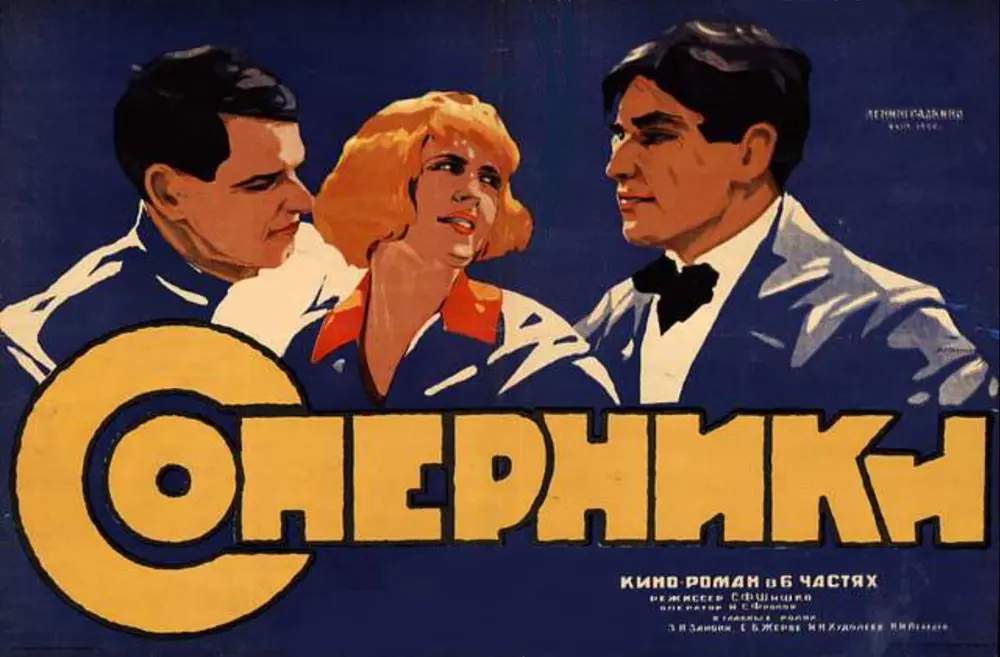
Is Soperniki worth your time today? Short answer: yes, but only if you have an appetite for the stark, often unforgiving aesthetics of late 1920s Soviet realism. This is not a film for those seeking lighthearted escapism or high-speed action. It is a film for the patient viewer, the historian of cinema, and anyone interested in how the human ego survives within a collective machine.
This film is for the cinephile who values texture and social commentary over traditional plot beats. It is NOT for viewers who find silent-era pacing tedious or those who require a clear hero-versus-villain dynamic. Soperniki lives in the gray areas of human ambition.
1) This film works because it refuses to sentimentalize the conflict between its leads, presenting a raw look at professional jealousy.
2) This film fails because the ideological messaging occasionally suffocates the organic character development in the final act.
3) You should watch it if you want to see how early Soviet cinema transitioned from avant-garde experimentation to more grounded, character-driven dramas.
Soperniki is anchored by the tension between the old guard and the new. While many films of this era, such as The Third Generation, focused on the grand scale of revolution, Soperniki keeps its lens tight on the individual. The rivalry depicted here feels personal, almost claustrophobic. It is a battle of wills that takes place in cramped offices and muddy construction sites.
The script by Ivan Leonov avoids the easy trap of making one rival a saint and the other a sinner. Instead, we see two men who are both products of their environment. One represents the steady, perhaps stagnant, experience of the past; the other represents the frantic, often reckless, energy of the future. This clash is most evident in the scene where the two leads argue over a blueprint—a moment that should be dry but is elevated by aggressive close-ups and rapid-fire editing.
The pacing is deliberate. It doesn't rush. Much like Tracked in the Snow Country, there is a sense of impending doom that hangs over the proceedings. You know these two cannot coexist, but the film takes its time showing you exactly how they will tear each other down. It is a slow burn that pays off in psychological weight rather than explosive action.
Valentina Baranova provides the film's emotional compass. In an era where acting was often characterized by wild gesticulation and over-the-top facial expressions, Baranova is remarkably restrained. She plays a woman caught between these two warring egos, and her performance suggests a deep, internal exhaustion. She isn't just a prize to be won; she is a witness to the destructive power of male pride.
Konstantin Khokhlov and Nikolay Lebedev play the rivals with a palpable physical intensity. There is a scene in the second act where they share a meal in silence. The way Lebedev handles his cutlery—sharp, precise, almost violent—tells you more about his character's internal state than any title card ever could. It is a masterclass in using physical objects to convey subtext.
This level of nuance is what separates Soperniki from more populist fare like The Little Variety Star. While the latter relies on charm and spectacle, Soperniki relies on the uncomfortable reality of human interaction. The cast manages to make the bureaucratic stakes feel like life or death. It is impressive, even if it is occasionally draining to watch.
The cinematography in Soperniki is surprisingly modern for 1929. The use of low-angle shots to make the industrial machinery look like ancient gods is a recurring theme. The director understands how to use scale to diminish the human characters. When the rivals stand before a massive engine, they look small, insignificant, and petty. It is a visual critique of their ego.
Unlike the experimental visuals of Opus IV, which focuses on abstract form, Soperniki uses its camera to reinforce the narrative's themes of entrapment. The framing is often tight, with characters obscured by shadows or architectural elements. This creates a sense of being watched, a common trope in Soviet cinema that reflects the era's social pressures.
The editing is sharp, though not as frantic as the montage style seen in Spartacus. There is a rhythmic quality to the cuts, particularly during the workplace sequences. The sound of the machines—implied by the visual rhythm—becomes a third character in the film. It is the heartbeat of the story, and it never stops.
Yes, Soperniki is worth watching for anyone interested in the psychological depth of early 20th-century cinema. While it lacks the polish of modern blockbusters, its raw portrayal of professional envy remains startlingly relevant. It provides a unique window into the anxieties of a society trying to reinvent itself through labor and competition.
Pros:
The film features exceptional use of industrial settings as a metaphor for internal conflict. The chemistry between the two leads is genuinely tense. It avoids the melodramatic cliches found in films like The Peddler of Lies, opting instead for a more grounded approach. The cinematography is ahead of its time.
Cons:
The pacing can feel sluggish in the middle section. Some of the political subtext might be lost on modern audiences without historical context. It lacks the visual variety of more experimental works like The Carpet from Bagdad.
When comparing Soperniki to other films of the period, its uniqueness becomes clear. While Weak, But Willing deals with personal inadequacy through comedy, Soperniki treats it as a tragedy of the soul. There is no punchline here. Even the rivalry in Are You a Failure? feels lighthearted by comparison.
Soperniki shares more DNA with The Eyes of the World in its attempt to capture a grander social truth through individual struggle. However, it is much more cynical. The film suggests that in the race for progress, the individual is often the first thing to be discarded. It is a bleak realization, but one that gives the film its lasting power.
Even when compared to the dramatic weight of What the Gods Decree, Soperniki feels more modern. Its focus on the workplace and professional identity anticipates the corporate dramas of the later 20th century. It is a film about who we are when we are defined by what we do—and what happens when someone else does it better.
Soperniki is a heavy, challenging, and ultimately rewarding piece of cinema. It is not a "masterpiece" in the sense that it is perfect; it is flawed and occasionally didactic. But it is a vital work. It captures a specific moment in time with a level of psychological honesty that was rare for its era. It works. But it is flawed.
The rivalry at its core is timeless. Whether it is two men in a 1920s factory or two executives in a modern boardroom, the mechanics of ego remain the same. By stripping away the distractions of modern life, the film forces us to look at the ugly reality of competition. It is a stark reminder that our rivals are often just mirrors of our own insecurities.
If you can get past the silence and the soot, you will find a story that is surprisingly human. It is a film that demands your attention and respects your intelligence. In a world of disposable entertainment, that alone makes it worth the investment. It is a relic, yes, but a relic with a pulse.

IMDb —
1919
Community
Log in to comment.