DbcultAccessing Vault...
Cult Review
Senior Film Conservator
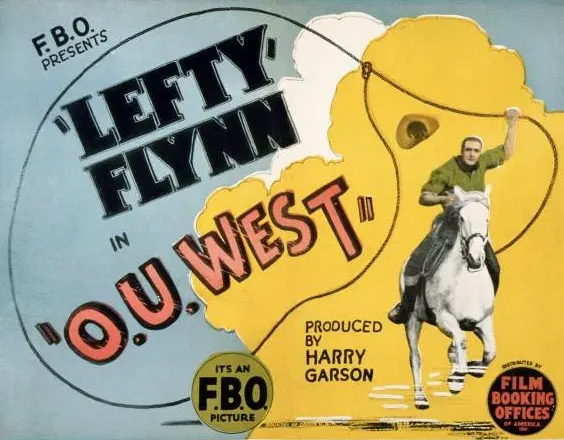
Is O.U. West a hidden gem of the silent era? Short answer: No, but it remains a fascinating, if deeply flawed, sociological artifact of 1920s American masculinity.
This film is specifically for historians of the silent Western and those who enjoy the 'Easterner-goes-West' trope in its rawest form. It is emphatically NOT for viewers who are sensitive to the dated and often offensive racial caricatures common in 1920s cinema.
1) This film works because of Maurice 'Lefty' Flynn’s physical presence; his transition from a bumbling drunk to a capable rider feels earned through actual sweat and stunt work.
2) This film fails because its narrative relies on a jarringly racist portrayal of the Pullman porter, which serves as a regressive comic relief that distracts from the central drama.
3) You should watch it if you want to see the blueprint for the modern 'dude ranch' redemption story, a theme that would later be refined in films like The Poor Boob.
The character of Oliver U. West represents a specific post-WWI anxiety regarding the 'softness' of the urban American male. When we first see Oliver, he is a mess of silk and stumbles. Unlike the more refined protagonists in The Masquerader, Oliver has no hidden depths at the start. He is a void filled only by his father's money. The film doesn't ask us to like him; it asks us to wait for him to be broken.
The sequence where Oliver arrives at the ranch is played for maximum humiliation. He isn't just out of place; he is an alien. The contrast between his pristine attire and the dusty, utilitarian world of Cass Jones (played with a grizzled stoicism by Fred Burns) is stark. It’s a visual shorthand for the class divide that the Western genre loves to bridge with manual labor.
Flynn’s performance is surprisingly physical. In the scenes where he is thrown from a bucking horse, there is no stunt double to hide behind. You can see the impact of the dirt. This physicality gives the film a weight that its thin script often lacks. It’s a visceral transformation that mirrors the grit found in Manhattan, albeit in a much more rural and rugged context.
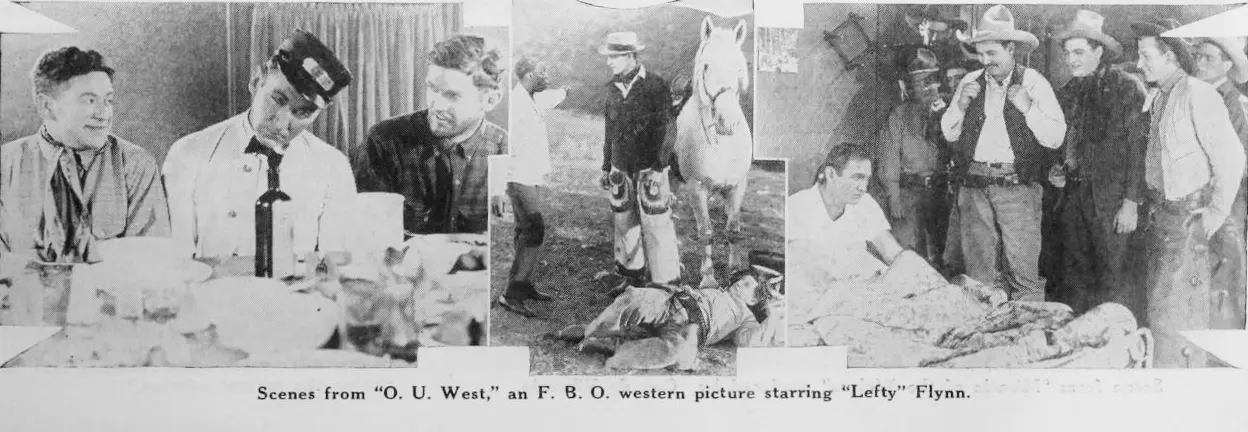
We have to talk about Ray Turner. As the Pullman porter, Turner is relegated to the 'frightened servant' archetype that plagued early Hollywood. His inclusion is meant to provide levity, but for a modern audience, it provides only discomfort. The scene where Oliver gets drunk and decides to take the porter with him to the ranch is treated as a whimsical lark, ignoring the inherent kidnapping and the racial power dynamics at play.
This element of the film is a stark reminder of why some silent films are left in the archives. While Anita Jo or Et Syndens Barn might deal with complex social taboos, O.U. West leans into them without a second thought. It is a brutal, simple sentence: the humor is the film's greatest rot.
The Crawley brothers represent the 'old' West—the lawless, predatory element that the 'new' West (represented by the reformed Oliver) must tame. They are a dissolute clan of cattle thieves, played with a snarling intensity by the Burns brothers (Jim and Edward). Their raid on the Jones ranch is the film's technical high point. The choreography of the cattle rustling is chaotic and fast-paced, utilizing wide shots that capture the scale of the theft.
When Oliver finally rides after them, the film shifts from a comedy of manners into a pure action-thriller. The single-handed subduing of the Crawley clan is, of course, highly improbable. However, within the logic of the 1920s Western, it is the necessary climax of his 'masculinization.' He doesn't just catch them; he dominates them. It’s a far cry from the more psychological conflict seen in Dämon und Mensch.
Direct Answer: Only if you are a student of film history or a Western enthusiast. For the casual viewer, the pacing is erratic and the social politics are a minefield. However, for those interested in the development of the American cowboy archetype, it provides a crucial link between the early shorts and the sweeping epics of the 1930s.
The film captures a moment in time where the West was already becoming a myth. By 1925, the frontier was closed, and films like O.U. West were essentially theme park versions of a reality that no longer existed. This sense of nostalgia is palpable in every frame of the Jones ranch. It’s a manufactured ruggedness that feels similar to the staged aesthetics of A Circus Romance.
Rob Wagner and Helen Broneau’s script is a lean machine, but it lacks the poetic depth of something like Still Waters. The dialogue intertitles are functional rather than inspired. However, the cinematography during the final chase is surprisingly modern. The camera stays low to the ground, capturing the thundering hooves in a way that feels immersive. It’s a technique that would be perfected in the years to come, but here it feels experimental and fresh.
The pacing in the middle section—Oliver’s training—is where the film truly shines. We see the passage of time not through a montage, but through the gradual change in Oliver’s posture and the way he handles his gear. It’s a subtle bit of directing that elevates the film above standard B-movie fare. It reminds me of the character-driven pacing in Farkas, where the environment dictates the man.
O.U. West is a punchy, aggressive piece of silent cinema that is unfortunately anchored by the prejudices of its time. It works. But it’s flawed. If you can look past the caricatures, you will find a rugged action film that understands the appeal of the American West: the idea that anyone can be reborn in the dirt. It isn't a masterpiece, but it is a fascinating look at the birth of a legend. It’s a rough ride, but for the right audience, it’s a ride worth taking.
IMDb —
1917
Community
Log in to comment.