DbcultAccessing Vault...
7/10
Senior Film Conservator
A definitive 7/10 rating for a film that redefined the boundaries of cult cinema. Bet de koningin van de Jordaan remains a cornerstone of transgressive art.
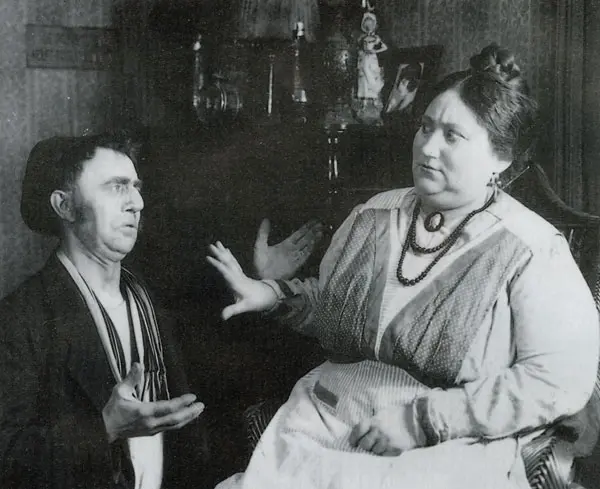
To gaze upon the flickering frames of Bet de koningin van de Jordaan is to invite a sensory assault that transcends the inherent silence of its medium. Released in 1924, this Alfred Harvey-directed piece stands as a monumental, if somewhat grotesque, pillar of Dutch silent cinema. It doesn't merely depict the Jordaan; it exhales the very scent of pickled herring and stagnant canal water directly into the viewer's consciousness. At the center of this swirling vortex of proletarian energy is Beppie Nooy Sr., an actress whose presence is so seismic that she threatens to shatter the very celluloid upon which she is etched.
The character of Bet is often summarized by the reductive descriptors of 'fat, crazy, and rude.' However, such a surface-level appraisal ignores the subversive brilliance of the performance. In an era where cinema often leaned toward the ethereal beauty of the vamp or the fragile innocence of the damsel, Bet arrives like a wrecking ball. She is a woman of immense physical gravity, utilizing her body not as an object of desire, but as a weapon of social navigation. When compared to the psychological grit found in Greed, Harvey’s work shares a similar fascination with the base instincts of humanity, yet it filters them through a specifically Dutch lens of 'gezelligheid' gone sour.
Bet’s fish stall is her throne room. From this vantage point, she dictates the terms of her reality. Her 'rudeness' is a revolutionary act—a refusal to adopt the hushed tones of the subservient working class. While contemporary films like The Man Unconquerable dealt with traditional notions of heroism, Bet offers a different kind of resilience. She is unconquerable not because of moral rectitude, but because she is too loud and too large to be silenced. Her interactions with Jan Nooy and Adrienne Solser create a chemistry that feels less like scripted acting and more like a captured riot. The film captures a specific Amsterdam vernacular in visual form, where a shrug or a menacing glare carries the weight of a thousand insults.
Alfred Harvey’s direction is surprisingly modern in its willingness to linger on the unappealing. There is no soft focus here. The camera captures the sweat on the brow, the scales on the fish, and the grime on the cobblestones. This commitment to a tactile reality places the film in conversation with the naturalistic movements of the time. If one looks at The Storm, there is a sense of elemental conflict; in Bet’s world, the storm is internal, a perpetual tempest of temperament that dictates the flow of the neighborhood. The Jordaan is portrayed not as a quaint tourist destination, but as a living, breathing organism that feeds on gossip and gin.
The pacing of the film is frantic, mirroring the chaotic heartbeat of the market. There are moments of genuine slapstick that rival the energy of Hello, Judge, yet there is always a darker undertone. Bet’s 'madness' is often a response to the claustrophobia of poverty. She lashes out because the world is closing in. This is not the stylized melodrama of The Other Man's Wife; it is a raw, unvarnished look at the survival of the loudest. The screenplay by Alfred Harvey avoids the pitfalls of moralizing, allowing Bet to exist in all her flawed, magnificent glory without the need for a redemption arc that would surely feel hollow.
One cannot discuss this film without acknowledging its place in the lineage of Dutch folk theater. The Nooy family brought a level of authenticity that was rare for the period. While films like The Deemster relied on grand, sweeping narratives of justice and fate, Bet de koningin van de Jordaan finds its epic scale in the mundane. A dispute over a piece of cod becomes a Shakespearean tragedy; a drunken stumble home is an odyssey. This elevation of the common person to the status of a 'queen' is both satirical and deeply respectful of the fortitude required to live such a life.
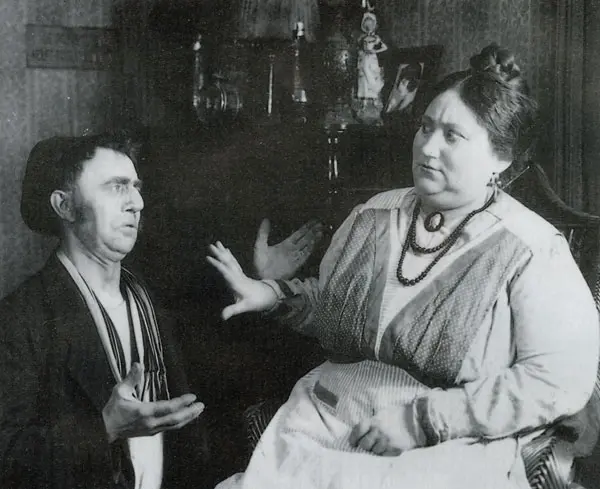
The visual language of the film utilizes the cramped interiors of the Jordaan to create a sense of inevitable collision. Characters are constantly bumping into one another, both physically and metaphorically. This creates a friction that fuels the narrative. Unlike the more isolated character studies in His Convict Bride, Bet is never alone. She is always part of a crowd, a leader of a ragtag army of street urchins and fellow vendors. Her identity is inextricably linked to the collective identity of her neighborhood.
Technically, the film is a fascinating artifact of 1924. The lighting often utilizes the natural, harsh glare of the Dutch sky, which adds to the documentary-like feel of the outdoor scenes. The interior sets are cluttered and lived-in, avoiding the sterile perfection of many Hollywood productions of the same year. When we compare the visual density here to something like Flickering Youth, we see a stark contrast between the polished artifice of the West and the gritty realism of the Low Countries. Harvey understands that the audience doesn't want to see a sanitized version of Bet; they want the dirt under her fingernails.
The editing, while restricted by the technology of the time, shows a keen sense of comedic timing. The cuts between Bet’s outbursts and the bewildered reactions of her victims are executed with precision. This rhythmic quality gives the film a musicality, a 'Jordaan-waltz' of aggression and humor. Even in its most frantic moments, such as the market brawls that remind one of the kinetic energy in Skinning Skinners, there is a clear directorial hand guiding the madness.
Why does Bet resonate nearly a century later? It is perhaps because she represents a primal archetype that cinema has since tried to domesticate. She is the mother who protects, the merchant who cheats, and the neighbor who screams—all wrapped in one formidable package. She does not seek the approval of the viewer. In fact, she seems to actively repel it. This lack of a 'likability factor' is what makes her so modern. She is as complex and contradictory as the protagonist in Drama na okhote, though her drama is played out in the streets rather than the aristocratic estates.
There is a profound sense of 'as a man sows, so shall he reap' in the narrative, much like the themes explored in As a Man Sows, but with a twist. Bet sows chaos and reaps a kind of distorted loyalty. She is the glue that holds her crumbling world together, even if that glue is made of spit and vinegar. The film doesn't ask us to pity her; it asks us to fear her, to laugh with her, and ultimately, to respect the sheer volume of her existence.
In the grand tapestry of 1920s cinema, Bet de koningin van de Jordaan remains a vibrant, clashing color. It is a film that refuses to be forgotten, much like the woman it portrays. It serves as a vital reminder that cinema's power doesn't always lie in beauty or grace, but in the raw, unedited truth of the human spirit. Whether she is throwing a fish or throwing an insult, Bet is undeniably alive. In the end, we are left with the image of a woman who is far more than 'fat, crazy, and rude'—she is the soul of a city, captured in silver halide, screaming at the top of her lungs for all of eternity. It is a work that demands to be seen by any serious student of the medium, standing tall alongside classics like Der Leibeigene or In the Python's Den as a testament to the diverse ways in which the human condition can be explored on screen.
IMDb —
1919
Community
Log in to comment.