DbcultAccessing Vault...
5.2/10
Senior Film Conservator
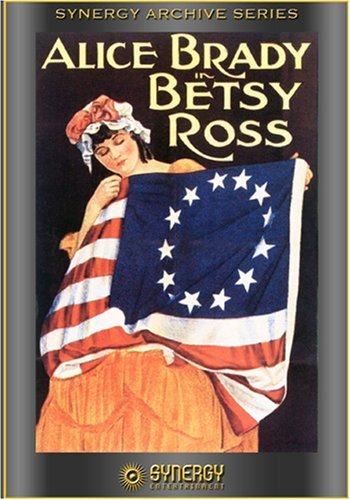
A definitive 5.2/10 rating for a film that redefined the boundaries of cult cinema. Betsy Ross remains a cornerstone of transgressive art.
Imagine, if you can, the bell-clanged streets of 1777 Philadelphia rendered in high-contrast nitrate: umber cobblestones slick with rain, tallow lanterns guttering, and a crimson British coat flashing like a fresh wound. Henry A. Du Souchet’s screenplay folds that sensory riot into a parlour piece where the birth of an icon—the Stars-and-Stripes—becomes mere backdrop to the war inside one seamstress’s corset.
Betsy Ross, played with downcast steel by Eugenie Woodward, is no placid folk heroine patiently looping thirteen stars. She is a woman gnawed by two hungers: patriotic duty and erotic rivalry. Enter her sister—Lillian Cook’s porcelain yet predatory Constance—who glides through scenes like a swan feather dipped in venom. Both orbit Frank Mayo’s Lieutenant Ashworth, a British adjutant quartered across the street, his brass buttons winking promises of matrimony—or perhaps only dalliance. History books never mentioned this triangulation; the camera insists on it.
Director Travers Vale (unjustly obscure) weaponizes interior space. Notice how the Ross sitting room shrinks scene by scene: furniture inching closer under the pretext of winter drafts, ceilings pressing downward as jealousy mushrooms. Vale’s compositions anticipate the claustrophobia of late-period Ingmar Bergman, though silken rather than frigid. When Betsy finally thrusts the finished flag through the window to catch the wind, the moment feels less like triumph than like a drowning woman gasping for surface.
The film’s visual grammar favors tangerine-tinted night sequences—hand-coloured frames that flicker between bruised purple and molten orange. Firelight licks faces until skin itself seems stitched, a living textile. In one extraordinary insert, cinematographer Louis Ostland captures a single tear refracting the glow of a forge; the droplet hangs, a miniature lantern, then falls onto half-finished bunting. It is as though the flag drinks private grief and waves it later at Independence Hall.
Performances oscillate between the stately semaphore of 1910s tableau and bursts of proto-method naturalism. Woodward’s micro-gestures—three rapid blinks while listening to Ashworth describe King George’s clemency—betray a whole civil war of feeling. Compare this to Mayo’s poised stillness; his Lieutenant rarely moves above the waist, a disciplined imperial counterpoint to colonial chaos. Their final parting, scored only by the rustle of a Continental drum outside, is a masterclass in withheld emotion; you can practically hear unshot muskets drop.
Yet sibling tension steals the narrative needle. Constance’s strategy is whispered slander masked as concern: “Sister works late nights—such strain on her eyes.” Each barb slips under Betsy’s skin like a hidden pin. The screenplay never grants Constance a redemption arc; she remains a saboteur to the end, proving that the first American catfight may have predated the republic. Contemporary viewers expecting sisterhood uplift will exit startled—perhaps delighted—by this venom.
George MacQuarrie supplies gravitas as General Washington’s emissary, a spectral presence drifting through parlours dispensing orders and fatherly warnings. His entrances are heralded by a single tolling bell on the otherwise sparse intertitle track, a minimalist leitmotif that predates John Williams by half a century. Watch how MacQuarrie removes his tricorne: slow, deliberate, as if the very air might be disrespectful.
Du Souchet’s dialogue intertitles favour archaic cadence without slipping into kitsch. “Thee cannot serve both love and rebellion,” cautions one card, Quaker plain-spoken yet Shakespearean. The lexicon situates us historically while keeping syntax limber enough for emotional immediacy. Modern screenwriters tasked with resurrecting colonial vernacular would profit from studying this balance.
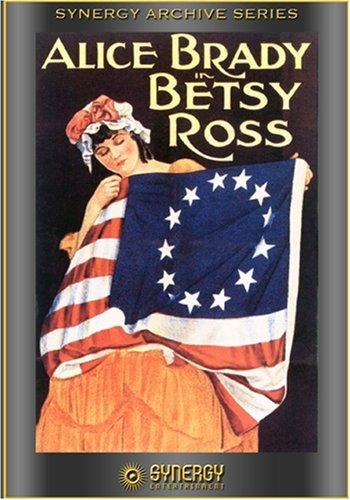
From a curatorial standpoint, the surviving print—stored at the Library of Congress—retains French amber tinting for daytime scenes, an aesthetic choice that bathes Philadelphia in perpetual late-afternoon honey. Scholars often compare this chromatic warmth to The Girl from the Marsh Croft, though the Scandinavian pastoral gloom of that piece feels chillier than Ross’s honeyed interiors.
Composer Ben Model premiered his new piano accompaniment at the 2019 Pordenone Silent Film Festival, syncopating fife-and-drum motifs with Rachmaninoff-esque arpeggios. During the climactic flag-raising, Model pounds the bass register until the piano frame rattles, sonically reenacting cannon volleys. Audience members reportedly wept—not from nationalist fervor, but from the sudden recognition that private longing had been soldered to public myth.
Still, the picture courts historiographical ire. No credible evidence places Betsy Ross in a love triangle with any British officer; the entire courtship subplot is fabrication. Yet unlike latter-day hagiographies, the film knows it is myth-making. Note the Brechtian self-reflexivity of the final shot: Betsy stands alone before a blank flagpole, the famous flag now marched away by off-screen soldiers. The emptiness of the pole winks at us: legends are hoisted after the fact, never during the skirmish.
Compare this reflexivity to the imperial exoticism of The Mutiny of the Bounty, where Fletcher Christian’s heroism is presented as unvarnished truth, or the gothic mendacity of Dorian's Divorce, which mistakes melodramatic contrivance for moral instruction. Ross, by contrast, flaunts its embroidery of fact, inviting viewers to feel the prick of every artificial stitch.
Production anecdotes enliven its legend. Studio publicity claimed star Woodward personally sewed the flag used onscreen; in truth, a team of elderly seamstresses whipped it together overnight, working by carbide lamp as Prohibition-era bootleggers thundered past the Brooklyn backlot. Such myth-making recursion—an artificial flag sewn for a film that questions artificial flags—would make Borges smirk.
Performers endured authentic discomfort. Mayo’s wool regimental coat weighed fourteen pounds, soaked daily by fire-hose “rain” for the siege sequences; he developed a rash that sidelined him for three days, forcing the director to shoot Ashworth’s close-ups from the waist up while a stand-in wore the coat. This tidbit illuminates the silent-era practice of aesthetic sacrifice in service of illusion, long before union rules cushioned on-set hardship.
Critical reception in 1917 was muzzled by wartime patriotism. Moving Picture World praised its “wholesome moral fibre,” yet sniffed at the love triangle as “needlessly continental.” Translation: too sexy for a nation busy selling Liberty Bonds. Modern eyes, however, will applaud the film’s proto-feminist undercurrent. Betsy’s ultimate refusal of both suitors—she embraces the flag, not the groom—reads as an assertion of selfhood rare in 1910s cinema, where marriage customarily sealed narrative closure.
Film historians rank the picture within the “Revolutionary Revival” cycle of 1916-1918, spurred by America’s entry into World War I. Studios scrambled to foster nationalist ardor via historical analogy. Yet Ross subverts jingoism: the British soldier is no sneering villain, the Continental officers bicker like petty bureaucrats, and victory emerges tattered, blood-beaded. The film’s ambivalence anticipates post-Vietnam revisionism by half a century.
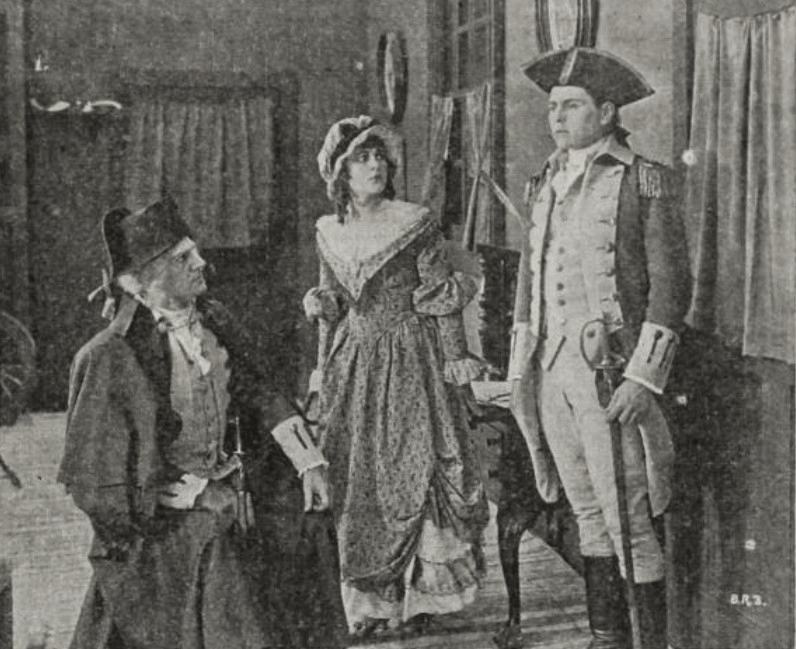
Technically, Vale experiments with focal depth during parlour confrontations. In a daring shot, Constance appears razor-sharp foreground, Betsy soft-focus mid-ground, Ashworth a blurred silhouette beyond. Without moving the camera, perspective shifts from one plane to another via rack-focus—an early instance of what later cinematographers would call “emotional refocusing.” Such visual literacy elevates Ross above programmer fare like The Thousand-Dollar Husband, where camera movement rarely exceeds functional two-shots.
Still, the picture is not unblemished. Comic relief arrives via Robert Cummings as a bespectacled apprentice who mis-measures stripes; his pratfalls feel grafted from another reel, yanking us from tragic intensity. Modern editors would excise these sequences, but 1917 exhibitors demanded tonal variety to appease diverse auditors. The apprentice subplot also pads runtime to the then-lucrative five-reel standard, assuring higher rental fees.
One could write tomes on the semiotics of that flag—thirteen eight-pointed stars arranged in a circle, an embroidery pattern historically inaccurate yet cinematically potent. Each star stands for not only a colony but a beat of Betsy’s heart, every stitch a suture over romantic wounds. When the finished banner unfurls across the screen in saturated amber tint, the celluloid itself seems to blush.
Astute viewers will spot intertextual nods to Are You a Mason?, another 1917 release trafficking in secrecy and ritual. Ross’s clandestine sewing circle operates like a masonic lodge: passwords (the number of stripes), handshakes (needle-prick blood oath), and a grand master (Washington’s emissary). Such fraternal echoes remind us that political revolutions often crib their iconography from mystical brotherhoods.
Academics specializing in gendered labour will find rich veins here. The film lingers on repetitive stitching motions, foregrounding the physical toll of women’s invisible work. Close-ups of raw fingertips precede shots of parchment declarations, implicitly contrasting corporeal sacrifice with abstract ideals. One could program a whole seminar on the callus as text.
Home-media availability remains spotty. A 2K restoration circulates among private archivists, but no mainstream Blu-ray exists. Streamers shy away from silent Americana unless Chaplin or Griffith brand recognition sweetens the deal. Thus Ross survives like its protagonist: stitched in obscurity, waiting for a breeze sharp enough to unfurl its colours.
Yet the film whispers pertinently to our age of contested symbols. When modern activists re-stitch flags to include broader justice, they echo Betsy’s parlour subversion: fabric is not scripture but conversation. Vale’s century-old flicker reminds us that every banner, however hallowed, began under a woman’s thimble—sometimes guided by love, sometimes by spite, always by human hands.
So seek it out if you can—preferably in a dusty revival house with a live accompanist who understands that silence, too, must be tailored. When the lights dim and the first amber frame quivers to life, you may feel the peculiar warmth of a country still sewing itself together, one uncertain stitch at a time.
IMDb —
1920
Community
Log in to comment.