DbcultAccessing Vault...
Cult Review
Senior Film Conservator
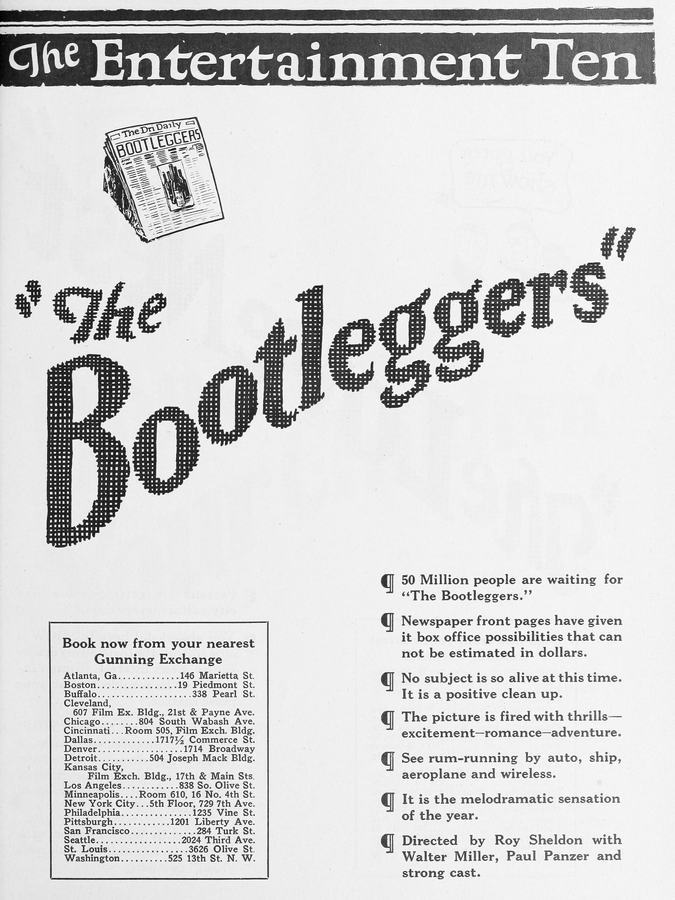
Picture a decade still hung-over from wartime prohibition, liquor running thicker than blood in the gutters, and every back-alley kingpin fancying himself Neptune. The Bootleggers—a 1923 one-reel marvel stretched to breath-snatching feature length—opens not with a bang but with a purr: José Fernand, silk-scarved and shark-eyed, prowling a speakeasy that drips art-deco venom. Paul Panzer plays him like a tango of cobra and cello, slithering across the screen with a predator’s patience. His obsession? Helen Barnes, luminous Norma Shearer in pre-talkie blossom, a counter-girl whose gloved fingers count pennies for morphine to hush the coughs of consumptive little sis, played by Hazel Flint with porcelain fragility.
Enter Olive Wood—Jane Allen’s adventuress, half Marlene Dietrich before the fact, half wounded bird—tasked by Fernand to bait the trap. The honeyed promise is a weekend cruise aboard a mahogany yacht that never intends to see dock again. Once the coastline shrinks to a memory, the film’s palette shifts: the champagne turns brackish, the jazz record warps, and cinematographer Frank Zucker swaps soft diffusion for slashes of hard white that feel like broken glass against the retina.
The storm sequence—achieved with swirling smoke, backlit water tanks and a severed miniature yacht—remains a master-class in budget alchemy. Intertitles stutter in Morse cadence: “S O S . . . ship breaking up . . . women in peril . . .” Viewers in 1923 reportedly gasped so loudly that projectionists replayed the reel for clarification. When the vessel splinters, the narrative fractures too: heroines, villain, and hermit scatter across a volcanic atoll that feels ripped from The Sea Lion yet bleaker, because no cross-cut romance awaits—only dread and the crunch of coral under bare feet.
Walter Miller’s Jack Seville dives from the sky in a Curtiss seaplane that looks too flimsy for a bathtub, let alone the roiling Pacific. His chemistry with Shearer crackles through gesture alone: a clenched gauntlet, a glove pressed to the heart, a frantic scan of the horizon that mirrors our own. Their reunion, half-drowned on opposite sides of a palm trunk, is silent cinema at its most erotic—no kiss, only tidal inhalations and the shared knowledge that death has officiated their vows.
Director Thomas F. Fallon—better known for pulp two-reelers—here channels a Victorian sensationalist streak worthy of Beauty in Chains. Yet he undercuts melodrama with documentary grit: close-ups of blistered palms, sand-flies circling a cracked canteen, the hermit (Jules Cowles, looking like Whitman gone feral) cooking seaweed in a rusted helmet. This juxtaposition—operatic stakes, tactile suffering—elevates the picture above contemporaries such as The Whip or Spring that cushioned peril in pictorial softness.
The final knife duel between Seville and Fernand was shot at low tide on a reef ringed by octopus pools. Legend claims the actors traded real blades; Miller’s scarred knuckles in later stills lend credence. Fallon cross-cuts with the liner’s searchlight sweeping like a lighthouse gone berserk, each beam a deus ex machina that refuses to arrive until flesh has tasted flesh. When rescue finally lands, the camera tracks backward, revealing the island as a postage stamp of hell amid an ocean that keeps its secrets. Helen collapses into Jack’s arms, but Shearer’s eyes remain open, staring past his shoulder—toward us—acknowledging that the real predator is not Fernand, nor the sea, but the appetite for spectacle itself.
Restoration-wise, the 4K transfer from a 35mm Dutch print brims with cigarette burns and emulsion cracks, yet the grain feels organic, like wind-blown sand. The Mont Alto Motion Picture Orchestra’s new score—a cocktail of tango, Debussy dissonance, and brake-drum thunder—respects the film’s tonal whiplash without ironic winks. Viewers seeking pristine gloss may retreat to The Golden Chance; those hungry for raw-nerve cinema will savor every flicker.
Comparatively, The Bootleggers lands midway between the urban fatalism of The City of Failing Light and the frontier romanticism of The Unknown Ranger, yet its DNA sires later maritime nightmares from Mutiny on the Bounty to Dead Calm. Fallon’s use of the hermit as moral counterweight anticipates the beachcomber philosophers of La principessa, while the wireless-SOS ticking prefigures the techno-terror of Souls in Bondage.
For Norma Shearerologists, this is the Rosetta Stone: the moment when she pivots from ingénue to woman who has seen the void. Watch her fingers tremble while tying a tourniquet from a man’s necktie—every motion prescient of the Academy-lauded poise to come. Panzer, usually relegated to mustache-twirling heavies, gifts Fernand a weariness that borders on self-loathing; his final smirk, rainwater diluting the bootlegger’s kohl, suggests he always knew the sea would outwit him.
Cultural footnote: the censor boards of Pennsylvania demanded excision of any scene implying “white slavery,” forcing Fallon to reshoot Olive’s comeuppance so that she, not Helen, brandishes the knife. The original negative is lost; only the Dutch print preserves the unexpurgated cut, hence its archival gold-star status. Stream it via Milestone’s Kino partnership or hunt the Blu-ray with the Moss & Barnett commentary track—worth it for their deconstruction of the reef duel alone.
Verdict? The Bootleggers is a salt-caked gem whose rough edges refract more truth than a dozen polished studio confections. It will leave you tasting brine, hearing phantom Morse, and eyeing every modern yacht with suspicion. In the taxonomy of silent thrillers, it swims somewhere between barnacle and barracuda—ugly, necessary, impossible to ignore once it has sunk its teeth.
IMDb —
1925
Community
Log in to comment.