DbcultAccessing Vault...
5.8/10
Senior Film Conservator
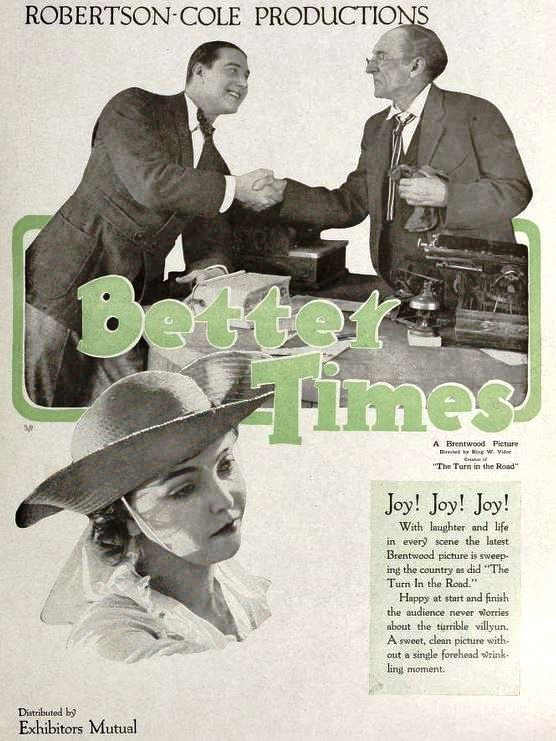
A definitive 5.8/10 rating for a film that redefined the boundaries of cult cinema. Better Times remains a cornerstone of transgressive art.
In the annals of early cinema, where narratives often unfolded with a captivating innocence yet surprising depth, King Vidor's 1919 offering, 'Better Times', emerges as a delightful curio, a testament to the era's burgeoning storytelling prowess. This film, a charming blend of romantic comedy and aspirational drama, invites us into a world teetering on the cusp of the roaring twenties, where ingenuity and a dash of spiritual philosophy might just be the antidote to impending financial ruin. It's a narrative that, despite its century-old vintage, still resonates with a universal appeal, speaking to the power of belief, the resilience of the human spirit, and the unexpected places love can blossom.
At its heart lies Nancy Scroggs, portrayed with an endearing vivacity by Julanne Johnston. Nancy is no mere damsel in distress; she is the resourceful, quick-witted daughter of a hotelier whose establishment, once a grand dame of hospitality, has fallen into a state of regrettable disrepair. The Grand Hotel, as it might have been called, is a character in itself – a decaying monument to forgotten elegance, its faded grandeur mirroring the family's dwindling fortunes. Nancy’s father, likely burdened by the weight of past glories and present struggles, seems to have resigned himself to the hotel's inevitable demise. But Nancy, with a sparkle in her eye and an unwavering determination, refuses to let their legacy crumble. Her spirit is a beacon in the gloom, a stark contrast to the encroaching shadows of bankruptcy. Johnston imbues Nancy with an infectious optimism, making her a compelling protagonist whose every calculated risk feels entirely justified by the dire circumstances.
The catalyst for change arrives in the form of Peter Alstyne, played by Hugh Fay. Peter is the antithesis of Nancy's robust vitality; a young man prescribed a strict regimen of diet and rest by his physician, a testament to the early 20th century's burgeoning, though sometimes rudimentary, understanding of health and wellness. He is fragile, perhaps a hypochondriac, or simply a victim of medical over-caution, his life dictated by the perceived limitations of his physical form. Nancy, encountering him at the train station, sees not a patient, but an opportunity. Here, the film introduces its most distinctive thematic element: Christian Science.
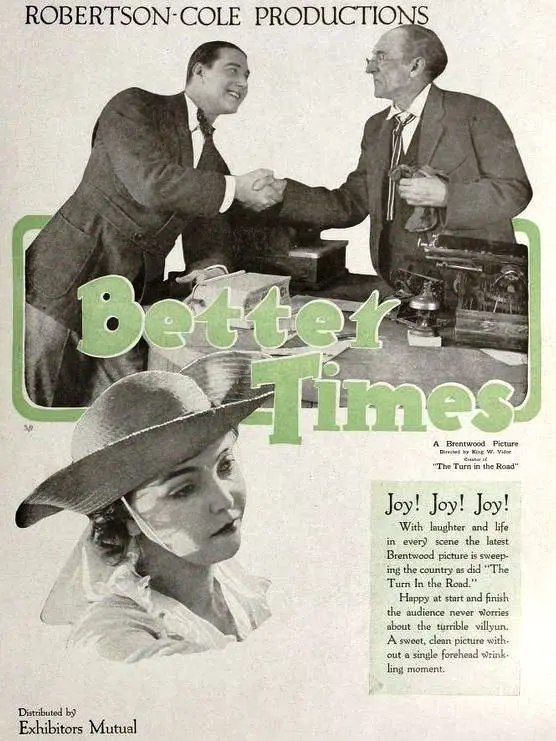
Christian Science, a religious movement founded by Mary Baker Eddy, posited that disease is fundamentally an error of the mortal mind, and that spiritual understanding can heal all ills. In 'Better Times', Nancy, perhaps not a devout adherent but certainly an opportunistic one, wields this philosophy with persuasive eloquence. She convinces Peter that his doctor's orders are mere suggestions, not immutable laws, and that true health stems from a robust mind and spirit, not from abstemious living. Her arguments, framed within the hopeful rhetoric of Christian Science, encourage him to discard his strict diet and embrace the hotel's fare, to live life to the fullest. This audacious gambit is not just a plot device; it's a fascinating look at the cultural landscape of the time, where alternative healing philosophies gained traction, often in direct opposition to conventional medicine. It also highlights Nancy’s profound understanding of human psychology, her ability to tap into Peter’s desire for freedom and joy.
The genius of this narrative choice lies in its dual function: it provides a compelling reason for Peter to stay at the struggling hotel, and it sets the stage for his transformation. As Peter, under Nancy's influence, begins to shed his inhibitions and indulge in the simple pleasures of life – eating what he desires, engaging in activity – his health ostensibly improves. This is, of course, presented with the lighthearted touch of a romantic comedy, rather than a theological treatise. His burgeoning vigor is as much a testament to Nancy's invigorating presence and his own psychological liberation as it is to any specific doctrine. This theme of mental fortitude overcoming physical perceived weaknesses can be seen in other films that explore the power of belief, though perhaps with a more mystical bent, like Occultism, which delves into esoteric practices, or even the fantastical elements of Il sogno di Don Chisciotte where imagination shapes reality. However, 'Better Times' grounds its spiritual exploration in a more accessible, almost pragmatic, context.
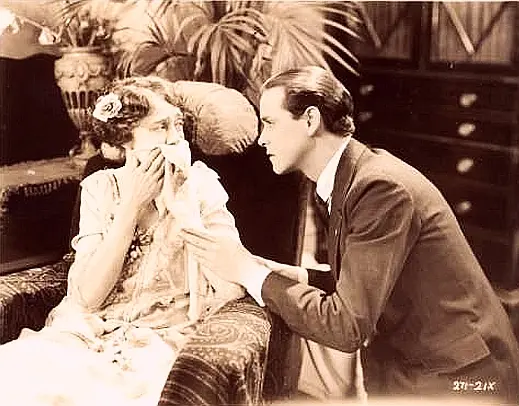
Inevitably, as Peter's health and spirits improve, a tender romance blossoms between him and Nancy. Their interactions are imbued with a charming innocence characteristic of the silent era, yet they convey a genuine warmth and connection. Julanne Johnston and Hugh Fay share a lovely on-screen chemistry, making their journey from persuasive hostess and reluctant guest to enamored couple feel authentic and earned. Peter's transformation is not merely physical; he becomes more confident, more engaged, and deeply appreciative of Nancy's unique blend of audacity and compassion. This romantic arc is the emotional core of the film, providing a satisfying counterpoint to the underlying financial anxieties.
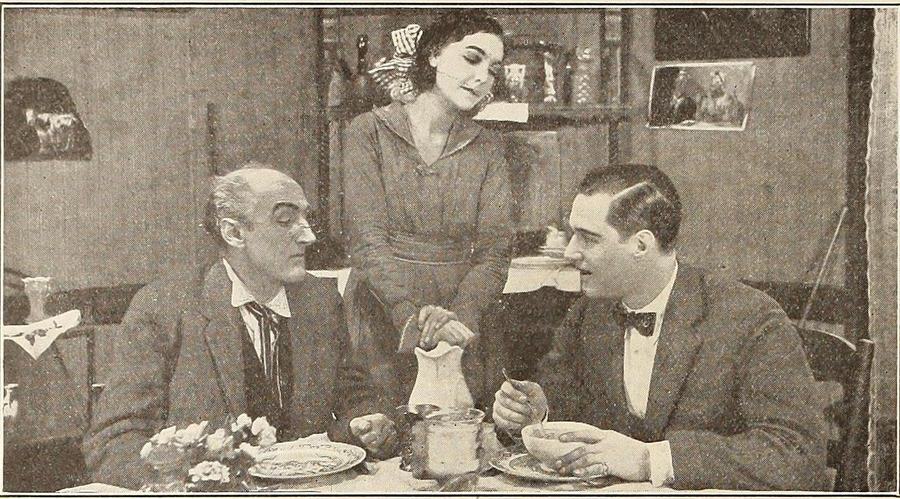
Crucially, Peter's presence and newfound vitality act as a magnet for the hotel. His visible improvement, attributed by Nancy (and perhaps by the community) to the hotel's 'salubrious' environment and her 'healing' philosophy, begins to draw in new customers. Word spreads, and the once-deserted corridors of the Grand Hotel slowly fill with the chatter of guests, the clinking of cutlery, and the hum of renewed prosperity. It’s a classic underdog story, where a clever scheme and a little bit of faith turn the tide against seemingly insurmountable odds. The film celebrates the spirit of entrepreneurialism, particularly when driven by a desire to preserve something cherished. This narrative of a struggling business being revitalized through unconventional means or sheer force of will is a recurring motif in cinema, often seen in comedies where the stakes are high but the solutions are delightfully absurd.
Beyond the central duo, the film is populated by a delightful ensemble. While specific details of their roles are often lost to the mists of time for supporting players, the presence of talents like Georgia Woodthorpe, Zasu Pitts, David Butler, and William De Vaull ensures a rich tapestry of characters. Zasu Pitts, even in her earlier roles, often brought a unique, almost ethereal quality to her performances, a blend of vulnerability and distinctive mannerisms that would later define her comedic persona. One can imagine her adding subtle layers of humor or pathos, even in a brief appearance. These supporting actors, though perhaps not as prominently featured as in later, more complex narratives, contribute significantly to the film's atmosphere and charm, painting a vivid picture of the community surrounding the struggling hotel.
King Vidor, even in this relatively early stage of his illustrious career, demonstrates an emerging mastery of visual storytelling. The silent film era demanded a particular kind of directorial skill – the ability to convey complex emotions, intricate plot points, and character development solely through imagery, pantomime, and intertitles. Vidor, known for his versatility across genres, from war epics like 'The Big Parade' to social dramas, here crafts a narrative that is both lighthearted and emotionally resonant. His direction would have focused on clear blocking, expressive facial performances, and the effective use of setting to amplify the story's themes – the contrast between the hotel's dilapidation and Nancy's vibrant spirit, for instance. The pacing, crucial in silent films to maintain audience engagement without dialogue, would have been carefully orchestrated to build both comedic moments and romantic tension.
The intertitles, the textual inserts that conveyed dialogue, exposition, and narrative progression, would have played a vital role in 'Better Times'. One can imagine them being crafted with a blend of wit and clarity, particularly when conveying Nancy's Christian Science arguments or the romantic exchanges between her and Peter. These textual elements were an art form in themselves, often beautifully designed and strategically placed to guide the viewer's understanding and emotional response. Comparing the visual storytelling of 'Better Times' to other films of its period, one might consider the dramatic intensity of a serial like Les Vampires or the adventurous spirit of The Tiger Woman, both of which relied heavily on visual spectacle and character action to propel their intricate plots. Vidor's approach, even in a lighter film, would have aimed for a similar clarity and impact.
Just as happiness seems to have firmly established itself at the Grand Hotel, and the love between Nancy and Peter deepens, a dramatic turning point arrives. Peter receives a letter, its contents undisclosed, but its implications immediately palpable. This is the classic cinematic device, a sudden twist designed to inject suspense and challenge the newfound equilibrium. The arrival of such a missive, often delivered with an air of foreboding in silent films, signals an external force threatening to disrupt the idyllic world our protagonists have painstakingly built. It's a moment that tests their resolve, their love, and the very philosophy that brought them together.
Without revealing the specific nature of the letter, one can surmise its purpose: to introduce a conflict that forces Nancy and Peter to confront their deepest fears and re-evaluate their choices. Will Peter's improved health be revealed as a temporary illusion? Will his past catch up with him? Or does the letter reveal a hidden identity, a prior commitment, or a financial obligation that threatens to pull him away from Nancy and the hotel? This narrative device, common in romantic dramas and comedies of the era, serves to heighten emotional stakes and provide a climax for the unfolding story. It mirrors similar plot points in films like The Doctor and the Woman, where external pressures frequently challenge personal relationships, or even the dramatic revelations in The Lash of Destiny where fate intervenes with unforeseen circumstances.
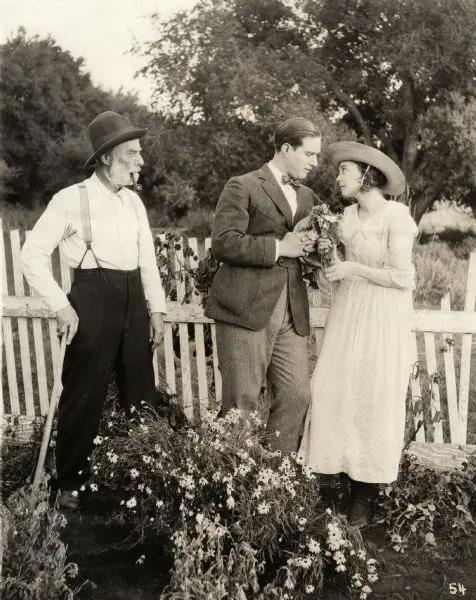
The effectiveness of this plot twist would have relied heavily on the performances of Johnston and Fay, their ability to convey shock, despair, or determination through their expressions and body language. The audience, having invested in their journey, would be left on tenterhooks, eager to see how they navigate this unforeseen challenge. It’s a testament to Vidor's skill as a storyteller that he could build such a compelling emotional arc, culminating in a moment of profound uncertainty, all within the stylistic confines of early silent cinema.
Ultimately, 'Better Times', despite its dramatic interlude, is a film steeped in optimism. It champions the idea that with courage, ingenuity, and a belief in the power of the mind (or perhaps just a good scam), one can overcome adversity. Nancy Scroggs is a memorable heroine, a prototype of the strong, independent female characters who would increasingly populate cinema screens in the coming decades. Her agency in saving her family's business and inspiring Peter's transformation is a refreshing departure from more passive female roles often seen in earlier films, marking a subtle shift in cinematic representation. One could draw parallels to the spirited heroines found in films such as The Antics of Ann or The Girl at Home, where female protagonists actively shape their destinies and often outwit their male counterparts or societal expectations.
King Vidor's early work, even in a seemingly simple romantic comedy, often hinted at the thematic richness and directorial ambition that would define his later masterpieces. 'Better Times' is more than just a historical artifact; it's a vibrant piece of cinematic history that offers insights into societal beliefs, gender roles, and the evolving art of filmmaking during a transformative period. It reminds us that even in the quiet grandeur of the silent era, filmmakers were crafting engaging, thought-provoking stories that continue to entertain and resonate today. The film serves as a charming reminder that sometimes, all it takes is a little unconventional thinking, a lot of heart, and the belief in 'better times' to turn the tide.
Watching 'Better Times' today is an exercise in appreciating the foundational elements of cinema. It’s a journey back to a time when storytelling relied on expressive faces, grand gestures, and the evocative power of light and shadow. The performances, particularly Julanne Johnston’s, are a masterclass in silent acting, conveying a spectrum of emotions without uttering a single word. Hugh Fay’s transformation from a sickly, cautious young man to a vibrant, loving partner is equally compelling. The film's message of hope and the triumph of the human spirit remains timeless, making it a delightful watch for anyone interested in the origins of romantic comedy and the early brilliance of King Vidor.
The film's blend of the serious (financial ruin, health concerns) with the lighthearted (romance, comedic persuasion) is expertly balanced, preventing it from veering into melodrama or farce. Instead, it maintains a consistent tone of optimistic realism, where challenges are met with a can-do attitude. This equilibrium is a hallmark of well-crafted narratives, regardless of the era. The cultural reference to Christian Science, while perhaps viewed differently today, was a significant aspect of early 20th-century American life, and its inclusion in the narrative provides a unique historical lens through which to view the film. It underscores the creative ways filmmakers integrated contemporary social and philosophical trends into their stories, making their works resonate with audiences of the time while also offering fascinating insights for modern viewers.
In conclusion, 'Better Times' is a cinematic gem that deserves to be rediscovered. It's a testament to the enduring power of classic Hollywood storytelling, offering a captivating glimpse into a bygone era while delivering a narrative that is both entertaining and emotionally satisfying. It’s a film that reminds us that even when faced with seemingly insurmountable obstacles, ingenuity, love, and a strong belief in a brighter future can indeed bring about, well, better times.
IMDb —
1928
Community
Log in to comment.