DbcultAccessing Vault...
5.8/10
Senior Film Conservator
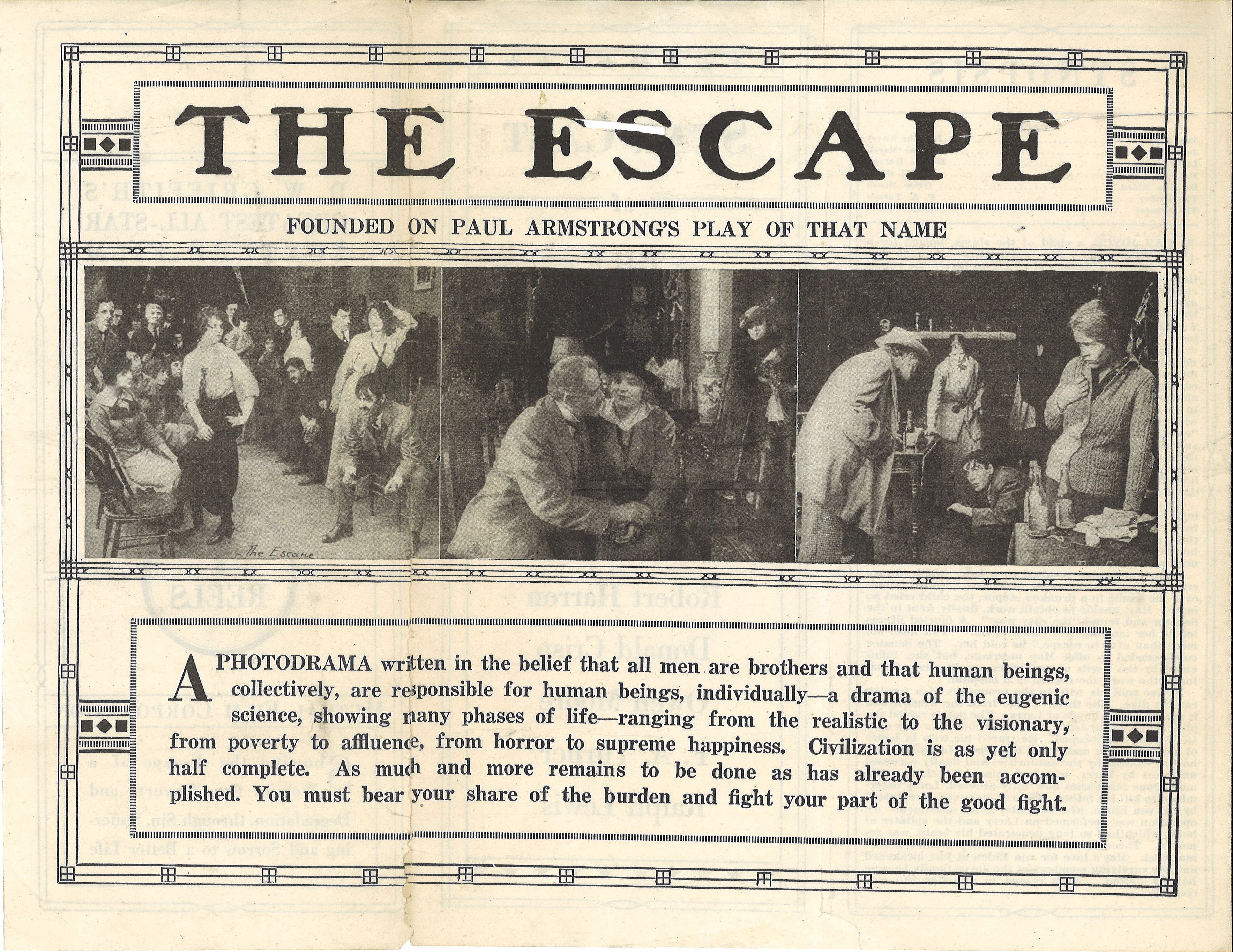
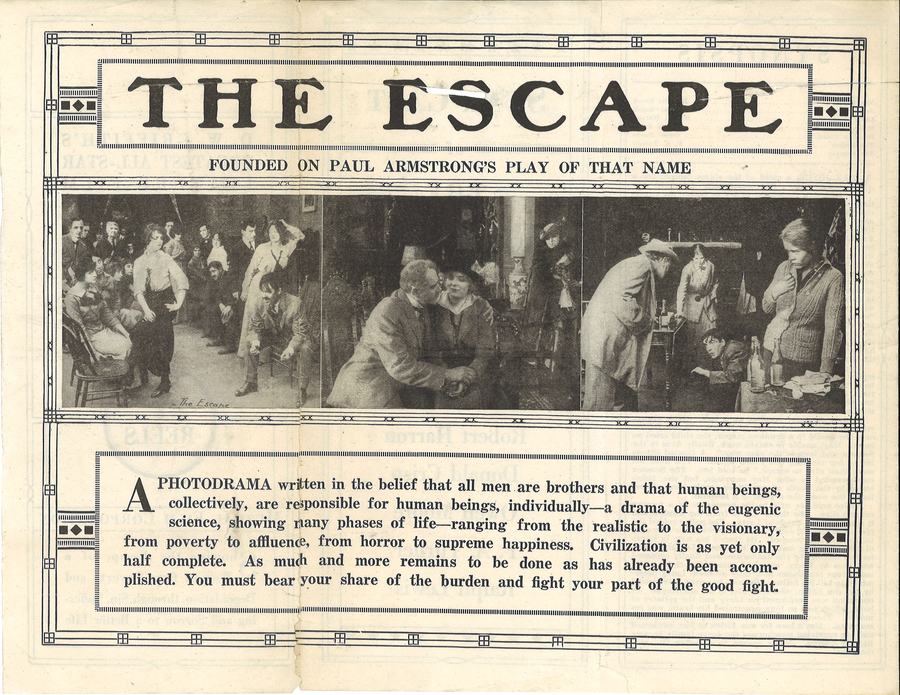
A definitive 5.8/10 rating for a film that redefined the boundaries of cult cinema. The Escape remains a cornerstone of transgressive art.
A zoological fever dream masquerading as drawing-room melodrama, The Escape is the missing evolutionary link between Victorian parlor ethics and the raw Darwinian panic that would soon convulse a continent at war.
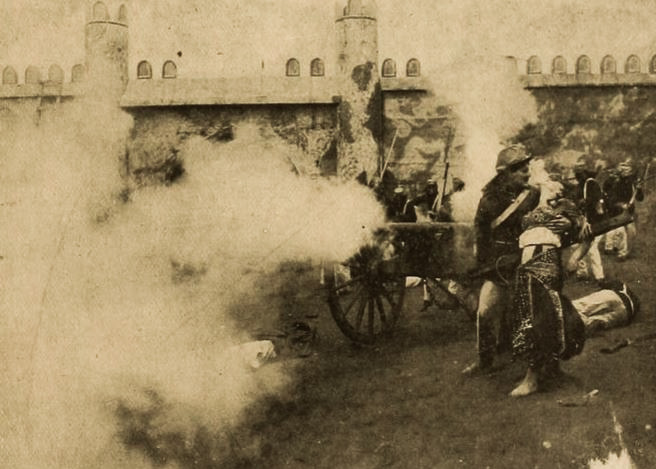
D.W. Griffith, ever the poetic sadist, begins inside a ramshackle zoo where iron bars score the frame like prison music. Donald Crisp’s veterinarian prowls the aisles, clipboard in hand, comparing the rut of elk to the courtship rituals of the moneyed class he will soon invade. The camera—still learning to walk—tilts upward so that a peacock’s tail fills the iris, each ocellus a tiny judgmental eye. Cut to Blanche Sweet’s governess reading The Descent of Man beside a nursery fire, her pupils asleep like unhatched eggs. The match-cut is silent yet deafening: plumage, property, progeny.
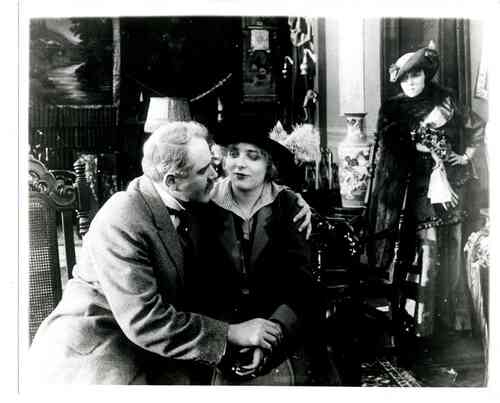
Griffith’s intertitles, usually haiku-brief, here swell into sardonic micro-essays: “In the animal kingdom the female selects; in society she is sold.” The aphorism lands like a slap, immediately contradicted by the spectacle of Robert Harron’s penniless botanist selecting—no, hunting—Blanche’s shy character with the same predatory choreography as the bull elk we saw butting rivals into the dust moments earlier.
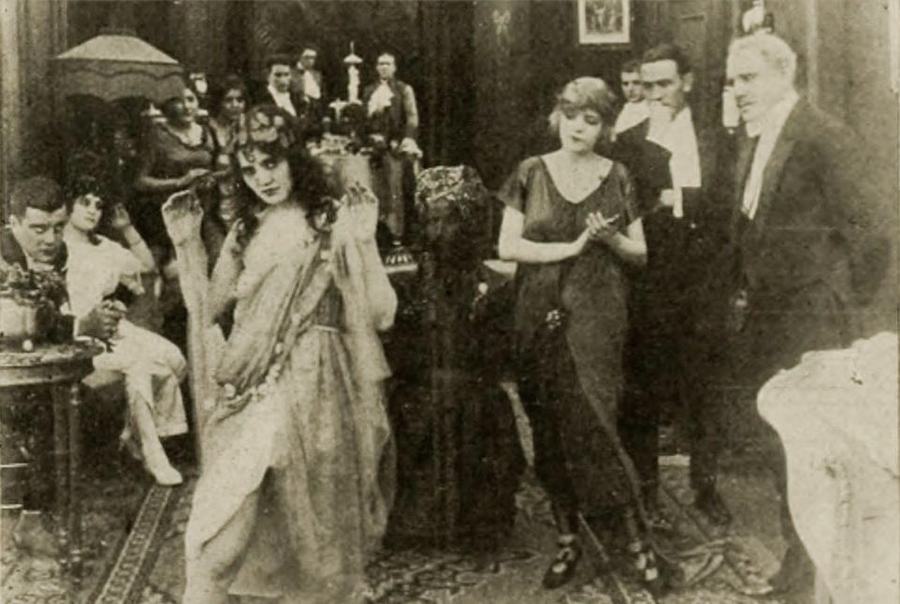
The film’s central set-piece is a five-minute wedding montage that feels like watching natural-selection channel-surf. Top-hatted financiers parade past the camera in profile, their glances measured in thousand-dollar increments. Bridesmaids flutter like a flock of guillemots, each competing for the optimal photographic angle. A string quartet scrapes out Mendelssohn, but Griffith drowns their civility under cross-cuts of fighting stag beetles, a tomcat shredding a rival’s ear, and a mare kicking away a gelding. The intermarriage of human ritual and zoological violence is so blatant it becomes surreal; the audience at the 1914 Strand reportedly gasped when the preacher intoned “If any man can show just cause” while onscreen a ram butted his challenger off a cliff.
F.A. Turner, playing the railroad baron groom, has the rubbery corpulence of a basking sea lion; his moustache twitches whenever the dowry is mentioned. Griffith lingers on Turner’s pink sausage fingers as they close around the bride’s wrist—an image that rhymes with earlier footage of a boa constrictor tightening around a guinea pig. The feminist indictment is unmistakable yet never didactic; Griffith allows the groom a flicker of genuine loneliness, a moment where he stares into a hand-mirror and practices smiling, as if aware that he, too, is trapped by the arithmetic of inheritance.
Meanwhile the jilted sister—played by an uncredited Mae Marsh—delivers a masterclass in silent hysteria. Her breakdown in the moonlit garden is shot through a veil of hanging moss that turns her face into a living lithograph. She clutches a bridal bouquet already wilting, petals falling like tiny white flags of surrender. Griffith pushes the camera so close her nostrils become topographical caverns; when she finally screams, the intertitle simply reads: “Nature, red in tooth and claw.”
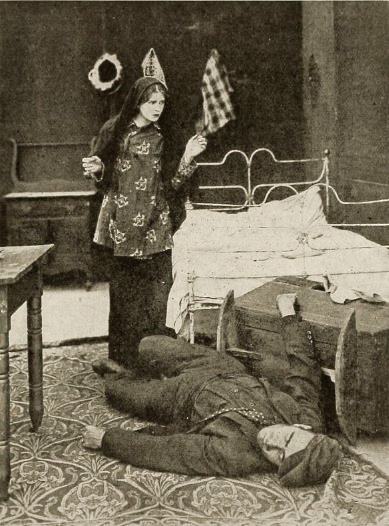
Paul Armstrong’s scenario, allegedly adapted from a one-act play about eugenics, mutates under Griffith’s hand into something far wilder: a cinematic Origin of Species staged inside a department-store window. The escape of the title is twofold: the governess’s midnight flight from patriarchal real estate, and the larger jailbreak of desire from the cages of social Darwinism. Yet Griffith refuses catharsis. The final shot—governess striding across a fog-drenched heath toward an industrial city whose smokestacks belch like mating dragons—offers no promise of liberty, only a different ecosystem of predation.
Technically, the film is a bridge between nickelodeon primitivism and the coming classical grammar. Cross-cutting, already showcased in The Spy, here becomes philosophical: the alternation between human ballroom and animal pen suggests two strips of celluloid copulating to produce a third meaning. The zoo sequences were shot in early morning with natural light; the blacks pool like spilled ink, while the whites threaten to eclipse the image. Interiors, by contrast, are over-exposed, faces bleached into porcelain masks—an inversion that makes domesticity feel more savage than the wilderness.
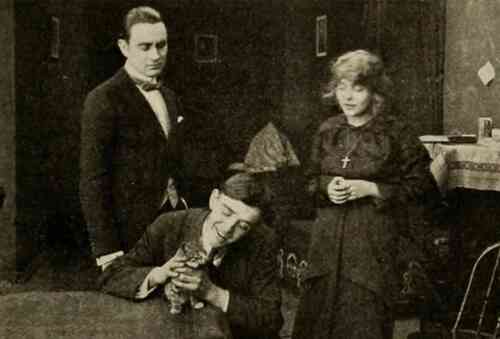
Blanche Sweet, only sixteen during production, carries the film’s moral center in the quiver of her lower lip. Watch the moment she learns the groom’s intention: a three-second close-up where her pupils dilate like a startled doe, then contract into resignation. No theatrical swoon, no tear-bottle histrionics—just the microscopic shudder of a soul rewriting its own survival manual. It is one of the first great silent performances, predating Lillian Gish’s transcendent martyrdoms by a full year.
Donald Crisp, usually consigned to sneering villains, here embodies a tragic anthropologist: a man who comprehends the bestial blueprint yet cannot exempt himself. His final monologue—delivered in a single long take beside a lion’s cage—ranks among the most self-lacerating in early cinema: “We build cathedrals to out-shout the jungle, but the jungle only laughs in our blood.” Crisp’s voice, supplied by the theater’s live lecturer, reportedly cracked with genuine grief; a surviving review notes that several women in the orchestra seats removed their wedding rings during the speech.
Comparative context enriches the experience. Where Tess of the Storm Country sentimentalizes rural virtue and Leah Kleschna glamorizes criminal rebellion, The Escape refuses both sentimental pity and outlaw romance; it posits civilization itself as the most refined form of captivity. Even Griffith’s own later The Typhoon retreats into Orientalist exoticism, whereas here the exotic locale is the drawing room.
The score for the 1914 release was a chaotic affair: a medley of Saint-Saëns’s Carnival of the Animals punctuated by locomotive sound-effects synced to the groom’s entrance. Modern restorations favor a minimalist approach—single cello looping a four-note motif that gradually detunes to echo the characters’ moral disintegration. Either way, the film’s sonic afterlife testifies to its unsettling power: it demands accompaniment because silence itself feels predatory.
Censorship boards in Chicago demanded the excision of the intertitle “Marriage is the only auction where the goods congratulate the buyer.” Boston censors objected to a brief shot of mating tortoises. Yet the most subversive element survived every cut: the implication that spectators themselves, munching peanuts in the dark while ogling human misery, are the true zoo animals. Griffith positions the camera behind wrought-iron railings during the climax so that the audience is literally framed as the cage.
Contemporary echoes reverberate. Pawel Pawlikowski’s Cold War borrows the heath-walk finale; Yorgos Lanthimos’s The Lobster lifts the human-ancourtship metaphor and stretches it into absurdist horror. Even the Marvel industrial complex owes a debt: the concept that every romantic decision carries species-level stakes first crystallized here, in a one-reel sideshow turned philosophical stick of dynamite.
Restoration notes: the only surviving print, housed at the Cinémathèque française, is missing the reputed “peacock mirror” scene—where the bride studies her painted face while behind her a peacock studies its reflection, creating infinite regress of vanity. Nitrate decomposition claimed 47 seconds; digital reconstruction uses AI interpolation based on production stills, though purists argue the gap enhances the film’s gnawing incompleteness, as if the movie itself were fleeing captivity.
Viewing strategy: watch at dusk with all lights extinguished. Allow the flicker to infect peripheral vision until the boundary between your living-room carpet and the heathland blur. Listen for neighborhood dogs barking at projected shadows—an involuntary canine critique of Griffith’s thesis that instinct always trumps etiquette. When the governess finally vanishes into the fog, resist the urge to replay; instead, sit in the darkness and notice how your own pulse syncs to an ancient mammalian rhythm older than cinema, older than marriage, older than escape itself.
The Escape is not a relic; it is a prophecy written in nitrate and nervure, a reminder that every ring on every finger is a tiny handcuff polished to look like starlight. The film escapes history, escapes genre, escapes even its director’s later self-mythologizing, to land—hooves first—in the present moment, snorting, wild-eyed, impossible to tame.
IMDb —
1922
Community
Log in to comment.