DbcultAccessing Vault...
5.5/10
Senior Film Conservator
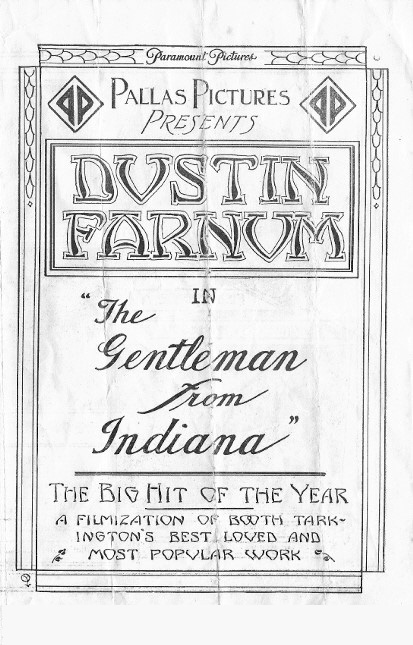
A definitive 5.5/10 rating for a film that redefined the boundaries of cult cinema. The Gentleman from Indiana remains a cornerstone of transgressive art.
Ink, blood, and ballot boxes.
In the sepia churn of 1915, while Europe mined its own marrow, American cinema still nursed on morality plays and bucolic piety. Into that pasture ambles The Gentleman from Indiana, a film whose very title feels like a brass-knuckled handshake. The picture’s DNA splices Booth Tarkington’s Hoosier humanism with the adrenalized syntax of early feature-length melodrama, yielding a curio that is at once stump-speech sermon, crime exposé, and valentine to the fourth estate.
Frank Lloyd, not yet the maritime laureate of Mutiny on the Bounty fame, directs with a newspaperman’s eye for deadline urgency. His camera prowls the plank sidewalks of Plattville like a beat reporter chasing sirens. The script, co-penned by Julia Crawford Ivers, distills Tarkington’s serialized prose into a lean arc that begins with a football stadium’s roar and ends amid clattering typewriters and election-night bonfires.
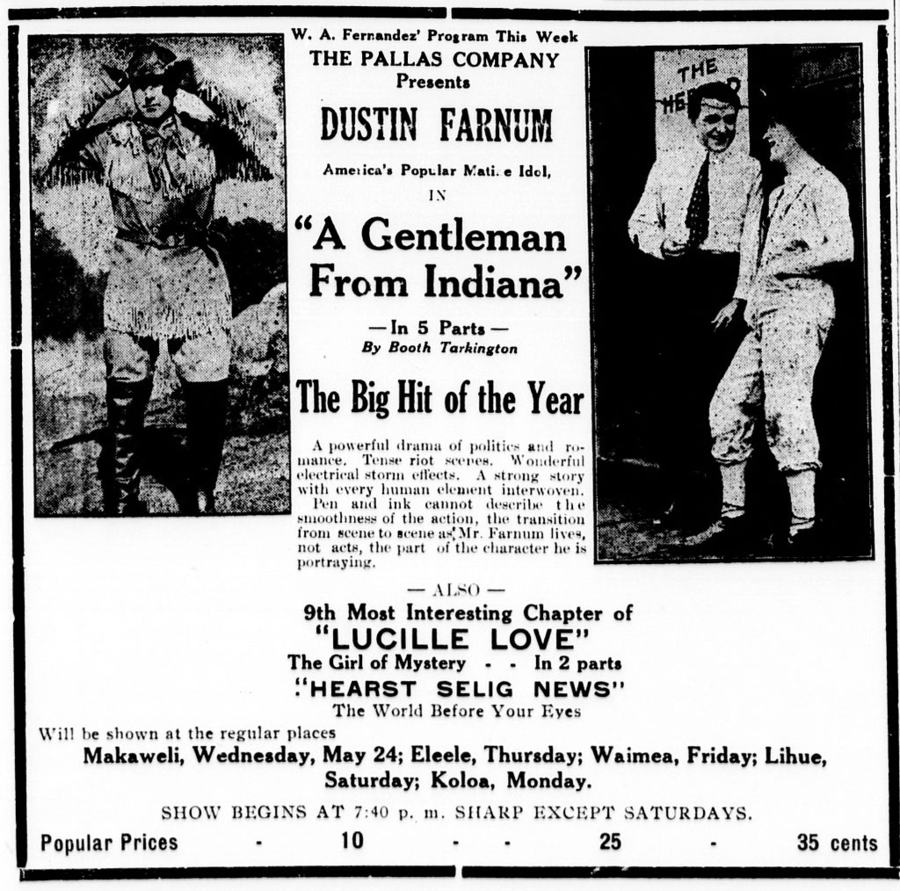
John Harkless—played by Dustin Farnum with the lank swagger of a young state senator who still remembers how to throw a forward pass—exudes that distinctly American alloy: part athlete, part preacher, part huckster. Farnum’s physiognomy, all hawkish cheekbones and prairie-sky eyes, carries the moral burden of the tale without sanctimony. When he strides into the ramshackle offices of the Herald, one sees not mere opportunism but a quasi-religious vocation: the conviction that ink can be baptismal water.
Enter the circus: brass bands, sawdust, candied almonds—and, beneath the spangles, a movable casino. Lloyd films the midway at twilight, kerosene lamps flaring like fox eyes, the Ferris wheel a halo against the indigo. In a bravura tracking shot (achieved via a hand-cranked dolly pushed on railway ties), we glide past shills hawking “lucky rings” until we land on the roulette table where corn-fed farmers hock pocket-watches for another spin. The sequence’s chiaroscuro—deep shadows swallowing faces whole—anticipates the carnival noir of Shadows of the Moulin Rouge by a full decade.
Harkless’s exposé runs under the headline “THE MIDWAY GRAVEYARD,” words that throb in superimposed double exposure over tombstones. Censors in Chicago clutched their pearls; exhibitors in Des Moines cheered the box-office draw of righteous indignation.
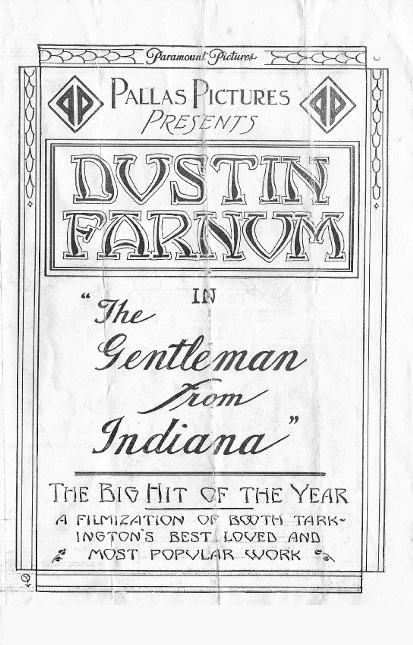
Violence detonates withExpressionist abruptness. Harkless, strolling home beneath constellations the size of silver dollars, is encircled by White Caps—hooded nightriders whose costumes stitch together Klan iconography and frontier banditry. The beating is staged in silhouette against a barn wall; the assailants become a single hydra, axe handles rising and falling like pump handles. Intertitles flash: “DEATH TO THE MEDDLER.” For ninety seconds the film dangles on the precipice of snuff.
Word of his demise ricochets via switchboard and telegraph; vigilantes pour into town, their torches dripping tar. Lloyd cross-cuts between the swelling mob, the fugitive White Caps, and the emergency-room ether where Harkless—lips sewn with catgut—whispers “Not yet.” The montage is Griffith-like but sans Birth of a Nation’s poisonous romance; here the crowd’s wrath is misdirected, not glorified.
If Harkless embodies muscular morality, Helen Sherwood (Winifred Kingston) incarnates cerebral resistance. Once news of John’s survival leaks, Helen commandeers the Herald’s composing room, her gloved fingers rearranging type like chess pieces. She crafts a front-page ballot insert—technically legal—that reprints McCune’s seditious speeches beside Harkless’s reform platform. The trick: every newsboy is instructed to fold the paper so the voter sees only John’s plank first. The sequence, shot in real time with actual linotype machines clanking, exudes a tactile eroticism: paper rolls, ink balls, the metallic scent of hot lead.
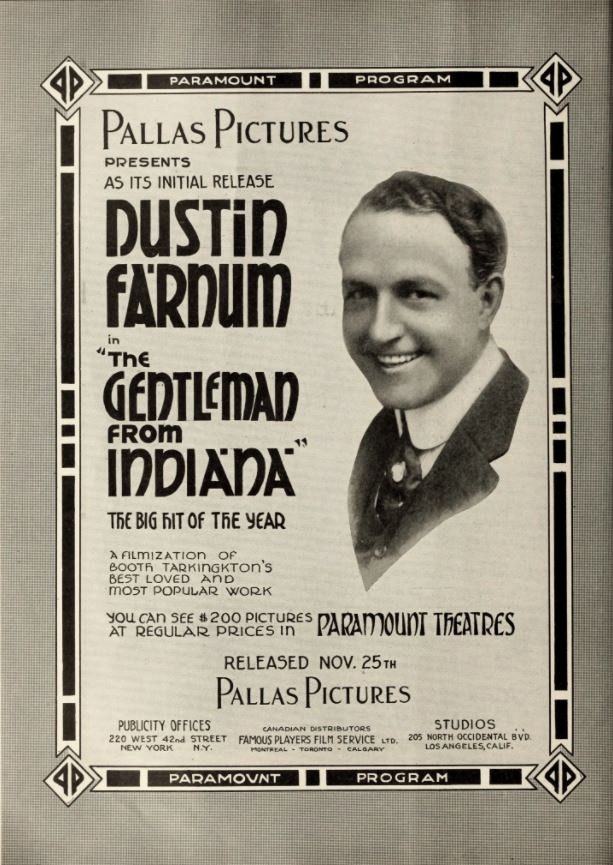
Kingston, often dismissed as merely “the leading lady,” here wields a proto-feminist authority that rivals the political shrewdness of Tarkington’s later Alice Adams. Her performance is a masterclass in subtext: a raised eyebrow when a politico calls her “little lady,” the way she cradles a typewriter key like a revolver trigger.
Cinematographer Jacob Abrams (also an uncredited actor) lenses Indiana as if it were a Dutch canvas: cumulus clouds tower like cathedral spires over corn stubble; twilight soaks the horizon in a bruised violet that makes the orange of campaign torchlights scream. Tinting alternates between amber for interiors—suggesting both hearth warmth and press-room lamp smoke—and viridian for nocturnal exteriors, a chromatic cue that danger lurks in the pastoral.
Yet the film’s tonal pivots can induce whiplash. One reel closes on Harkless near-death; the next opens with a comic interlude of a drunk typesetter chasing a runaway pig through the courthouse. Such genre promiscuity was standard for 1915, but modern viewers may find the oscillation vertiginous—more so than, say, the sustained Gothic gloom of The Isle of the Dead.
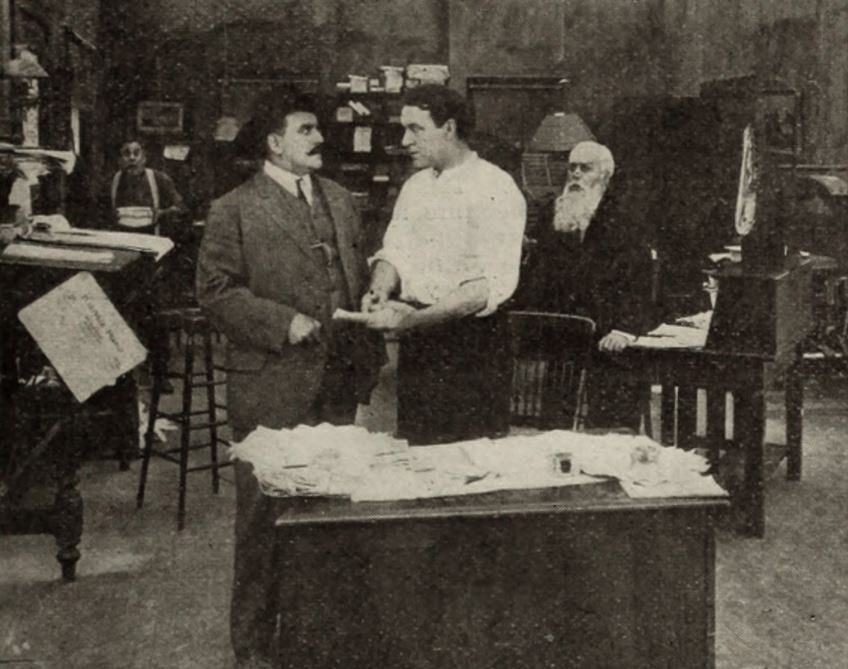
Dustin Farnum’s Harkless radiates the same righteous magnetism that would later propel him through The Man Who Came Back. His oratory cadences—caught in long takes without cutaways—prove that silent-film acting need not devolve into histrionic semaphore. Opposite him, Howard Davies’s Rodney McCune twirls an invisible mustache: slicked hair, walking stick, a carnation always one day from wilt. The character is a template for the urbane grifter, though the screenplay denies him the Shakespearean nuance that later villains would enjoy.
Among the ensemble, Herbert Standing as the town’s Episcopal rector steals every scene with a raised eyebrow or a timely cough; his moral authority is conveyed via posture alone. Meanwhile Juan de la Cruz’s brief turn as a circus strongman foreshadows the proletarian brawn of Germania, though here the part is underwritten, relying on pectoral charisma.
Contemporary exhibitors received a cue sheet urging “Laurendeau’s ‘March of the Hoosiers’ for the campaign rally; Suppé overture fragments during the circus; Dvořák’s ‘New World’ Largo under the hospital vigil.” Modern restorations often substitute Copland-esque pastiche, but the original directive reveals how studios micromanaged regional orchestras. The result: a symphonic nationalism that primes viewers to conflate prairie virtue with manifest destiny.
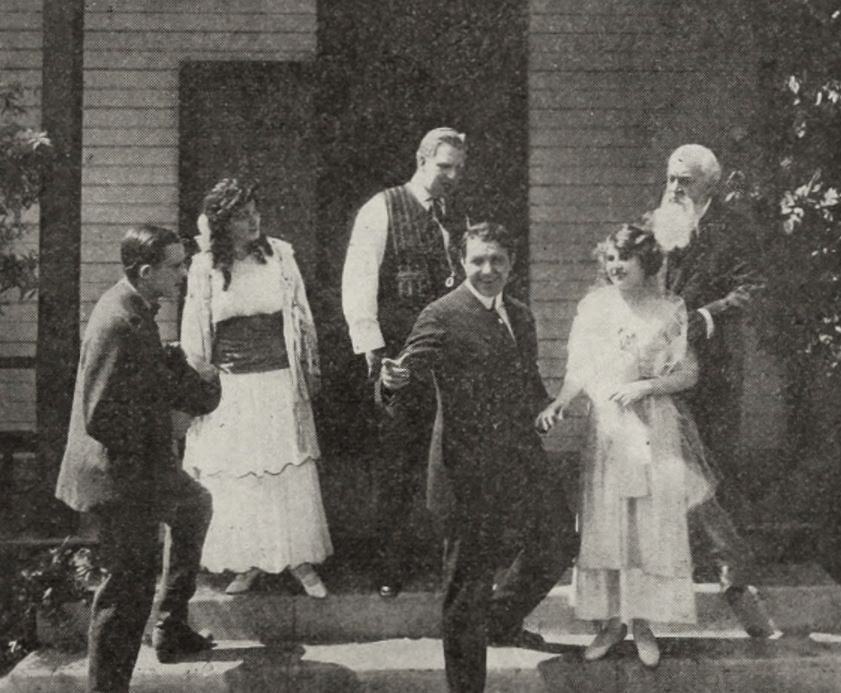
Released months before Woodrow Wilson’s “too proud to fight” speech, the film channels the muckraking spirit of McClure’s Magazine. Yet its resolution—an election won by journalistic jujitsu rather than systemic reform—feels more fable than blueprint. Compare it to the fatalistic determinism of Dzieje grzechu, where corruption devours even the pure. Tarkington and Lloyd prefer the American article of faith: that one honest man plus a printing press equals salvation. The fantasy is seductive, especially when wrapped in Farnum’s all-American jawline.
Helen’s editorial coup d’état anticipates the women’s suffrage victory only five years away. Yet the film hedges its proto-feminist bets: once Harkless recovers, Helen retreats to the balcony on election night, clutching a flag rather than a ballot. The image encapsulates early cinema’s ambivalence—capable of imagining women in command rooms but not yet in Congress. Still, compared to the decorative helplessness of heroines in Hearts and Flowers, Helen’s temporary stewardship feels revolutionary.
No complete 35 mm negative is known; the Library of Congress holds a 28-minute fragment, while Gosfilmofond’s 2014 4K restoration stitches two incomplete Czech prints with an American archival reel. The resulting collage is 67 minutes—roughly 75% of the original runtime. Missing sequences include a purported flashback of Harkless’s college gridiron heroics and a comic subplot involving a temperance lecturer. Tinting was reconstructed via Desmet color separation, yielding the aforementioned amber/viridian palette.
Place The Gentleman from Indiana on the timeline between Griffith’s Battle of Elderbush Gulch and the urban sagacity of Lights of London. Its blend of regional specificity and moral allegory prefigures the folksy universality of Rose of the Rancho, while its faith in journalistic crusades echoes through The Great Leap: Until Death Do Us Part. Yet unlike the brooding determinism of The Destroying Angel, this film insists the angels still win.
Today, when newspapers shutter and circus scams migrate to crypto grifts, the film plays like a rustic prophecy. Its conviction that sunlight—whether via headline or klieg light—disinfects corruption remains both quaint and urgent. Watch it for Farnum’s bruised nobility, for Kingston’s ink-smeared proto-feminism, for Lloyd’s restless camera that already dreams of Scotland’s crashing waves. Watch it most of all to remember when virtue carried a printing press and a prairie sky could still make room for heroes.
Verdict: 8.5/10 — A barn-burning sermon on ink, integrity, and the American myth, scarred by missing footage yet blazing with Progressive-Era verve.
IMDb 4.6
1933
Community
Log in to comment.