DbcultAccessing Vault...
Cult Review
Senior Film Conservator
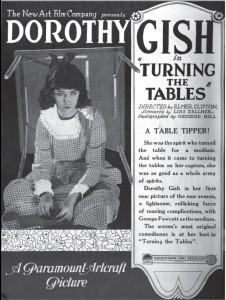
Step into the flickering shadows of early cinema, and you'll occasionally unearth a gem whose brilliance, though muted by the passage of a century, still manages to captivate with its sharp wit and audacious narrative. Such is the case with Turning the Tables, a 1919 silent film that, despite its age, offers a surprisingly modern take on psychological manipulation and the subversion of power. Directed with a keen eye for dramatic tension, this picture transcends its simplistic premise to deliver a compelling commentary on justice, perception, and the cunning of the human spirit.
At its core, the film unravels the plight of Doris Pennington, portrayed with a compelling blend of vulnerability and nascent resolve by Rhea Haines. Doris finds herself ensnared in a cruel machination, committed to an insane asylum by her conniving aunt, whose sole motivation is the acquisition of Doris's considerable fortune. This premise, while familiar in the melodramatic landscape of early 20th-century cinema—think of the societal critiques found in films like The Moral Fabric, which often explored the darker undercurrents of family ambition—is merely the springboard for something far more inventive. The film, written by the astute minds of Lois Zellner and Wells Hastings, doesn't dwell on Doris's victimhood; instead, it swiftly propels her into a position of unexpected agency.
The true genius of Turning the Tables lies in its central conceit: Doris’s audacious maneuver upon her arrival at the asylum. Rather than succumbing to the terrifying reality of her wrongful incarceration, she seizes control of the narrative. With a remarkable presence of mind, she manages to convince the asylum staff that her accompanying nurse, the very agent of her aunt’s nefarious plot, is in fact the patient requiring commitment, and that she, Doris, is the legitimate nurse. This audacious switcheroo is executed with such finesse and conviction that it transforms the film from a simple melodrama into a psychological thriller of sorts, a testament to the power of perception and the fragility of institutional authority.
The film’s strength in this pivotal sequence hinges not just on the cleverness of the plot but also on the nuanced performances. Rhea Haines, as Doris, navigates the treacherous waters of her situation with an evolving intensity. Initially, her fear is palpable, but as the opportunity for reversal presents itself, her demeanor shifts, revealing an inner steel. This transformation is crucial for the audience to believe in her ability to execute such a bold deception. Her counterpart, the unfortunate nurse, whose identity is so cruelly usurped, is played with a growing sense of bewildered terror that perfectly complements Haines’s calculated calm. This dynamic interplay is a masterclass in silent film acting, where gestures, facial expressions, and body language convey the intricate emotional landscape.
One cannot discuss Turning the Tables without acknowledging its place within the burgeoning cinematic landscape of 1919. This was an era of rapid innovation, where filmmakers were still defining the language of motion pictures. The visual storytelling in this film is remarkably sophisticated for its time. The use of close-ups to emphasize Doris’s expressions of fear and then her cunning resolve, or the nurse’s escalating panic, is particularly effective. The framing within the asylum, with its stark, often imposing architecture, contributes significantly to the atmosphere of confinement and psychological unease. While not as overtly experimental as some European films of the period, the film’s directorial choices demonstrate a clear understanding of how to manipulate audience emotion and build suspense through purely visual means.
The pacing, a critical element in silent cinema where intertitles carry much of the dialogue, is judiciously handled. The narrative never lags, moving with a purposeful momentum that keeps the audience invested in Doris’s desperate gambit. Unlike some contemporaries that could feel overly theatrical or reliant on broad gestures, Turning the Tables feels surprisingly understated in its dramatic delivery, allowing the inherent tension of the plot to speak for itself. This economical storytelling makes the film feel remarkably modern, avoiding the excesses that sometimes characterize early features.
The cast assembled for Turning the Tables delivers a collective performance that elevates the material beyond mere genre fare. Rhea Haines, as the beleaguered yet brilliant Doris, anchors the film with her nuanced portrayal. Her transformation from a terrified victim to a resourceful architect of her own liberation is utterly convincing. She eschews overt histrionics, opting instead for a more internal struggle that resonates powerfully with the audience. This kind of understated strength in a female protagonist was perhaps less common than the more overtly heroic or damsel-in-distress archetypes of the era, making Doris a particularly compelling figure. One might even draw parallels to the spirited independence seen in characters from films like Tempest Cody Hits the Trail, showcasing women who defied conventional roles, albeit in very different cinematic contexts.
Dorothy Gish, though perhaps in a role less central than Haines, contributes significantly to the film’s emotional texture. Gish, a celebrated actress of her time, brings a certain gravitas and vulnerability to her character, whatever her specific role may be (the cast list often indicates her presence without full character details in older synopses, but her involvement invariably means a performance of note). Her presence alone would have been a draw for audiences, adding another layer of artistic credibility to the production. The supporting cast, including George Fawcett, Norman McNeil, Eugenie Besserer, Fred Warren, Porter Strong, Kate Toncray, and Raymond Cannon, create a believable ensemble. Their reactions, whether of suspicion, confusion, or eventual conviction, are crucial to selling Doris’s audacious deception. George Fawcett, often seen in authoritative roles, likely plays a key figure among the asylum staff, lending his experience to the film's dramatic weight.
Beyond the immediate thrills of its plot, Turning the Tables delves into profound themes relevant even today. The film brilliantly explores the malleability of identity and the arbitrary nature of institutional authority. What defines sanity or madness? Is it an inherent state, or merely a label imposed by those in power? Doris’s ability to so easily swap roles with her supposed captor highlights the precariousness of these definitions. The asylum, ostensibly a place of healing, becomes a symbol of arbitrary power, where a person’s fate can be sealed by a single, unchecked accusation.
This thematic richness elevates the film beyond a simple chase or revenge narrative. It prompts contemplation on societal structures, the vulnerability of individuals within those structures, and the power of narrative control. In an era where trust in institutions was perhaps more unquestioned, Turning the Tables subtly critiques the very foundations of such authority. One could argue it shares a lineage with later films that question the nature of reality and sanity, even if its immediate dramatic concerns are more grounded in a personal quest for freedom.
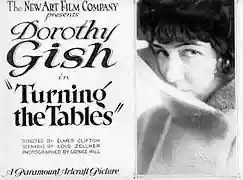
The enduring appeal of Turning the Tables lies in its cleverness. It’s a film that doesn't rely on grand spectacle or overwhelming emotional melodrama, but rather on the sheer ingenuity of its central character and the brilliance of its narrative twist. For a film produced over a century ago, it feels remarkably fresh, proving that a well-crafted story and compelling characters can transcend time and technological advancements.
While it may not be as widely known as some of the epoch-defining blockbusters of the silent era, Turning the Tables deserves renewed attention from cinephiles and historians alike. It offers a window into the narrative sophistication that existed in early American cinema, often overshadowed by the more overt spectacle of epic productions. Its influence, though perhaps subtle, can be seen in countless later narratives that play with mistaken identity, institutional critique, and the triumph of individual wit over oppressive systems. It's a delightful example of how a simple premise, executed with skill and intelligence by its writers and performers, can create a truly memorable cinematic experience.
In a world where cinematic narratives often feel recycled, revisiting a film like Turning the Tables is a refreshing reminder of the timeless power of storytelling. It’s a testament to the fact that even in the nascent days of film, creators were already exploring complex human dramas with remarkable insight and flair. This film stands as a vibrant, if often overlooked, piece of cinematic history, offering both entertainment and food for thought. Its ingenious plot, compelling performances, and subtle critique of power make it a truly captivating watch, a silent film that speaks volumes.
When placing Turning the Tables within the context of its contemporaries, certain distinctions become clear. Unlike the grand romantic sweep of films such as The Belle of New York or the adventurous spirit of A Desert Wooing, this film trades overt spectacle for psychological tension. It doesn't rely on exotic locales or elaborate set pieces but rather on the claustrophobia of its setting and the intricate dance of minds. Similarly, while films like Legion of Honor or The Hostage might explore heroism and sacrifice on a larger scale, Turning the Tables focuses on a more intimate, intellectual form of triumph. The heroism here is one of cunning and quick thinking, a battle of wits rather than swords.
The film’s approach to female agency, while not as overtly political as Britain's Bulwarks, No. 1: Women Munitioners of England, which documented real-life women in wartime roles, nonetheless presents a protagonist who actively shapes her destiny. Doris is not merely a reactive figure; she is a proactive agent of change, a characteristic that resonates with the more independent female characters emerging in cinema during this period. Her struggle is personal, yet it mirrors broader anxieties about freedom and control. Even in comparison to more straightforward melodramas like Her Good Name or The Love Cheat, which often hinged on moral quandaries or romantic entanglements, Turning the Tables offers a unique blend of suspense and satirical insight into the human condition. It’s a film that, through its clever central premise, manages to be both entertaining and thought-provoking, a true testament to the creative vigor of early cinema.
IMDb —
1917
Community
Log in to comment.