DbcultAccessing Vault...
Cult Review
Senior Film Conservator
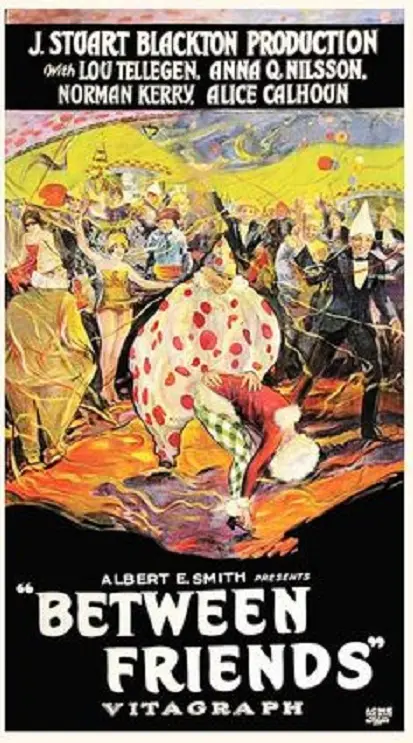
The silent era of the 1920s was frequently characterized by a frantic, almost desperate pursuit of novelty, yet few films managed to synthesize the carnal with the ethereal as effectively as Between Friends. Released in 1924 under the aegis of Vitagraph, this feature serves as a somber meditation on the fragility of human bonds and the weight of unatoned sin. Unlike the kinetic energy found in A Yankee Go-Getter, which relies on a more traditional American optimism, Between Friends plunges headlong into the murky waters of European-inflected psychodrama.
At the heart of the narrative is Jack Greylock, portrayed with a simmering intensity that avoids the histrionics often associated with the period. His betrayal of David Drene is not merely a plot point; it is a fundamental fracturing of the social contract. When Jack and Jessica elope, they aren't just fleeing a marriage; they are attempting to outrun the very concept of consequence. The suicide of Jessica, played with a ghost-like fragility by Anna Q. Nilsson, acts as the film's moral anchor. Her absence is more palpable than her presence, a void that Jack tries to fill with the vibrant, yet equally complex, Cecile.
The casting of Lou Tellegen as David Drene provides the film with a magnetic, sculptural gravity. Tellegen, often touted as the 'world’s most perfect man' during his prime, brings a physicalized grief to the role that elevates the material. One might find a stark contrast between the heavy emotional lifting here and the lighter, more acrobatic performances in The Blue Streak. While the latter celebrates the prowess of the body, Between Friends is preoccupied with the erosion of the mind.
Every great tragedy requires a Iago, and in this instance, we have Quair. His role as the informant is pivotal, transforming a simmering domestic tension into a full-blown existential crisis. The discovery of the past elopement isn't merely a moment of anger for Drene; it is a moment of total disillusionment. This thematic exploration of the 'discarded' friend or lover is a recurring motif in the era, echoed in films like The Discard, though rarely handled with such metaphysical nuance.
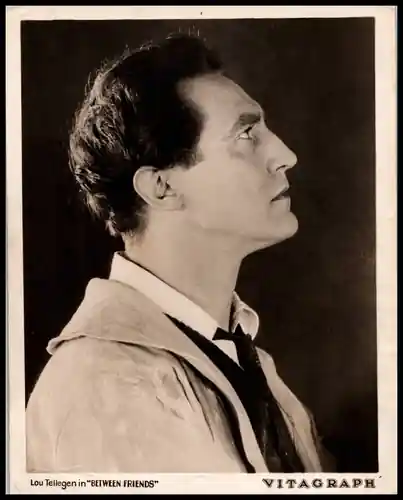
The script, penned by the trio of Gaskill, Blackton, and the renowned Robert W. Chambers, avoids the simplistic 'eye for an eye' resolution. Chambers, known for his supernatural leanings in literature, infuses the screenplay with a sense of the uncanny. The tension builds not toward a duel of pistols, as one might expect in a rugged production like The Brute Breaker, but toward a duel of spirits. Jack’s proposal to end his own life as a form of restitution is a dark, Victorian gesture that feels both archaic and profoundly moving in the context of 1924.
The most controversial and fascinating element of Between Friends is the resolution via mental telepathy. In a contemporary landscape, this might be dismissed as a deus ex machina, but within the spiritualist fervor of the early 20th century, it carried immense weight. The idea that Drene could sense Jack’s impending suicide and intervene through sheer force of will is a testament to the film’s belief in the interconnectedness of human consciousness. This psychic bond is reminiscent of the duality explored in Les frères corses, where shared sensation transcends physical distance.
This spiritual intervention serves to humanize Drene, shifting him from a vengeful husband to a magnanimous savior. It suggests that forgiveness is not a passive act, but an active, almost supernatural force. The visual representation of this mental connection—conveyed through lighting shifts and the expressive faces of Tellegen and Kerry—showcases the sophisticated visual vocabulary Vitagraph had developed by the mid-20s. It stands in stark opposition to the literalism found in Bucking Broadway, where conflicts are resolved with fists and grit rather than thought and grace.
The cinematography in Between Friends utilizes deep shadows and intimate close-ups to mirror the internal states of its characters. The studio sets, while opulent, often feel claustrophobic, symbolizing the social cages Jack and Jessica tried to escape. There is a specific stillness to the scenes featuring Alice Calhoun as Cecile, emphasizing her role as the 'model'—both a physical subject for Drene’s art and a moral ideal for Jack’s redemption. This stillness is a far cry from the slapstick chaos of Jumping Beans or the farcical energy of Why Smith Left Home.
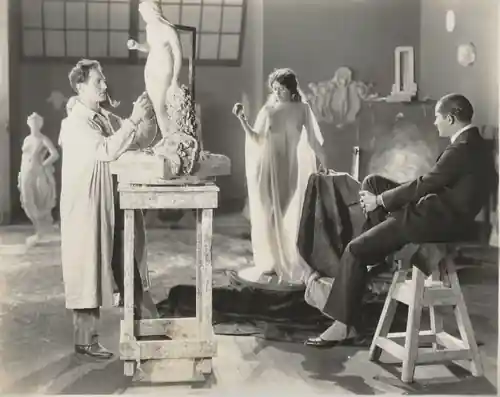
The use of the model-artist relationship allows the film to explore the concept of the 'gaze.' Drene sees the world through the lens of aesthetics, which makes Jack’s betrayal a desecration of beauty itself. When Cecile enters the frame, she represents a chance for Drene to reclaim his art and for Jack to reclaim his humanity. The romantic entanglement is handled with a sophistication that rivals the contemporary dramas of the era, such as A Flirt There Was, yet it maintains a somber undercurrent that keeps it grounded in tragedy.
Ultimately, Between Friends is a film about the impossibility of returning to the past. The 'forgiveness' granted at the end is not a reset button; it is a recognition of shared suffering. The mental telepathy scene acts as a bridge between two broken men, allowing them to move forward without the weight of a further death. This emphasis on psychological resolution over physical action marks the film as a precursor to the modern psychological thriller.
While some audiences of 1924 might have preferred the straightforward heroism of Iwami Jûtarô or the escapist whimsy of Beach Nuts, Between Friends offered something far more substantial. It challenged the viewer to consider the morality of their own secrets and the power of empathy. Even when compared to the more socially conscious Dzhymmi Hihhins, this film’s focus on the internal landscape of its protagonists remains remarkably modern.
In the grand pantheon of silent cinema, where many works have been lost to time or neglect, Between Friends stands as a resilient artifact of a time when the medium was beginning to master the nuances of the human heart. It doesn't need the grand spectacle of Join the Circus or the high-altitude thrills of Up in the Air to hold our attention. Instead, it relies on the quiet intensity of a gaze, the heavy silence of a studio, and the profound realization that the greatest battles are fought within the mind. The performances of Norman Kerry and Stuart Holmes further solidify this as an ensemble triumph, proving that even a story of 'friends' can be as epic as any war or western.
For those seeking a cinematic experience that lingers long after the final intertitle, this 1924 gem remains an essential study in silent-era pathos and the enduring power of the human spirit to overcome its own darkest impulses.
IMDb —
1919
Community
Log in to comment.