DbcultAccessing Vault...
Cult Review
Senior Film Conservator
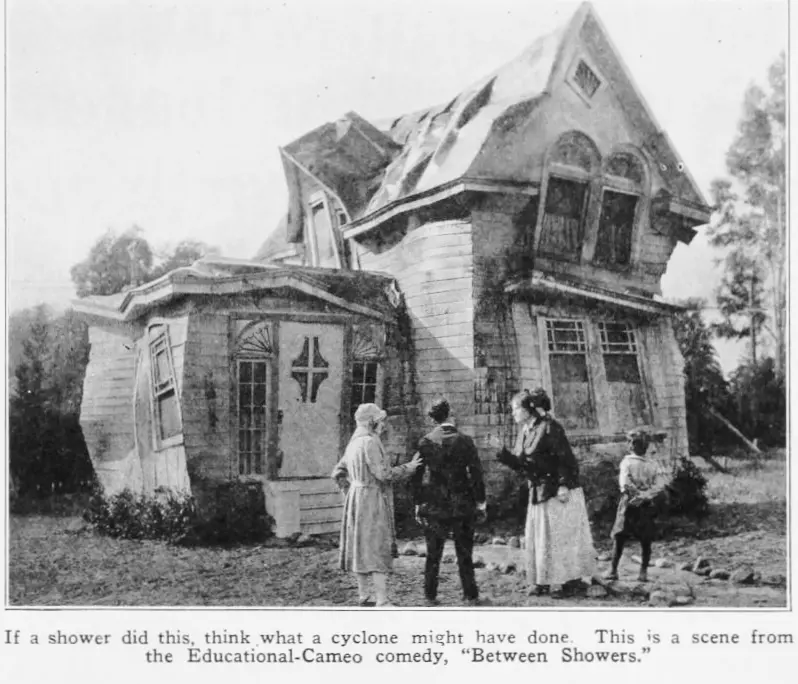
When the title Between Showers first flickers across the silver screen, one anticipates a light‑hearted romance punctuated by a few comedic rain‑soaked mishaps. What unfolds, however, is a meticulously crafted meditation on impermanence, the fragility of aspiration, and the uncanny ways architecture can mirror the psyche of its inhabitants.
Cliff Bowes, the film’s central figure, is introduced not as a dashing hero but as a diligent, almost obsessive, homeowner. The opening montage—slow pans across freshly painted walls, the gentle clink of china being set, the soft rustle of curtains—establishes a visual lexicon of domestic ambition. His purchase of the cottage is less a transaction than a ritual, a symbolic laying of foundations for a future love that remains, at this point, an abstract yearning.
Enter Virginia Vance, portrayed with a poised restraint that belies the turbulence beneath her calm exterior. Accompanied by her stern step‑mother and a mischievous younger brother, Virginia’s arrival is choreographed like a ceremonial inspection. The step‑mother’s critical eye, the brother’s restless curiosity, and Virginia’s measured grace create a triadic dynamic that subtly interrogates class, gender, and familial duty.
The initial tour proceeds with an almost reverent silence, broken only by the occasional creak of floorboards and the soft murmur of polite conversation. The camera lingers on details: a brass lamp casting amber halos, a tapestry depicting pastoral scenes, a window framing a distant, storm‑laden horizon. These visual motifs foreshadow the impending rupture between the interior sanctuary and the external chaos.
As the narrative progresses, the weather becomes an active character. The first drops of rain are captured in a series of close‑ups—water beads sliding down glass, the rhythmic patter on the roof—each sound amplified to underscore the growing tension. The gables, once stately, begin to flutter like the wings of a trapped bird, their wooden slats shuddering against the wind’s relentless assault.
The structural decay that follows is rendered with a blend of practical effects and early cinematic trickery that feels astonishingly modern. The floorboards, once level, swell into undulating hills and valleys, creating a disorienting visual that mirrors the characters’ internal disquiet. The audience is forced to confront the unsettling notion that the very ground beneath the protagonists is unstable, a metaphor for the precariousness of their budding relationship.
When the cottage finally succumbs—its walls collapsing in a cascade of timber and plaster—the film does not resort to melodramatic music or exaggerated acting. Instead, there is a stark, almost clinical silence broken only by the distant rumble of thunder. The aftermath is a tableau of debris, a visual echo of shattered expectations, and a poignant reminder that even the most carefully constructed dreams can be reduced to dust by forces beyond control.
Thematically, Between Showers aligns itself with other silent era explorations of domestic fragility, such as The Firm of Girdlestone and Broken Barriers. While those films examine societal constraints and class divisions, Between Showers turns its gaze inward, interrogating the psychological architecture that underpins personal aspirations. The storm, in this reading, is not merely meteorological but emblematic of subconscious anxieties that erode even the most solid of foundations.
Cliff’s performance is a study in restrained yearning. He never overtly declares his love; instead, his gestures—adjusting a cushion, smoothing a rug, offering a hand to steady Virginia as the floor tilts—communicate an intimacy that is both tender and tentative. Virginia, meanwhile, balances deference to her step‑mother with an undercurrent of rebellion, evident in the way she lingers a moment longer in the sun‑lit parlor, as if to claim a space for herself within the house’s narrative.
The supporting cast, though limited, adds layers of texture. The step‑mother’s disapproving glances serve as a visual counterpoint to the house’s structural decay, suggesting that familial expectations can be as destabilizing as any natural disaster. The younger brother’s playful antics—chasing a stray cat, poking at loose floorboards—inject moments of levity that make the eventual collapse all the more heartbreaking.
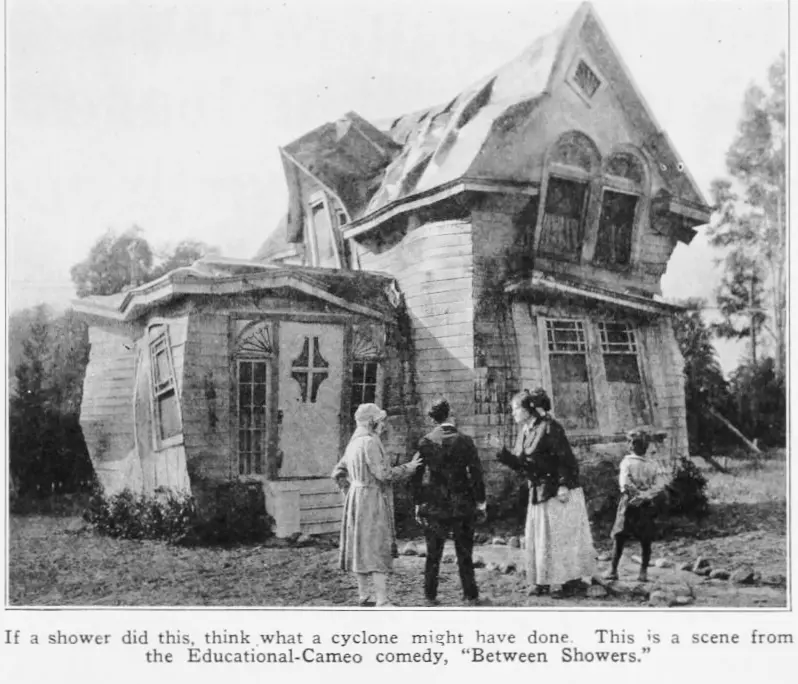
From a technical standpoint, the film’s cinematography deserves commendation. The use of chiaroscuro lighting accentuates the contrast between the warm, inviting interiors and the cold, threatening exteriors. The director’s decision to employ a static camera during the collapse, allowing the audience to witness the destruction in real time, creates an immersive experience that feels eerily contemporary.
Comparatively, the atmospheric tension in Between Showers shares DNA with the horror‑laden ambience of Friday the 13th, albeit without the overt gore. Both films leverage environmental forces to externalize internal dread. Likewise, the narrative’s focus on a single, pivotal setting recalls the claustrophobic intensity of The Knocking on the Door, where the house itself becomes a character.
The film’s pacing is deliberate, allowing viewers to savor each visual cue. The gradual build‑up to the storm mirrors the slow accumulation of tension in a well‑crafted symphony. When the climax arrives, the audience is already primed, making the collapse feel inevitable yet profoundly affecting.
In terms of cultural relevance, Between Showers offers a window into 1920s attitudes toward home ownership, gender roles, and the burgeoning concept of personal agency. The notion that a man must secure a physical domicile before courting a woman reflects the era’s patriarchal expectations, while Virginia’s subtle resistance hints at the early stirrings of feminist consciousness.
The film’s title itself operates on a dual level. On the surface, it references the literal rain that precipitates the house’s demise. On a metaphorical plane, it alludes to the emotional ‘showers’—moments of doubt, fear, and revelation—that fall between the characters’ attempts at connection.
For modern audiences, the film’s resonance lies in its timeless exploration of how external forces—be they weather, societal pressure, or personal insecurity—can destabilize even the most carefully constructed lives. The visual metaphor of a house collapsing under rain remains strikingly relevant in an age where climate anxiety and economic uncertainty dominate public discourse.
If one were to situate Between Showers within the broader canon of silent cinema, it would occupy a niche that bridges romantic melodrama and existential allegory. Its influence can be traced in later works that employ architecture as a narrative device, such as the crumbling mansion in The Wolverine or the shifting set pieces in The Kalda Ruby.
The film’s conclusion—an open‑ended tableau of ruin—eschews tidy resolution, inviting viewers to contemplate the aftermath. Does the collapse signify the end of Cliff’s aspirations, or does it herald a rebirth, a chance to rebuild on more honest foundations? The ambiguity is intentional, a hallmark of the director’s confidence in the audience’s interpretive capacity.
In sum, Between Showers is a masterclass in visual storytelling, thematic depth, and atmospheric tension. Its deliberate pacing, nuanced performances, and symbolic use of weather elevate it beyond a simple period romance, positioning it as a work of enduring artistic merit. Whether you are a scholar of silent film, a lover of atmospheric cinema, or simply a viewer seeking a story that lingers long after the credits roll, this film offers a richly layered experience that rewards repeated viewings.
For those intrigued by the interplay of domestic spaces and emotional turbulence, further exploration of contemporaneous titles such as The Kentuckians, The Perfect Thirty‑Six, and Her Lucky Day will provide additional context and comparative insight.
Ultimately, the film stands as a testament to the power of silence, light, and rain to convey narratives that speak across decades, reminding us that even in the quietest of moments, the most profound dramas can unfold.

IMDb —
1927
Community
Log in to comment.