DbcultAccessing Vault...
5.9/10
Senior Film Conservator
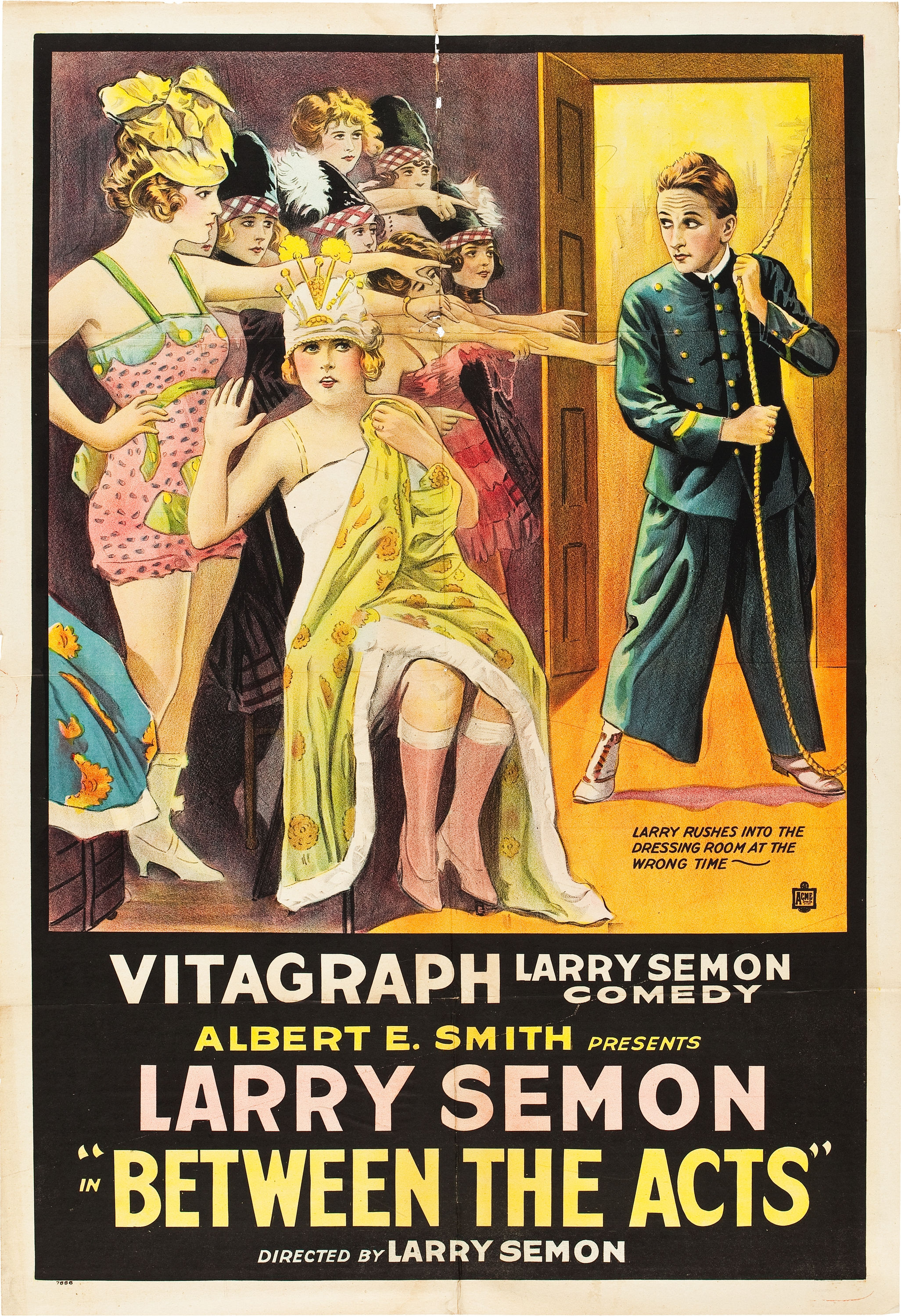
A definitive 5.9/10 rating for a film that redefined the boundaries of cult cinema. Between the Acts remains a cornerstone of transgressive art.
History often remembers the silent era through the melancholic lens of Chaplin or the stoic geometry of Keaton, yet to ignore the explosive, almost nihilistic energy of Larry Semon is to overlook the most visceral segment of early cinema's comedic evolution. In Between the Acts, Semon doesn't just perform; he orchestrates a symphony of systematic destruction that feels more akin to a fever dream than a standard one-reeler. While contemporaries like those in The Child of Destiny were preoccupied with the heavy-handed morality of melodrama, Semon was busy dismantling the very stage upon which such dramas were built.
Semon’s screen persona is a fascinating anomaly—a white-faced, wide-eyed specter of chaos who seems less like a human being and more like a cartoon character that has breached the dimensional veil. In Between the Acts, this quality is weaponized. The setting of the vaudeville theater serves as the perfect crucible for his brand of mayhem. Unlike the ethereal, tragic movements found in Umirayushchiy lebed, where the stage is a site of delicate finality, Semon treats the stage as a playground of physical absurdity. He is the stagehand as a saboteur, the behind-the-scenes ghost who ensures that the show must not go on.
The film’s brilliance lies in its spatial awareness. Semon understands that comedy is derived from the frustration of intent. When we see Frank Alexander—the quintessential 'heavy' of the era—attempting to maintain a semblance of professional poise, Semon’s interference becomes a critique of social order. It is a collision of the immovable object and the irresistible, albeit clumsy, force. This tension is far more kinetic than the static societal observations found in Vanity Fair, replacing drawing-room wit with the blunt-force trauma of a falling sandbag.
The narrative structure of Between the Acts is deceptively simple, yet it functions with the precision of a Swiss watch—if that watch were designed to explode. We are presented with the tiered reality of the theater: the audience’s expectation, the performers' ego, and the backstage reality. Semon exists in the liminal space between these tiers. His character is a catalyst for a chain reaction that exposes the fragility of the theatrical illusion. This meta-textual approach to filmmaking was radical for 1919. While a film like Inside the Lines sought to immerse the viewer in a coherent spy narrative, Semon constantly reminds us of the artifice of the medium.
The physical comedy here is not merely about the fall; it is about the anticipation of the fall. Semon utilizes the verticality of the stage—ropes, pulleys, and trapdoors—to create a multi-dimensional field of play. The interaction with Lucille Carlisle provides a brief, albeit frantic, romantic counterpoint, but the true 'romance' in a Semon film is between the protagonist and the inanimate objects that conspire against him. The props in Between the Acts have more agency than the human extras in A Wall Street Tragedy. They are malicious, unpredictable, and ultimately triumphant.
To understand Semon’s impact, one must look at the landscape of 1910s cinema. Many films of the period, such as The Call of the Cumberlands, were striving for a rugged naturalism or a grounded sense of place. Semon, conversely, leans into the surreal. His work shares more DNA with the distorted psychology of Das Bildnis des Dorian Gray than it does with the standard comedies of his time. There is a touch of the grotesque in his white makeup and the exaggerated physicality of his supporting cast. Frank Alexander’s girth and Nick Cogley’s exasperation are not just character traits; they are visual landmarks in a landscape of absurdity.
Consider the pacing of Between the Acts. It lacks the leisurely development of a film like One Wonderful Night. Semon’s editing is breathless. He was one of the first directors to realize that the camera could do more than just record a stage play; it could enhance the velocity of a gag through precise cutting. This sense of speed creates a visceral reaction in the viewer, a precursor to the high-octane action cinema of the modern era. Even when compared to the exoticism of The Arab, Semon’s vaudeville stage feels like a more dangerous and unpredictable territory.
In analyzing the specific gags of Between the Acts, one notices a recurring theme of the 'unintended consequence.' When Semon pulls a lever, it doesn't just drop a curtain; it sets off a sequence of events that might involve a bucket of water, a misplaced ladder, and a confused musician. This is the comedy of the Rube Goldberg machine. It requires a level of technical mastery that belies its chaotic appearance. While Face Value dealt with the complexities of human identity, Semon deals with the complexities of human clumsiness, elevated to the level of high art.
The film also serves as a poignant historical document of the vaudeville era. It captures the frantic energy of the variety show—the quick changes, the diverse acts, and the palpable tension of live performance. However, Semon subverts this by making the 'acts' themselves secondary to the mayhem. This is a film about the labor of entertainment. We see the sweat, the rigging, and the failure. It is a deconstruction of the 'good gracious' politeness found in Good Gracious, Annabelle, replacing it with a raw, unbridled slapstick that feels surprisingly modern.
Semon’s background as a cartoonist is evident in every frame of Between the Acts. He treats the film strip as a series of panels where the laws of physics are merely suggestions. This creates a sense of liberation. The audience isn't bound by the heavy realism of The Gray Wolf's Ghost or the social constraints of Marga, Lebensbild aus Künstlerkreisen. Instead, we are invited into a world where a man can be flattened, stretched, and tossed through the air, only to bounce back for the next frame. It is a celebration of resilience through the lens of the ridiculous.
The climax of the film, where the theater's internal logic completely breaks down, is a masterpiece of silent choreography. It mirrors the escalating stakes of The Still Alarm, but instead of fire being the threat, it is the protagonist’s own existence that causes the conflagration of comedy. Semon’s character is a human firebrand, igniting every scene he enters. This is not the 'slow burn' comedy of some of his peers; it is a rapid-fire assault on the senses that leaves the viewer as breathless as the characters on screen.
Ultimately, Between the Acts stands as a testament to the sheer audacity of Larry Semon. While he would later move toward more expensive, stunt-heavy features that some argue diluted his comedic purity, these early Vitagraph shorts represent the apex of his creative vision. They are lean, mean, and utterly uncompromising in their pursuit of the laugh. In a world of Danger, Go Slow, Semon chose to go fast, breaking every rule of theatrical decorum along the way.
The film remains essential viewing for anyone interested in the mechanics of laughter. It teaches us that comedy is not just about the joke; it is about the rhythm, the environment, and the willingness to let the world fall apart for the sake of a well-timed pratfall. Semon’s legacy in Between the Acts is one of glorious, unrepentant mayhem—a reminder that sometimes, the best way to appreciate the theater is to watch it burn down (figuratively speaking) from the wings.
Technical Verdict:
A masterclass in silent-era kineticism. Semon’s use of deep focus and multi-planar action sets a benchmark for the slapstick genre that few have since matched. While the narrative is thin, the execution is a dense tapestry of physical ingenuity.
IMDb —
1916
Community
Log in to comment.