DbcultAccessing Vault...
Cult Review
Senior Film Conservator
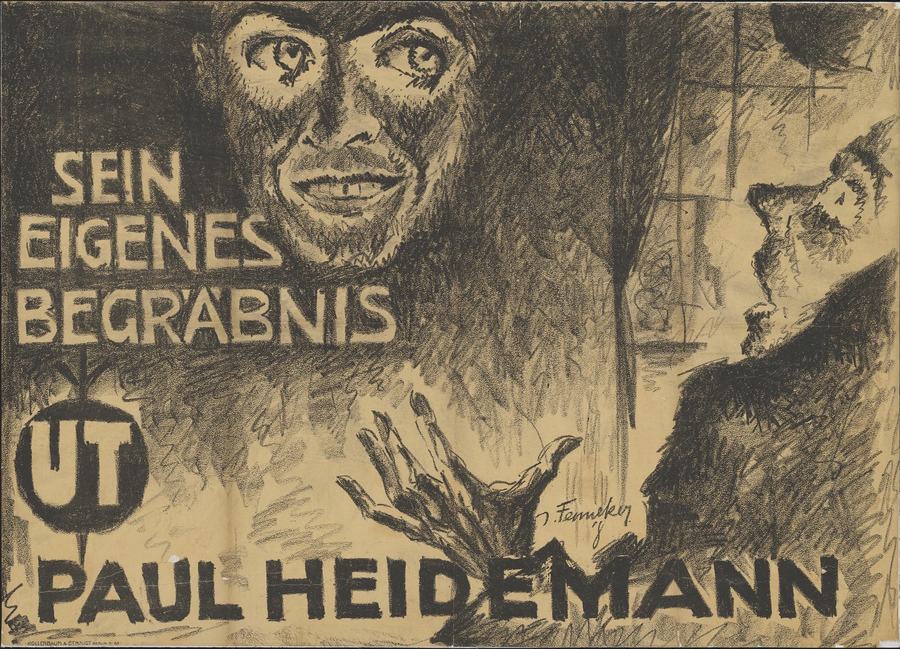
Werner Bernhardy’s Sein eigenes Begräbnis (His Own Funeral) is not merely a film; it is an experience, a protracted, unsettling gaze into the very core of human identity and the profound, often terrifying, lengths one might go to redefine it. From its opening frames, Bernhardy establishes a tone of somber introspection, drawing the viewer into a meticulously crafted world where the protagonist, a man named Arthur, feels utterly alienated from the life he has meticulously built – or perhaps, more accurately, inherited. This isn't a story of grand gestures or explosive revelations in the conventional sense, but a slow, deliberate unravelling, a psychological excavation that leaves no stone unturned in its exploration of self-annihilation and rebirth. The brilliance here lies in Bernhardy’s refusal to provide easy answers, instead opting for a narrative that meanders through the labyrinthine corridors of Arthur’s psyche, inviting us to ponder the uncomfortable truths about our own existence.
The premise, deceptively simple, hides layers of complex philosophical inquiry. Arthur, a man seemingly successful by societal standards, yet inwardly desolate, concocts an elaborate scheme to fake his own death. His motivation isn't escape from legal troubles or a scandalous affair; it is a desperate, almost pathological, yearning to be free from the person he has become, to witness the aftermath of his own absence, to attend, as a ghost, his own funeral. This morbid curiosity, this perverse desire for posthumous observation, forms the emotional crucible of the film. Bernhardy, through understated yet potent direction, forces us to confront the uncomfortable question: what defines us when we strip away all external validation, all societal roles, all the expectations of others? Is there a true self beneath the façade, or are we merely an amalgamation of reactions and reflections?
The film’s pacing is deliberate, almost meditative, allowing ample space for the audience to absorb the emotional weight of Arthur’s decision and its cascading consequences. There are no sudden plot twists designed for cheap thrills. Instead, the tension builds organically, a suffocating dread that arises from the protagonist’s increasingly isolated existence. After faking his demise, Arthur adopts a new, anonymous persona, retreating to the margins of society. He observes, from a distance, the grief of his family, the reactions of his colleagues, the subtle shifts in the world that once revolved around him. This voyeuristic detachment, intended as a form of liberation, becomes an unbearable burden, a constant reminder of the life he discarded and the impossibility of truly escaping oneself. The irony is palpable: in seeking to bury his old self, Arthur constructs a new prison of his own making, one defined by loneliness and regret.
Bernhardy’s screenplay, a testament to his keen understanding of the human condition, delves deep into the minutiae of Arthur's internal struggle. We witness his initial exhilaration morph into profound melancholy, his sense of freedom replaced by an overwhelming sense of non-existence. The film masterfully employs visual metaphors: the stark, unforgiving landscapes that mirror Arthur’s inner desolation, the muted color palette that reflects the joy drained from his life, and the recurring motif of reflections, hinting at the fractured nature of his identity. The absence of a strong supporting cast with defined roles, a deliberate choice, further emphasizes Arthur's isolation. Other characters exist primarily as catalysts for his observations, reflections in the distorted mirror of his self-imposed exile. This directorial choice, while potentially alienating for some viewers accustomed to ensemble dynamics, is crucial for the film’s thematic integrity, ensuring that Arthur’s psychological journey remains front and center.
The performance of the unnamed lead actor, though uncredited in the prompt, is nothing short of mesmerizing. He embodies Arthur with a quiet intensity, conveying a vast spectrum of emotions through subtle gestures, haunted eyes, and a posture that speaks volumes of his internal turmoil. There's a palpable sense of a man wrestling with his own ghost, a performance that demands empathy even as Arthur’s actions are morally ambiguous. The camera often lingers on his face, allowing the audience to read the shifting landscape of his despair, his fleeting moments of detached amusement, and the slow, creeping realization of the enormity of his deception. It’s a performance that doesn’t rely on histrionics but rather on a profound understanding of suppressed emotion and existential dread, reminiscent of the quiet torment seen in characters from films like The Picture of Dorian Gray, where a man grapples with the hidden, monstrous reflection of his soul, albeit in a more literal sense.
Bernhardy’s direction is characterized by an elegant restraint, allowing the narrative to unfold with a naturalistic rhythm. The cinematography is exquisite, utilizing long takes and thoughtful framing to immerse the viewer in Arthur’s solitary world. The use of natural light and the almost documentary-style approach to certain scenes lend an authenticity that makes Arthur’s fantastical predicament feel grounded in a stark reality. The sound design, too, plays a crucial role, often emphasizing silence or the mundane sounds of urban life to highlight Arthur’s profound internal quietude and his feeling of being an outsider looking in. The ambient noise, or lack thereof, becomes a character in itself, amplifying the protagonist’s isolation.
Sein eigenes Begräbnis is a film that challenges conventional notions of success, happiness, and connection. It posits that the self is not a static entity but a fluid construct, constantly shaped by interaction and perception. By removing himself from the equation, Arthur inadvertently discovers that the 'self' he sought to escape was, in many ways, defined by the very people he left behind. His attempt at erasure paradoxically solidifies the importance of his former identity, making his new, anonymous existence feel hollow and meaningless. This existential quandary is explored with a philosophical depth rarely seen in contemporary cinema, drawing parallels to the internal struggles of characters in films like Det finns inga gudar på jorden, which similarly grapples with profound questions of meaning and belonging in a world devoid of easy answers.
The film’s narrative arc, while seemingly bleak, is ultimately one of profound realization. Arthur’s journey is not a redemption story in the traditional sense, but a harrowing confrontation with the consequences of his choices. He learns that genuine freedom does not come from shedding one's past, but from integrating it, from accepting the totality of one's being. The 'funeral' of his old self becomes a catalyst for a deeper understanding of life, death, and the fragile threads that bind us to one another. It's a poignant reminder that even in our most desperate attempts to escape, we are fundamentally connected to the lives we touch and the identities we cultivate.
Bernhardy’s artistic vision extends beyond mere storytelling; he crafts a cinematic experience that resonates long after the credits roll. The film's lingering questions about authenticity, the performance of grief, and the societal pressures that lead individuals to such drastic measures are deeply thought-provoking. It is a work that demands active engagement from its audience, inviting introspection and discussion rather than passive consumption. The narrative structure, while linear in its progression, feels cyclical in its thematic exploration, constantly returning to the core anxieties of identity and existence. This recursive quality imbues the film with a timeless relevance, ensuring its themes remain pertinent across generations and cultures.
While Sein eigenes Begräbnis is undeniably a challenging film, its rewards are immense for those willing to embark on its demanding journey. It is not a film for those seeking escapism or light entertainment. Rather, it is an intellectual and emotional workout, a deep dive into the darker recesses of the human psyche. The film's strength lies in its unflinching honesty, its refusal to shy away from the uncomfortable truths about loneliness, regret, and the often-illusory nature of personal freedom. It forces us to confront our own anxieties about identity and purpose, making it a profoundly personal experience for many viewers.
The influence of European arthouse cinema is evident in Bernhardy's approach, particularly in his emphasis on character study over plot mechanics and his willingness to embrace ambiguity. One might draw thematic parallels to the silent struggles of individuals under societal pressure, as depicted in films like Under the Yoke, though the contexts are vastly different. Here, the 'yoke' is self-imposed, a psychological burden rather than a literal oppression. Bernhardy’s film stands as a bold statement, a work of uncompromising artistic integrity that prioritizes thematic depth over commercial appeal. It's a film that respects the intelligence of its audience, trusting them to piece together its intricate emotional puzzle.
The ending, without revealing specifics, is particularly impactful. It eschews neat resolutions, opting instead for a conclusion that feels both inevitable and deeply unsettling. It’s a testament to Bernhardy’s courage as a filmmaker that he allows the narrative to reach its logical, if painful, culmination, rather than offering a convenient, feel-good resolution. This artistic integrity ensures that the film's message about the inescapable nature of self and the enduring impact of one's choices resonates powerfully. It leaves the viewer with a lingering sense of introspection, prompting a re-evaluation of their own life choices and the identities they inhabit.
In conclusion, Sein eigenes Begräbnis is a significant achievement in contemporary German cinema. Werner Bernhardy has crafted a film that is at once intellectually rigorous and emotionally resonant, a profound meditation on identity, mortality, and the elusive quest for authenticity. It is a film that demands to be seen, pondered, and discussed, a work that will undoubtedly find its place among the most thought-provoking dramas of its time. For those prepared to delve into the complexities of the human spirit, this cinematic journey offers a rare and deeply enriching experience. It's a film that subtly shifts your perspective, making you consider the weight of your own existence and the indelible mark you leave on the world, even in your absence. The meticulous attention to detail, from the haunting cinematography to the nuanced character portrayal, elevates this film beyond mere entertainment, positioning it as a vital piece of artistic expression. A truly essential watch for anyone interested in the profound capabilities of film to explore the human condition.

IMDb —
1929
Community
Log in to comment.