DbcultAccessing Vault...
Cult Review
Senior Film Conservator
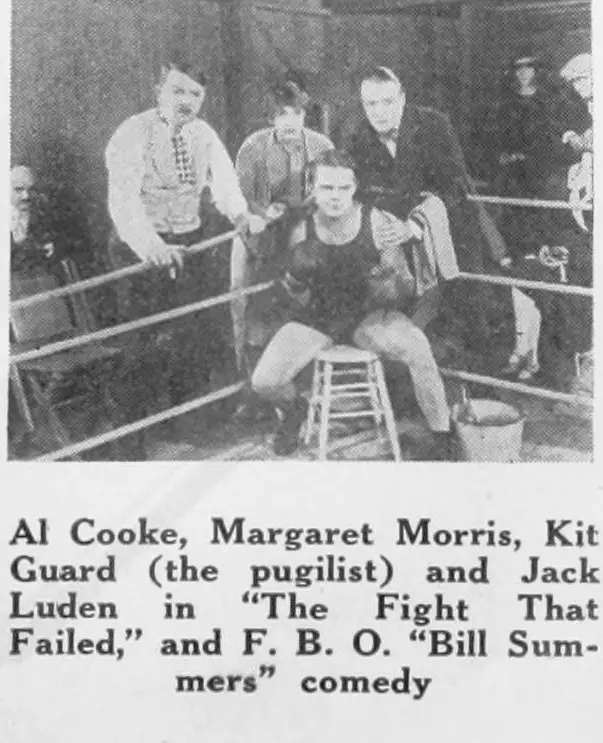
Is The Fight That Failed worth your time in the modern era? Short answer: only if you have a deep-seated appreciation for the mechanical rhythms of 1920s slapstick or a scholarly interest in the 'Fighting Blood' series.
This film is for the silent cinema completionist who finds joy in the physical geometry of a well-timed stumble; it is certainly not for the casual viewer seeking a cohesive narrative or high-stakes drama. It works. But it is deeply flawed by the standards of modern pacing.
In The Fight That Failed, Al Cooke demonstrates a specific kind of athletic anti-grace. While many silent stars utilized their bodies to perform feats of incredible precision, Cooke’s talent lies in the precision of the 'almost.' There is a specific scene where he attempts to dodge a punch, only to lead his chin directly into the glove of his opponent. It’s a moment of choreographed disaster that requires more skill than it appears. Compared to the more polished routines in Andy's Hat in the Ring, Cooke’s performance is grittier and less whimsical.
The direction focuses heavily on the claustrophobia of the ring. The camera, mostly static as per the era’s limitations, acts as a voyeur to the humiliation. There is no glory here. The lighting is flat, emphasizing the sweat and the cheapness of the gym setting. This isn't the romanticized version of the sport we see in The Field of Honor. Instead, it’s a blue-collar comedy that finds humor in the struggle of the underdog who isn't actually very good at what he does.
The Fight That Failed is worth watching if you are studying the evolution of the sports comedy genre. It provides a fascinating look at the tropes of the 1920s, showing how humor was derived from physical pain and social embarrassment. However, for a general audience, the film may feel dated and repetitive. It lacks the emotional resonance of a film like A Boy of Flanders, choosing instead to lean into pure, unadulterated slapstick.
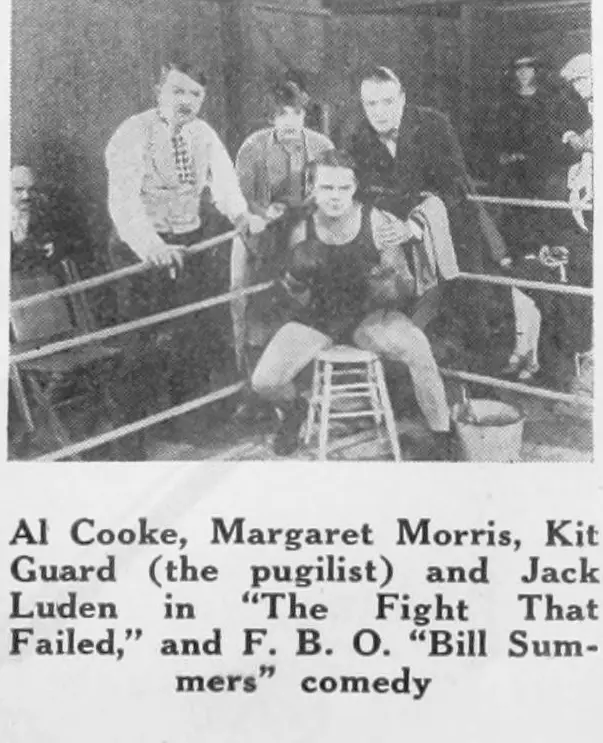
The cinematography in The Fight That Failed is functional, but lacks the experimental flair of contemporary European works like Il castello del diavolo. The shots are wide, intended to capture the entirety of the physical movement within the ring. This wide-angle approach allows the viewer to see the 'gears' of the comedy—how the referee moves, how the opponent reacts, and how Cooke’s character fails to find his footing. It is a masterclass in spatial awareness, even if the visual palette is somewhat monochromatic and dull.
What is surprising is the film's use of pacing. Unlike the frantic energy of Behind the Front, this film allows moments of silence and stillness to build tension. The 'failed' punch doesn't always come immediately; sometimes the film lingers on the anticipation of the failure. This creates a rhythmic quality that is quite modern, anticipating the 'cringe comedy' of the 21st century. It’s painful to watch, and that is exactly the point.
While Cooke is the center of gravity, Margaret Morris provides a necessary counterpoint. Her role is somewhat limited by the conventions of 1920s cinema, but she manages to inject a sense of stakes into the proceedings. When she looks at the ring, we see the concern that the comedy attempts to mask. Kit Guard, as the antagonist, plays his role with a brutish simplicity that makes Cooke’s incompetence even funnier. There is a lack of the psychological depth found in The Oath of Stephan Huller, but for a short comedy, the archetypes are well-defined and effective.
Pros:
- Authentic 1920s atmosphere and grit.
- Exceptional physical comedy timing.
- Short runtime makes it an easy historical watch.
- Interesting portrayal of the 'loser' archetype.
Cons:
- Minimal plot development.
- Static cinematography can feel claustrophobic.
- Lacks the high-budget polish of major studio silents.
- Some gags feel recycled from other shorts of the era.
The Fight That Failed is a fascinating, if minor, entry in the silent comedy canon. It doesn't have the grand scale of Romeo and Juliet or the political weight of Velikiye dni Rossiiskoi revolutsii, but it possesses a singular focus on the humor of the ring. It is a punchy, cynical, and ultimately human look at what happens when the hero isn't a hero at all. It’s a film that understands that sometimes, the most interesting thing in the world is a man failing at his job. Watch it for the history, stay for the beautifully executed stumbles. It works. But it’s a relic.
IMDb —
1922
Community
Log in to comment.