DbcultAccessing Vault...
Cult Review
Senior Film Conservator
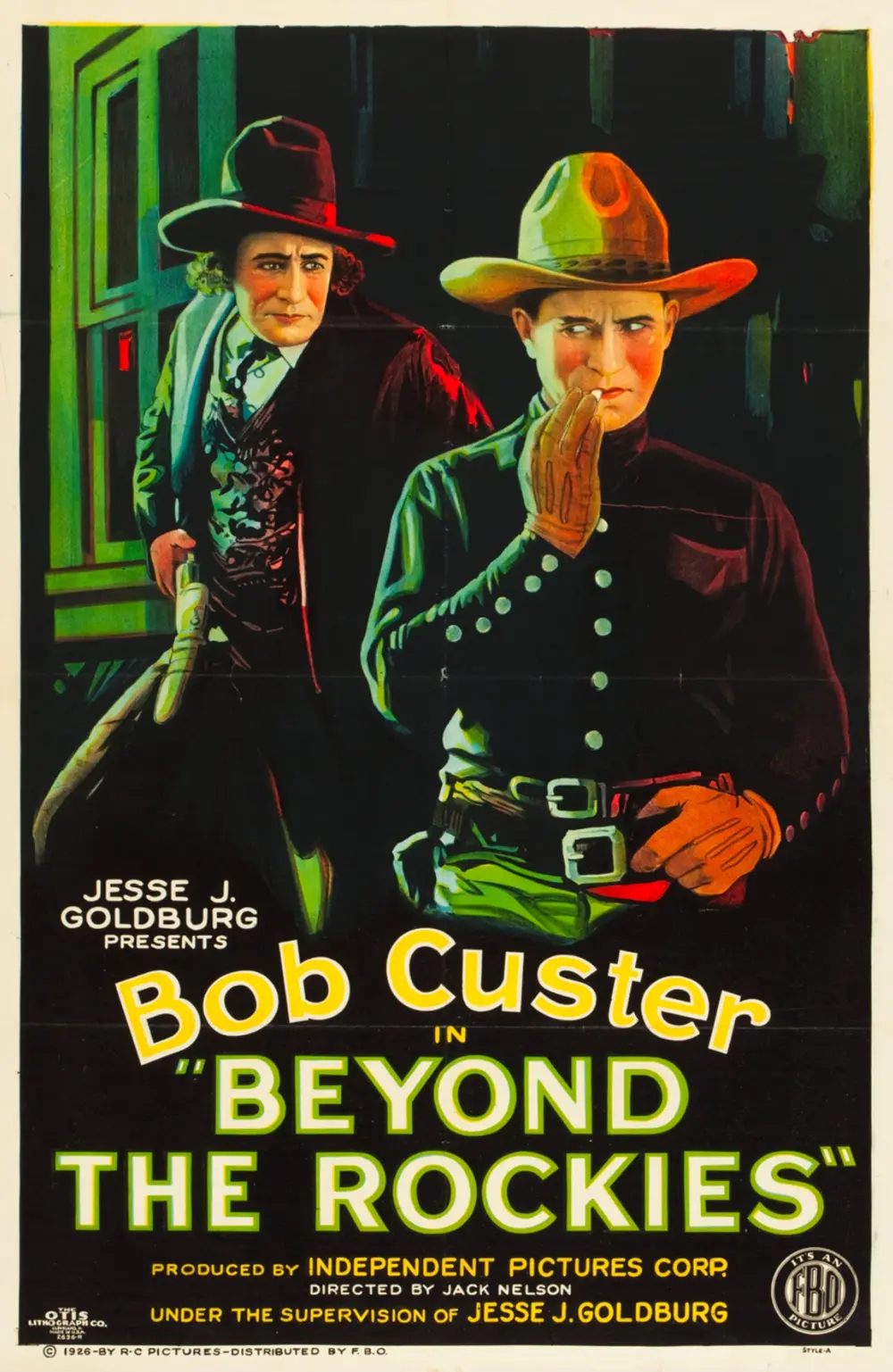
Is "Beyond the Rockies" a film worth watching in the modern era? Short answer: yes, but with significant caveats that demand a specific viewing mindset. This film is an absolute must-see for ardent aficionados of early Westerns and those fascinated by the foundational tropes of the genre, offering a raw, unfiltered glimpse into the storytelling conventions of its time. Conversely, it is decidedly not for audiences seeking complex character arcs, sophisticated narratives, or the polished production values of contemporary cinema.
Released in an era where the Western was rapidly cementing its place in cinematic history, "Beyond the Rockies" serves as a fascinating artifact. It’s a brisk, no-nonsense affair that prioritizes action and clear-cut morality over ambiguity or deep psychological exploration. For those willing to adjust their expectations, there’s a surprising amount of genuine charm and historical value to be found within its unpretentious framework.
This film works because it distills the essence of a classic Western conflict into a lean, propulsive narrative. It embraces its genre conventions without apology, delivering exactly what its original audience expected: a clear hero, a dastardly villain, and a satisfying resolution.
This film fails because its character development is minimal, the dialogue is often functional rather than engaging, and its pacing, while brisk, occasionally sacrifices depth for expediency. Modern viewers will find its simplistic morality and predictable plot points challenging.
You should watch it if you appreciate the historical context of early cinema, enjoy straightforward tales of good versus evil, or are specifically studying the evolution of the Western genre. It's a foundational text, not a revolutionary one.
The narrative backbone of "Beyond the Rockies" is as straightforward as a dusty trail leading to a saloon. Con Benteen, portrayed with stoic resolve by Fox O'Callahan, isn't a hero burdened by internal conflict or moral ambiguities. He's an agent, a tool of justice sent to clean up a messy corner of the world. His mission to infiltrate the Cloaked Riders, a band of cattle rustlers led by the predictably nefarious Cottle (Roy Laidlaw), forms the entire thrust of the plot.
The writers, William E. Wing and J. Edward Leithead, craft a story that moves with an almost relentless efficiency. There's little wasted motion; Benteen arrives, he infiltrates, he gathers evidence, he's discovered, he escapes, and he triumphs. This economy of storytelling, while perhaps feeling thin to contemporary audiences accustomed to multi-layered plots, was a hallmark of the era and contributes to the film's brisk pace.
One particularly effective sequence involves Benteen's initial immersion into the gang. There's a subtle tension in these scenes, a quiet danger as he navigates suspicion, even if the eventual discovery of his identity feels more like a plot device than an organic development. It's here that the film hints at a deeper potential for espionage, though it quickly reverts to more conventional Western action.
The film's greatest strength is also its most glaring weakness: its unwavering commitment to genre purity. It delivers on every expectation of an early Western, from the lawless town setting to the damsel in distress (Flossie, played by Eugenia Gilbert), but it rarely ventures beyond these familiar archetypes. This makes it a perfect example of its kind, but perhaps less compelling for those seeking innovation.
The acting in "Beyond the Rockies" is a fascinating study in early cinematic performance. Fox O'Callahan as Con Benteen embodies the silent-era hero with conviction. His performance relies heavily on physical presence and a strong, unwavering gaze rather than nuanced dialogue (which, of course, was limited). He's the archetype of the lone, capable hero, a man of action whose moral compass is never in doubt. You believe he can ride, fight, and outwit the rustlers, even if his emotional range is largely confined to determined sternness.
Eugenia Gilbert, as the dance hall girl Flossie, brings a much-needed spark to the proceedings. While her role is largely to be rescued and to provide the romantic payoff, she imbues Flossie with a spirited energy that transcends the typical damsel trope. Her interactions with Benteen, though brief, suggest a character with more agency than the plot overtly grants her. It’s a surprisingly engaging portrayal for a character who could have easily been entirely forgettable.
On the villainous side, Roy Laidlaw's Cottle is a serviceable antagonist. He's menacing enough to drive the plot, but lacks the depth or charisma that would make him truly memorable. His villainy is purely functional, a necessary obstacle for Benteen to overcome. The supporting cast, including Milton Ross, Bobby Nelson, and Bob Custer, fill their roles adequately, contributing to the overall atmosphere of a rough-and-tumble frontier. Their collective effort paints a picture of a community struggling against lawlessness, a common theme in Westerns of this period, much like in The Texas Trail.
The directing and cinematography of "Beyond the Rockies" are undeniably products of their time, yet they possess a raw charm. The use of natural landscapes, while perhaps not as breathtaking as later Technicolor epics, gives the film an authentic, grounded feel. The wide-open spaces and rugged terrain are integral to the Western identity, even if captured with less sophisticated equipment.
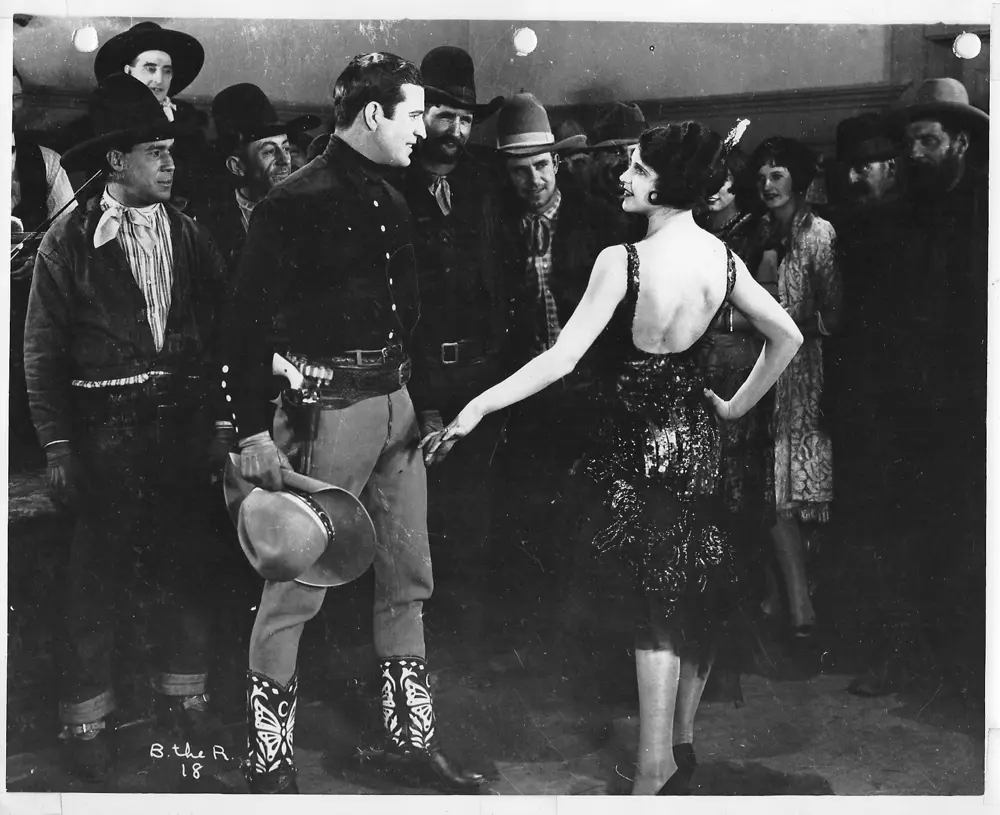
The action sequences, particularly the climactic roundup of the rustlers and Benteen's daring escape from the explosive-laden shack, are executed with a commendable level of energy. While the special effects are rudimentary by today's standards, the tension in Benteen's predicament is palpable. The quick cuts and dynamic staging of the pursuit and capture scenes demonstrate an understanding of how to maintain audience engagement through visual storytelling, a skill that was still evolving rapidly in cinema.
Pacing is another aspect where the film excels for its genre. It moves quickly. There's no fat on this narrative bone. From Benteen's arrival to the final resolution, the story maintains a brisk tempo, ensuring that even with its simple plot, it rarely drags. This efficiency is a testament to the practical storytelling demands of early cinema, where clarity and forward momentum were paramount.
While the film's simplicity is part of its charm, it's also where it shows its age most profoundly. The plot, as outlined by William E. Wing and J. Edward Leithead, serves as a functional framework for action rather than a vehicle for complex themes. Motivations are clear: good guys want justice, bad guys want cattle. There's no exploration of why Cottle leads the Cloaked Riders, beyond the obvious desire for ill-gotten gains.
The dialogue, when present (in intertitles), is sparse and direct, serving primarily to advance the plot or convey immediate emotion. There's little in the way of witty repartee or profound statements. This can make the characters feel less developed than modern viewers might prefer, reducing them to archetypes rather than fully fleshed-out individuals. However, for its original audience, this directness likely contributed to the film's accessibility and broad appeal.
One could argue that this unvarnished approach is, in itself, a statement. It’s a film that trusts its audience to understand the stakes without elaborate exposition, relying on familiar genre cues to fill in the blanks. It’s a bold choice, or perhaps simply the standard of its time, that results in a film that feels both immediate and historically significant.
Yes, "Beyond the Rockies" is absolutely worth watching, but with a critical eye and an appreciation for its historical context. It offers a valuable window into the early days of the Western genre, showcasing its foundational elements before they became more complex or self-aware. It’s a straightforward adventure that delivers exactly what it promises.
This film will particularly resonate with film historians, genre enthusiasts, and anyone interested in seeing how the tropes of the American West were first translated to the screen. It’s a brisk watch, unburdened by modern narrative expectations, making it a surprisingly refreshing experience for those open to it.
However, if you're looking for sophisticated storytelling, deep character studies, or high production values, this might not be the film for you. Its charm lies in its simplicity and its historical significance, not in its ability to compete with contemporary blockbusters.
Pros:
- Authentic representation of early Western filmmaking conventions.
- Brisk and engaging pace that keeps the story moving.
- Clear-cut good vs. evil narrative, easy to follow.
- Strong, charismatic lead performance by Fox O'Callahan.
- Historically significant as a genre example.
Cons:
- Lack of complex character development.
- Predictable plot points for modern audiences.
- Limited emotional depth or thematic exploration.
- Technical limitations of its era are evident.
- Dialogue (via intertitles) is purely functional.
There's an almost radical honesty to "Beyond the Rockies." It doesn't pretend to be anything more than a straightforward adventure. In an age of cinematic excess and convoluted narratives, this film's bluntness feels almost refreshing. It’s a story told with minimal fuss, relying on archetypes and clear action to convey its message. This isn't a film that will challenge your perceptions of morality or humanity. It simply presents a problem and then shows you how the hero solves it.
My perhaps unconventional observation is that the raw energy of early filmmaking, despite its technical limitations, often feels more authentic than many overproduced modern blockbusters. There's a palpable sense of the effort and ingenuity required to tell a story with fewer tools, and that effort shines through in the film's directness. It works. But it’s flawed.
Consider the 'dance hall girl' trope, embodied by Flossie. While she is ultimately Benteen's reward, Eugenia Gilbert's portrayal imbues her with a resilience that hints at a character far more capable of navigating the harsh frontier than many similar roles of the period. She isn't just a passive object; she's part of the landscape, a survivor in her own right, even if the script doesn't explicitly highlight it.
"Beyond the Rockies" stands as a solid, if unspectacular, example of early Western cinema. It delivers on its promise of frontier justice, a determined hero, and a thrilling conclusion without overstaying its welcome. While it won't redefine the genre or challenge your intellect, it serves as an excellent historical document, demonstrating the enduring appeal of the Old West in its nascent cinematic form.
For those who cherish the foundational elements of the Western and are willing to overlook its inherent simplicity, this film offers a genuine, albeit brief, journey back to a time when heroes were uncomplicated and villains were unequivocally evil. It’s a worthwhile watch for context and classic charm, provided you know what you're getting into.
IMDb 6.2
1925
Community
Log in to comment.