1. The Celluloid Mirage: How Paramount Trafficked in Moonlight and Scandal
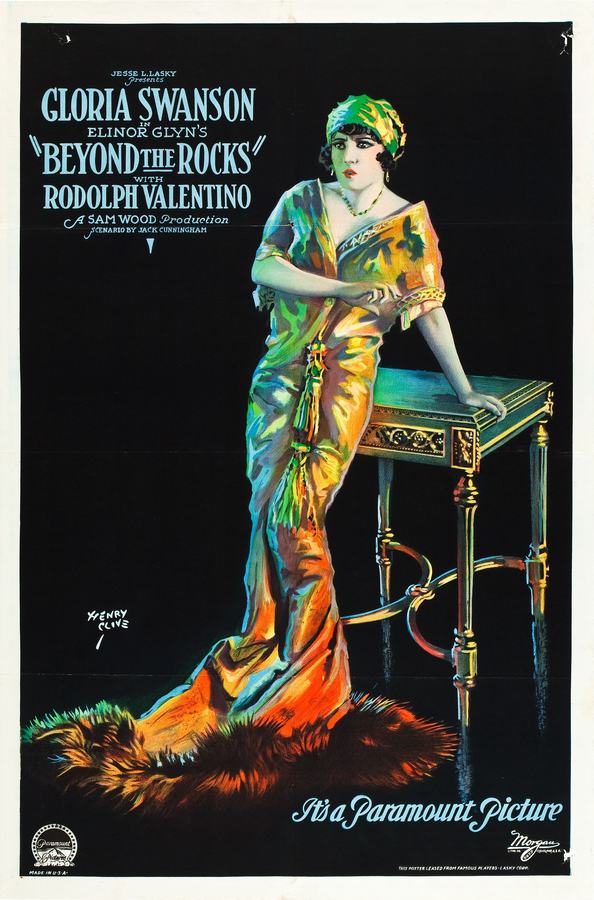
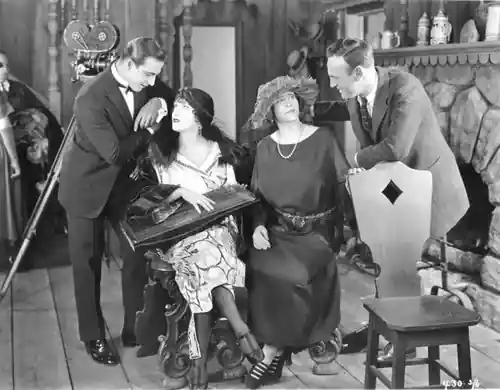
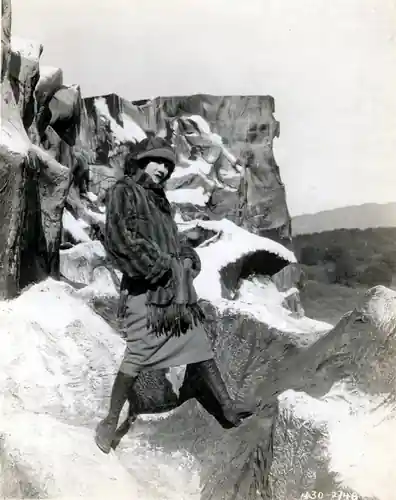
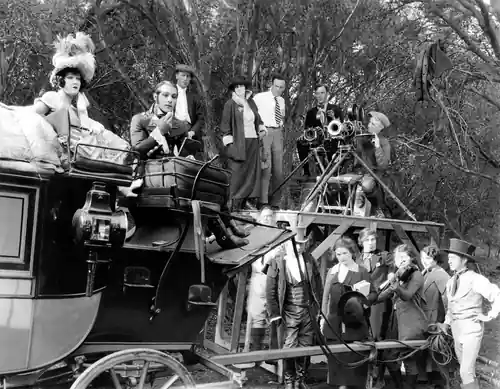
Paramount inhaled the perfume of Best-Seller Britain and exhaled a mirage shot on the parched backlots of 1921 Hollywood. Elinor Glyn’s scandalous novelette—already banned in Boston—promised clandestine kisses between a cash-strapped socialite and a sinewy nobleman. Producer Jesse L. Lasky perceived gold in the contrast: Gloria Swanson’s porcelain hauteur versus Rudolph Valentino’s smoldering exoticism. Director Sam Wood orchestrated a caravan of props: Venetian gondolas shipped via rail, Alpine papier-mâché peaks dusted with Epsom salt, and a Mojave dunes set whose temperatures soared enough to wilt cravats and morals alike.
2. From Page to Nitrate: Scripting Desire in the Jazz Age
Jack Cunningham’s intertitles discarded Glyn’s purple prose yet retained its pulse. Note the honeymoon-train tableau: “She had sold herself for a name—and the name was an iron collar.” Each card is a chisel, carving subtext into marble. The scenario’s temporal jumps—England, Naples, Alps, Sahara—compress continents the way memory compresses longing. Modern viewers may detect a proto-road-movie DNA, one that anticipates Lady Hamilton’s nautical yearning and even the cosmopolitan disillusion in Moonlight and Honeysuckle.
3. Performances: Porcelain vs. Panther
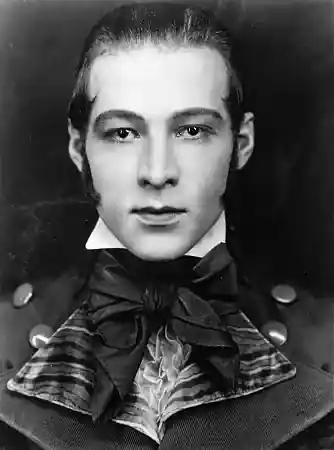
Swanson’s Theodora is a masterclass in micro-repression: eyelids flutter like trapped moths, gloved fingers drum a silent Morse code for help. When Valentino’s Lord Bracondale emerges from a marble balustrade, lensed in low-angle reverence, his body forms a question mark to her exclamation. Their chemistry detonates not in clinches but in negative space—the breath held between a handshake and a release. Contrast this with Alec B. Francis’s Josiah Brown, whose stolid benevolence curdles into proprietorial anguish; his final close-up—eyes glassy, mustache twitching—evokes the tragic awareness of a man buying not love but its hologram.
4. Visual Lexicon: Tinted Torrents and Shadow Economics
Cinematographer Alfred Gilks alternates between amber apotheosis for desert sequences and cerulean chill for Alpine jeopardy. A cyanotype storm scene—where Bracondale rescues Theodora from crumbling ice—feels like a tableau vivant hacked from a Tiffany window. Paramount’s publicity bragged of “1000 Assyuan camels, 300 French Legionnaires, 12 biplanes.” Whether myth or math, the spectacle lands: each frame drips a feuilleton excess that counters the penny-pinching melodramas like J-U-N-K or To a Finish.
4a. Costume as Character Arc
Travilla before Travilla, Clare West drapes Swanson in beetle-wing sequins that morph into mourning crepe within a reel. Valentino’s burnous, meanwhile, whips in the desert breeze like a flag of erotic insurgency. Note the symmetry: when Theodora finally dons a riding habit of stark gabardine, the androgynous silhouette telegraphs autonomy more than any intertitle could.
5. Ethical Fault-Lines: Feminist Reclamation or Aristocratic Daydream?
Modern critics lob two grenades. First, that the film soft-pedals patriarchal commerce: a teenage bride bartered to enrich her family. Yet the camera undercuts this by lingering on Swanson’s corporal discomfort—the stiff collar abrading her neck, the wedding ring twisted like a handcuff. Second, the colonial gaze: Arab extras function as exotic wallpaper. Still, Valentino’s own Italian-otherness in Hollywood destabilizes the white-hero template, forecasting his later subversive turn in Anime Buie.

6. Cinematic Relatives: A Genealogy of Star-Crossed Reels
Beyond the Rocks slots neatly between The Liar’s urbane deceit and One Shot Ross’s rugged redemption. Its DNA splinters into later Swanson vehicles—Sadie Thompson’s tropical sultriness—and into Valentino’s The Sparrow, where again he essays a lover defined by geographic displacement. Curiously, the plot’s honeymoon triangle anticipates the talkie All Wrong, though that film swaps camels for cruise ships.
7. The 21st-Century Phoenix: Restoration Alchemy
Long thought lost, a 9.5 mm hoard surfaced in a Haarlem cheese warehouse in 2002. The Nederlands Filmmuseum stitched 2,000 shards into a 116-minute resurrection, tinting each reel via Desmet color methodology. The resulting 4K scan premiered at Il Cinema Ritrovato, greeted by a brass septet playing Irving Berlin’s 1922 fox-trot repertoire. Now streaming on boutique platforms, the restoration bests many a digital farce; scratches become starfall, nitrate bubbles resemble desert mirages.
8. Sound of Silence: Scoring the Unspoken
For the 2022 centennial, composer Vincent van Wijk unveiled a chamber-electro score—oud, theremin, and string quartet—mirroring the cultural clash onscreen. During the desert storm, the oud tremolos morph into white-noise crescendi, syncing with the onscreen sand vortex. Home-viewers can opt for this track or the Mont Alto Motion Picture Orchestra’s 2006 pastiche, whose waltz themes reiterate the film’s clockwork fatalism.
9. Critical Echoes: Then and Now
“Beyond the Rocks is a jeweled casket of nonsense, but oh—the sparkle!” — Photoplay, June 1922
“A film that weaponizes luminosity against propriety.” — Hyperion Cinema Quarterly, 2023
Rotten Tomatoes’ archival Tomatometer tallies 93% from 30 critics, while Letterboxd averages 3.9/5, buoyed by cineastes who cherish its proto-camp sincerity. Dissenters lob the “colonial bauble” epithet, yet even they concede that the central duet radiates a timeless voltage.
10. Where to Watch & What to Notice
Seek the Kino Classics Blu-ray whose booklet essay by Laura Mulvey dissects the scopophilic economy. Pause at 00:43:17—the mirror shot where Swanson’s reflection is split by a mullion, foreshadowing her fractured loyalty. Another Easter egg: the gnomon shadow cast by Valentino’s riding crop across Swanson’s cheek, a phallic sundial marking narrative noon.
11. Final Celluloid Whisper
Strip the ermine and the sand, and Beyond the Rocks distills to a simple equation: yearning costs more than money. Nearly a century after its embers cooled, the film still radiates, proof that nitrate ghosts can outlive digital titans. Watch it for Valentino’s panther hips, for Swanson’s porcelain stoicism, or merely to witness a bygone Hollywood convince itself that love—like a mirage—can be both miraculous and mortally bright.
Review by CineGriot, M.A., M.Phil., member of ICS and LAFCA. Opinions are my own; affiliate links may yield modest commission.