DbcultAccessing Vault...
4.8/10
Senior Film Conservator
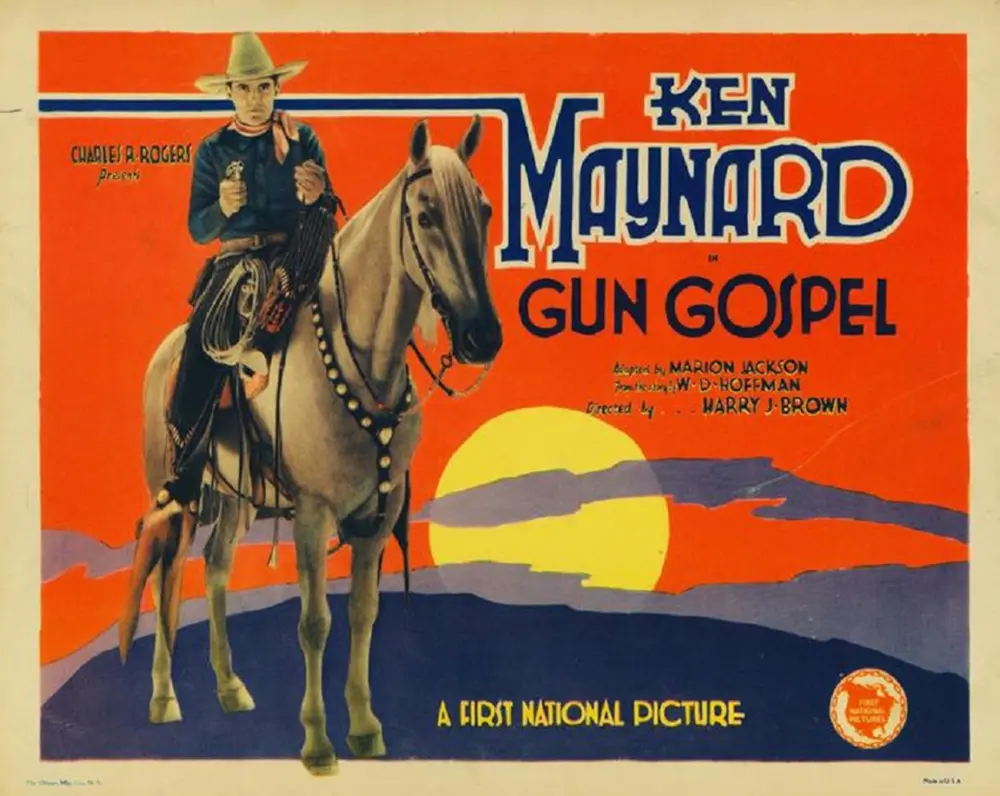
A definitive 4.8/10 rating for a film that redefined the boundaries of cult cinema. Gun Gospel remains a cornerstone of transgressive art.
Does Gun Gospel still pack a punch nearly a century after its release? Short answer: yes, but primarily as a masterclass in silent-era physical performance rather than narrative complexity.
This film is specifically for those who appreciate the 'athletic' era of Westerns, where the lead actor's ability to leap onto a moving horse was more important than their ability to deliver a monologue. It is decidedly NOT for viewers who demand the psychological depth of a modern Revisionist Western or the polished pacing of a contemporary thriller.
This film works because it utilizes the actual topography of the Mojave Desert to create a sense of genuine peril that studio lots can never replicate.
This film fails because the plot is a transparently thin clothesline used to hang a series of repetitive chase sequences.
You should watch it if you want to see Ken Maynard and his horse, Tarzan, perform stunts that would likely be banned by modern safety coordinators.
If you are looking for a foundational piece of Western history, the answer is a resounding yes. While it doesn't have the atmospheric dread of Torgus or the stylistic experimentation of The Show, it excels in raw kinetic energy. The film captures a moment in cinema where the 'Western' was transitioning from the gritty realism of the early 1920s into the more polished, heroic mold of the 1930s.
The stunt work alone justifies the runtime. Watching Maynard navigate the rocky outcrops of Mount Whittier provides a visceral thrill that CGI cannot emulate. It is a document of physical bravery. However, if you are looking for a story that challenges the tropes of the genre, you will find it lacking. It is a product of its time—efficient, rugged, and unapologetically straightforward.
Ken Maynard was never the world's greatest dramatic actor. In many scenes, his facial expressions range from 'slightly concerned' to 'vaguely heroic.' But Maynard wasn't hired for his range; he was hired for his gravity-defying relationship with his horse, Tarzan. In Gun Gospel, Tarzan is essentially a secondary protagonist with more screen presence than half the human cast.
There is a specific moment during a gold shipment ambush where Maynard performs a mounting stunt that is so fluid it looks like a trick of the eye. It isn't. This was the era of the 'Stunt King,' and Maynard earns that title here. Unlike the more stage-bound performances seen in The Charming Mrs. Chase, Maynard treats the entire Mojave as a gymnasium.
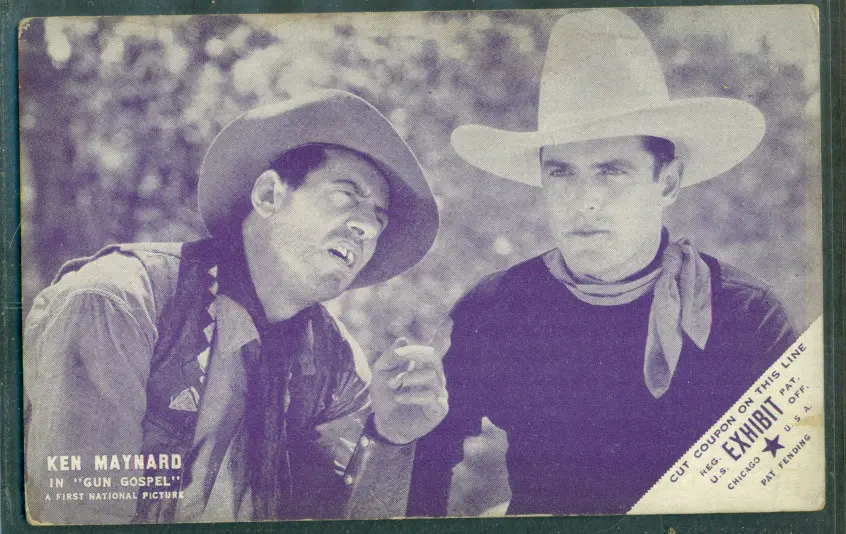
The chemistry between man and horse is the emotional core of the film. When the outlaws threaten the express service, the stakes feel high not because of the gold, but because we don't want to see the horse get hurt. It’s a simple dynamic, but it works. It’s effective. It’s the reason people kept coming back to Maynard’s films.
Many Westerns of this period were content to shoot in the hills behind Hollywood. Gun Gospel takes the harder path, heading into the actual Mojave and Death Valley. The cinematography captures the oppressive heat and the isolation of the mines with a starkness that feels almost documentary-like. You can almost feel the grit in the characters' teeth.
The director, Harry Joe Brown, uses the vastness of the landscape to emphasize the vulnerability of the Wells Fargo shipments. In a world before radio or rapid communication, a gold wagon in the middle of the desert is a tiny, moving target in a sea of predators. This isolation creates a tension that the script occasionally fails to maintain.
Compare this to the indoor dramas of the era like Stranded, and you see the massive difference in scale. Gun Gospel feels 'big' even when the story is 'small.' The dust clouds kicked up during the final chase aren't just special effects; they are the desert reacting to the intrusion of the camera. It gives the film a grounded, tactile quality that is often missing from silent cinema.
A fascinating, if subtle, aspect of Gun Gospel is its portrayal of Wells Fargo. In this narrative, the 'law' isn't a sheriff with a tin star; it's a corporate entity trying to secure its supply lines. Granger Hume is essentially a private security contractor. This adds a layer of industrial realism to the film that sets it apart from more romanticized outlaw tales like Vengeance Is Mine!.
The villains, led by the reliable Slim Whitaker, represent the old, chaotic world. They are the 'havoc' that must be cleared for commerce to flourish. While the film doesn't go deep into the ethics of this corporate expansion, it provides an interesting snapshot of how the American West was being re-imagined in the 1920s as a place of business rather than just adventure.
The writing by William Dawson Hoffman and Don Ryan is functional. It moves the characters from point A to point B with minimal fuss. However, the dialogue intertitles are occasionally a bit too flowery for the rugged action on screen. A more minimalist approach to the text would have served the film’s masculine energy better.
Gun Gospel is a rugged, no-nonsense piece of silent cinema that serves as a perfect introduction to the 'Stunt Western.' It doesn't have the emotional weight of The Clown's Little Brother or the comedic timing of Nobody's Business, but it doesn't need them. It is a film about men, horses, and the unforgiving desert.
While the narrative is thin, the execution is bold. Ken Maynard proves why he was one of the biggest stars of the decade, providing a physical performance that bridges the gap between the circus and the cinema. It’s an honest film. It knows what it is, and it doesn't pretend to be more.
Ultimately, Gun Gospel is a testament to the era of 'real' stunts. In a world where we are used to digital doubles, there is something profoundly satisfying about watching a man actually ride a horse down a 45-degree incline of loose shale. It’s not art in the traditional sense. It’s spectacle. And in 1927, that was more than enough.
IMDb 6.2
1931
Community
Log in to comment.