DbcultAccessing Vault...
Cult Review
Senior Film Conservator
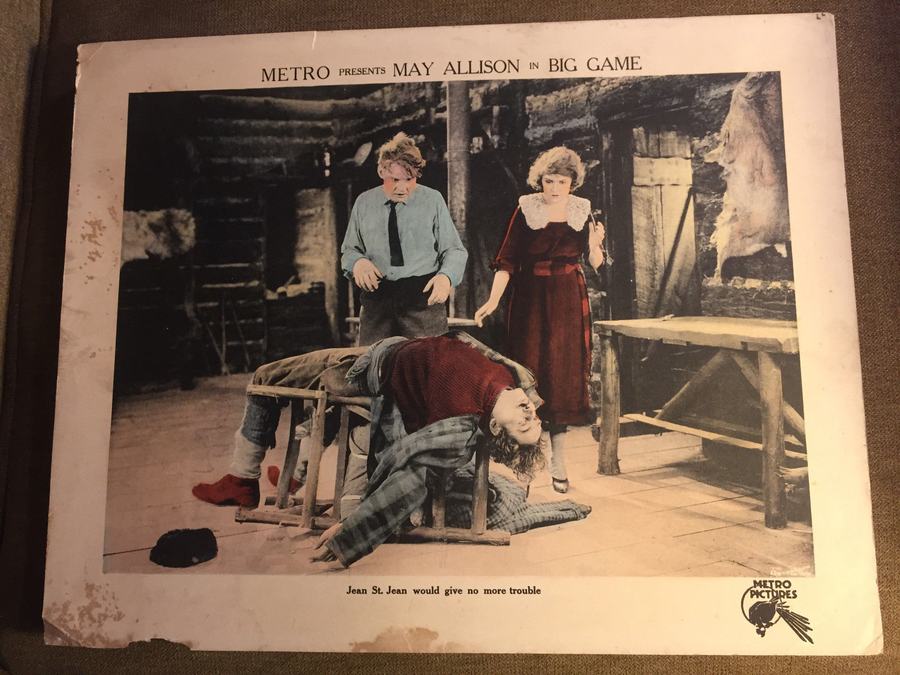
The 1921 silent drama Big Game serves as a fascinating, if occasionally uncomfortable, artifact of early 20th-century anxieties regarding the perceived softening of the American male. Larry Winthrop is not merely a character; he is a symbol of the Gilded Age’s waning vitality, a man whose inheritance has shielded him from the grit of existence. Edward Cecil portrays Winthrop with a delicate, almost translucent vulnerability that stands in stark contrast to the jagged surroundings of the Canadian frontier. When we first encounter him, he is a creature of interiors—parlors, offices, and manicured spaces. The transition to the Great North is not just a change of scenery; it is a descent into a landscape that demands a different kind of currency than the Winthrop family fortune.
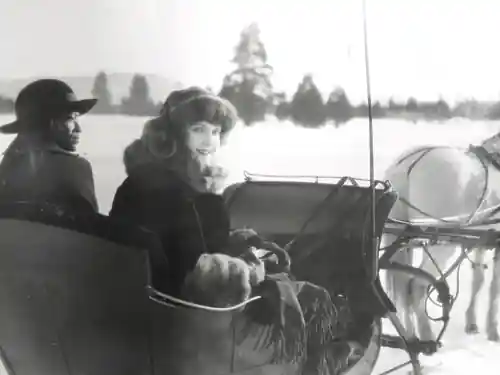
May Allison delivers a performance that is surprisingly complex for the era. Eleanor Winthrop is far from a passive observer of her husband’s inadequacy. She is the architect of the film’s central conflict, a woman whose love is inextricably tied to a traditional, almost prehistoric, demand for protection and strength. Her decision to hire Jean St. Jean is a calculated provocation. Unlike the gender subversions explored in I Don't Want to Be a Man, Eleanor seeks to reinforce the binary, pushing Larry toward a specific archetype of virility. It is a dangerous game of emotional brinkmanship that highlights the desperation of a woman who feels her social and domestic security is threatened by her husband’s perceived cowardice.
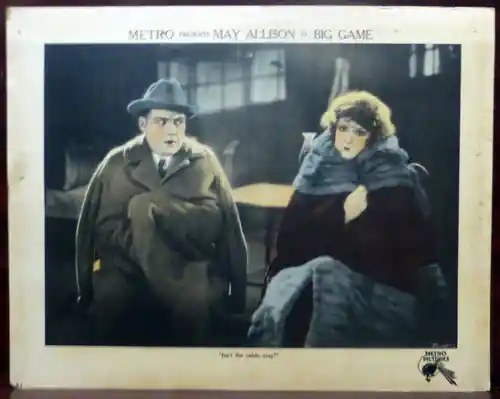
Sidney D'Albrook’s Jean St. Jean is the quintessential 'man of the woods'—unbridled, physically imposing, and utterly devoid of the social graces that define Larry. He represents the 'Big Game' of the title, a predator who senses weakness and moves to exploit it. The chemistry between the three leads is taut with a tension that the silent medium handles with remarkable chiaroscuro. St. Jean’s presence forces a comparison between the refined and the rugged, a theme often explored in works like The World and Its Woman, where class barriers are tested by extreme circumstances. However, in Big Game, the focus remains stubbornly on the individual’s internal reclamation of power.

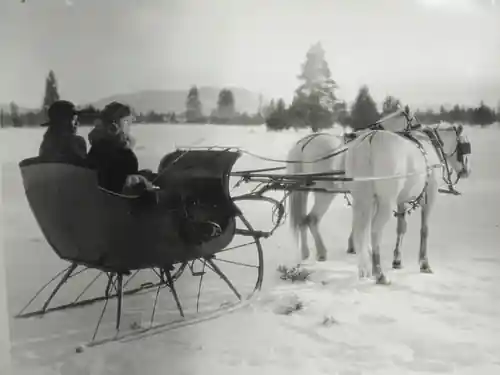
The cinematography utilizes the oppressive whiteness of the Canadian winter to create a sense of claustrophobia despite the vastness of the setting. The cabin sequences are masterpieces of shadow and light, mirroring the psychological darkness creeping into the characters' hearts. While not as overtly gothic as The Haunted House (1921), there is a haunting quality to the isolation. The writers, including Elliott J. Clawson and Edward T. Lowe Jr., understand that the real horror isn't the cold, but the realization of one's own insignificance in the face of nature and malice. The pacing builds with the inevitability of a glacier, culminating in a climax that is both cathartic and disturbing.
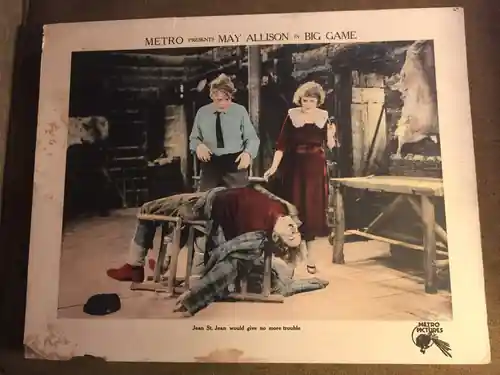
When the breaking point finally arrives, Larry Winthrop’s transformation is visceral. This isn't the poetic indecision of Hamlet (1917); it is the sudden, violent awakening of a cornered animal. The whipping of Jean St. Jean is a sequence of intense physicality that would have left 1921 audiences breathless. It echoes the themes of physical redemption found in The Battler, suggesting that the only way to truly 'find' oneself is through the infliction or endurance of pain. Eleanor’s delight at this newfound brutality is the film’s most provocative element. It suggests a world where 'real' manhood is defined by the capacity for violence, a sentiment that resonates with the darker undertones of The Unpardonable Sin (1919).
In the broader context of silent cinema, Big Game occupies a space between the moralizing tales of Unto Those Who Sin and the more whimsical explorations of human nature like Brownie, the Peacemaker. It lacks the urban cynicism of The Blues, opting instead for a rugged, frontier morality. Even when compared to the dual-identity intrigue of The Masquerader, Big Game feels more urgent, more grounded in the dirt and the snow. It is a film that refuses to offer a comfortable resolution, as the 'real man' who emerges from the cabin is a stranger to the man who entered it.
The direction is lean, avoiding the melodramatic excesses that often plagued early 20th-century features. Every frame serves the central thesis of environmental and psychological pressure. While films like Az éjszaka rabja might lean into the stylistic flourishes of European expressionism, Big Game remains quintessentially North American in its directness. The writing team manages to weave a complex web of motivations without relying on excessive intertitles, allowing the actors' physicality to carry the narrative weight. The use of the snowstorm as both a plot device and a metaphor for the characters' internal turmoil is handled with a sophistication that belies the film's age.
Ultimately, Big Game is a stark reminder of the power of the wilderness mythos in cinema. It posits that the true measure of a man is not found in his social standing or his intellectual pursuits, but in his ability to survive and dominate his environment. It shares a certain thematic DNA with Her Condoned Sin, where social transgressions are weighed against the necessity of survival. As we watch Larry Winthrop discard his cowardice, we are forced to reckon with the cost of that shedding. Is the 'real man' Eleanor desired a superior version of her husband, or has the wilderness simply replaced one form of fragility with a more dangerous form of aggression? This ambiguity is what elevates the film from a simple adventure story to a haunting exploration of the human psyche under duress.
For those seeking a cinematic experience that bypasses the lightheartedness of My Lady Nicotine or the optimism of A Star Over Night, Big Game offers a cold, uncompromising look at the primal forces that lie just beneath the surface of civilization. It is a journey into the heart of winter, where only the strongest—or the most desperate—survive.
IMDb 5.2
1928
Community
Log in to comment.