DbcultAccessing Vault...
7.2/10
Senior Film Conservator
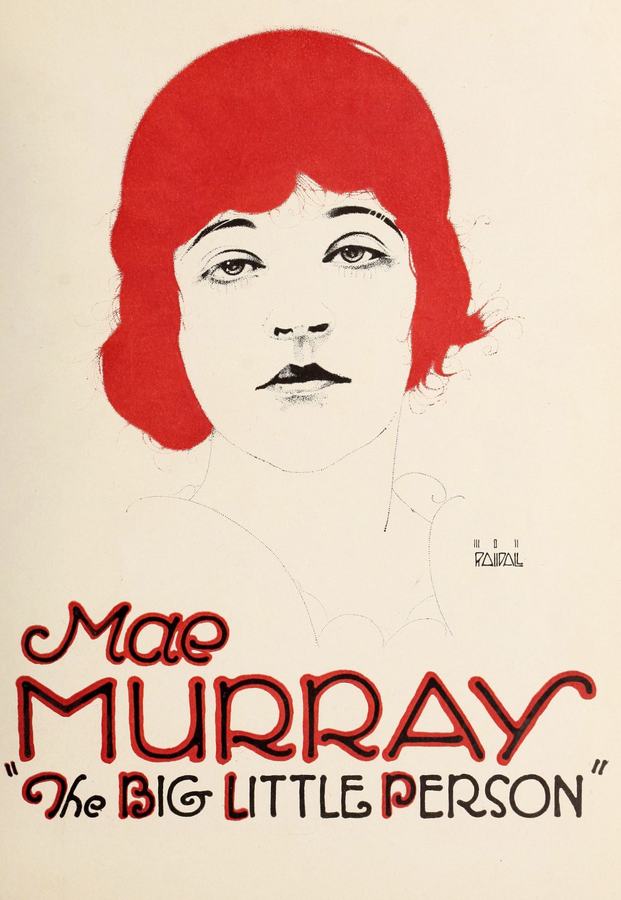
A definitive 7.2/10 rating for a film that redefined the boundaries of cult cinema. Big Little Person remains a cornerstone of transgressive art.
The year 1919 marked a crucible of transformation for American motion pictures. Post‑war optimism mingled with the burgeoning studio system, and Universal Pictures, eager to cement its foothold, invested heavily in romantic dramas that could showcase both star power and narrative ambition. *Big Little Person* emerged from this milieu, a vehicle crafted for Mae Murray—then‑wife and muse of director Robert Z. Leonard—whose ethereal charisma had already begun to define the era’s feminine archetype.
Leonard’s direction orchestrates a layered tale that oscillates between pastoral innocence and metropolitan excess. The opening tableau, rendered in soft focus, captures Murray’s character—an unnamed seamstress—threading fabric beneath the amber glow of a modest workshop lamp. This visual metaphor of weaving destiny foreshadows the intricate entanglements she will later confront.
The inciting incident arrives when Gerard Alexander’s patron, a wealthy benefactor with a taste for theatrical novelty, discovers her humming a plaintive melody while mending a client’s gown. His invitation to audition at his downtown revue becomes the narrative’s catalyst, thrusting the protagonist into a world where applause can be both affirmation and albatross.
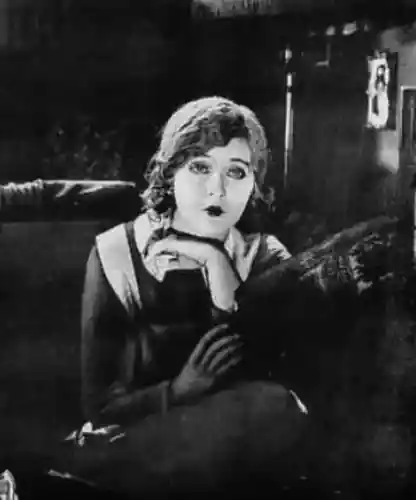
Within the bustling backstage corridors, Clarissa Selwynne—a seasoned diva whose reputation for temperamental brilliance precedes her—recognizes the newcomer as a threat. Their rivalry crystallizes in a series of escalating confrontations: from whispered barbs in dressing rooms to a climactic dance-off that pits youthful vigor against seasoned poise. Leonard employs rapid intercutting—remarkable for its time—to heighten the tension, allowing the audience to feel the electric charge of competition.
Rudolph Valentino, credited as M. Rodolpho De Valentina, inhabits a supporting yet pivotal role. His character drifts through the narrative like a moonlit silhouette, his presence evoking both intrigue and unspoken yearning. In a particularly evocative scene, he shares a silent exchange with Murray’s heroine on a rain‑slicked balcony, the droplets glistening like fragmented reflections of their internal turmoil. This moment, though fleeting, underscores the film’s exploration of unrequited desire and the paradox of proximity without intimacy.
Leonard’s visual grammar blends expressionistic lighting with the fluidity of early montage. The use of chiaroscuro—deep shadows juxtaposed against the luminescence of stage spotlights—mirrors the protagonist’s oscillation between obscurity and fame. Moreover, the film’s intertitles are rendered in an elegant Art Nouveau font, each line punctuated by decorative flourishes that echo the ornamental costumes displayed on screen.
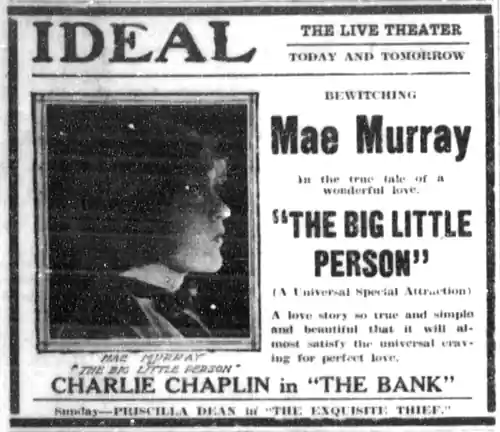
The choreography, designed by an unnamed but evidently skilled dance master, fuses contemporary ragtime steps with classical ballet motifs, reflecting the protagonist’s internal conflict between modern ambition and timeless grace. The climactic performance, where Murray’s character finally commands the stage, is captured in a sweeping crane shot—a technical marvel that predates similar techniques popularized in the 1920s.
When juxtaposed with Romance and Brass Tacks, another 1919 melodrama, *Big Little Person* distinguishes itself through its nuanced portrayal of female agency. While the former leans heavily on conventional romantic tropes, Leonard’s film allows its heroine to wrestle with autonomy, a theme later echoed in Let’s Elope (1920) where the protagonist’s elopement becomes an act of self‑assertion rather than mere rebellion.
The rivalry between Murray and Selwynne also finds a thematic counterpart in The Girl and the Game, where two women vie for artistic supremacy. Both films employ the stage as a microcosm of society, using performance to interrogate gendered power dynamics.
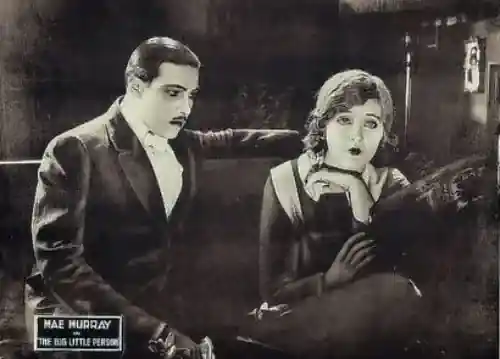
Mae Murray’s performance radiates a kinetic elegance that transcends the silent medium’s limitations. Her expressive eyebrows, deft hand gestures, and the subtle tilt of her head convey a spectrum of emotions—from hopeful optimism to anguished resignation—without uttering a single word. Critics of the era praised her ability to “speak through the silences,” a testament to her mastery of the visual lexicon.
In contrast, Rudolph Valentino’s contribution, though brief, foreshadows the magnetic charisma that would later define his career. His lingering glances and languid posture imbue his scenes with a magnetic pull, hinting at the star power he would soon wield.
The screenplay, adapted from Rebecca Lane Hooper Eastman’s novel and refined by Bess Meredyth, balances fidelity to source material with cinematic economy. The dialogue—though limited to intertitles—exhibits a poetic cadence, each phrase carefully chosen to amplify emotional resonance. The narrative arc adheres to a classic three‑act structure, yet Leonard injects moments of subversion, such as the protagonist’s decision to abandon a lucrative contract in favor of personal fulfillment—a choice that challenges contemporary expectations of female ambition.
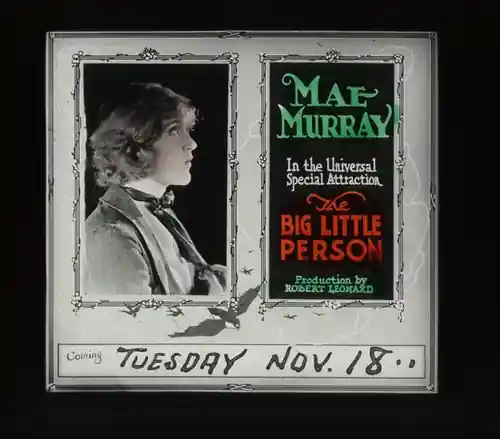
Although *Big Little Person* is classified as a lost film, its imprint on cinematic history endures through contemporary reviews, production stills, and the lingering influence on subsequent star vehicles. The film’s exploration of fame’s double‑edged sword prefigures later works like The Secret of the Storm Country, where protagonists grapple with public perception versus private authenticity.
Scholars often cite the film as an early exemplar of the “star‑system” narrative, wherein a charismatic lead drives both plot and box‑office allure. Mae Murray’s ascendancy, facilitated by Leonard’s direction, helped cement the model of the “actress‑as‑icon” that would dominate Hollywood’s Golden Age.
The production design juxtaposes the muted palette of the protagonist’s hometown with the opulent, saturated hues of the urban theatre. Set pieces—lavish chandeliers, gilded proscenium arches, and intricate backstage machinery—are rendered with meticulous attention to detail, underscoring the film’s commitment to visual storytelling.
Costuming, attributed to an unnamed department head, employs a progression of fabrics: simple cotton dresses transition to silks and sequins as the heroine’s status evolves. This sartorial metamorphosis visually narrates her journey from obscurity to stardom, a technique later echoed in Peg of the Pirates where costume signifies character development.
The loss of the original nitrate reels renders *Big Little Person* a phantom within film archives. Surviving materials—production stills, lobby cards, and period newspaper clippings—provide fragmented insight, prompting scholars to reconstruct its narrative through secondary sources. Debates persist regarding the film’s exact runtime and whether certain scenes were excised for censorship, a common practice in the post‑World War I era.
Despite its absence, the film’s thematic preoccupations continue to inspire academic discourse, particularly in gender studies. Its portrayal of a woman negotiating public acclaim while retaining personal integrity resonates with contemporary dialogues about celebrity culture and self‑determination.
*Big Little Person* stands as a luminous artifact of silent cinema’s golden moment, encapsulating the tensions between aspiration and authenticity that remain relevant today. Its narrative, though veiled by time, offers a compelling meditation on the price of visibility and the quiet strength required to reclaim one’s narrative.
IMDb —
1929
Community
Log in to comment.