DbcultAccessing Vault...
Cult Review
Senior Film Conservator
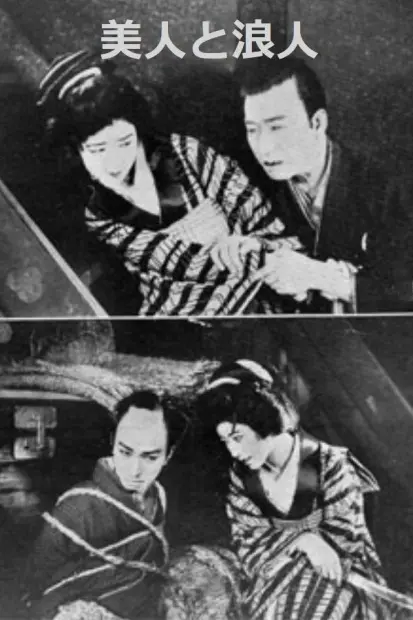
Is "Bijin to rônin" worth watching in an era saturated with cinematic grandeur? Short answer: yes, but with significant caveats that demand a particular kind of patience and appreciation from its audience.
This film is undoubtedly for enthusiasts of early Japanese cinema, those who find beauty in the subtle expressions of silent storytelling and the raw, untamed spirit of its era. It is decidedly NOT for viewers seeking fast-paced action, modern narrative conventions, or a polished, easily digestible experience.
This film works because... it masterfully captures a melancholic atmosphere and features a quietly compelling central performance that anchors its emotional core, allowing its themes to slowly permeate the viewer's consciousness.
This film fails because... its pacing can be agonizingly slow by contemporary standards, and some narrative beats feel underdeveloped, relying heavily on implied emotion rather than explicit exposition, which can be alienating for some.
You should watch it if... you are fascinated by the origins of the samurai genre, appreciate nuanced character studies, and have a deep interest in the directorial style of Hiroshi Shimizu, especially his ability to convey profound emotion through visual poetry.
Hiroshi Shimizu, primarily known for his prolific output and versatility, crafts a story in "Bijin to rônin" that, while seemingly straightforward, delves into profound human struggles. The narrative follows Kenshin, a ronin portrayed by Hideo Fujino, whose weary shoulders carry the burden of a past unspoken. He is a man adrift, his samurai code a relic, his purpose lost to the winds of change.
His journey brings him to a village choked by the tyranny of Lord Akamatsu (Tokuji Kobayashi) and his brutal enforcer, Goro (Hajime Mori). It is here that he encounters O-Haru (Yukiko Tsukuba), the titular "beauty," whose resilience in the face of relentless oppression becomes the unexpected catalyst for Kenshin's dormant sense of justice. The plot is less about intricate twists and turns and more about the gradual, almost imperceptible shift within Kenshin.
Shimizu, as both writer and director, explores themes that resonate deeply within the samurai genre: honor, sacrifice, and the often-tragic conflict between personal detachment and communal responsibility. Kenshin’s initial reluctance to intervene is a stark portrayal of a man broken by his world, yet O-Haru’s quiet strength and the village’s plight chip away at his hardened exterior. The film doesn't glorify violence; instead, it frames it as a last, desperate resort, a heavy cost for a semblance of justice.
The story’s true power lies in its exploration of the human spirit under duress. O-Haru is not a damsel in distress in the traditional sense; she embodies a quiet defiance, a strength that is both inspiring and heartbreaking. Her interactions with Kenshin are sparse, yet loaded with unspoken meaning, a testament to Shimizu's ability to communicate complex emotions without relying on dialogue.
In a silent film, the burden of storytelling rests almost entirely on the actors' physical presence, their expressions, and their ability to convey internal states without words. "Bijin to rônin" is a masterclass in this regard, largely due to the understated yet powerful performances of its lead actors.
Hideo Fujino's portrayal of Kenshin is particularly noteworthy. His is not a performance of grand gestures or overt heroism, but one of profound stoicism and weariness. Fujino conveys Kenshin's internal conflict through subtle shifts in posture, the slight tightening of his jaw, or the distant look in his eyes. Consider the scene where Kenshin observes the villagers' suffering from afar, his back against a gnarled tree. Fujino's stillness, the slight slump of his shoulders, speaks volumes about a man wrestling with his conscience, a broken blade yearning for purpose.
Yukiko Tsukuba as O-Haru provides the emotional anchor of the film. Her beauty is not merely physical; it is a quiet strength, a resilient spirit that shines through adversity. Tsukuba's performance is characterized by her expressive eyes and delicate yet firm movements. There's a particular moment where she confronts Goro, the enforcer, her gaze unwavering despite the obvious danger. This single, defiant look encapsulates her character's indomitable will, offering a stark contrast to Kenshin's initial passivity.
Tokuji Kobayashi as Lord Akamatsu and Hajime Mori as Goro deliver performances that are, by necessity, more theatrical, embodying the archetypal villains of the era. Kobayashi's sneering arrogance and Mori's brutish menace are effective in establishing the oppressive atmosphere that grips the village. While perhaps lacking the nuanced depth of the protagonists, their roles are crucial in providing the external conflict that drives Kenshin's eventual awakening.
Hiroshi Shimizu's directorial style in "Bijin to rônin" is one of quiet observation and poetic realism. He foregoes flashy camera work for a more contemplative approach, allowing scenes to unfold with a deliberate, almost documentary-like authenticity. This is not a film that shouts its artistry; it whispers it through careful composition and a profound understanding of visual storytelling.
The cinematography, while constrained by the technology of its time, is remarkably effective in establishing mood and atmosphere. Shimizu frequently employs long takes, allowing the audience to absorb the setting and the characters' internal states without interruption. One striking example is the recurring motif of Kenshin framed against vast, empty landscapes. These shots emphasize his isolation and the overwhelming scale of the world he inhabits, making his personal struggles feel both intimate and universal.
The use of natural light and sparse sets further enhances the film's gritty realism. Shimizu's camera often lingers on mundane details – the rustle of leaves, the texture of worn clothing, the expressions of ordinary villagers – grounding the dramatic narrative in an authentic, lived-in world. This attention to detail, while not always overtly dramatic, builds a rich tapestry of context for the more heightened emotional moments.
The tone is predominantly melancholic, imbued with a sense of resignation that was characteristic of many Japanese films of the period. Yet, within this melancholy, there are glimmers of hope and human resilience, often conveyed through the quiet strength of O-Haru or the subtle acts of kindness exchanged between villagers. Shimizu's ability to balance these contrasting emotions without veering into sentimentality is a testament to his understated brilliance.
Perhaps the most significant hurdle for modern audiences approaching "Bijin to rônin" is its pacing. This is a film that takes its time, often deliberately so, allowing scenes to breathe and emotions to slowly marinate. Unlike contemporary cinema, which often prioritizes rapid-fire editing and constant narrative propulsion, Shimizu's film embraces a more contemplative rhythm.
There are extended sequences where little overt action occurs, yet much is conveyed through observation. A lingering shot of Kenshin walking a dusty road, or O-Haru silently performing daily chores, might feel protracted to a viewer accustomed to instantaneous gratification. This is not a flaw in the film's design, but a reflection of a different cinematic language, one that requires a shift in viewing habits.
However, I’m willing to argue that Shimizu's commitment to this deliberate pace, while admirable in its artistic integrity, occasionally sacrifices narrative drive. While it deepens the emotional impact of certain moments, it can also lead to a sense of inertia, particularly in the film's middle section. It works. But it’s flawed. The tension, when it finally arrives, feels earned, but the journey to get there demands a significant investment of patience.
This deliberate speed allows for a deeper immersion into the characters' internal worlds, but it risks losing those who aren't prepared for such a slow burn. It is a film that respects silence, trusts its audience to interpret unspoken cues, and asks them to slow down and truly observe.
Yes, "Bijin to rônin" is worth watching, especially for specific audiences. It offers a unique window into early Japanese cinema.
It provides a compelling example of silent storytelling. The performances are strong and evocative.
However, be prepared for a very slow pace. The narrative unfolds gradually. It demands patience and an appreciation for historical film.
If you are a student of film history, particularly Japanese film, this is a valuable experience. If you prefer modern action or fast narratives, it might not be for you.
"Bijin to rônin" is a film that demands, and largely rewards, a specific kind of engagement. It is not a crowd-pleaser, nor does it strive to be. What it offers instead is a nuanced, melancholic meditation on honor, responsibility, and the quiet resilience of the human spirit. Hiroshi Shimizu crafts a narrative that, despite its slow burn, resonates with a profound emotional truth, anchored by exceptional silent performances. It's a challenging watch, certainly, and one that requires an adjustment to its deliberate rhythm. But for those willing to lean in, to truly observe and absorb its subtle artistry, "Bijin to rônin" offers a valuable and surprisingly moving experience, a testament to the enduring power of early Japanese cinema. It's a forgotten gem that, while not without its imperfections, shines brightly for those who seek its particular brand of understated brilliance. It won't convert skeptics of silent film, but it will enrich the journey of its devotees.

IMDb 5
1927
Community
Log in to comment.