DbcultAccessing Vault...
Cult Review
Senior Film Conservator
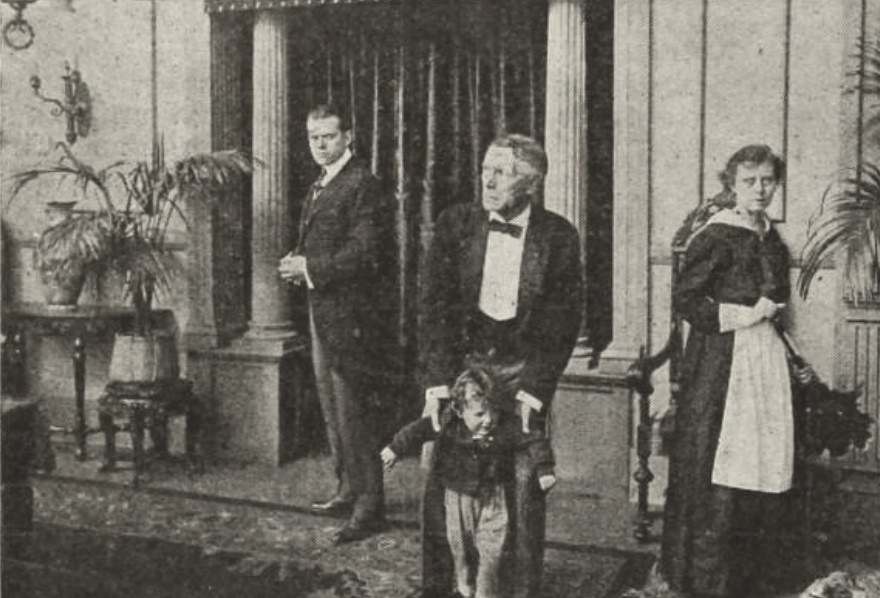
In the annals of early cinema, certain narratives emerge not merely as fleeting entertainment but as profound societal reflections, etching themselves into the collective consciousness with an indelible ink. 'The Heart of Ezra Greer' stands as one such enduring testament, a silent film that, despite the passage of a century, continues to articulate universal truths about love, sacrifice, class struggle, and the arduous path to redemption. It is a melodrama, yes, but one elevated by its sincere emotional core and a narrative craftsmanship that belies its era. This isn't just a story; it's a meticulously woven tapestry of human frailty and resilience, presented through the eloquent visual language that defined the silent era.
At its core, the film is a poignant exploration of paternal love, personified by the venerable Ezra Greer, brought to life with understated dignity by Frederick Warde. Ezra is not merely a butler; he is a silent titan of sacrifice, dedicating his every meager saving to propel his daughter, Mary, into a world of opportunity far removed from his own. This act of selfless devotion forms the bedrock of the narrative, establishing a moral compass against which all subsequent betrayals and triumphs are measured. Warde's portrayal, though wordless, communicates volumes – the subtle slump of his shoulders under the weight of concern, the flicker of hope in his eyes, the unwavering resolve of a father determined to provide a better life. It’s a performance that speaks to the innate human desire for progeny to flourish, often at great personal cost. The film masterfully builds this foundation of love, making Mary's subsequent fall from grace all the more gut-wrenching, not just for her, but for the devastating impact it has on the man who gave her everything.
Mary, depicted with a delicate blend of innocence and burgeoning strength by Leila Frost, finds herself entangled in a classic cinematic dilemma: love across the chasm of class. Her romance with John Denbeigh, portrayed by Gerald Badgley, is initially a whirlwind of youthful passion, untainted by the harsh realities of social stratification. However, the narrative swiftly introduces the formidable obstacle of John's guardian, a symbol of rigid societal norms and the unyielding power of inherited wealth. This refusal to sanction their union is not just a plot device; it's a stark commentary on the era's class prejudices, where love was often secondary to lineage and financial standing. John's subsequent abandonment of Mary, exacerbated by her pregnancy, transforms the innocent romance into a searing indictment of privilege and irresponsibility. Frost captures Mary's descent into shame and self-reliance with a compelling vulnerability, showcasing the societal pressures placed upon women in such predicaments during that period. Her choice to support herself through sewing, rather than return to her father in disgrace, speaks volumes about her pride and the crushing weight of social stigma.
The brilliance of Lloyd Lonergan's screenplay lies in its intricate use of dramatic irony, particularly when Ezra, still searching for Mary, unwittingly accepts a position as John Denbeigh's butler. This proximity, fraught with unspoken tension and the specter of past betrayal, elevates the film from a simple melodrama to a sophisticated study of human connection and consequence. The audience is privy to a truth that Ezra is not, creating a powerful sense of anticipation and dread. It’s a narrative device that resonates with the complexities of fate and the often-unseen threads that bind lives together, recalling the intricate social webs explored in works like Les misérables, where characters' lives intersect in unforeseen and often agonizing ways due to societal pressures and personal choices.
The arrival of the infant on John's doorstep is a pivotal moment, a catalyst for transformation. It is here that the film truly begins its journey into redemption. Ezra, unaware that this foundling is his own grandchild, takes on the role of caregiver with the same quiet devotion he showed Mary. His tender care and subtle influence begin to chip away at John's superficiality, instilling in him a nascent sense of responsibility. This indirect mentorship, where the betrayer is guided by the betrayed's father, is a masterstroke of storytelling. It highlights the profound impact of compassionate action, even when the full truth remains obscured. John's gradual reformation, his forsaking of the 'vamp' Amy Le Vere (a character type prevalent in early cinema, embodying temptation and moral laxity), signifies a turning point. It's not a sudden conversion but a slow, believable awakening to the duties of fatherhood and the emptiness of a life devoid of genuine connection. The silent film medium, without dialogue, excels at conveying these internal shifts through subtle gestures, facial expressions, and the interplay of light and shadow, and Badgley's performance effectively communicates this evolution.
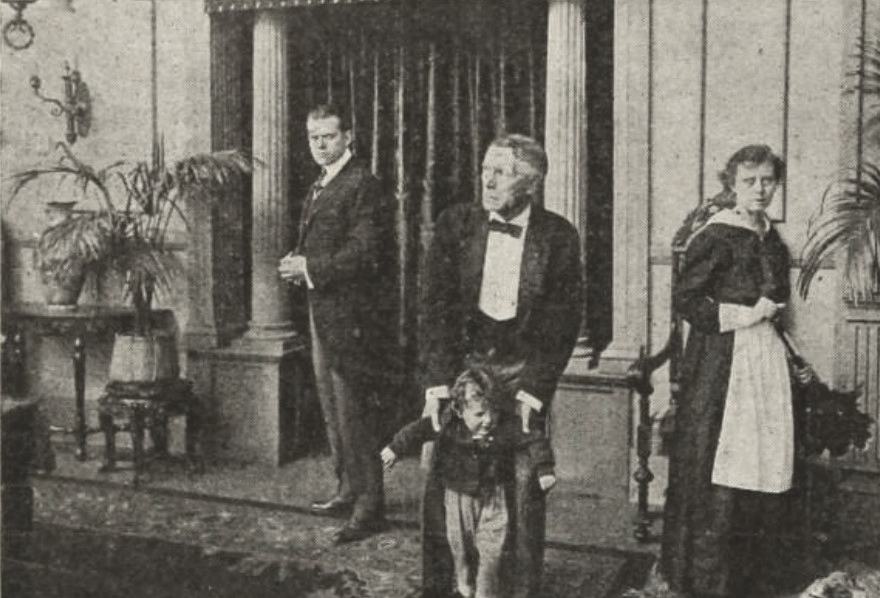
'The Heart of Ezra Greer' is a quintessential example of silent film's power to convey complex emotional narratives without a single spoken word. The performances, particularly those of Warde and Frost, rely on exaggerated yet sincere expressions, grand gestures, and the art of pantomime to communicate inner turmoil, joy, sorrow, and resolve. The visual storytelling, characteristic of the era, uses close-ups to emphasize emotional states and wider shots to establish social contexts, such as the opulence of John's home contrasting with Mary's solitary existence. The pacing, while perhaps slower by modern standards, allows for a deeper immersion into the characters' emotional journeys, building suspense and empathy with deliberate precision. The intertitles serve as crucial narrative guides, but the true brilliance lies in the actors' ability to transcend these textual interruptions, making the audience feel the weight of their unspoken words and unexpressed feelings. This era's films, like Frou Frou, often excelled in portraying the internal struggles of their characters through such visual means, drawing the audience into their psychological landscapes.
The film's exploration of class disparity is particularly stark. Ezra's life of service, his constant struggle to save, stands in stark contrast to John's inherited wealth and initial heedlessness. The narrative subtly critiques the societal structures that allow a guardian to dictate a wealthy young man's marriage while leaving a young woman from a lower class to face the consequences of an unsanctioned union alone. This theme of class conflict and its impact on personal destinies is a recurring motif in cinema, seen in other contemporary films like Blue Blood and Red, which similarly grappled with the rigid social strata of the time. The film posits that true nobility lies not in birthright but in character, in the capacity for love, sacrifice, and ultimately, responsibility. The journey of John Denbeigh from a privileged, irresponsible youth to a man of integrity underscores this message forcefully.
The climax of 'The Heart of Ezra Greer' is a masterclass in emotional release. The moment John discovers the foundling is his own child, and subsequently proposes to Mary, is not just a happy ending; it's a profound validation of the film's thematic trajectory. It’s a moment of truth, of reckoning, and ultimately, of healing. The family's reunion, with Ezra as the beloved grandfather, is the emotional crescendo, bringing full circle the cycle of sacrifice, betrayal, and forgiveness. It’s a powerful statement on the enduring strength of familial bonds and the possibility of redemption, even in the face of grave errors. This resolution, while perhaps fitting a melodramatic convention, feels earned due to the arduous journey the characters undertake. It mirrors the emotional arc found in other classic melodramas like Lena Rivers or Not My Sister, where hidden truths and societal pressures eventually give way to reconciliation and justice.
The lasting legacy of 'The Heart of Ezra Greer' lies in its ability to transcend its period setting and speak to timeless human experiences. It reminds us that sacrifice is often the purest form of love, that societal judgment can be a crushing force, and that the path to moral awakening is rarely straightforward. The film's nuanced portrayal of character development, particularly John's journey from thoughtless privilege to responsible fatherhood, offers a compelling study of personal growth. Frederick Warde's Ezra Greer remains an iconic figure of quiet strength and unwavering devotion, a testament to the profound power of a father's love. Even today, watching this film is not merely an exercise in historical appreciation; it is an emotional journey that resonates deeply, prompting reflection on our own capacities for empathy, forgiveness, and enduring love. It's a reminder that some stories, told with sincerity and heart, truly are timeless.
In an era of rapid technological advancement in filmmaking, 'The Heart of Ezra Greer' stands as a powerful argument for the enduring impact of compelling narrative and authentic human emotion. It's a silent film that speaks volumes, a historical artifact that feels remarkably relevant, and a cinematic experience that continues to touch the 'heart' of its audience, just as its title promises. The performances, the intricate plot, and the profound thematic explorations combine to create a work that is not just a film from the past, but a story for all time. It is a testament to the fact that the human condition, with all its triumphs and tribulations, remains a fertile ground for compelling artistry, regardless of the medium or the era. This film is more than just a historical curiosity; it is a vibrant, beating heart of early cinematic storytelling, deserving of its place in the pantheon of classic dramas. Its ability to evoke such deep emotional responses without spoken dialogue is a testament to the artistry of its creators and the raw power of visual narrative.
IMDb —
1921
Community
Log in to comment.