DbcultAccessing Vault...
Cult Review
Senior Film Conservator
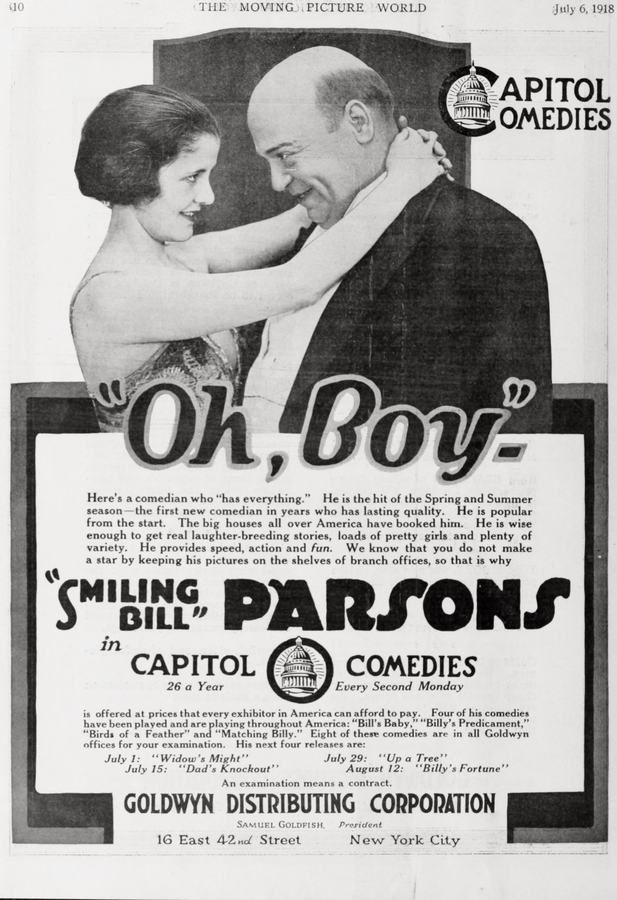
Silent cinema, in its primal power, often thrived on elemental conflicts – light against dark, virtue against vice, the settled against the rootless. William Parsons's portrayal of Bill in Tom Bret's Bill Settles Down (1916) embodies this latter tension with a profound, almost geological stillness. He doesn't merely enter the frame; he materializes like a weather-beaten monolith deposited by unseen forces onto the windswept plains, instantly disrupting the fragile equilibrium of a community defined by its insular rhythms. The earth seems to shift underfoot with his arrival. Parsons masterfully conveys Bill's history not through expositional title cards, but through the weary set of his shoulders, the guarded depth in his eyes that have scanned too many horizons, and the deliberate economy of his movements, suggesting a man conserving energy for survival's perpetual demands. He is less a character introduced than a force of nature encountered, an embodiment of the vast, unsettling 'outside' washing up on the shores of parochial certainty.
His initial interaction with Widow Gable – a transaction purely of labor for basic shelter – establishes the film's central dynamic: Bill seeks only the most fundamental anchorage, a respite from the ceaseless drift. Yet, his very competence, particularly his intuitive, almost mystical rapport with animals (a stark contrast to the often-brutish handling seen elsewhere), becomes an immediate point of friction. This skill is not celebrated; it is perceived as alien, potentially threatening, especially by Silas Thorpe. Thorpe, played with simmering, bulldog intensity by an actor lost to time, embodies the possessive territoriality of the settled. His resentment isn't solely professional jealousy over Bill's way with a horse; it's deeply personal, entwined with his perceived ownership of Ada Marsh. Ada represents the community's future, its continuity, and Thorpe views her as rightfully his – another possession to be secured alongside his land and his granary. Bill's quiet presence, his simple existence near Ada, becomes an intolerable affront to Thorpe's rigidly ordered world.
The granary fire isn't merely a plot device; it's the catalytic crucible where latent suspicion erupts into violent certainty. Bret’s direction excels here. The blaze itself is a terrifying spectacle for 1916, flickering tongues of light consuming the dark frame, casting monstrous, dancing shadows – a visual metaphor for the consuming hysteria about to engulf the town. Thorpe’s reaction is instantaneous and calculated: not grief for the loss, but fury weaponized into accusation. He points a trembling, righteous finger at Bill, the convenient stranger, the perpetual scapegoat. His performance transforms from simmering resentment to volcanic, self-righteous rage. The speed with which the community rallies to Thorpe’s cry is chilling, a stark depiction of how easily fear erodes reason and neighborly bonds dissolve into mob mentality. The rhythmic pounding of fists on tables, the wild gesticulations captured in stark silhouette, the grim determination etched on faces illuminated by flickering lanterns – these are not individuals seeking justice, but a collective organism seeking catharsis through the destruction of the ‘other’. This sequence shares a visceral, unsettling energy with the vigilante fervor depicted in contemporaneous films like The Trap, though Bill Settles Down feels less melodramatic, more grounded in a terrifying plausibility.
Bill’s stoicism in the face of this rising tide is Parsons’ finest moment. There’s no grand defiance, only a weary resignation, a profound understanding of how these dynamics play out. He knows explanations from him are futile; his very identity condemns him. The resignation in his posture as the mob approaches speaks volumes about the loneliness of the perpetual outsider. The film teeters on the brink of a tragedy, a grim reflection of society's brutal tendency to expel the unfamiliar. The tension is palpable, thick enough to choke on.
Salvation arrives not with a cavalry charge, but with the quiet, terrified courage of Ada Marsh. Her intervention is the film’s pivotal moral turn. Having witnessed Thorpe's careless discard of a smoldering pipe ember near dry tinder – the true, mundane origin of the disaster – she carries the crushing weight of truth. The pressure to remain silent, to conform to Thorpe's narrative and the community's bloodlust, must have been immense. Yet, she steps forward. Her testimony, delivered with trembling hands and downcast eyes initially, then gathering strength as she locks onto Thorpe’s shocked visage, is electrifying. It’s a powerful moment, not just for the plot, but for the silent era’s often-understated portrayal of female agency against overwhelming masculine pressure. Ada isn’t a damsel; she’s the catalyst for justice. Her action dismantles Thorpe's carefully constructed edifice of blame and authority in seconds.
Thorpe’s implosion is swift and complete. The bullying facade crumbles into abject shame and panic. His flight from the town isn't just an escape from punishment; it’s a rejection of the community he sought to dominate, a final, cowardly act of self-preservation. The mob’s energy dissipates as quickly as it formed, leaving behind an awkward residue of guilt and confusion. Their unified rage fragments into scattered shame, avoiding each other's eyes. The focus shifts to Bill, the man they were ready to destroy. The collective gaze upon him now holds a different quality – not suspicion, but a dawning, uncomfortable recognition of their own prejudice.
The film’s resolution, Bill finally ‘settling down’, is far more complex and poignant than a simple happy ending. It’s a victory tempered by the harrowing experience that preceded it. The community’s acceptance feels less like a warm embrace and more like a begrudging acknowledgment of their error, a collective sigh of relief that they didn’t commit an irrevocable atrocity. Bill’s decision to stay is not born of sudden, deep affection for the town, but perhaps of a profound exhaustion with the road, a recognition that this hard-won, fragile sanctuary, however imperfect, is preferable to the relentless uncertainty beyond its borders. There’s a quiet melancholy in Parsons’ final scenes. The weight hasn't lifted; it has merely shifted. He’s exchanged the burden of rootlessness for the burden of knowing exactly how conditional his welcome truly is. The settlement offers physical shelter, but the psychological scars of being the designated pariah run deep. This complexity elevates Bill Settles Down above simpler contemporary morality tales like The Gentleman from Indiana, which often resolved outsider narratives with unambiguous communal jubilation.
Bret and his cinematographer wield the stark landscape as a powerful narrative and thematic tool. The vast, often empty expanses of prairie surrounding the settlement aren't merely a backdrop; they are a constant, oppressive presence. Wide shots emphasize the characters' insignificance against the immense sky and relentless flatness, mirroring Bill’s isolation and the town’s vulnerability to both natural and human threats. The play of light is crucial – harsh, bleaching sunlight exposes every line of worry and suspicion during the day, while the deep, velvety blacks of night provide cover for clandestine meetings and the gathering mob, pierced only by the accusing beams of lanterns or the destructive glow of fire. The framing often isolates characters within doorways or windows, visually reinforcing themes of exclusion and observation. There’s a tangible texture to the environment – the grit of the dust, the coarse fabric of work clothes, the weathered wood of the buildings – that grounds the drama in a palpable reality, reminiscent of the evocative naturalism aimed for (though not always achieved) in films like Unexpected Places. This visual language underscores the film’s central tension: the human struggle for connection and security within an indifferent, often hostile, natural world.
Parsons’ performance is a masterclass in silent film acting, relying on profound physicality and expressive nuance over broad pantomime. His Bill communicates volumes through the slightest adjustments: the tightening of his jaw when challenged, the softening around the eyes when working with animals, the subtle slump of defeat when accused, the cautious, almost imperceptible straightening of his posture after his vindication. He embodies the weary dignity of the unjustly accused, evoking comparisons to later, more famous performances of stoic endurance, yet feels uniquely rooted in the silent idiom. His chemistry with the actress playing Ada is based on shared glances and unspoken understanding, a connection that feels genuine amidst the surrounding hostility.
Tom Bret’s screenplay, translated through direction, demonstrates remarkable economy. Subplots are minimal, focusing relentlessly on the central conflict. The title cards are sparse and impactful, used primarily for essential dialogue or crucial narrative pivots (like Ada’s damning revelation), trusting the visuals and performances to convey the emotional and psychological depth. This restraint gives the film a taut, urgent pace, particularly in its second half. While it shares thematic ground with other ‘outsider’ narratives of 1916, such as The Hawk (which explores redemption through action) or Out of the Night (often more melodramatic in its depiction of societal reintegration), Bill Settles Down distinguishes itself through its psychological realism and the unsettling plausibility of its mob dynamic. It avoids the serialized sensationalism of The Mysteries of Myra or the romantic espionage of Die Prinzessin von Neutralien, opting instead for a raw, unflinching look at communal prejudice.
Watching Bill Settles Down over a century later, its core conflict resonates with unnerving familiarity. The fear of the ‘other’, the speed with which communities can coalesce around a scapegoat in times of crisis, the fragility of reputation, and the arduous path to acceptance for the outsider – these are not relics of 1916. They are persistent human conditions. The film serves as a stark, silent reminder of how easily reason can be consumed by collective hysteria and how courage often resides in the quietest voice speaking an inconvenient truth. Its power lies not in grand spectacle, but in its intimate, uncomfortable examination of human nature under pressure.
While the restoration quality varies, the surviving prints reveal a film of significant artistic ambition and emotional weight. Parsons deserves rediscovery as a leading man of considerable depth. Bret’s direction is assured, favoring atmospheric composition and psychological tension over frenetic action. Bill Settles Down doesn’t offer escapism; it offers a mirror, albeit one framed by the aesthetics of silent cinema, reflecting back our enduring struggles with belonging, suspicion, and the difficult, often incomplete, journey towards redemption and acceptance. It’s a prairie gothic tale, stripped of supernatural elements, revealing the very real monsters that dwell within the human heart and the fragile settlements we build against the void. The final image of Bill, looking out not towards the open road, but towards the community that nearly destroyed him, is hauntingly ambiguous – is it resolution, or merely a pause in an endless negotiation between the self and the world?
IMDb —
1923
Community
Log in to comment.