DbcultAccessing Vault...
Cult Review
Senior Film Conservator
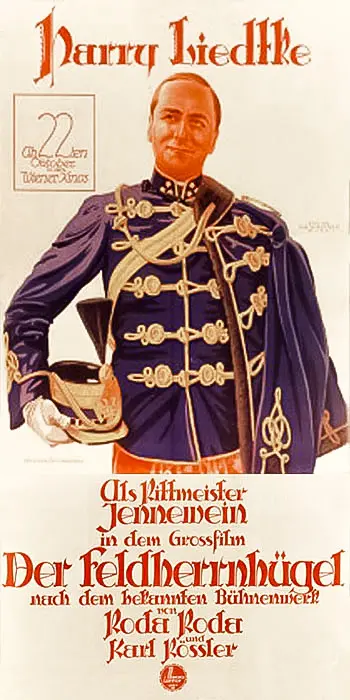
Is 'Der Feldherrnhügel' a silent comedy worth unearthing in the modern era? Short answer: absolutely, but with a few caveats that demand a specific kind of viewer. This 1926 German satire, with its star-studded ensemble of the era, offers a fascinating glimpse into the comedic sensibilities of Weimar Germany, making it a compelling watch for historians of cinema and dedicated silent film enthusiasts, yet it might prove a challenging experience for those accustomed to contemporary pacing and narrative structures.
It’s a film that, despite its age, still possesses a certain spark, a gentle but incisive wit that pokes fun at timeless human follies. However, its deliberate rhythm and reliance on visual gags without the benefit of sound can, at times, test the patience of even the most dedicated cinephile. This is a film for those who appreciate the artistry of the silent era, particularly German Expressionism's lighter side, and aren't afraid to engage with a historical artifact on its own terms.
This film works because it taps into the universal and enduring humor of social satire, particularly the absurdity of military hierarchy and bureaucratic pomposity. Its ensemble cast, featuring comedic titans of the era, delivers performances that transcend the silent medium, bringing a tangible energy to the screen.
This film fails because its pacing, characteristic of many silent features, can feel exceptionally slow by modern standards, occasionally diluting the impact of its clever gags. The lack of audible dialogue also means some of the more nuanced satirical jabs might be lost without historical context or careful attention to intertitles.
You should watch it if you are a devoted fan of silent cinema, particularly German comedies and satires, or if you are interested in the evolution of comedic performance and storytelling. It’s a historical document as much as it is entertainment, offering unique insights into a bygone era.
At its core, 'Der Feldherrnhügel' is a masterclass in observational comedy, dissecting the often-ludicrous dance between authority and absurdity. The title itself, 'The Commander's Hill,' evokes a sense of elevated, almost divine, self-importance that the film then proceeds to playfully dismantle. It's a testament to the writers Carl Rößler, Robert Liebmann, and Roda-Roda, that the themes of petty power, misguided regulations, and the sheer human capacity for taking oneself too seriously, remain as fresh today as they were in 1926. One can easily draw parallels to modern office politics or government inefficiencies, proving that some comedic gold is truly timeless.
The film’s genius lies in its ability to highlight these universal truths without resorting to heavy-handed moralizing. Instead, it invites the audience to laugh alongside (or perhaps, at) its characters, recognizing fragments of themselves or their own experiences in the exaggerated, yet oddly familiar, scenarios unfolding on screen. It’s a gentle prodding rather than a sharp jab, and this tone is what gives the film its lasting appeal.
Directing a silent comedy, especially one rooted in social commentary, requires a keen eye for visual storytelling and a nuanced understanding of comedic timing without the aid of spoken lines. While specific directorial credits for 'Der Feldherrnhügel' are less emphasized in historical records than the writers and cast, the film's execution suggests a clear vision. The framing of scenes, for instance, often emphasizes the spatial hierarchy of military settings, with officers literally looking down on their subordinates or civilians, only for their posturing to be comically undermined by a well-placed prop or an unexpected reaction shot.
The use of depth and blocking in key scenes, such as a bustling regimental office or a formal social gathering, would have been crucial. Imagine a scene where a pompous general, perhaps played by Karl Forest, delivers a grand pronouncement to a line of increasingly bewildered subordinates, while in the background, a junior officer, oblivious, struggles comically with a piece of equipment. This layered visual information is essential for silent comedy, allowing multiple gags to play out simultaneously and enriching the satirical texture.
The strength of 'Der Feldherrnhügel' is undeniably its ensemble cast, a veritable who's who of German and Austrian talent from the 1920s. Actors like Hans Moser, Mizzi Zwerenz, Olga Tschechowa, and Harry Liedtke bring distinct energies to their roles, turning archetypes into memorable characters. Hans Moser, in particular, with his signature nervous tics and wide-eyed exasperation, would have been a comedic anchor, likely playing a put-upon subordinate or a bewildered civilian caught in the military machine's gears. His physical comedy, often subtle but always precise, would have translated perfectly to the silent screen, eliciting knowing chuckles from the audience.
Olga Tschechowa, known for her elegance and dramatic range, would have provided a counterpoint, perhaps as a sophisticated socialite navigating the military's rigid social circles, her subtle expressions conveying more than any intertitle could. The interplay between these diverse acting styles — from Moser's broad humor to Tschechowa's refined wit — is what elevates the film beyond mere slapstick into genuine social satire. Even without dialogue, the personalities shine through, a testament to their craft.
In a silent film, cinematography and set design become characters in themselves, conveying mood, status, and comedic intent. For 'Der Feldherrnhügel,' the visual language would have been paramount in establishing its satirical tone. Imagine the meticulous, almost suffocating, detail of military uniforms and headquarters, contrasted sharply with the more relaxed, flowing lines of civilian attire or the chaotic clutter of a non-military setting. This visual juxtaposition immediately communicates the film’s central conflict: the clash of two worlds.
Cinematography likely employed clear, uncluttered shots to allow the actors' expressions and physical comedy to take center stage. Close-ups on a bewildered face, a rolling eye, or a subtle smirk would have delivered much of the humor. The use of deep focus in certain scenes could have highlighted the absurd details in the background, such as an overly decorated office or a hilariously out-of-place object, adding layers to the comedic narrative. It’s a subtle art, often overlooked, but essential for a film of this nature to truly land its punches.
The pacing of 'Der Feldherrnhügel,' like many silent films, is a double-edged sword. On one hand, the deliberate rhythm allows for a slow build-up of comedic tension, giving the audience time to absorb the visual gags and character reactions. This unhurried approach is part of its charm, a window into a different era of storytelling where brevity wasn't always the primary goal. It demands a certain patience, a willingness to surrender to its flow, which can be immensely rewarding for those who embrace it.
On the other hand, for modern viewers accustomed to rapid-fire editing and constant narrative propulsion, this pacing can feel sluggish. Some gags might overstay their welcome, and the satirical points, while clever, might take longer to register. The tone, however, is consistently light and playful. Even when critiquing societal norms, the film never dips into cynicism or overt anger. It's a good-natured ribbing, a gentle reminder that pomp and circumstance are often just a facade for human fallibility. This particular balance of tone is a standout feature, making it eminently rewatchable for its target audience.
Yes, 'Der Feldherrnhügel' is absolutely worth watching, but with a significant caveat. It’s not a film for casual viewing or for those new to silent cinema. It demands an appreciation for historical context, a tolerance for slower pacing, and a genuine interest in the comedic styles of the 1920s.
For silent film aficionados, however, it is a delightful discovery. Its sharp social commentary, delivered through brilliant visual gags and stellar performances, offers a unique window into German satire of the period. It provides a fascinating counterpoint to more dramatic or expressionistic films of its time, such as The Oath of Stephan Huller, showcasing the breadth of silent cinema's artistic reach. Its value lies less in its immediate entertainment for all and more in its enduring cultural and artistic significance for the discerning viewer.
"Der Feldherrnhügel" is a fascinating artifact, a comedic time capsule that, despite its nearly century-old vintage, still manages to deliver a chuckle or two. It works. But it’s flawed. Its brilliance lies in its ability to transcend the limitations of its medium through the sheer force of its performers and the timelessness of its satirical targets. While it will never be a blockbuster for the masses, for those willing to engage with its particular rhythm and historical context, it offers a rich, rewarding experience. It’s a testament to the power of silent cinema to communicate complex ideas and emotions, even without a single spoken word. It’s not just a film; it’s a conversation with the past, a witty dialogue on human nature that continues to resonate. Don't go in expecting 'Behind the Front' levels of slapstick; expect a more refined, observational humor. It's a film that earns its place on the 'commander's hill' of silent comedy, not through force, but through charm and enduring wit.
IMDb 7.2
1937
Community
Log in to comment.