DbcultAccessing Vault...
Cult Review
Senior Film Conservator
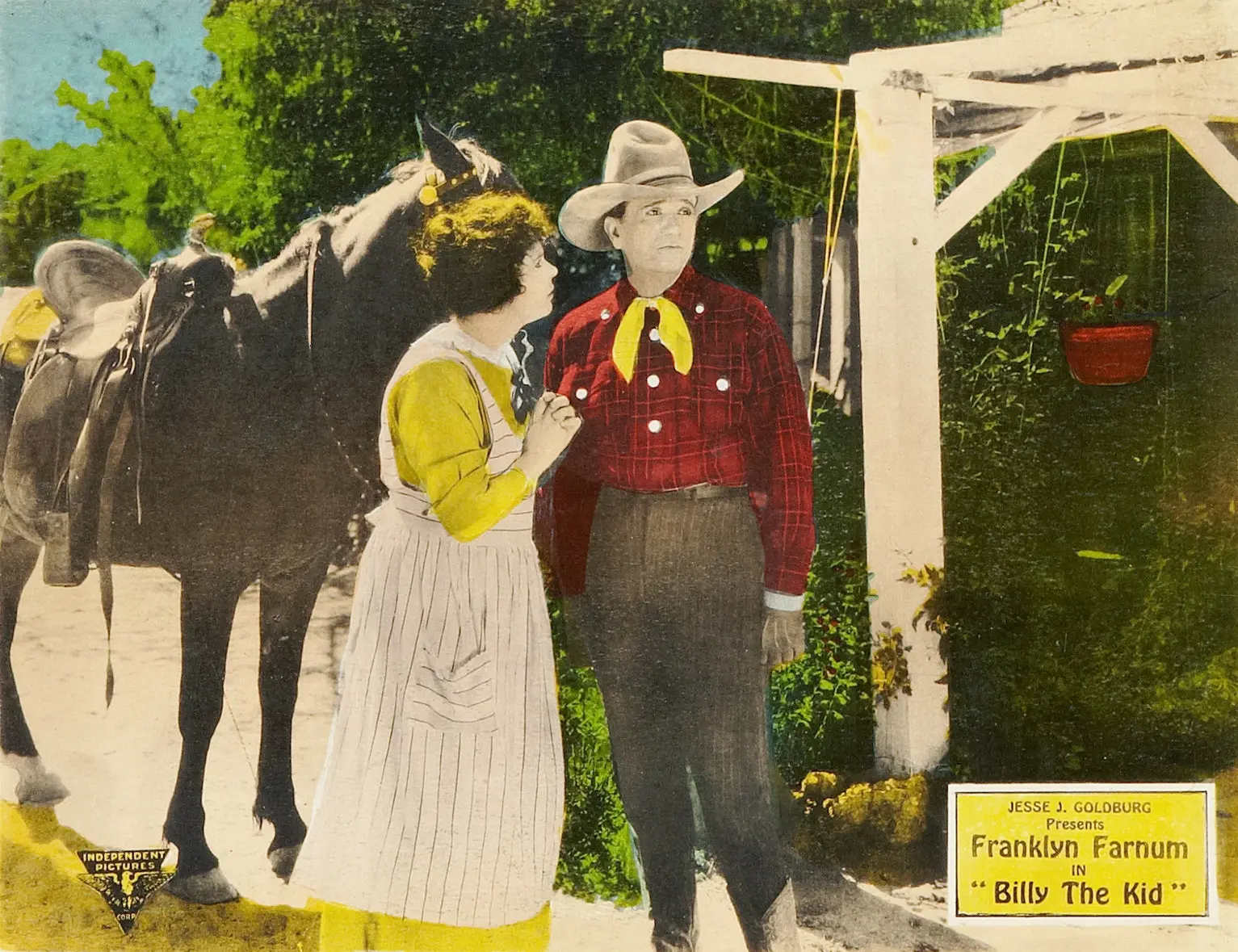
Is 'Billy the Kid' (1922) a film worth seeking out in the crowded landscape of modern cinema? Short answer: yes, but with significant caveats. This early Western offers a fascinating glimpse into the nascent stages of American filmmaking and the enduring appeal of its central legend, making it a valuable historical artifact.
This film is absolutely for cinephiles, historians, and anyone with a deep interest in the evolution of the Western genre or silent-era storytelling. It is emphatically NOT for viewers accustomed to contemporary pacing, complex character arcs, or high-fidelity production values, as its conventions and technical limitations will likely prove a barrier.
'Billy the Kid' (1922), directed and co-written by J.P. McGowan, stands as a foundational brick in the sprawling edifice of the Western genre. It's a film that doesn't just tell a story; it actively participates in the construction of a national myth. To approach this film with anything less than an understanding of its historical context is to miss its profound significance. This isn't just a movie; it's a timestamp, a relic from an era when cinema was still finding its voice, particularly in how it would immortalize figures of the American frontier.
The film's very existence speaks volumes about the immediate cultural impact of figures like Billy the Kid, even decades after their demise. The legend was fresh, the West still wild in the collective imagination, and cinema was the perfect new medium to amplify these tales. McGowan, a prolific actor, director, and writer of the era, understood this inherently. He crafted a narrative that, while perhaps simplistic by today's standards, was deeply resonant with audiences of the time, who craved tales of adventure, rebellion, and the stark justice of the frontier.
What's immediately striking is the film's reliance on visual storytelling. Dialogue cards are sparse, serving more as narrative bridges than comprehensive exposition. This forces the viewer to engage with the performances and the cinematography in a way modern films rarely demand. It's a silent symphony of dust, horses, and grim determination, punctuated by moments of swift, often brutal, action. The aesthetic is raw, unpolished, yet undeniably effective in conveying the harshness of the environment and the desperate lives led within it.
J.P. McGowan's direction, while not groundbreaking by D.W. Griffith's standards, is efficient and functional. He understands the mechanics of building tension through chase sequences and standoffs, even if the editing feels somewhat rudimentary. The camera is largely static, observing the action rather than actively participating in it, a common trait of early cinema. Yet, within these constraints, McGowan manages to convey a sense of urgency and danger that is surprisingly effective.
The pacing of 'Billy the Kid' is, for contemporary audiences, likely to be its most challenging aspect. It moves with a deliberate, almost stately rhythm, punctuated by bursts of action. There are long stretches dedicated to establishing mood or location, often through wide shots of expansive landscapes. While some might find this slow, it actually serves to emphasize the vastness and isolation of the Western frontier, a crucial element in understanding the legend of Billy the Kid. Unlike the frenetic cuts of modern action films, this film allows scenes to breathe, allowing the audience to absorb the atmosphere.
One particular sequence, early in the film, depicting Billy's initial brushes with the law, showcases this deliberate pacing. Rather than a quick montage, we see individual moments of transgression and consequence unfold, each given ample screen time. This builds a sense of inevitability around Billy's path, rather than presenting it as a sudden, inexplicable shift. It's a slow burn that ultimately leads to a tragic conflagration.
The cast, featuring Dorothy Wood, Slim Whitaker, Robert Walker, J.P. McGowan himself, and Franklyn Farnum, delivers performances that are very much in line with the acting conventions of the silent era. Exaggerated gestures, expressive facial movements, and clear physical blocking are paramount, designed to convey emotion and intent without spoken words. This style, often perceived as melodramatic today, was the universal language of early cinema.
Robert Walker, as Billy the Kid, embodies the youthful defiance and eventual weariness of the character. He's not given the luxury of subtle internal conflict; instead, his performance is a series of outward manifestations of inner turmoil. His eyes, in particular, often convey a haunted quality, suggesting a soul trapped by circumstance. While not a performance that delves into psychological depth, it's effective in establishing Billy as a compelling, albeit tragic, figure of rebellion. His portrayal, for instance, in the climactic pursuit scenes, relies heavily on physical exertion and a pervasive sense of desperation, rather than nuanced dialogue, to communicate his plight.
"The film's portrayal of Billy isn't about moralizing; it's about mythologizing. It's less a biography and more a ballad, sung through the lens of a camera."
Dorothy Wood, likely playing a love interest or a sympathetic female figure, provides a necessary counterpoint to the masculine, often brutal world of the frontier. Her performance, while also adhering to silent film conventions, brings a touch of vulnerability and humanity to the narrative, reminding the audience of the stakes beyond mere gunfights. Slim Whitaker and Franklyn Farnum, likely portraying lawmen or rival outlaws, are suitably menacing or resolute, fulfilling their archetypal roles with conviction. J.P. McGowan, in his dual role as director and actor, probably casts himself in a significant supporting role, demonstrating the multi-hyphenate nature of early Hollywood talent.
The cinematography in 'Billy the Kid' is perhaps its strongest suit, particularly in how it utilizes the vast, rugged landscapes of the American West. The film often employs wide, sweeping shots that emphasize the isolation and grandeur of the natural environment. These vistas are not merely backdrops; they are active participants in the story, shaping the characters' destinies and reflecting the epic scale of the legend itself.
The use of natural light, a necessity in early filmmaking, lends an authentic, almost documentary-like quality to many scenes. Sunlight glares off dusty trails, shadows lengthen dramatically at dusk, and the harshness of the environment is palpable. There's a particular shot, early on, of a lone rider silhouetted against a vast, empty horizon, that perfectly encapsulates the film's tone and its subject's solitary journey. It’s simple. But it’s powerful.
Production design, while undoubtedly modest by today's standards, is effective in creating a believable frontier world. Rustic cabins, dusty saloons, and sparsely furnished interiors all contribute to the film's sense of authenticity. The costumes, too, feel period-appropriate, avoiding the overly romanticized depictions that would sometimes creep into later Westerns. It’s clear that a genuine effort was made to ground the film in the visual reality of its setting, even with limited resources. This commitment to verisimilitude is, in my opinion, one of its most commendable aspects. It feels lived-in, not merely constructed.
'Billy the Kid' delves into themes that remain perennial in the Western genre: freedom versus law, the making of a legend, and the often-blurred lines between hero and villain. The film, through its portrayal of Billy, questions the very nature of justice in a land where law is often arbitrary and survival is paramount. Is Billy a cold-blooded killer, or a product of his environment, driven to desperate measures?
The film doesn't offer easy answers, instead presenting Billy as a figure caught in a relentless cycle of violence and pursuit. This ambiguity is crucial to the enduring appeal of the legend. It allows successive generations of filmmakers and audiences to project their own interpretations onto the character, making him a malleable symbol of rebellion against authority, or a cautionary tale of a life squandered. This early film sets the stage for many later Westerns, establishing visual and narrative tropes that would be refined over decades.
One surprising observation is how little the film relies on overt glorification. While it certainly portrays Billy as charismatic, it also never shies away from the harsh consequences of his actions. There’s a stark realism here, almost a fatalism, that distinguishes it from some of the more overtly romanticized outlaw narratives that followed. It works. But it’s flawed. This film is more interested in the inevitability of the legend than in celebrating every bullet fired.
'Billy the Kid' (1922) is not a film to be judged by contemporary standards of entertainment. It is, instead, a vital piece of cinematic history, a rough-hewn artifact that offers a window into the nascent art of filmmaking and the powerful, enduring appeal of the American frontier legend. It's a film that demands patience and an appreciation for its historical context, rewarding those who are willing to look beyond its technical limitations.
While it may not captivate a general audience today, its importance to the Western genre cannot be overstated. It laid groundwork. For those who understand its place in the cinematic lineage, from early silent comedies to epic historical dramas, 'Billy the Kid' is an essential viewing experience. It's a testament to the raw power of early cinema to create enduring myths, even with the simplest of tools. It’s not just good; it’s significant. And that, in itself, is a powerful form of recommendation.
IMDb —
1929
Community
Log in to comment.