DbcultAccessing Vault...
Cult Review
Senior Film Conservator
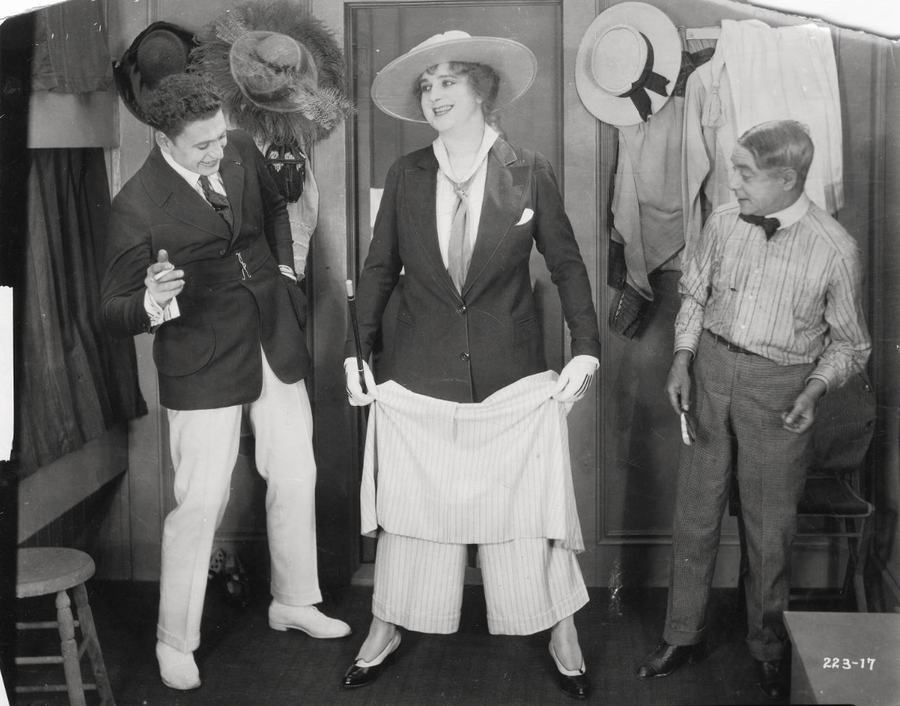
In the annals of early cinema, where the nascent art form was still discovering its voice and pushing the boundaries of societal norms, a film like The Clever Mrs. Carfax emerges as a particularly fascinating artifact. Released in 1917, this silent comedy, starring the legendary Julian Eltinge, is far more than a simple period piece; it’s a vibrant exploration of identity, deception, and the surprising pathways to love, all wrapped in a delightful package of cross-dressing farce. It's a testament to the era's adventurous spirit, unafraid to tackle themes that, even today, resonate with a certain contemporary edge.
At the heart of The Clever Mrs. Carfax lies the inimitable Julian Eltinge, a performer whose star shone brightly in the early 20th century as a vaudeville and Broadway sensation renowned for his exquisite female impersonations. To understand the film, one must first grasp the cultural phenomenon that was Eltinge. He wasn't merely a man in a dress; he was an artist who meticulously crafted female characters, embodying grace, wit, and often, an almost uncanny femininity. His stage presence was magnetic, and his transition to film, though brief in the grand scheme of his career, brought his unique talent to a broader audience. In an age before widespread discussions of gender fluidity, Eltinge's performances offered a complex interplay of perception and reality, challenging audiences to look beyond superficial appearances. His portrayal of Temple Trask, and more importantly, Mrs. Carfax, is a masterclass in this duality, forming the very bedrock of the film's charm and thematic depth.
The film opens by introducing us to Temple Trask, a newspaper publisher whose public persona as a hardened cynic belies his secret life as 'Mrs. Carfax,' the beloved agony aunt whose sagacious advice graces the pages of his publication. This initial paradox immediately establishes the film's playful tone and its central theme of hidden identities. Temple, as penned by Hector Turnbull and Gardner Hunting, is a man who believes he knows all there is to know about women, mostly negative, a conceit that sets him up for a deliciously ironic fall. His college reunion provides the perfect catalyst, reigniting his dormant passion for female impersonation, a skill that once made him the life of every party. This revival isn't just a nostalgic indulgence; it's the spark that ignites the entire comedic engine of the plot.
A casual wager with an old college chum, Billy Wise (played by Fred Church), dares Temple to enter a public restaurant still in his 'Mrs. Carfax' guise. It's a moment of delightful absurdity, a challenge accepted by a man who, despite his disdain for women, clearly relishes the performance. It is in this very restaurant, amidst the clinking of cutlery and hushed conversations, that destiny intervenes. Temple, still embodying the elegant Mrs. Carfax, spots Helen Scott (Mary Wise), and in a moment of cinematic magic, his cynical armor crumbles. The man who professed to detest women, who believed himself immune to their charms, finds himself utterly smitten. This immediate, visceral attraction is a crucial turning point, transforming the film from a mere cross-dressing comedy into a romantic farce with genuine emotional stakes.
The irony is palpable: Temple falls in love while disguised as the very gender he claims to despise, and Helen falls for him, both as the charming 'Mrs. Carfax' and later, as the enigmatic Temple. This double layer of attraction adds a rich complexity to the romance, making it more than just a boy-meets-girl narrative. The film cleverly uses the disguise not just for comedic effect, but as a vehicle for Temple's personal growth and emotional vulnerability. His initial cynicism, a protective shell, is gradually chipped away by genuine affection and the necessity of selfless action.
No good romantic comedy is complete without an antagonist, and The Clever Mrs. Carfax delivers with Adrian Graw (Noah Beery), a shadowy figure from Temple's past as a cub reporter. Graw's reappearance, coupled with his nefarious designs on Helen's fortune, provides the necessary narrative thrust and danger. Temple, now burdened by his newfound love and a keen sense of responsibility, realizes he must protect Helen. And what better way to do so than to re-don the disguise of 'Mrs. Carfax'? This decision elevates the cross-dressing from a mere comedic device to a heroic gambit, injecting a sense of thrilling adventure into the proceedings.
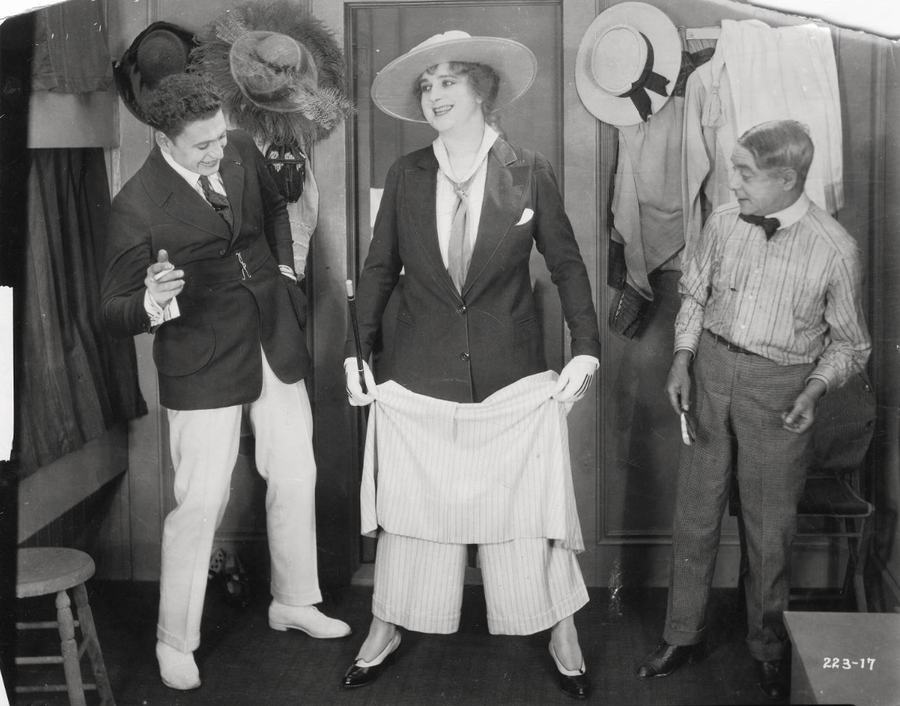
The ensuing steamer voyage, with 'Mrs. Carfax' accompanying Helen and her grandmother, Mrs. Keyes (Jennie Lee), becomes a confined stage for burgeoning relationships and escalating tension. Onboard, Helen, oblivious to the true identity of her companion, develops a deep and trusting friendship with 'Mrs. Carfax,' confiding in her, seeking her counsel, and finding comfort in her presence. Simultaneously, her interactions with Temple, albeit less frequent and often tinged with his internal struggle, ignite a different kind of spark. The film masterfully portrays this dual attraction, highlighting Helen's growing affection for both the wise, maternal 'Mrs. Carfax' and the dashing, albeit guarded, Temple. This intricate web of relationships is handled with a delicate touch, allowing the audience to appreciate the emotional authenticity beneath the comedic surface.
The climax aboard the steamer is a testament to the film's ability to blend slapstick with genuine peril. When Graw makes his move to steal Mrs. Keyes' bonds, 'Mrs. Carfax' springs into action, delivering a surprisingly forceful punch to the villain. This moment of physical comedy mixed with heroic valor is pivotal. It not only leads to Graw's arrest, along with his accomplice Rena Varsey (Rosita Marstini), but also provides the perfect setup for the grand reveal. The confrontation underscores the film's message: that courage and integrity can manifest in unexpected forms, even from behind a veil of disguise.
The final scene, where Temple dramatically removes his wig and reveals his true identity to a bewildered Helen, is the emotional crescendo of the film. It’s a moment of vulnerability and triumph, where all pretenses are stripped away. Helen's initial astonishment quickly gives way to joyful acceptance, as she falls into his arms. This resolution, while perhaps predictable for a romantic comedy, is earned through the film's careful development of its characters and their journey. It solidifies the idea that love transcends superficialities, that true connection can be forged even through layers of deception. The film doesn't just end with a kiss; it ends with the affirmation of a bond built on trust, friendship, and an undeniable, if unconventional, attraction.
Beyond its surface as a charming comedy, The Clever Mrs. Carfax offers a surprisingly rich tapestry of themes. The most obvious, of course, is the exploration of gender and identity. Julian Eltinge's performance is not merely a gag; it’s an examination of how society perceives and categorizes individuals based on outward appearance. Temple's ability to seamlessly inhabit a female persona, and the respect and affection he garners as 'Mrs. Carfax,' implicitly critiques rigid gender roles. As 'Mrs. Carfax,' he is a confidante, a protector, and a source of wisdom – qualities often associated with an idealized femininity. Yet, these are all aspects of Temple himself, demonstrating that these traits are not exclusive to one gender.
The film also delves into the nature of cynicism versus genuine emotion. Temple's initial worldview, shaped by his experiences as a reporter and perhaps the jadedness of a newspaper publisher, presents him as a man who believes he has seen it all and is beyond the follies of love. His transformation, catalyzed by Helen, is a powerful argument for the enduring power of human connection to soften even the hardest heart. This arc resonates with many classic romantic narratives, where a character must overcome internal barriers to embrace happiness.
Furthermore, the narrative subtly touches upon the idea of performance in everyday life. Temple is, in essence, always performing, whether as the stoic publisher, the wise 'Mrs. Carfax,' or the burgeoning lover. The film suggests that identity is often a fluid construct, shaped by circumstance and intention. The supporting performances by Fred De Shon and Daisy Jefferson, though perhaps less central, contribute to the vibrant ensemble, creating a believable world for Temple's elaborate charade to unfold within.
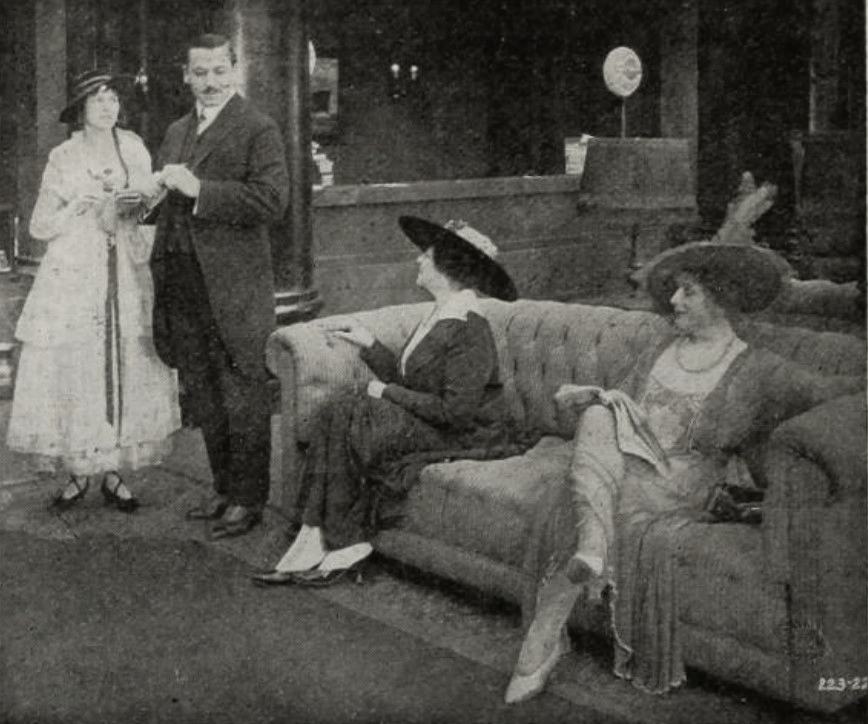
While The Clever Mrs. Carfax stands somewhat uniquely in its specific blend of comedic cross-dressing and romantic intrigue, its thematic underpinnings of deception, hidden identities, and the pursuit of love echo across various cinematic landscapes. One might draw a conceptual parallel to films that utilize disguise or mistaken identity to drive their plots, even if the tonality is different. For instance, while not a comedic cross-dressing vehicle, a film like The Black Box might share a common thread in its intricate layers of mystery and the uncovering of truth, where appearances are often misleading. The suspense in uncovering hidden motives, as Graw's true intentions are revealed, aligns with the tension found in such mystery narratives.
Similarly, the journey of a cynical protagonist finding love against their better judgment is a timeless trope. One could consider the emotional growth seen in Redeeming Love, for example, where characters overcome past traumas and hardened hearts to embrace genuine affection, albeit in a dramatically different context. The transformation of Temple Trask from a jaded observer to an active, protective lover, despite his initial protestations, is a powerful testament to love's transformative power, a theme that resonates universally.
Even films like An American Widow, which might explore societal expectations and the unconventional choices women make, albeit without the explicit cross-dressing element, share a spirit of challenging norms. The idea of 'Mrs. Carfax' offering advice, stepping into a role of authority and wisdom, could be seen as a subtle commentary on the evolving roles of women during that period, even if performed by a man. The strength and agency demonstrated by characters like Helen Scott and Mrs. Keyes, even as they are protected, further ground the film in the societal currents of its time.
The intricate plotting by writers Hector Turnbull and Gardner Hunting ensures that the various threads of deception, romance, and villainy are expertly woven, creating a compelling and entertaining experience. Their ability to balance the comedic elements of Eltinge's performance with the genuine emotional stakes of Temple's burgeoning love for Helen is commendable, especially within the constraints of silent film storytelling. Every intertitle, every gesture by the actors, had to convey layers of meaning, and the script provided a robust foundation for this visual storytelling.
The Clever Mrs. Carfax stands as a delightful example of early silent cinema's capacity for sophisticated storytelling and character development. It showcases Julian Eltinge's unparalleled talent, not just as a female impersonator, but as a compelling dramatic and comedic actor. His ability to convey both the outward elegance of Mrs. Carfax and the internal turmoil of Temple Trask with subtle gestures and expressions is remarkable. The film, in its entirety, is a charming, witty, and surprisingly heartfelt journey that transcends its period setting. It invites viewers to question perceptions, celebrate individuality, and ultimately, believe in the transformative power of love, even when it arrives in the most unexpected and elaborately disguised forms.
For those interested in the history of film, the evolution of gender representation, or simply a good old-fashioned romantic comedy with a twist, The Clever Mrs. Carfax remains a vital and thoroughly enjoyable watch. It’s a testament to the ingenuity of its creators and the timeless appeal of a well-told story, proving that cleverness, indeed, knows no gender.
IMDb —
1926
Community
Log in to comment.