DbcultAccessing Vault...
Cult Review
Senior Film Conservator
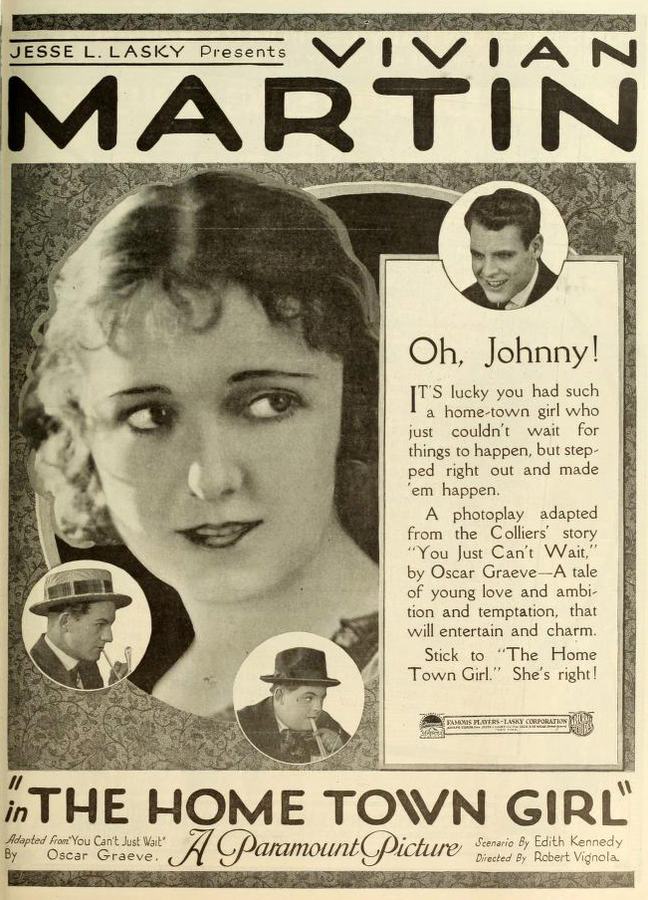
The year 1919 stood as a precipice in American history, a moment where the agrarian ghosts of the nineteenth century collided violently with the industrial machinery of the twentieth. Within this cultural friction, The Home Town Girl emerges not merely as a melodrama, but as a sophisticated sociological inquiry into the fragility of the masculine ego when transplanted from the safety of the village to the unforgiving concrete of Manhattan. Directed with a keen eye for spatial dynamics, the film utilizes the luminous Vivian Martin to anchor a narrative that might otherwise have drifted into the saccharine. Instead, we are presented with a gritty exploration of economic desperation and the redemptive power of a woman’s agency—a theme that resonates with contemporary works like The Rise of Susan, yet here it is tempered by a more grounded, mercantile reality.
The film’s central motif—the soda fountain—serves as a fascinating liminal space. In the opening sequences, the fountain is a site of pastoral innocence, a place where John Stanley (played with a nervous, kinetic energy by Ralph Graves) dispenses sugary confections and romantic promises. It is the heart of the community. However, when the narrative shifts to New York, the soda fountain is transformed into a sprawling, anonymous network. Nell’s quest to find John by visiting every fountain in the city is a stroke of narrative genius by writers Oscar Graeve and Edith M. Kennedy. It suggests that while the setting changes, the essence of the individual remains tethered to their origins. This search is far more visceral and desperate than the romanticized yearning found in A Weaver of Dreams; it is a literal hunt through the underbelly of urban service work.
Vivian Martin’s performance during these sequences is a masterclass in silent era restraint. Where many of her contemporaries might have drifted into histrionics, Martin employs a stoic resolve. Her Nell Fanshawe is not a victim of circumstance but a navigator of it. When she enters the employ of Jellaby and Co., she isn't just seeking a paycheck; she is infiltrating the very institution that broke her lover. This level of female intentionality was a burgeoning trope in post-suffrage cinema, echoing the quiet strength seen in Mothers of Men, though Martin brings a unique, porcelain-fragile toughness to the role.
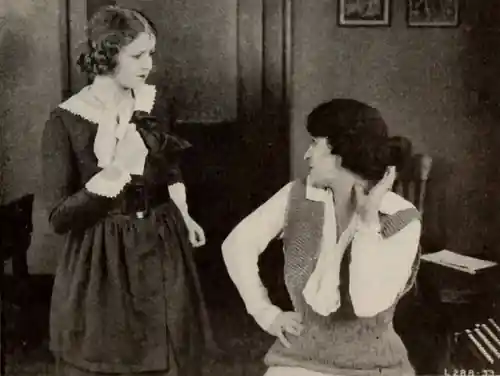
The character of Steve Ratling, the vindictive discharged salesman, is perhaps the most modern element of the film. He represents the 'disgruntled worker' archetype, a man whose bitterness toward the patriarchal figure of Jellaby (the formidable Herbert Standing) manifests as a predatory urge to corrupt the new, idealistic youth. Ratling’s manipulation of John is not merely a plot device to induce a gambling debt; it is a psychological assault on the 'home town' values of meritocracy. By convincing John that his lack of a raise justifies embezzlement-via-gambling, Ratling exposes the porous nature of John’s moral armor. This darker thematic thread aligns the film with the cautionary tones of The Risky Road, where the city is depicted as a crucible that melts away provincial ethics.
The cinematography during the gambling den sequence deserves particular praise. The use of chiaroscuro lighting creates a claustrophobic atmosphere that contrasts sharply with the airy, high-key lighting of the opening village scenes. We see John Stanley’s face half-submerged in shadow, a visual metaphor for his fractured integrity. This aesthetic choice elevates the film from a simple morality play to a work of visual expressionism, akin to the brooding atmospheres found in Lost in Darkness or the haunting European sensibilities of Mitternacht.
The climax of The Home Town Girl hinges on a moment of profound ethical complexity. When Nell finally traces John through the intercepting of a letter to the stenographer Nan Powderly (played with a sharp, metropolitan edge by Carmen Phillips), the expected resolution would be a tearful reunion. Instead, Kennedy’s script offers a moment of crushing disappointment. Nell learns that John didn't just lose the money—he gambled it. This distinction is vital. It moves the conflict from the external (the lost money) to the internal (the lost character). The film asks a difficult question: can a person’s inherent goodness survive a definitive moral failure?
The resolution, involving Jellaby’s paternalistic second chance, might seem convenient to modern audiences, but within the context of 1919, it served as a vital social balm. It suggested that the rigid hierarchies of capitalism could be softened by individual grace. This theme of the 'second chance' is a recurring motif in the era's cinema, often explored with less nuance in films like The Liar. Here, however, the forgiveness is earned through Nell’s labor and John’s genuine confession, making the catharsis feel grounded in effort rather than coincidence.
When placing The Home Town Girl alongside its contemporaries, its unique positioning becomes clear. Unlike the heightened fantasy of The Vagabond Prince or the sensationalist thrills of The Woman and the Beast, this film resides in the mundane—and finds the epic within it. The struggle to pay back three hundred dollars is treated with the same gravity as a national conflict in Shannon of the Sixth or the geopolitical stakes of Under Four Flags. This elevation of the personal to the level of the monumental is what gives the film its lasting power.
Furthermore, the technical execution of the antique shop scenes provides a fascinating look at early twentieth-century consumerism. The way the camera lingers on the artifacts in Jellaby’s shop suggests a reverence for the past that mirrors Nell’s own reverence for her 'home town' roots. This visual subtext implies that John Stanley was selling more than just furniture; he was selling a piece of the stability he had already abandoned. It is a subtle layer of irony that adds significant depth to the viewing experience, comparable to the intricate plotting found in The Mystery of the Rocks of Kador.
In the final analysis, The Home Town Girl stands as a poignant artifact of a lost cinematic language. It avoids the easy traps of the 'city vs. country' dichotomy by allowing its characters to be flawed, desperate, and ultimately, human. Vivian Martin delivers a performance of quiet luminosity, proving that the strength of the 'home town girl' was never in her innocence, but in her capacity to survive the loss of it. This is a film that demands to be rediscovered, not just as a piece of history, but as a compelling narrative of resilience that remains strikingly relevant in our own era of economic uncertainty and urban isolation. It is a testament to the enduring power of the silent screen to communicate the most complex of human emotions through the simple, profound act of a woman searching for her truth in the shadows of a great city. Whether compared to the delicate romance of Her Inspiration or the sharp social commentary of The Woman, Nell Fanshawe’s journey remains a quintessential example of early American cinematic storytelling at its most empathetic and artistically honest. The legacy of the 'red-haired cupid' (referencing The Red-Haired Cupid) may offer whimsical diversions, but The Home Town Girl offers something far more substantial: a mirror to the soul in a time of radical change.
IMDb —
1917
Community
Log in to comment.