DbcultAccessing Vault...
Cult Review
Senior Film Conservator
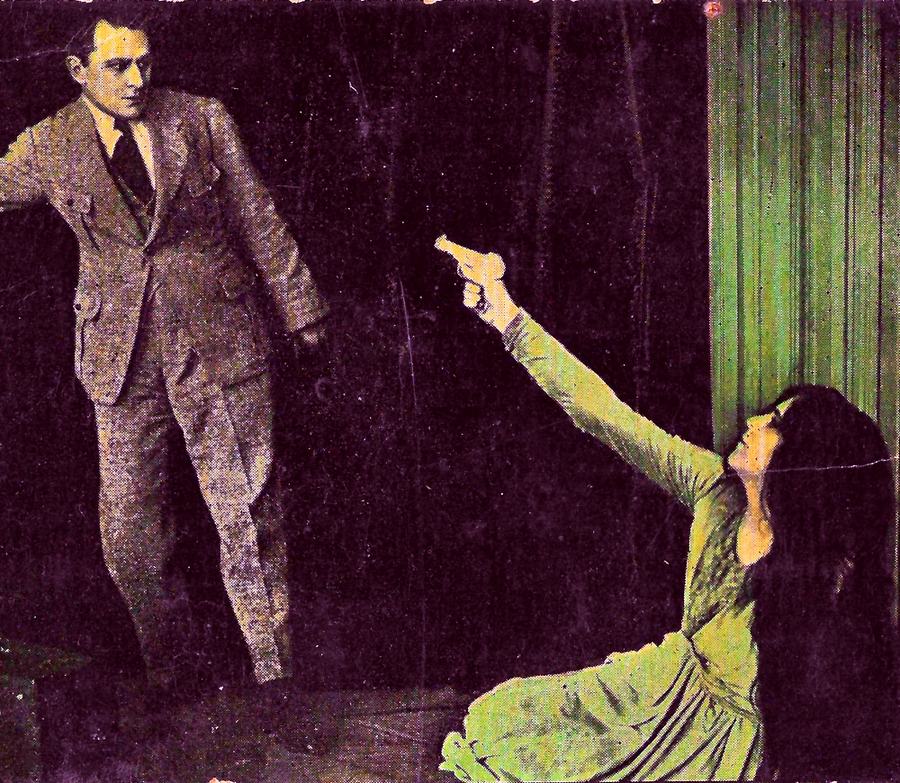
Stepping into the world of Blessée au coeur is akin to entering a meticulously constructed hall of mirrors, each reflection distorting truth, culpability, and the very fabric of justice. This early cinematic gem, penned by the masterful Jules Mary, plunges its audience into a vortex of suspicion and self-deception, masterfully illustrating how easily perception can be twisted when the stakes involve life, liberty, and the sanctity of family honor. It's a profound exploration of human frailty, the blinding power of maternal instinct, and the insidious nature of concealed malice, all wrapped in a compelling narrative that demands intellectual engagement from its opening frames. The film, a product of an era still defining its visual language, nonetheless achieves a remarkable sophistication in its psychological portraiture and intricate plotting.
The film’s central conflict ignites with the brutal demise of a prominent banker, an event that casts a long, ominous shadow over several lives. Almost immediately, a man driven by financial desperation finds himself ensnared in the dragnet of suspicion, his circumstances conspiring against him to paint him as the cold-blooded perpetrator motivated by pecuniary gain. The narrative meticulously builds this case, not through overt villainy, but through a confluence of unfortunate coincidences and circumstantial evidence that seems to scream his guilt. Jean Aymé, in a performance that resonates with a tragic resignation, embodies this accused man, his plight eliciting both pity and a gnawing sense of unease. His portrayal is nuanced, hinting at a man caught in a machinery far greater and more complex than his own desperate actions. It's a testament to early screen acting that such depth could be conveyed without the benefit of spoken dialogue, relying instead on gesture, expression, and the sheer force of visual storytelling. The silent era, often underestimated in its capacity for emotional conveyance, truly shines here, as Aymé’s every subtle movement and anguished glance communicate volumes about his character’s inner turmoil and the crushing weight of public condemnation.
Yet, the brilliance of Blessée au coeur lies in its refusal to offer a straightforward villain. Parallel to the accused man's harrowing journey, we witness the psychological unraveling of the banker's wife, portrayed with heart-wrenching intensity by Jeanne Delvair. Following a violent domestic confrontation, she becomes terrifyingly convinced that she herself delivered the fatal blow, a desperate act undertaken to shield her child's honor from an unspecified, yet profoundly damaging, threat. Delvair's performance is a masterclass in internal torment, her eyes conveying a maelstrom of guilt, grief, and a fierce, primal maternal protectiveness. Her self-incrimination isn't born of malice, but of a shattered psyche, a mother's fierce desire to preserve her offspring's innocence, even at the cost of her own soul. This deeply disturbing mental state, where perceived reality overrides objective truth, adds a harrowing layer of psychological complexity. The film delves into the depths of her fractured memory and the terrifying power of suggestion, demonstrating how easily the mind, under duress, can construct its own version of events. This psychological dimension elevates the film beyond a mere whodunit, transforming it into a poignant study of trauma, subjective truth, and the overwhelming burden of maternal responsibility.
What truly distinguishes Blessée au coeur is its audacious revelation that both these compelling narratives of guilt—the financially motivated accused and the maternally driven wife—are ultimately misdirections. The true murderer is a third party, an unseen manipulator whose machinations orchestrate the chaos and point fingers in all the wrong directions. This narrative twist is not merely a plot device; it's a scathing commentary on the fallibility of justice systems and the ease with which appearances can deceive. Georges Tréville, Jacques Volnys, and René Rocher, while perhaps having less screen time than the central figures, contribute significantly to the film’s intricate tapestry, each portraying characters who, in their own ways, are either pawns or unwitting participants in this grand deception. Their collective performances underscore the pervasive nature of the lie, showing how an entire community can be misled by a cleverly constructed facade. The film, in this regard, shares thematic DNA with later works like The Master Mind, where a singular, calculating intelligence pulls strings from the shadows, orchestrating elaborate schemes of crime and misdirection. The sense of an unseen hand guiding events, creating confusion and injustice, is palpable throughout, maintaining a gripping tension that few films of its era managed to achieve with such consistent efficacy.
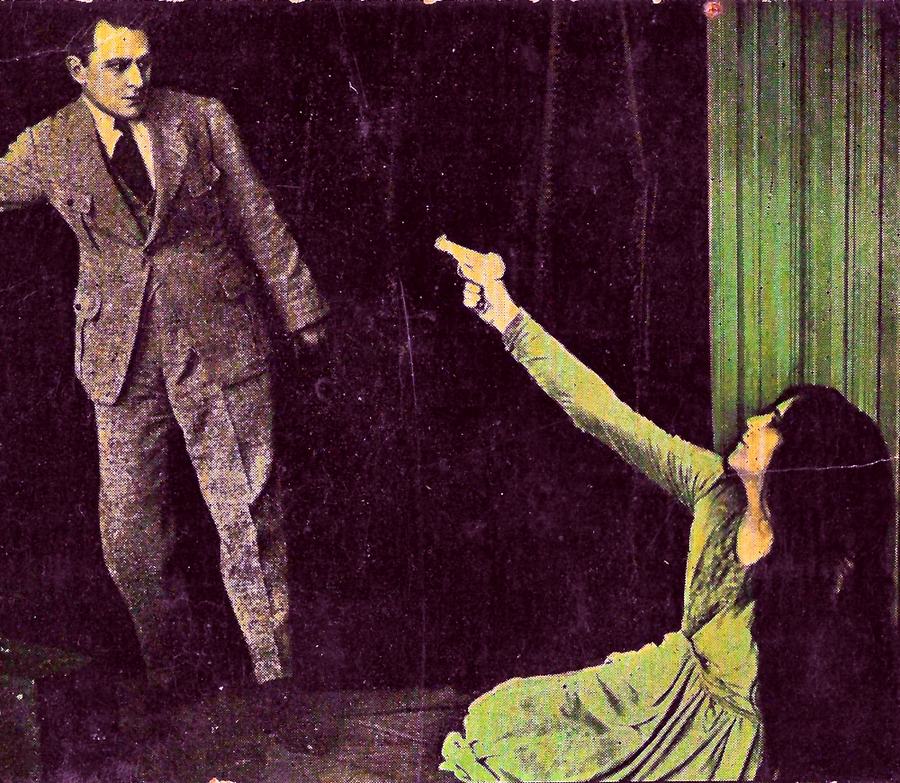
Jules Mary's screenplay, adapted from his own literary work, showcases a remarkable understanding of suspense and dramatic irony. He crafts a world where the audience is privy to certain truths that the characters are not, creating a constant tension between what is believed and what actually transpired. This sophisticated approach to storytelling, especially for its era, is genuinely commendable. The film eschews simplistic morality, instead delving into the complexities of human motivation and the tragic consequences of assumptions. The intricate plotting ensures that every scene, every character interaction, contributes to the overarching mystery, carefully planting clues and red herrings that keep the viewer perpetually off balance until the final, shocking unveiling of the true culprit. This level of narrative craftsmanship is a testament to Mary's enduring literary legacy and his successful translation of complex human drama to the nascent cinematic medium.
Beyond its intricate plot, Blessée au coeur explores profound themes that remain relevant today. The concept of justice, specifically its potential for misdirection and the devastating impact of wrongful accusation, is central. The plight of Jean Aymé’s character resonates deeply, echoing the anxieties present in other legal dramas of the period, such as For the Defense, where the legal system itself becomes a formidable, often flawed, adversary. The film challenges viewers to question what they see and to look beyond the surface, a crucial message in an age where information, and misinformation, proliferate rapidly. The director, utilizing the visual language of silent cinema, employs evocative imagery and careful framing to underscore these themes, making the audience feel the weight of prejudice and the fragility of truth.
The portrayal of Jeanne Delvair’s character is particularly striking in its exploration of maternal sacrifice and the psychological aftermath of violence. Her conviction of guilt, while objectively false, is subjectively true to her, driven by a powerful, almost instinctual need to protect her child. This provides a fascinating counterpoint to the more conventional motives often explored in crime narratives. It speaks to the inner turmoil a woman might endure, particularly in a society that often placed immense pressure on women to uphold family honor, a theme subtly explored in films like A Woman's Triumph, albeit with different narrative trajectories. The film manages to evoke immense empathy for her predicament, even as the audience knows she is mistaken, showcasing the profound emotional depth that silent actresses could achieve through nuanced physical performance and expressive eyes. Her struggle is a powerful illustration of how love and trauma can warp perception, creating a personal hell more terrifying than any external punishment.
From a cinematic perspective, Blessée au coeur demonstrates a sophisticated understanding of visual storytelling characteristic of early French cinema. The use of mise-en-scène, the framing of shots, and the careful deployment of dramatic lighting all contribute to the film’s pervasive atmosphere of dread and suspicion. While dialogue was limited or non-existent, the performances are remarkably expressive, relying on exaggerated gestures and facial expressions that were the lingua franca of silent film. The pacing, though perhaps slower than modern audiences are accustomed to, allows for a deliberate unfolding of the plot, building suspense incrementally rather than through rapid-fire cuts. This deliberate rhythm immerses the viewer in the characters' emotional states, making the eventual revelation of the true culprit all the more impactful. The director masterfully uses close-ups to highlight emotional intensity and wide shots to establish the oppressive societal context, demonstrating an advanced understanding of cinematic grammar for its time.
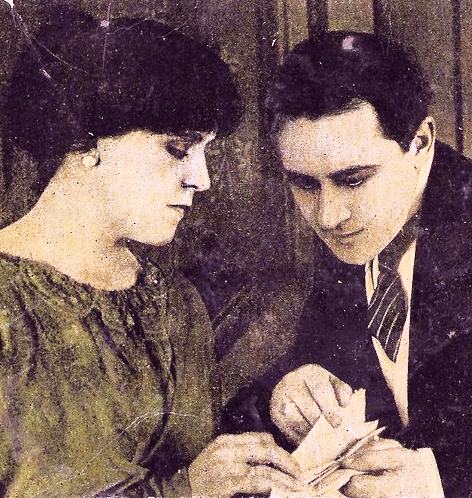
The cast of Blessée au coeur delivers performances that transcend the limitations of silent film, imbuing their characters with a palpable sense of humanity and internal struggle. Jean Aymé’s portrayal of the accused man is particularly poignant, capturing the essence of a man trapped by circumstance. His expressions convey a silent desperation, a growing despair as the net of accusation tightens around him. One can almost feel the weight of injustice pressing down upon his shoulders, making his eventual exoneration (or lack thereof, depending on the film’s ultimate resolution, which is often ambiguous in such early works, focusing more on the journey of revelation and the psychological toll) a truly cathartic moment. His performance serves as a powerful reminder of the vulnerability of individuals against an unyielding legal and social machine, a theme that resonates with universal appeal.
Jeanne Delvair, as the tormented wife, is nothing short of mesmerizing. Her ability to convey profound psychological distress and unwavering maternal resolve through silent acting is a testament to her skill. The scenes where she grapples with her self-perceived guilt are intensely dramatic, showcasing a raw vulnerability that is both heartbreaking and compelling. Her character’s journey is perhaps the most emotionally resonant, highlighting the profound impact of trauma and the lengths a mother will go to protect her child. This intense emotional core is what gives the film its enduring power, making it more than just a crime story but a psychological drama of the highest order. Delvair’s expressive face and body language communicate a spectrum of emotions—fear, love, despair, and a desperate hope—with an authenticity that defies the lack of spoken words. Her performance alone is a masterclass in the nuanced art of silent film acting, anchoring the film’s emotional weight.
The supporting cast, including Georges Tréville, Jacques Volnys, and René Rocher, contributes to the film’s rich tapestry, each playing their part in the elaborate deception or the pursuit of truth. Their interactions, though brief, are impactful, providing crucial pieces to the puzzle and adding layers of intrigue to the unfolding drama. The collective effort creates a believable world, even when the plot itself is steeped in dramatic contrivance. Their presence, though sometimes fleeting, serves to populate the world with believable figures, each reacting to the central tragedy in ways that feel authentic to the period and the heightened stakes. The film's success in creating a coherent and emotionally charged narrative without spoken dialogue is a remarkable achievement, showcasing the collaborative genius of its cast and crew.
Jules Mary's contribution as a writer cannot be overstated. His narrative, with its layered complexities and unexpected turns, demonstrates a keen understanding of the human psyche and the mechanics of suspense. The way he constructs the plot, introducing red herrings and false confessions, keeps the audience guessing until the very end. This literary foundation provides Blessée au coeur with a depth and intellectual rigor that sets it apart from many of its contemporaries. It’s a narrative that rewards careful attention, revealing its nuances upon reflection. The film’s exploration of hidden truths and the difficulty in discerning them aligns with themes found in works like The Bitter Truth, where the struggle to uncover reality is often arduous and fraught with peril. The narrative’s careful pacing ensures that each revelation, each shift in perspective, lands with maximum impact, drawing the viewer deeper into the moral and legal quagmire.
In conclusion, Blessée au coeur stands as a compelling testament to the artistry and storytelling prowess of early French cinema. It is a film that defies simplistic categorization, weaving together elements of crime drama, psychological thriller, and social commentary with remarkable skill. Its intricate plot, powerful performances, and thematic depth ensure its place as a significant piece of cinematic history. For those who appreciate the foundational works of cinema and narratives that delve into the darker corners of the human condition, this film offers a rich and rewarding experience. It reminds us that truth is often elusive, justice is frequently imperfect, and the human heart, when wounded, can conjure its own devastating realities. The lingering questions it poses about guilt, innocence, and the nature of proof resonate long after the final frame fades, cementing its status as a truly thought-provoking masterpiece. The revelation of a third party, the secret man behind the curtain, is a narrative device that still packs a punch, demonstrating the timeless appeal of a well-crafted mystery and the enduring power of cinematic misdirection. This film is not merely a historical artifact; it is a vibrant, emotionally charged drama that continues to speak to the complexities of the human condition, proving that compelling storytelling transcends technological advancements.
IMDb —
1916
Community
Log in to comment.