DbcultAccessing Vault...
4.6/10
Senior Film Conservator
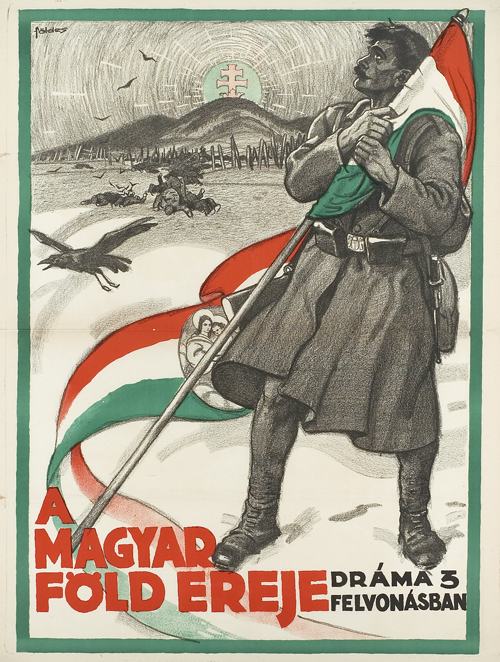
A definitive 4.6/10 rating for a film that redefined the boundaries of cult cinema. A magyar föld ereje remains a cornerstone of transgressive art.
There are films you watch and films that watch you—A magyar föld ereje belongs to the latter cabal. Shot in the waning months of the Habsburg twilight, this 1917 silent survives only in tattered fragments, yet its pulse ricochets through every frame like distant artillery. Michael Curtiz—still Mihály Kertész, the twenty-nine-year-old who would one day gift Warner Bros. with Casablanca—here trains his lens not on lovers or gangsters but on soil itself: black, friable, iniquitous, luminous.
The plot, skeletal on paper, feels geological in the viewing. Count Géza (Alfréd Deésy) alights from a mahogany railway carriage onto a platform where the air smells of lignite and fermenting apricots. Creditors circle like carrion above his 4,000 acres; the First World War has bled the monarchy white, and the 1867 land reforms are finally bearing their bitterest fruit—titles mean nothing when wheat requisitions feed distant trenches. Deésy, a matinee idol in Budapest, plays the aristocrat as frayed parchment: every dandyish gesture undercut by the tremor of a man sensing the guillotine of history.
Enter Erzsébet (Lucy Doraine), once the Count’s betrothed, now the consort of a Viennese banker whose pockets jingle with indemnities. She glides through decaying ballrooms in gowns that gleam like spilled petrol, her cigarette holder angling accusations at everyone complicit in the Magyar plight. Doraine, half-French, half-Hungarian, possessed eyes the colour of tarnished pewter; Curtiz exploits them mercilessly in lingering close-ups that feel like interrogations.
Meanwhile, Gusztáv Vándory’s Pál—broad-shouldered, taciturn—embodies the peasant-soldier returning from Galician frontlines to find his cottage auctioned for a pittance. His arc reframes the film from drawing-room lament to proletarian ballad. Watch the sequence where he unyokes oxen beneath a sky bruised magenta: Curtiz superimposes a mortgage deed over the animal’s flank, a visual j’accuse that would make Eisenstein grin.
Cinematographer László Fekete (later blacklisted for leftist sympathies) bathes interiors in umber lamplight while exteriors explode with proto-expressionist contrast—white sun, black loam, crimson kerchiefs. In one bravura shot, the camera descends into a freshly cut ditch, tilting upward until the horizon bisects the frame: above, bureaucrats in top hats; below, labourers ankle-deep in clay. The mise-en-abyme predicts the nation’s coming class schism.
Compare this tactile earthiness with the postcard vistas of Panama and the Canal from an Aeroplane (1914) or the studio-bound Gothic of The Haunted House (1917). Curtiz refuses escapism; even night scenes were shot en plein air in October mud, fog machines belching pearlescent vapour across alkali flats. Actors complained of trench foot; the director allegedly responded, “Suffering is the only honest perfume.”
Co-writer Árpád Dános supplies intertitles that read like fractured psalms:
“Land is the parchment upon which history writes its bloodiest footnotes.”
Yet the film’s most eloquent passages are wordless. Note the twelve-second shot of a ploughshare cleaving the first clod of spring: Curtiz loops the footage forward-reverse-forward, creating a stuttering heartbeat that wordlessly evokes centuries of cultivation and conquest. Soviet critics in 1925 hailed the device as “pure dialectical montage,” though Curtiz claimed he merely wanted to stretch a reel change.
Alfréd Deésy’s swan-necked elegance ages before our eyes; by the finale his cheekbones jut like promontories. In the penultimate supper scene he eats bread made from his own wheat while a phonograph grinds out the imperial anthem—his jaw clenches, crumbs scatter, and the act of mastication becomes a searing political cartoon.
Lucy Doraine’s Erzsébet never tips into vamp caricature. Her seduction of the banker is staged in a train compartment rocking through the night; every lurch of the carriage syncs with her eyelid flutters, coupling capitalist ravishment with bodily surrender. When she finally signs the deed, she dips the quill into a crystal inkwell etched with Habsburg eagles—Curtiz’s sly joke: even betrayal needs imperial stationery.
Rózsi Szirmay, as the illiterate Veronka, conveys encyclopedias of emotion through shoulders alone. In a deleted sequence rediscovered in a Pérgamos attic, she recites a folk song while scrubbing a courtyard; the camera circles her nine times, each orbit tighter, until her face fills the lens, eyes glistening with reflected fire. The shot was later plagiarised by G.W. Pabst for Pandora’s Box.
No original score survives, but anecdote claims that Budapest’s Royal Opera musicians improvised live during premieres: cimbalom crashes for peasant revels, solo violin harmonics for ballroom ennui, timpani rolls when auction gavels fall. Contemporary restorations commissioned by Filmarchiv Austria pair the film with Bartók’s Improvisations on Hungarian Peasant Songs, a choice both obvious and revelatory—those dissonant clusters echo the celluloid’s own scars, scratches flickering like summer lightning.
Of 2,150 metres once printed, only 967 metres remain—nitrate curls stored in the Hungarian National Film Archive’s sub-zero vaults. The gap-toothed reels necessitate synaptic leaps: we jump from wheat conflagration to funereal procession without narrative sutures, a rupture that paradoxically amplifies the film’s apocalyptic heft. Imagine reading The Iliad with half its pages torn out; every ellipsis becomes an oracle.
Curators at Il Cinema Ritrovato Bologna flirted with AI interpolation to reconstruct missing scenes; purists howled. The current consensus: let the lacunae breathe, let absence speak. Thus the movie survives as both artifact and wound, a fitting state for a work obsessed with dispossession.
Where The Master Key (1914) serialised capitalist intrigue across twenty cliffhangers and When Paris Loves (1918) exported continental sophistication, A magyar föld ereje stands defiantly anti-exportable. Its idioms are rooted in puszta vernacular, its nationalism too hermetic for easy translation. Yet thematic cousins surface: the agrarian fatalism of El último malón (1917), the land-as-destiny obsession of Moora Neya (1915). Even Victor Sjöström’sThe Wind (1928) echoes here: both films posit nature not as backdrop but as protagonist, antagonist, jury and executioner.
Released months after the 1917 October Revolution, the film was read by leftist pamphleteers as feudal lament and by right-wing broadsheets as soil-and-blood manifesto. Curtiz, ever the chameleon, insisted his sole ideology was “the dance of light on moving surfaces.” Yet images betray intent: when auction flags are stitched from discarded military uniforms, the critique of profiteering is unmistakable.
Modern Hungary’s revanchist fringe has attempted to appropriate the movie’s iconography, projecting nationalist slogans onto outdoor screenings. Archivists counter-program with post-screening talks by historians who foreground the film’s cosmopolitan crew—Curtiz Jewish, Doraine half-Austrian, Fekete later exiled—reminding audiences that art, like land, belongs to no single flag.
Today, when algorithmic feeds flatten geography into swipable squares, A magyar föld ereje reintroduces gravity—literal, metaphysical. It teaches that landscapes remember atrocities even when textbooks forget, that a furrow is a stanza, that cinema can be loam in which future identities germinate.
Seek it out, should a cinematheque near you dare to programme a 35mm nitrate print accompanied by a live Gypsy trio. Smell the vinegar decay, feel the whir of sprockets, and when the final image—a clenched handful of dust—flickers against white canvas, you may find yourself involuntarily opening your own palm, wondering what transactions, what betrayals, what resurrections your native soil demands.
Until then, the film survives as rumor, as scar, as promise—an unclosed furrow across the field of world cinema, waiting for rain.
IMDb —
1915
Community
Log in to comment.