DbcultAccessing Vault...
6.5/10
Senior Film Conservator
A definitive 6.5/10 rating for a film that redefined the boundaries of cult cinema. Cleaning Up remains a cornerstone of transgressive art.
Is 'Cleaning Up (1925)' worth watching today? Short answer: yes, but with significant caveats. This short silent comedy, penned by the legendary Roscoe 'Fatty' Arbuckle, offers a fascinating, albeit frenetic, glimpse into the foundational mechanics of slapstick, making it a valuable watch for enthusiasts of early cinema and physical comedy.
However, for those accustomed to modern narrative pacing or sophisticated humor, its relentless, almost brutal, simplicity might prove more exhausting than entertaining. It’s a film for the curious cinephile, not necessarily the casual viewer seeking easy laughs.
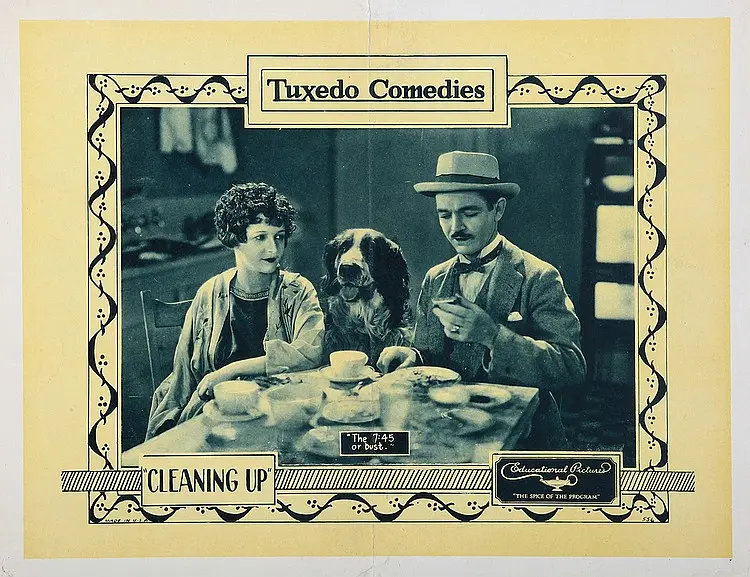
The premise of 'Cleaning Up' is deceptively simple: a husband (Johnny Arthur), tasked with domestic duties in his wife's (Helen Foster) absence, attempts to clean the house. The narrative, if one can call such a chaotic progression a narrative, quickly spirals into an impressive display of destruction. This isn't just a messy house; it's a house actively rebelling against its inhabitant, a canvas for pure, unadulterated slapstick.
The film works because of its unyielding commitment to escalating chaos. From an overflowing bathtub that threatens to flood the entire residence to a kitchen fire that erupts with alarming speed, the gags build upon one another, each disaster compounding the last. It’s a masterclass in visual escalation, demonstrating a clear understanding of comedic timing in the silent era.
This film fails because its relentless pursuit of destruction, while initially amusing, eventually verges on repetitive. The lack of character depth or genuine emotional stakes means that the humor relies solely on the physical spectacle, which can feel a little hollow after a while. One might even argue that the sheer scale of the devastation borders on the absurd, making it hard to connect with any underlying human element.
You should watch it if you appreciate the raw, foundational energy of silent-era physical comedy, are interested in the evolution of slapstick, or simply want to witness a house get utterly, spectacularly annihilated for comedic effect. It's a historical artifact of humor, not a nuanced character study.
While Roscoe 'Fatty' Arbuckle is credited as the writer, his directorial touch, even if uncredited due to the scandalous circumstances of his career at the time, is palpable. The film bears the hallmarks of his comedic sensibilities: a focus on physical gags, an almost balletic approach to destruction, and a willingness to push comedic scenarios to their most extreme conclusions. This isn't subtle comedy; it's a sledgehammer, delivered with precision.
Arbuckle’s genius lay in orchestrating such grand-scale mishaps, and 'Cleaning Up' is a prime example. The way the various elements of destruction—water, fire, feathers, animals—intertwine and exacerbate each other speaks to a mind deeply attuned to the mechanics of comedic mayhem. It’s a testament to his enduring, though often overshadowed, influence on the genre.
Johnny Arthur, as the hapless husband, carries the bulk of the film's comedic weight. His performance is a masterclass in silent-era physical comedy, relying heavily on exaggerated facial expressions, frantic gestures, and a palpable sense of growing despair. He embodies the everyman overwhelmed by circumstances, his initial optimism slowly eroding into wide-eyed panic as his home literally crumbles around him.
Consider the scene where the bathtub overflows. Arthur’s increasingly frantic attempts to stem the tide, his flailing limbs, and his contorted face convey a universal frustration that transcends the silent medium. It's a performance built on reaction, and Arthur sells every escalating catastrophe with convincing, if comically over-the-top, terror.
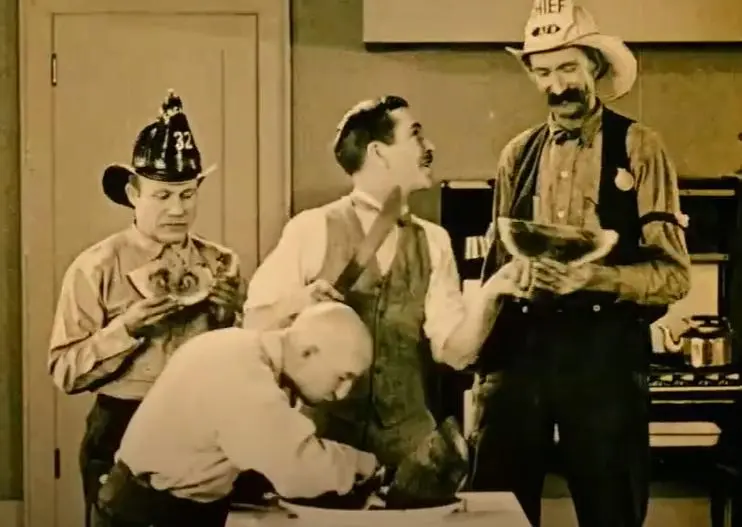
Helen Foster, as the wife, has a far more limited role, appearing briefly at the beginning and presumably at the end to witness the wreckage. Her presence serves primarily as a catalyst for Arthur’s domestic ambition and a looming threat of judgment. While brief, her stoic departure sets the stage for the coming storm, a quiet calm before a very loud, very wet, very feathery storm.
The animal performers, particularly Napolean the dog, also play a crucial role. The dog-and-cat chase sequence, a classic silent film trope, is executed with surprising energy and contributes significantly to the final, comprehensive destruction. It's a reminder that silent film often relied on the unpredictable charm of animals to add another layer of organic chaos.
The direction, heavily influenced by Arbuckle's writing, is all about momentum. The pacing is incredibly fast, even for a short film. Gags aren't lingered upon; they simply happen, often overlapping, creating a sense of relentless, unavoidable catastrophe. This rapid-fire approach keeps the audience engaged, constantly wondering what fresh hell awaits the poor protagonist.
One particularly striking aspect is the film's ability to maintain clarity amidst the chaos. Despite multiple destructive elements unfolding simultaneously—water, fire, feathers, animals—the viewer always understands the source and progression of each gag. This is a testament to the efficient visual storytelling inherent in silent cinema, where every action must be clear and deliberate.
The cutting is sharp, transitioning quickly between the various zones of destruction, amplifying the sense that the house is under a multi-pronged assault. This isn't just a series of unfortunate events; it's a perfectly orchestrated symphony of domestic collapse, with each instrument playing its part in the cacophony.The Visual Language of Chaos
Cinematography in 'Cleaning Up' is functional and effective, serving the primary goal of showcasing the gags. The camera is largely static, allowing the physical comedy to unfold within the frame. This approach ensures that the audience can fully appreciate the scale of the destruction, from the spreading puddle of water to the billowing smoke of the kitchen fire.
The use of practical effects is, naturally, paramount. The visual impact of real water cascading down stairs, real feathers exploding from pillows, and real (albeit controlled) flames licking at kitchen cabinets provides an authenticity that modern CGI often struggles to replicate. There's a tangible quality to the destruction that makes it all the more impressive.
Perhaps the most enduring image is that of the house utterly ravaged, a testament to the destructive power of good intentions gone horribly wrong. It’s a darkly comedic vision, almost a cautionary tale disguised as a farce, about the perils of domestic ambition without the requisite skill or foresight. The final shot of the house, in its state of utter disarray, is genuinely shocking in its completeness.
Is This Film Worth Watching?
Yes, 'Cleaning Up (1925)' is absolutely worth watching for specific audiences. It's a foundational text for understanding early 20th-century slapstick. It demonstrates how physical comedy was constructed and delivered in an era before sound. It provides valuable insight into Roscoe 'Fatty' Arbuckle's unique comedic voice and his enduring influence on the genre. For silent film aficionados, it's a must-see. For those interested in the history of comedy, it offers a direct lineage to later forms of physical humor. However, if you're expecting sophisticated humor, nuanced characters, or a deep narrative, you will be disappointed. It’s a pure, unadulterated gag reel, and while effective, it can feel dated to modern sensibilities. The comedy is broad, the pacing is frantic, and the emotional resonance is minimal. It works. But it’s flawed.
Pros and Cons
- Pros:
- Exceptional physical comedy from Johnny Arthur.
- Masterful escalation of gags and destruction.
- Clear influence of Roscoe 'Fatty' Arbuckle's comedic style.
- A valuable historical document of early slapstick.
- Surprisingly effective practical effects for its time.
- Cons:
- Repetitive nature of the destructive gags.
- Lack of character depth or emotional stakes.
- Can feel dated for viewers unaccustomed to silent film conventions.
- The humor is purely visual, offering little in terms of wit or dialogue.
- The relentless chaos might be overwhelming for some.
Key Takeaways
- Best for: Fans of early slapstick, silent film scholars, and those interested in the history of physical comedy.
- Not for: Viewers seeking modern narrative depth, subtle humor, or character-driven comedy.
- Standout element: The sheer, unbridled scale of domestic destruction and the ingenious layering of multiple disasters.
- Biggest flaw: Its single-minded focus on escalating gags can lead to a sense of repetition and a lack of emotional engagement.
Verdict
Ultimately, 'Cleaning Up (1925)' is a fascinating, if somewhat one-note, piece of silent film history. It stands as a testament to the raw energy and inventive spirit of early slapstick, showcasing how an ostensibly simple premise could be stretched to its most absurd and destructive limits. Johnny Arthur delivers a committed performance, embodying the spiraling despair of a man utterly outmatched by his domestic environment, while Arbuckle's influence ensures a relentless, almost brutal, comedic rhythm.
While it may not resonate with all modern viewers, particularly those who prefer more nuanced storytelling, its importance in the lineage of physical comedy is undeniable. It’s a film that demands appreciation for its craft and its historical context, rather than its universal appeal. It's a loud, messy, and undeniably influential blast from the past, reminding us that sometimes, the funniest thing is watching everything fall spectacularly apart. Give it a watch if you're prepared for pure, unadulterated chaos.
IMDb 5.9
1931
Community
Log in to comment.