DbcultAccessing Vault...
Cult Review
Senior Film Conservator
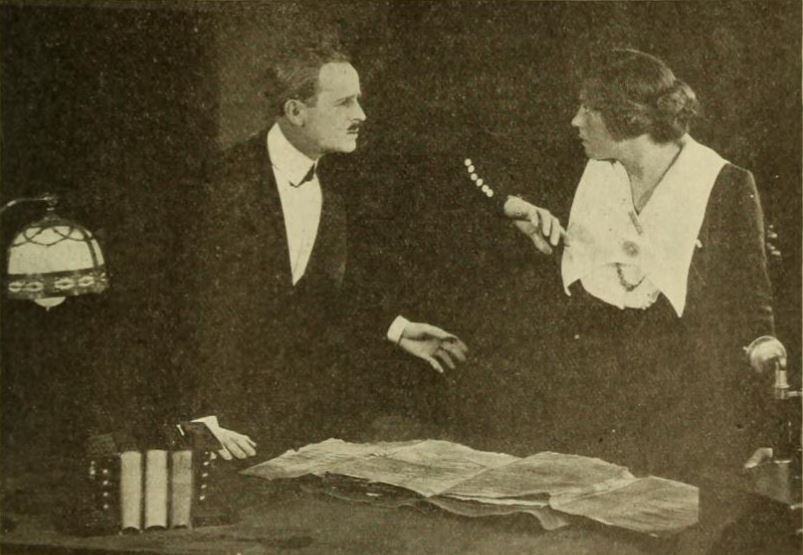
Somewhere between the first electric flicker of Edison’s bulb and the last gasp of Prohibition, American silent cinema discovered that sin photographs beautifully in monochrome. Blue Blood—that curious 1925 relic now resurrected via a 4K tint restoration—belongs to the fever gallery where Transgression and The Wax Model already hang, portraits of respectability flayed alive by syphilitic shame. Yet unlike its contemporaries, this picture refuses the moral easel; it is a splatter of arterial crimson across white gloves, a society autopsy performed with opera glasses.
Spencer Wellington enters draped in the arrogance of inherited limestone fortunes, his walking stick tapping like a metronome counting down to dementia. Syphilis, the era’s whispered house-guest, has already begun gnawing his synapses, but the screenplay—credited to J. Grubb Alexander and Fred Myton—never utters the word. Instead we get euphemistic lace: “a certain blood condition,” “inherited weakness,” the physician’s furrowed brow. The film’s genius lies in how it makes the unsaid fester louder than confession.
When Spencer spurns Dr. Rand’s prognosis, the gesture is less bravado than necromancy: he insists on marrying Grace Valient, the doctor’s own unspoken ache, thereby sentencing all three to a slow-motion guillotine. Marriage here is not alliance but contagion, the legal transference of rot. The honeymoon montage—iris shots dissolving from champagne spume to Grace’s startled eyes—feels less romantic than forensic, as though the camera itself were collecting evidence.
The birth sequence arrives like an ice floe cracking. Intertitles fracture into staccato fragments: “The child—” “—lives only minutes—” “—a soul too flawless for this world.” What we see is less a delivery than an exorcism: the infant, swaddled shadows and twisted digits, expires in Grace’s arms while midwives retreat in sign-of-the-cross horror. The film censors nothing but clarity; the deformity is implied through negative space, a bundle quickly removed from frame.
Grace’s subsequent madness is rendered via double-exposure: her face superimposed over rocking empty cradle, the cradle over oceanic ripples of black silk. Ida Lewis, in the role, modulates from porcelain composure to silent scream without the usual histrionic arms-flung-wide cliché; her breakdown is interior, a shutter slamming. The substitution of a living foundling—filched from an unwed kitchen maid—should read as melodramatic contrivance, yet the film stages it like contraband smuggled across mortal borders. The moment the swap occurs off-camera, we grasp the ethical vacuum: life is currency, redemption a forged banknote.
As Spencer’s brain macerates, the mansion metastasizes into a carnal labyrinth. Hidden behind oak bookcases lies a Rococo boudoir where cigarette smoke coils like opium incense and jazz, though unheard, vibrates from every grain of flickering silver. Howard Hickman plays the heir with a louche elegance reminiscent of the doomed Roman boy-emperor: pupils dilated, laughter too rapid, fingers drumming a danse macabre on cut-crystal glass.
The orgy sequence—shot mostly in silhouetted chiaroscuro—skirts censorious scissors by never quite revealing nipple or nether hair, yet the erotic charge is ferocious. Bodies twine like grapevines; champagne is poured down clavicles; a showgirl’s garter snaps against the camera lens, breaking the fourth wall, inviting the 1925 audience to taste the salt of complicity. When Spencer collapses mid-carouse, champagne spurting from his mouth like arterial spray, the moment feels less death than punctuation: a period stamped on a sentence written in bodily fluids.
Dr. Rand, essayed by George Fisher with a jaw clenched so tight one fears for his molars, embodies the film’s ethical crucible. Bound by professional silence, he watches the woman he loves condemned to infection, madness, and ultimately widowhood. The screenplay refuses him the heroic reveal; instead his torment is measured in inches of candle wax, in the tremor of a stethoscope hand. Compare him to the medic in The Rack who brandishes truth like sabre; Rand is Socratic, hemlocked by oath.
When the inevitable union between Grace and the doctor is hinted in the final reel, the gesture feels less romantic reward than pragmatic graft: two survivors stitching wounds with shared scar tissue. The film denies us swelling violins or clinch; instead a doorway shot: Rand’s silhouette merging with Grace’s chiaroscuro, the substituted infant gurgling unseen off-frame—an unholy trinity poised to repeat ancestral sins.
Director of Photography Harry Cooper shoots guilt in amber, debauchery in sulphur yellow, and death in Prussian cyan. The restoration reveals hand-applied stencils: when Spencer’s pupils dilate under morphine, the 35 mm print flares toxic green; Grace’s postpartum hysteria is bathed in rose that curdles into bruise mauve frame by frame. Such chromatic rhetoric predates the phantasmagoric palettes of Hoffmann’s operatic fever dreams yet feels more intimate—like tinting grief at the edge of a tear.
Composition favors vertical stress: towering doorframes, elongated mirrors, cruciform stair-rails. Characters appear dwarfed, sinners in a moral lift-shaft descending. The camera seldom pans; instead it tilts, as though morality itself were sliding off-axis. In one insert, a champagne glass topples in ultra-close-up, its rim reflecting Spencer’s convulsing face—an optical ouroboros of self-consumption.
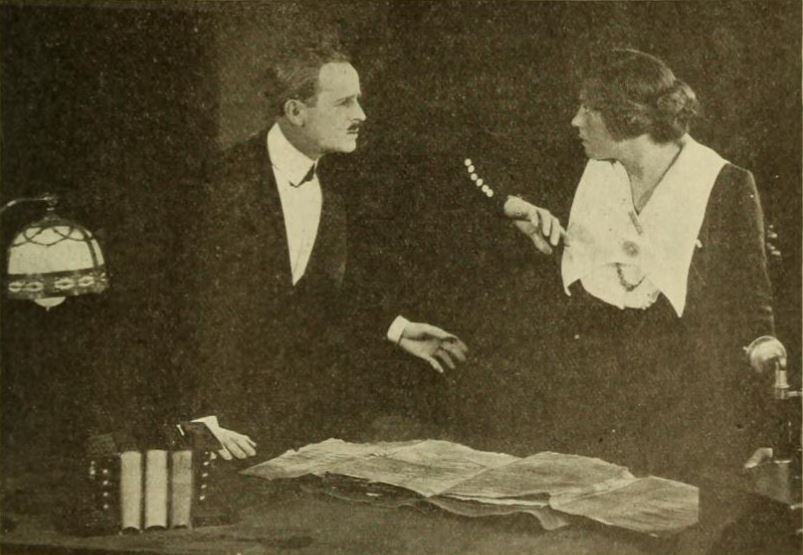
Ida Lewis exemplifies the minimalist school that critics often overlook when they stereotype silent acting as bushy-mustache villainy. Watch her pupils in the nursery scene: they dilate not once but in stepped pulses, a cardiac monitor of despair. She modulates breathing so that the rise and fall of her collarbone becomes dialogue. Hickman, meanwhile, channels dissipation through micro-gestures: a finger rubbing thumb as though smoothing the last brain cells into oblivion. When news of the child’s death arrives, his collapse is vertical—knees folding like broken marionette strings, head never lifting, a man imploding toward gravity’s truth.
Nona Thomas as the lead bacchante supplies a startling counter-rhythm. Where Grace is chiaroscuro, she is incandescent; where Grace is absence, she is voracious presence. Her Charleston, shot from knee-height, becomes a staccato Morse code of heels and fringe, a kinetic taunt at the impotence of the dying patriarch slumped in chaise longue. The erotic economy here is transactional yet elegiac: dancers earn coins, Spencer buys amnesia, audience buys guilt.
Original road-show engagements in 1925 carried a compiled score stitched from Saint-Saëns’ Danse Macabre, Erik Satie’s Gymnopédies, and lurid organ improvisations. Modern screenings often default to generic piano, but the restored Blu-ray offers an optional electro-acoustic track: heartbeat-like timpani underlaying glass harmonica shrieks that crescendo during Spencer’s death throes, then dissolve into lullaby music box as the surviving trio exit into uncertain dawn. The effect is neurasthenic, a sonic migraine that lingers long after houselights rise.
Despite its salacious marrow, Blue Blood bypassed major municipal bans by cloaking syphilis under euphemism and relocating orgies behind diegetic curtains. Variety’s 1925 notice dismissed it as “morbid fluff for the carriage trade,” yet the picture grossed robustly in urban nabes, particularly among women’s clubs intrigued by its maternity horror. State censor boards in Pennsylvania and Ohio excised the intertitle referencing “the wages of hereditary guilt,” inadvertently turning the narrative even more opaque, more nightmare-logic.
For decades the film languished in 9.5 mm abridgments under the alternate title Her Unborn Sin, until a 2018 Buenos Aires vault yielded a near-complete 35 mm tinted nitrate. The current 4K iteration reveals details previously illegible: a physician’s chart marked ‘GPI’ (general paresis of the insane), and a blink-and-miss it shot of Rand crushing a mercury-laced pill—period treatment—between spoons, foreshadowing the husband’s doom.
Place Blue Blood beside Over the Hill’s maternal martyrdom or The Children Pay’s juvenile suffering, and you locate a strata of silent cinema that weaponizes family against itself. The DNA also rhymes with The Luring Lights’ urban venality, though here decadence is not a city sewer but ancestral well-water. Where The Catspaw deploys comedy to lacerate prejudice, Blue Blood dispenses with laughs; its comic relief—a drunken butler swatting at invisible wasps—lasts mere seconds before the maw reopens.
Transatlantic cousins surface in French rural fatalism and Soviet predator allegories, yet none bluntly fuse venereal horror with class entitlement quite like this American curio. It anticipates the post-Code mad-doctor cycle of the 1940s while predating Scandinavian finger-slicing nihilism by decades, proving that U.S. audiences were never naïve, only unspoken.
Viewed today, the film operates on two planes: a tawdry medical cautionary for 1925 spectators still calling childbirth “confinement,” and a modern mirror reflecting our ongoing dance with stigma—be it HIV, opioid relapse, or hereditary mental illness. The substitution-of-infant trope, once creaky melodrama, now evokes CRISPR-era anxieties: how readily we swap biological facts for palatable fictions.
Does the pacing dawdle? Occasionally. The mid-section orgy detour, while visually succulent, stretches ten minutes that could tighten to five. And the closing hint of Grace-Rand matrimony feels studio-mandated, a soft-focus salve over cauterized flesh. Yet these are quibbles; the overall architecture stands as a missing link between Victorian parlor guilt and noir’s post-war nihilism.
I award 8.7/10, deducting chiefly for lost footage—roughly eight minutes remain missing, including purported lesbian overtures between two chorines. Until a complete print surfaces, this restoration is the most vivid necromancy we possess. Watch it midnight, lights off, headphones cranked, and you may feel the heat of Spencer’s fevered breath on your cheek—a century-old contagion still hunting hosts.
Blu-ray extras: audio commentary by historian Dr. Sylvia Pererra, 20-page booklet on syphilis stigma in Jazz Age media, and a 1918 public-health short The End of the Road for contextual squirm. Stream responsibly—or irresponsibly, if you share Spencer’s appetites.
IMDb —
1920
Community
Log in to comment.