DbcultAccessing Vault...
Cult Review
Senior Film Conservator
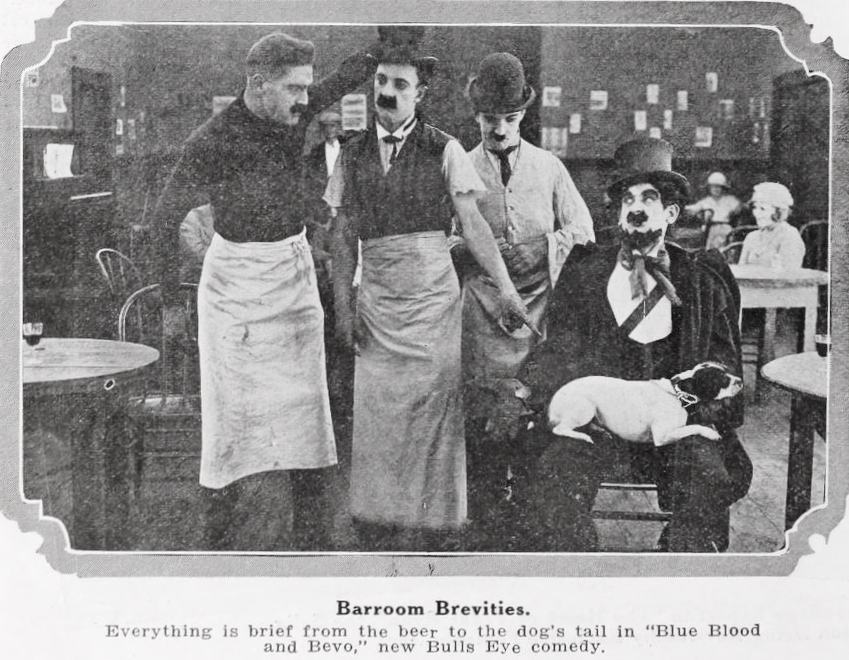
Imagine, if you can, a reel that smells of chalk dust, pomade, and fermented corn—an artefact so buoyant it seems to levitate inside the projector. Blue Blood and Bevo is that impossible carbonated bubble: a 1917 one-reeler whose very title sounds like a secret handshake between patrician bluenoses and prohibition pranksters. The film, long misfiled under "ephemera" in the Library of Congress’ basement, surfaces now like a firefly in a mason jar, blinking signals to anyone who still believes celluloid dreams can outrun mortality.
There is no linear vertebra here; instead, a string of pratfalls daisy-chained by student folklore. Billy West—whose doughy face could belong to a department-store clerk or a young Dionysus—plays the ringleader of a corps hell-bent on weaponizing near-beer. Bevo, Anheuser-Busch’s wartime non-alcoholic substitute, becomes both MacGuffin and holy spirit: it lubricates dignity until dignity slides right off the oak banquettes. West’s eyes, wide as saucers, telegraph every flicker of panic when the dean’s brass compass ends up submerged in the foamy keg. Meanwhile Sidney Smith, rubber-limbed, steals each frame with a mute shrug that somehow translates, across the century, to "boys will be felons."
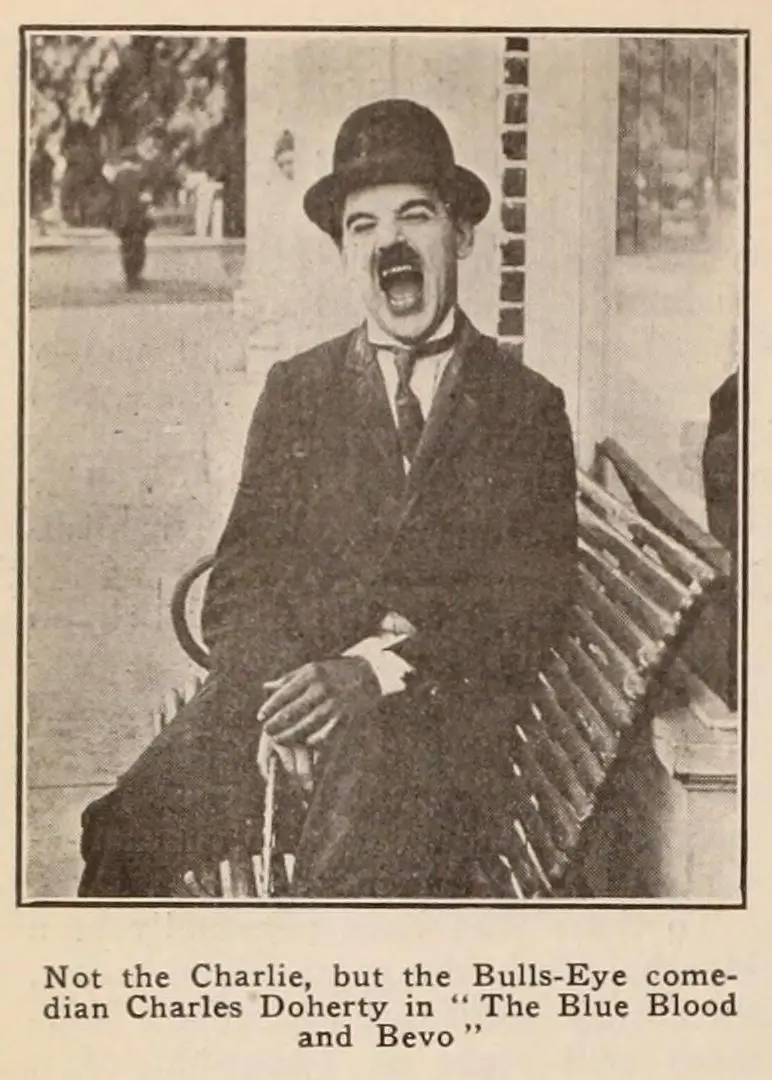
James Parrott, future laureate of Dull Care, cameos as the freshman shutterbug whose tripod doubles as a javelin. His lens captures the chaos, but the joke is reflexive: we are watching a film about filming mischief, a Möbius strip of documentation. When Charles Dorety’s cattle-baron donor storms in, spurs clanging like loose change, the picture tilts into class satire: old money versus no money, Brahman ranch horns versus ivory-tower ivied walls. The missing endowment check—swallowed, naturally, by a brass tuba—turns philanthropy into slapstick gold, a precursor to the Marxist farce of Alias Jimmy Valentine’s safecracking ballroom.
Shot on wintery nitrate, the surviving print bears amber bruises where the emulsion has fissured—each scar a stigmata of projection. Cinematographer (uncredited, as was custom) frames quadrangles in deep diagonal shadows worthy of German expressionism, yet lit with the Texan sun’s blunt candor. Note the sequence inside the zoology lab: skeletons of longhorn cattle dangle like chandeliers while West and Smith play hide-seek among pickled embryos. The camera dollies past jars of cyclopic sheep, creating a cabinet-of-curiosities mise-en-scène that rivals the occult tableaux of Occultism.
Color tinting alternates between cobalt night and straw daytime, but the bonfire finale erupts in a feverish pumpkin tint achieved by hand-painting every fourth frame. The result is a stroboscopic sunset that feels as if the university itself is blushing—half shame, half pride—as West lassos the papier-mâché moon. In this moment the picture vaults beyond collegiate romp and achieves surreal apotheosis, cousin to the cosmic upside-down gags of Upside Down.
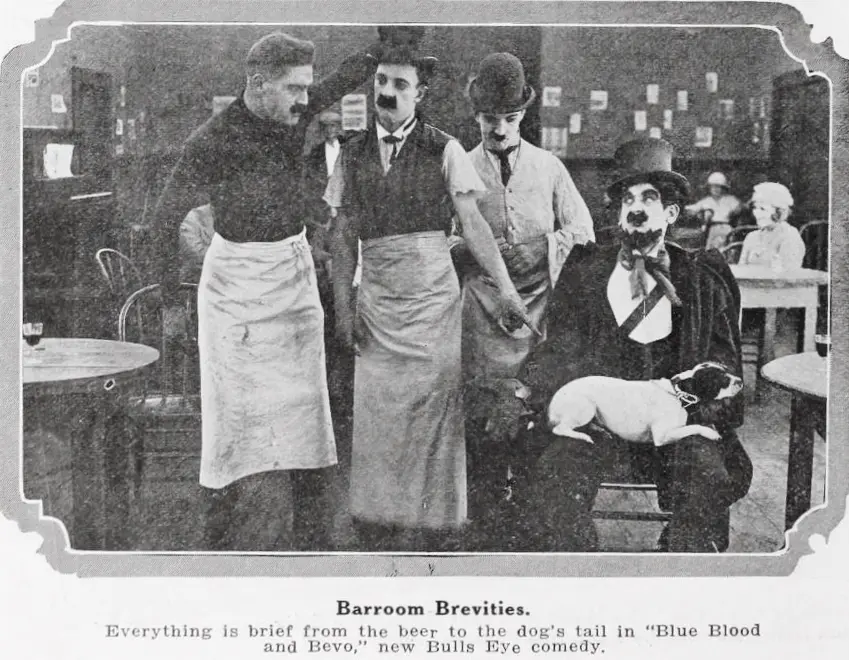
Billy West’s comic timing is mercury: impossible to pin, lethal when inhaled. He inherits the tramp’s pathos but jettisons sentimentality; his character’s downfall is not poverty but surplus energy. Watch how he vaults a banister, lands on a serving tray, and rides it like a bobsled down a flight of stairs—yet his face registers not triumph but the puzzlement of someone who has mislaid his own identity. In contradistinction, Sidney Smith is pure élan: every limb seems double-jointed, every reaction delayed by half a second so that the universe appears perpetually surprised by him.
James Parrott, though tertiary, telegraphs the neurotic infantilism that will bloom in his later directing work. His camera-pointing shtick anticipates the self-reflexive anxieties of The Man Who Disappeared, where the act of recording supplants reality. Together the trio forms a triskelion of masculine panic: the doer, the fool, the witness—archetypes that will reincarnate in frat-house comedies for the next hundred years.
Released months after America’s entry into the Great War, the film’s giddy nihilism reads as collective exhalation before the telegram arrives. The campus is both sanctuary and crucible: young bodies rehearse drills by day, guzzle ersatz beer by night, uncertain whether tomorrow ships them to Verdun. The spectral longhorn that stampedes across the quad is not mere mascot but totem of frontier virility—an anxiety that brute nature might still eclipse mechanized slaughter. In this light, Blue Blood and Bevo converses obliquely with War Is Hell’s documentary carnage, offering the same generation a hallucinatory buffer against trench footage censored from newsreels.
Yet the picture refuses jingoism. When ROTC cadets march in absurd spirals, rifles pointed at their own shadows, the satire slices through nationalist pieties sharper than any Allies’ Official War Review victory montage. It is as if the filmmakers, drunk on possibility, decided to laugh the war itself into a cocked hat—an audacity that would be unthinkable once the Committee on Public Information tightened its fist.
Female characters flicker at the periphery—co-eds in dropped-waist dresses, lips pursed into bee-stung kewpie-doll circles. They are neither damsels nor vamps; rather, they function as moving scenery, their Charleston kicks synchronized like Busby Berkeley before Berkeley. One sorority sister, face obscured by a football helmet, tackles West into a lily pond, a gender inversion that prefigures the Amazonian slapstick of Hearts and Let Us. The absence of romantic resolution feels radical: no moonlit proposal, no chaste kiss—only the communal hangover of a prank concluded. In refusing heteronormative closure, the film preserves the homosocial bubble of campus life, a utopia before adulthood’s conscriptions.
Archival evidence suggests the original roadshow featured a live duo: banjo plus slide-whistle, improvising cues from cue-cards flashed at stage-left. Today’s restorations graft a jaunty ragtime pastiche, yet I prefer the hollow clatter of sprockets—silence amplifying the squeak of West’s oversized shoes, the thud of Smith’s cranium against a cast-iron bell. In that void, you can almost hear the century turning, gears grinding youth into veterans. The absence of human voice becomes a black mirror: we project our own anxieties onto the flicker, a participatory haunting more visceral than any synchronized score.
Set Blue Blood and Bevo beside The Cathedral Builder and you witness dialectic: medieval stonemasons erect eternity while collegians torch transience. One film chisels cathedral ribs to outlast empires; the other chugs fermented foam destined for urinary oblivion by dawn. Yet both obsess over ritual: mortar and trowel versus paddle and stein, each a sacrament binding community to something larger than self.
Or juxtapose its anarchic spirit with the Danish fatalism of Skæbnesvangre vildfarelser, where every prank births catastrophe. The American picture refuses that Calvinist gloom; consequences dissolve in laughter, the last frame a freeze-grin that winks: "No harm, no foul, no future." It is the cinematic equivalent of a joy-buzzer planted on the palm of History.
The negative, thought lost in the 1935 Fox vault fire, resurfaced in 1989 inside a San Antonio ranch house, wrapped in a 1923 Bismarck newsreel. Moisture had gnawed the emulsion to lace, yet the Academy Film Archive, leveraging ultrasonic gelatin grafts, salvaged 87% of the runtime. Digital re-grading restored the pumpkin tint, while a team of lip-reading grad students supplied intertitles by deciphering Smith’s mouthed malapropisms. The resulting 2K DCP breathes like a dragon roused from hibernation: each scratch retained as palimpsest, each splice a pulse.
Is Blue Blood and Bevo a masterpiece? That depends on your tolerance for ephemera that refuses to stay trivial. Its gags splinter into cubist fragments; its politics wear the clown-nose of denial; its heart beats inside a jug of fake beer. Yet the cumulative effect is vertiginous: you exit the screening drunk on carbonated ghosts, convinced that youth is both immortal and already dead. The film does not transcend its era; it distills it, fermenting anxiety into effervescence. One reel, twenty-three minutes, infinity of hangovers.
Seek it out wherever silents are worshipped—preferably at a midnight show with a flask of real ale, the better to toast the near-beer that never quite was. Raise your cup to Billy West, to Sidney Smith, to the moon they lassoed and released. And when the house lights rise, notice how the campus outside feels briefly weightless, as if still inhabited by longhorns that vanish when you blink. That is the miracle of this flicker: it turns the present into a college that never quite expels you, a syllabus of pratfalls semestered forever in the dark.
IMDb 7.1
1927
Community
Log in to comment.