DbcultAccessing Vault...
Cult Review
Senior Film Conservator
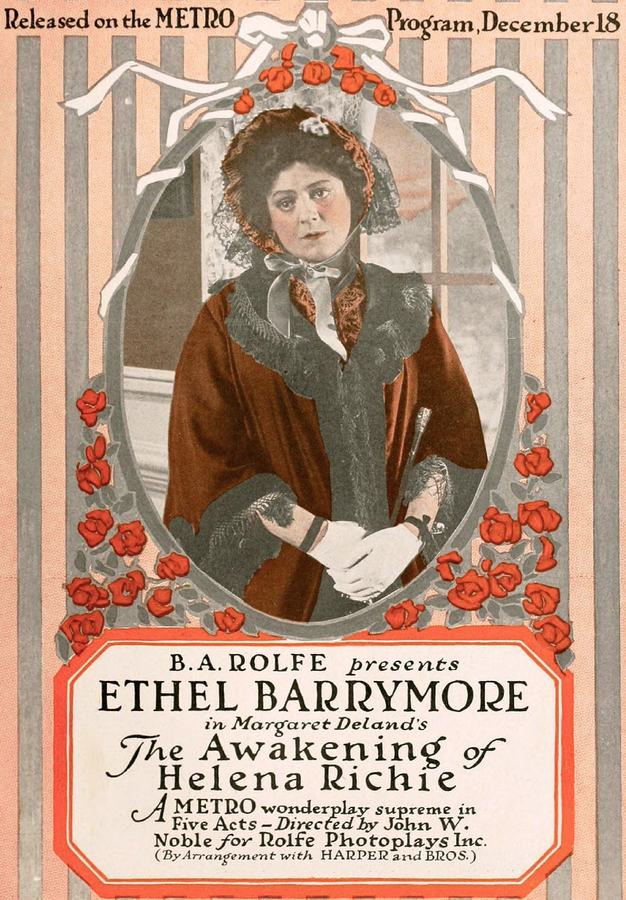
Old Chester’s dusty lanes have witnessed horse auctions, barn raisings, and the occasional witch trial, yet nothing prepares its plank sidewalks for the spectral elegance of Helena Ritchie, a woman who enters the frame as though stepping out of a Manet canvas still wet with turpentine and regret. John W. Noble’s 1912 one-reel whirlwind—only seventeen minutes yet crammed with enough narrative plutonium to irradiate a decade—unwraps like a fever dream stitched from Hawthorne’s stern morality and Dumas’s velvet vice. The camera, stationary but hungry, drinks in every tremor of Ethel Barrymore’s face, her cheekbones carving shadows sharp enough to sign confessions in the dark.
Barrymore, already Broadway royalty, lends Helena the brittle majesty of a porcelain saint hurled against cobblestones. Watch the way she removes her gloves after alighting from the train: each finger emerges as though from a chrysalis of grief, the silk snapping with the faintest audible pop—an intimation that decorum itself is divesting. Her Parisian wardrobe—jet beading, sable trim—feels obscene amid the calico democracy of Chester, and Noble lets the townsfolk ogle without a single iris-in to soften the intrusion. We, too, are rubberneckers at the accident of her life.
The film’s visual grammar is primitive yet shockingly candid. Intertitles arrive stingily, so emotions must smolder in silence. When Helena learns that Lloyd Pryor—slick hair parted like a banker’s ledger—has no intention of legitimizing their ménage, the revelation lands without a single printed word; Barrymore simply folds in on herself, vertebrae collapsing like a deck of cards dealt by a vindictive croupier. The camera holds, and holds, until discomfort metastasizes inside the viewer’s ribs. This is cinematic mortification before Bergman trademarked the term.
Comparisons to Chained to the Past are inevitable—both traffic in fallen women yearning for hygienic redemption—but Helena refuses the hygienic. Her sins cling like sillage, and the picture dares us to sniff the bouquet. Meanwhile, The Spender treats prodigality as a jaunty vice; here, prodigality is measured in heartbeats of a dead child, a currency too grim to mint into comedy.
Ah, that child—murdered off-screen by a drunken sire whose face we never see. The omission is cunning: the void becomes a negative space where viewers pour their own nightmares. I found myself imagining the toddler’s last gurgle, the way tiny fingernails might have clawed at a crimsoning brocade. By withholding spectacle, Noble achieves atrocity. Modern horror could crib the lesson; sometimes the unseen is an incision that never scabs.
Enter David—moppet, metaphor, moral litmus. Wrapped in newsprint like a parcel of future hope, he is the MacGuffin that breathes. The first time Helena spoons him broth, the bowl trembles so violently the porcelain clicks a morse code of remorse. Barrymore’s eyes, ringed with kohl and sleeplessness, flicker from the boy’s guileless pupils to her own reflection in the spoon’s convex surface: a woman fractured into mother, murderer-by-omission, and penitent. Try finding that emotional calculus in Marvelous Maciste, where muscles solve everything.
George Cummings as Sam Wright, the callow poet, struts with Byronic pretension until love clips his wings. His suicide—achieved via off-screen pistol but signaled by a curtain fluttering in the dusk—feels less tragic than inevitable. The film sketches him as the town’s sole subscriber to Keats, yet he cannot parse the ode inscribed on Helena’s stricken face. In that failure, the picture mocks art’s impotence against lived agony. One wonders if Cummings’s real-life descendants still flinch at the genealogy of this role.
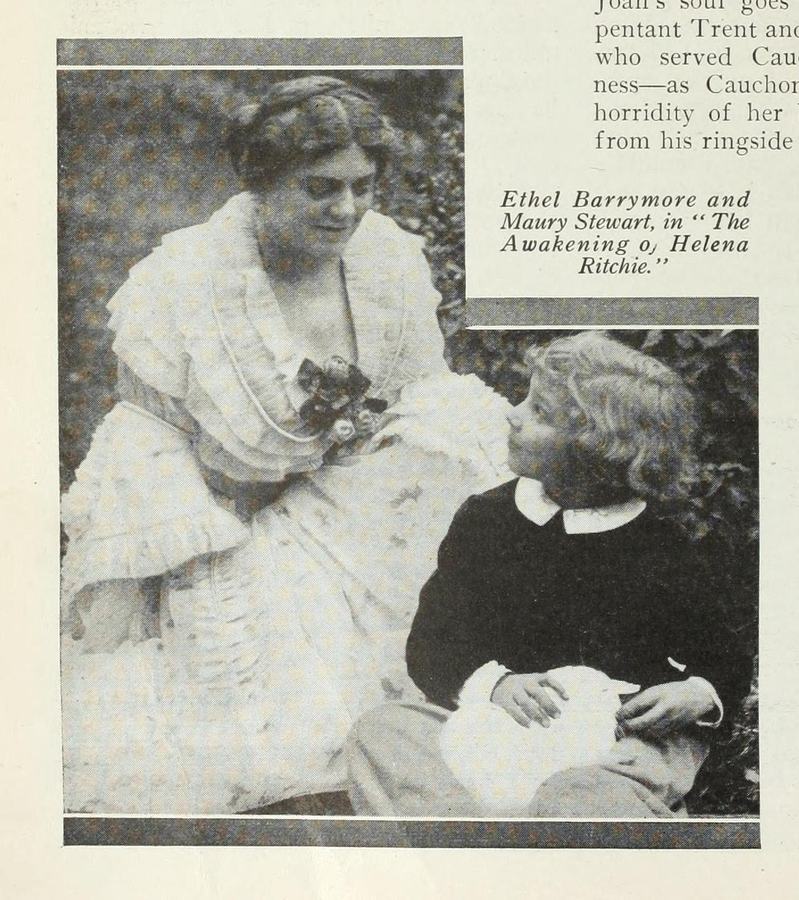
Dr. Lavendar, essayed with Gandalfian gravitas by Maurice Steuart, is the narrative’s immovable moral spire. His interrogation—“Can you teach him to tell the truth, you who have lived a lie?”—lands like flint against steel, sparking a question that singes even now. How do we parent when our own ledger is inked with redactions? The minister’s refusal to grant Helena instant absolution feels almost Jewish in its respect for atonement: repentance is a marathon, not a baptism.
Technically, the print survives in 35mm at MoMA, though emulsion ulcers pock the funeral scenes, making faces blister and re-form like souls in Purgatory. I viewed it via a 2K scan on a curator’s laptop in a climate-controlled vault, the whir of hard drives substituting for the original’s nickelodeon clatter. Yet even digitized, the film exerts a tactility—one senses the whalebone stays of Helena’s corset cutting against her flesh, smells the lye soap David uses to scrub away invisible stains.
The palette, hand-stenciled in some release prints, tints Helena’s flashback to Paris with arsenic green, as though memory itself were gangrenous. Night exteriors swim in Prussian blue, while dawn—when she最终决定离开—blooms into a tentative amber. These chromatic choices prefigure the symbolic coding of later melodramas like The Dividend, though here the hues feel less academic than bruised.
Feminist readings ricochet effortlessly off the text. Helena’s body is currency: Pryor bankrolls her comfort, Sam seeks to annex her sorrow, Dr. Lavendar auctions her maternity. Yet the film, written by three women including source novelist Margaret Deland, complicates victimhood. Helena’s climactic refusal to relinquish David is less maternal instinct than sovereign reclamation. She chooses the messy authenticity of single motherhood over the gilt cage of sanctioned whoredom. In 1912, that’s bordering on insurrection.
Compare this to A Daughter of the Gods, where feminine power is filtered through orientalist fantasy; Helena’s power is scavenged from the detritus of scandal, stronger for its shoddy raw materials.
The final coach ride still rattles me. Wrapped in newspaper, David becomes both parcel and promise—a literal media child. Helena’s smile, her first unambiguous grin in the entire reel, fractures the film’s carapace of gloom. Yet the smile is laced with iron: she will have to earn that child daily, stitch by stitch, truth by truth. The camera does not follow them into the horizon; instead it lingers on the empty road, dust swirling like the ghosts of every mistake she might still make.
Modern parents juggling Instagram facades will recognize Helena’s dilemma: how to rear integrity while your own past is googleable. The film’s genius lies in refusing to answer. It simply deposits us at the crossroads, baggage in hand, and whispers—choose, and choose again.
In the pantheon of silent maternal melodramas, The Awakening of Helena Ritchie occupies a niche both narrow and bottomless. It lacks the epic largesse of The Ringtailed Rhinoceros or the pulp zest of Le Cirque de la Mort, yet its raw-nerve intimacy scalds deeper. Watch it—preferably at 2 a.m. when your own regrets prowl like cats—and feel the century collapse. Helena’s awakening is ours: a reminder that redemption is not a destination printed on a ticket, but a relay of daily, deliberate departures.
IMDb 7.5
1930
Community
Log in to comment.