DbcultAccessing Vault...
Cult Review
Senior Film Conservator
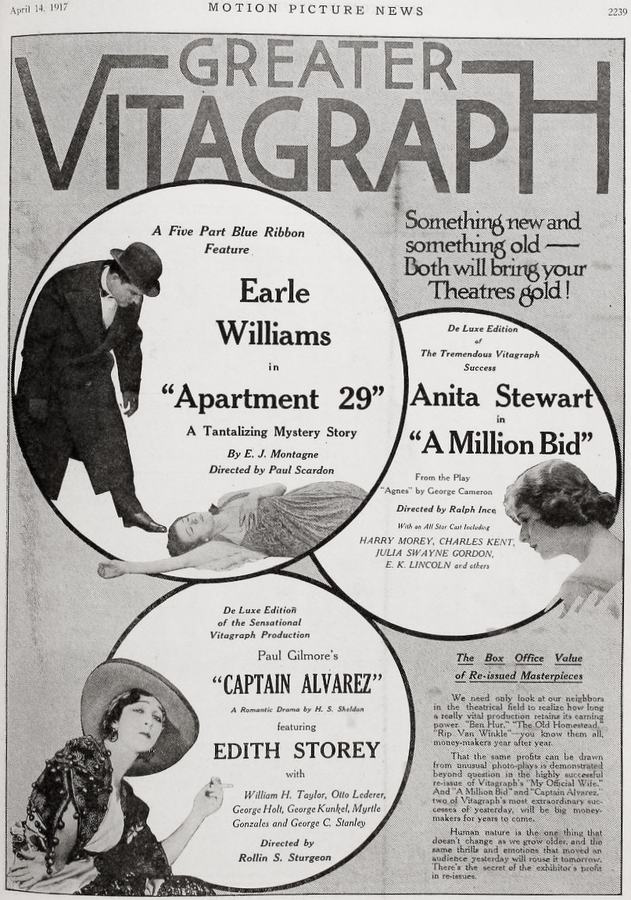
In the gilded dusk of 1914, when the world still believed wars would be brief and cinema itself was a nickelodeon novelty, A Million Bid arrives like a blood-orange moon—luminous, ominous, impossible to ignore.
What lingers first is the shimmer of transactional cruelty. The camera, shy yet covetous, glides past velvet drapes and into a drawing room where Julia Swayne Gordon’s matriarch brandishes her fan like a croupier’s rake. Every gesture is a bid; every smile, an IOU. Anita Stewart’s Agnes stands adjacent, eyes lowered in the manner of porcelain figurines who expect to be toppled. We sense the ledger before we see it: a daughter’s heartbeat mortgaged against a diamond tiara that will never refract enough light to hide the family’s insolvency.
Ralph Ince, directing from a scenario co-written by the formidable Mrs. Sidney Drew, refuses to grant the mother the cartoonish villainy that would comfort us. Instead, he paints her as a frantic entrepreneur in a marketplace where women’s bodies are the only negotiable tender. The performance is so exquisitely balanced between pathos and rapacity that you almost forgive her—until the moment she intercepts a letter scented with hospital ether and spring lilacs, a letter that might have saved a fragile heart.
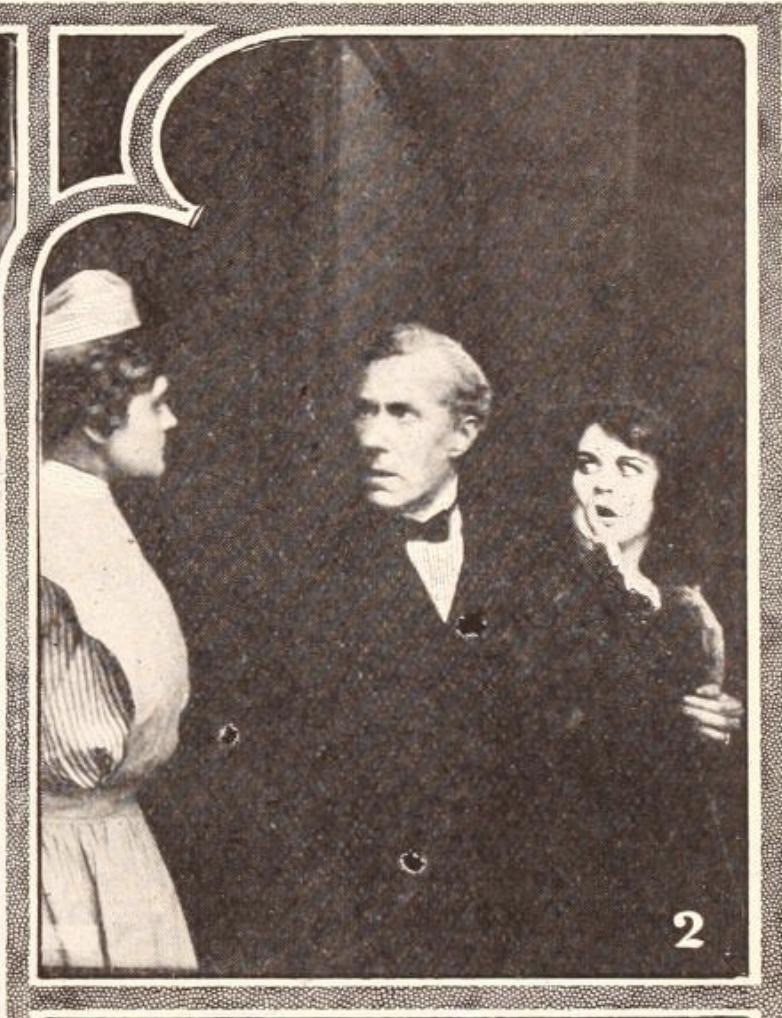
Mid-film, the picture pivots with the brutality of a guillotine blade. One reel we are amid lace and gaslight; the next, surf crashes across the deck of a yacht that might as well be Charon’s ferry. Donald Hall’s Australian millionaire—beefy, genial, forgettable even before amnesia claims him—becomes the casualty of a storm rendered through whiplash editing and double-exposed foam. The ship’s fracture is intercut with Agnes’s silent scream, a tableau that anticipates European expressionism by a full decade. When the smoke clears, two widows exist: Agnes in black crêpe, and the sea itself, wearing whitecaps like mourning ribbons.
Enter E.K. Lincoln as the doctor, now elevated from penurious suitor to celebrated neurologist. Lincoln’s bearing carries the ascetic magnetism of early American Protestantism; you believe he could carve hope out of a skull. Yet the film’s boldest maneuver is to strand him in ignorance. He does not recognize his rival when the latter, memory scrubbed clean as a newborn, is stretchered into his clinic. The irony is so vertiginous it feels modernist: the healer commissioned to restore the very past that would obliterate his domestic bliss.
Amnesia here is no soap-opera contrivance; it is the ethical crucible of the twentieth century. If identity is memory, then to forget is to die and be reborn. Agnes, trapped between two incarnations of the same man, becomes a reluctant deity presiding over resurrection. Stewart’s face—caught in a three-quarter profile that the cinematographer lights like a cameo brooch—registers every tremor of dread and desire. She begs her second husband to withhold the knife, not from malice but from the primal intuition that knowledge can be a curse.
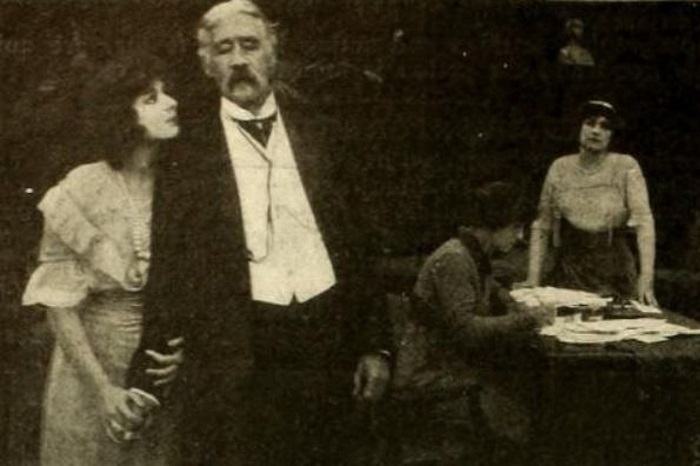
Viewers weaned on the tidy moral algebra of later melodramas may find the resolution startling: the patient expires on the table, memory unrecovered, marriage intact. The film declines to punish adultery that never fully materialized, nor does it reward deceit. Instead, it offers the chillier comfort of contingency. Fate, not virtue, guards the threshold. One exits the theater sensing that a single heartbeat’s deviation could have detonated this fragile equilibrium—a sensation both nihilistic and sublimely democratic.
Though chemically shackled to grayscale, the film secretes chromatic suggestion. Intertitles flare in canary-yellow ink whenever the maternal edicts descend. Night sequences are toned with bruised violet, while the shipwreck reel is solarized into a sickly teal that makes skin appear drowned. Such flourishes, achieved through hand-cranked variances in development baths, anticipate the stylized palettes of Fantômas: The Man in Black and even the maritime horror of Australia Calls.
Compositionally, Ince favors diagonal thrusts: stair rails slice frames, oars skew horizons, surgical scalpels glint like italicized threats. The result is a perpetual off-balance sensation, as though the world itself listing toward moral entropy. When Agnes finally kneels in a chapel aglow with candlelight, the vertical columns of pews provide rare perpendicular solace—a fleeting architectural embrace before the edit yanks us back into uncertainty.

Beneath its lace glove, the picture conceals a clenched feminist fist. Note the mother’s desperation: denied her own earning power, she monetizes the next generation. The father’s cardiac collapse reads less as personal tragedy than as systemic failure—patriarchy expiring from the very pressures it legislates. Meanwhile the male physician ascends via professional merit, a path barred to women in 1914. Agnes’s final silence, therefore, is not submission but strategy; she secures domestic sovereignty by allowing medical patriarchy to self-sabotage.
Contrast this with the frontier parable Peril of the Plains, where heroines triumph through physical grit, or the Wagnerian biography The Life of Richard Wagner, where artistic genius justifies domestic collateral damage. A Million Bid occupies a liminal zone: too urbane for western mythos, too American for Old-World decadence. Its true ancestor might be Ibsen, though transmitted through the kaleidoscope of nickelodeon sensationalism.
Stewart, often dismissed as merely “photogenic,” achieves a masterclass in constrained affect. Watch her fingertips in the letter-intercept scene: they graze the envelope’s flap with the delicacy of a safe-cracker, then recoil as though burned. Later, aboard the yacht, she strips for bed behind a chintz screen; the silhouette reveals shoulders quaking with premonitory grief. No intertitle announces her dread—the body confesses.
Lincoln, angular and sepulchral, plays the surgeon with the humility of a monk who suspects divinity but doubts his own worthiness. In the operating theater, his brows knit into a Morse code of ethical static. The moment he declines his wife’s plea—an almost imperceptible shake of the head—carries more gravitas than pages of dialogue. It is the film’s ethical fulcrum: the recognition that professional duty transcends marital contract, even when the two are encrypted within the same fragile skull.
Julia Swayne Gordon’s maternal predator deserves scholarly monographs. She never twirls a mustache; instead she radiates the manic hospitality of cruise-ship social directors. Listen to her laugh—captured in silent-era rhythms yet echoing forward to the brittle chirp of 1930s screwball dames. She embodies capitalism not as robber-baron but as society hostess, converting small talk into futures markets.
The narrative triptych—auction, amnesia, operation—mirrors the Stations of the Cross, albeit monetized. Each act culminates in a death: financial, mnemonic, corporeal. Writers Marguerite Bertsch and Mrs. Sidney Drew (herself a pioneering comedienne) interleave biblical cadence with Sears-catalog vernacular. Observe the intertitle: “And the sea gave up its dead.” The phrasing is Revelation, the context pure pulp. That friction ignites the film’s enduring mystique.
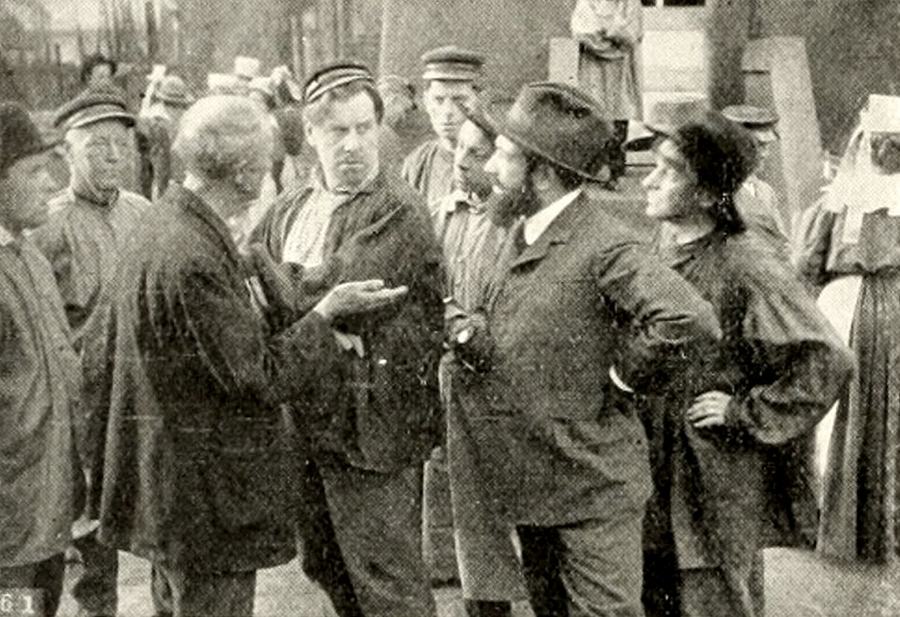
Moreover, the script anticipates modernist fragmentation. Temporal ellipses—five years condensed into a splice—challenge viewers to fill lacunae. We arrive at the clinic mid-success, piecing together renown, marriage, progeny from surgical props and hallway gossip. Such narrative economy would influence everything from Checkers to late-century neo-noir, where backstory is archaeological rubble demanding excavation.
Cinephiles will detect the proto-feminist DNA later spliced into The Keys to Happiness, though that 1918 release softens its heroine’s agency with redemptive motherhood. Conversely, When Paris Loves flirts with amnesia yet retreats into continental sophistication; A Million Bid stays ferociously domestic, insisting that the American parlor can host tragedies equal to any European salon.
Shipwreck as narrative eraser resurfaces in The Wrath of the Gods, but there divine vengeance steers destiny. Here, randomness rules. The millionaire’s head injury is not karmic reprisal but statistical inevitability—an existential shrug that feels almost Camus-esque. Likewise, the mother’s demise off-screen, reported via telegram, denies us catharsis. The universe is not cruel; it is indifferent, and thus infinitely more terrifying.
Contemporary trade sheets praised Stewart’s “moonlit fragility” yet dismissed the plot as “nautical nonsense.” Modern archivists, however, discern pre-code audacity. The 2019 Bologna restoration reveals textured tints and a hand-stenciled surgical scene wherein arteries pulse faintly crimson—an effect so ahead of its time that initial exhibitors thought it projection error.
Streaming audiences weaned on rapid-cut suspense may find the pacing glacial, but patience yields eerie rewards. The film teaches us to listen to silence, to read the tremor of a gloved hand as fervently as any spoken vow. In an era when CGI obliterates stakes with pixelated immortality, here a paper letter, a candle gutter, a skull saw can cleave existence in twain.
Should you submit to this operation? Absolutely—but prepare for anesthesia of the soul. A Million Bid does not merely narrate amnesia; it induces a version in the viewer, a bleaching of moral certitude that lingers long after the projector’s hum subsides. You will exit questioning the currency of affection, the ledger of loyalty, the fragile cartography of selfhood. And when the final intertitle fades—white on black like a death certificate—you may realize that memory itself is the highest stake in the auction of living, and that sometimes forgetting is the only bid that buys tomorrow.
© 2024 celluloid curio cabal | all rights reserved under international nebula law

IMDb —
1921
Community
Log in to comment.