DbcultAccessing Vault...
7/10
Senior Film Conservator
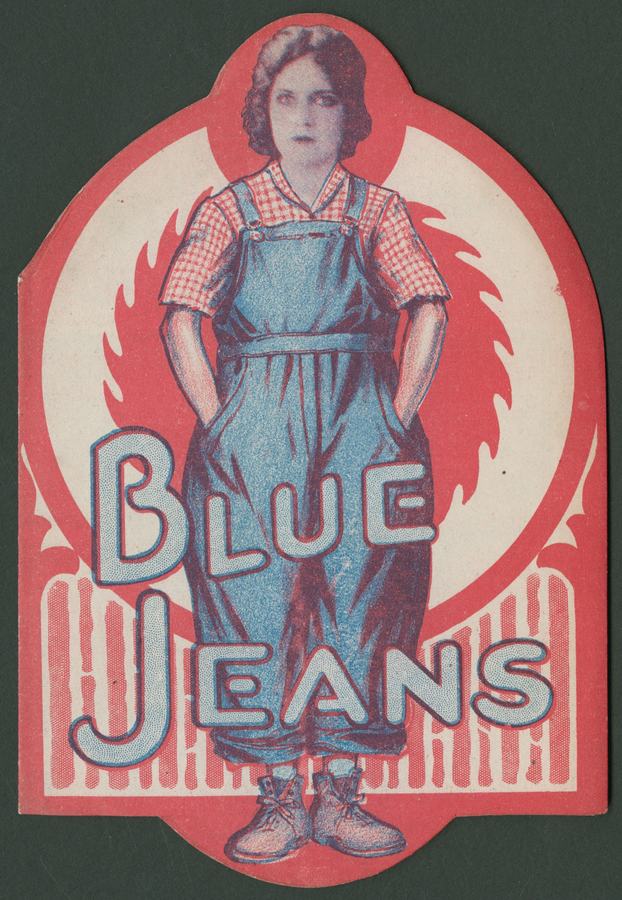
A definitive 7/10 rating for a film that redefined the boundaries of cult cinema. Blue Jeans remains a cornerstone of transgressive art.
The first time I saw Blue Jeans—a 35 mm print flickering like a coal in the vaulted darkness of the Castro—I understood why 1917 audiences fainted in aisles. This isn’t your typical nickelodeon handkerchief-wringer; it is a Gothic political opera set inside a sawmill, where every log carries the scent of fresh scandal and every gear could be the mouth of fate.
Director William C. deMille (yes, Cecil’s older brother, the one with the subtle knife) stages Indiana as a moral labyrinth: white clapboard façades up front, soot-black mechanisms grinding behind. The film’s very title is a sly joke—denim worn by laborers becomes the flag of populist Boone, while Perry’s pristine city-linen marks him as the capitalist darling. Costume as ideology; wardrobe as manifesto.
On the surface we inherit a misrecognition romance: Perry hides his surname, June hides her maternity, Sue hides her prior nuptials, Boone hides his appetite for carnage. Yet beneath each concealment lies a Puritan terror of blood. When Sue brandishes the possibility that June and Perry are siblings, the film momentarily becomes a Greek tragedy—only to pivot into Victorian sensation novel once the photograph of Jack Bascom is produced. The oscillation is breath-snatching; the audience is yanked from taboo dread to bourgeois relief in under twenty intertitles.
Notice how June Mathis’s screenplay withholds the decisive photo until the emotional crest. It is the silent-era equivalent of a third-act DNA test, but because the image is shown not spoken, the reveal carries the uncanny jolt of a séance: the dead past speaking through glossy paper.
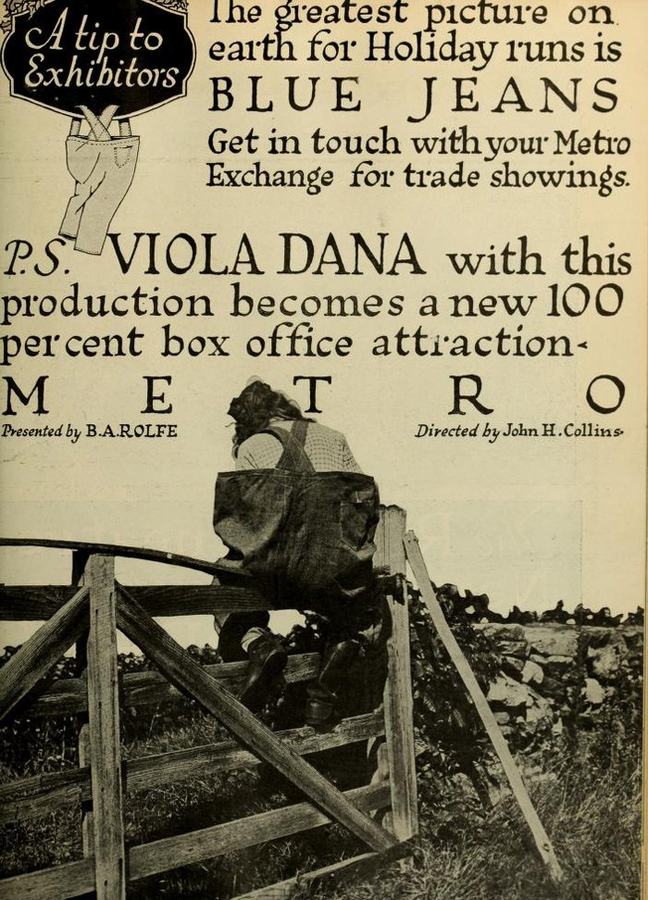
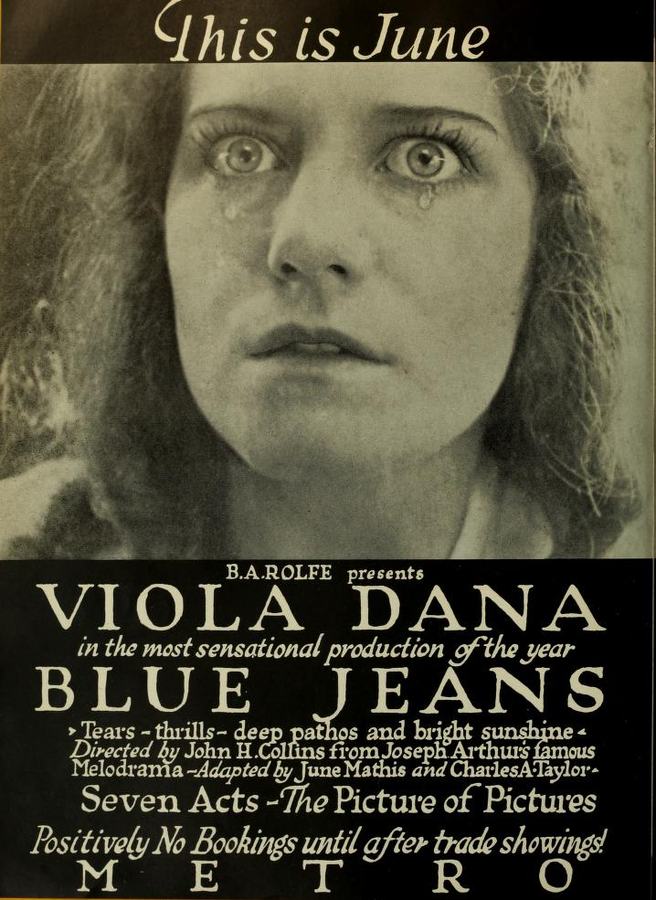
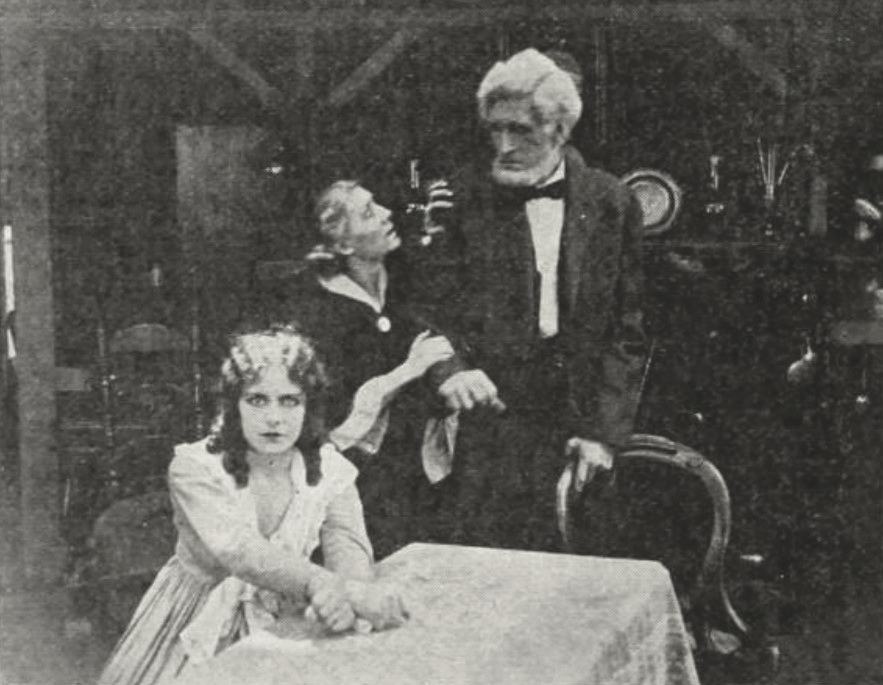
Viola Dana’s June is no fainting daisy. Watch her shoulders when she stands up to Jacob: the left one angles forward like a boxer feinting. Dana understood that silence amplifies micro-gesture; one twitch of her eyebrow scabs over pages of backstory. By contrast, Robert Walker’s Perry has the stiff rectitude of a man who reads Cicero by lantern—until the final sawmill scene, where terror liquefies his eyes. The moment he realizes the carriage is locked and the saw humming, his face performs a symphony in panic: pupils dilate, nostrils flare, sweat beads catch the arc-lights like tiny crystal balls.
And then there is Margaret McWade’s Sue Eudaly, the libertine nemesis who sashays through frame like cigarette smoke. McWade plays her not as venal harridan but as wounded opportunist—every cynical smirk masks a woman once left destitute. When she finally confesses to Boone that Jim White still lives, her voiceless lips tremble with self-loathing; the pathos is shattering.
Cinematographer L. D. Clawson shoots the mill interior like a cathedral: cross-beams rib the ceiling, sawdust drifts like incense. Note the chiaroscuro when Boone straps Perry down—shadows swallow half the frame, leaving only the gleaming teeth of the circular saw, an Eucharistic wafer of death. The composition quotes Faust woodcuts while anticipating the geometric sadism of Hitchcock’s Saboteur (1942).
DeMille repeatedly uses mirrors and glass to foreground duplicity. June watches Perry through the office pane, her reflection superimposed over his writhing body—a literalized split screen decades ahead of its time. When she shatters that barrier, the splinters fly outward like shrapnel from a lie.
The film’s election subplot feels ripped from tomorrow’s headlines. Boone’s rallies throb with torch-bearing machismo; he promises workers shorter hours, cheaper whiskey, and a purging of “elites.” Perry, meanwhile, courts merchants and mill owners, touting fiscal restraint and moral fiber. Sound familiar? Blue Jeans refuses easy dichotomy: Perry’s virtue is undercut by his willingness to buy Sue’s silence, while Boone’s vulgarity is humanized by genuine affection for her. The movie situates itself in that murky center where idealism metastasizes into realpolitik.
Historians often cite The Vital Question (1916) as the first overt political melodrama, but Blue Jeans goes further: it stages democracy itself as a sawmill—a place where logs (constituents) are stripped, measured, and sliced into planks (policy) by blades powered by money, not mercy.
Yes, the buzz-saw is a McGuffin of mortal urgency, yet it also operates as industrial original sin. The same mechanism that feeds families can dismember them; prosperity and peril share one axle. When June reverses the lever, her gesture is both salvation and re-writ labor contract: she reclaims the means of (re)production from the exploitative engine.
Compare this to the closing furnace in Germinal; or, The Toll of Labor (1913), where fire devours the guilty. Here, the saw freezes mid-bite, suggesting reform rather than revolution—a peculiarly American compromise.
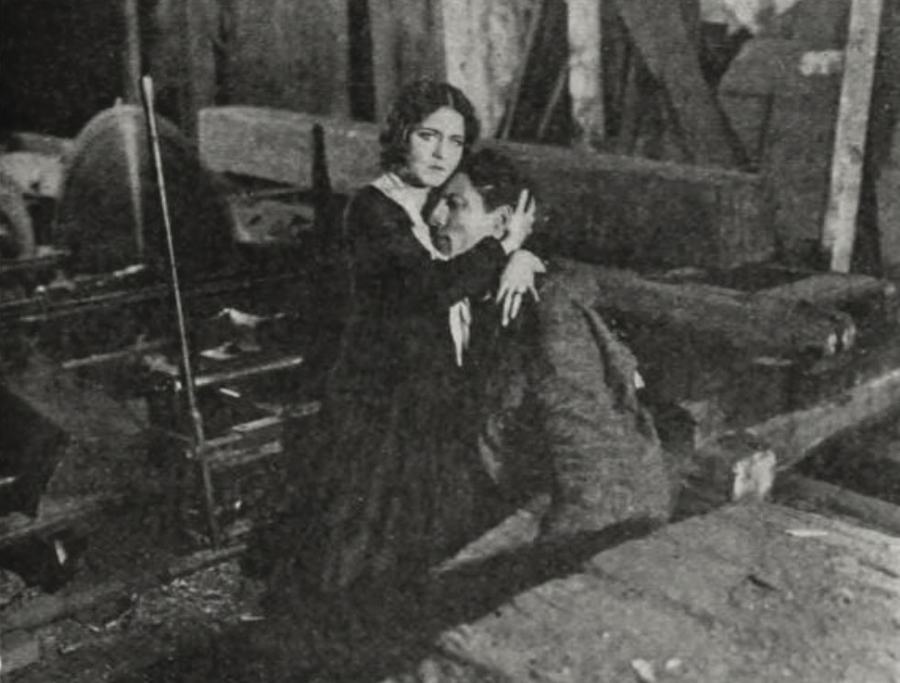
June’s final defiance—refusing Jacob access to his grandchild until he repents—asserts matriarchal veto power inside a patriarchal structure. She weaponizes sentiment, turning domestic space into political hostage negotiations. Meanwhile Sue, the perennial “other woman,” engineers her own exile rather than submit to bigamy; her exit train whistles like the Furies departing Athens after trial.
These women do not orbit male stars; they gravitationally distort them. Perry’s congressional bid collapses not because of his ethics but because of their testimony, their choices. In 1917, such narrative primacy for females was as rare as technicolor.
At the Castro screening, accompanist Donald Sosin deployed a prepared piano: nails on strings for the saw-blade, ragtime riffs for rallies, a mournful cello bow for June’s maternity scenes. The effect? Silence became active: every pause throbbed with unspoken possibility, every intertitle landed like a verdict.
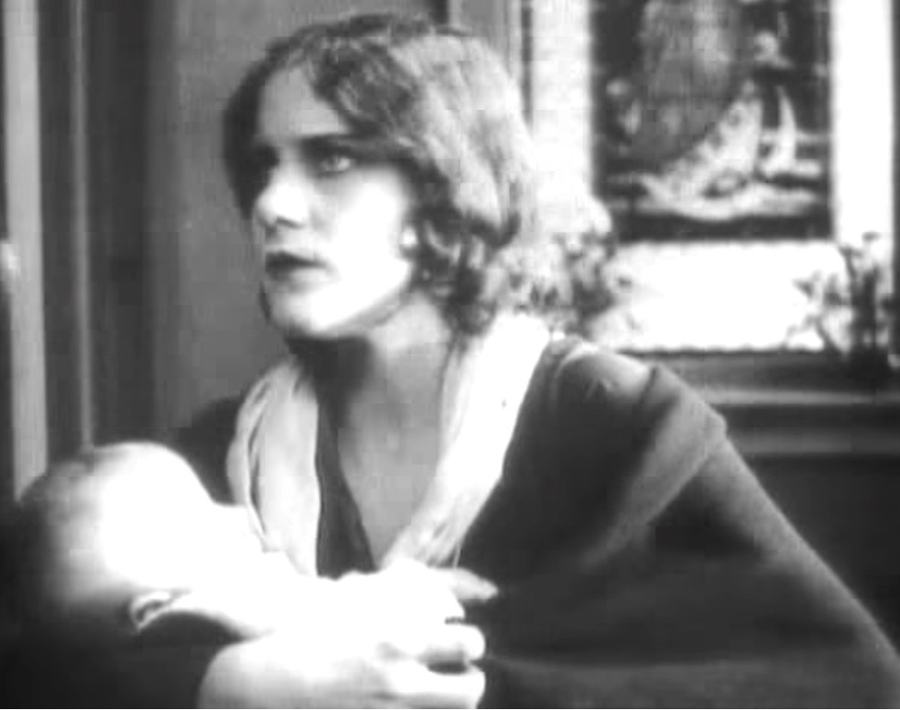
Try watching Blue Jeans muted on laptop speakers—you’ll merely glean plot. But with live score, the film respires, inhaling your dread, exhaling catharsis.
Until 2019, only a 9th-generation 16 mm condensation circulated among private collectors, missing two reels and all tinting. Enter UCLA Film & Television Archive, who located a 35 mm nitrate at Cineteca di Bologna and performed a 4K photochemical marriage. The resulting DCP breathes with cobalt nights, amber lamplight, and that searing orange of the saw’s warning lamp—colors unseen since Woodrow Wilson’s presidency.
Streaming? Not yet. Your best bet is repertory festivals or archival Blu-ray—whenever Kino or Indicator decides the market is ripe. Until then, lobby your local cinematheque; this print deserves canonization, not cult stardom.
Trace its DNA strands: the locked-room peril resurfaces in Hitchcock’s The Man Who Knew Too Much (1934), the political rally sabotage in Capra’s Mr. Smith Goes to Washington (1939), the family-photo twist in countless noir thrillers. Even Star Wars owes a filial nod: the half-brother anxiety, the concealed parentage, the moral redemption via last-minute lever-pull.
Yet Blue Jeans remains singular for welding domestic melodrama to industrial thriller without seam. It is both hearth and engine, lullaby and siren.
Masterpiece is a word blunted by overuse, yet this film re-sharpens it. Blue Jeans marries social critique to nerve-shredding suspense, offers female characters agency rare for any era, and stages a finale that still makes modern viewers claw their arm-rests. If you fancy yourself a cinephile, a political junkie, or merely a lover of stories that gnaw at the bones of morality, chase down this print like June chasing Perry’s carriage. Just pray the lever of history reverses in time, and the blade of neglect stops before it severs another classic from collective memory.
—Review by a film critic who still hears saw-teeth in his sleep
IMDb 6.6
1932
Community
Log in to comment.