DbcultAccessing Vault...
Cult Review
Senior Film Conservator
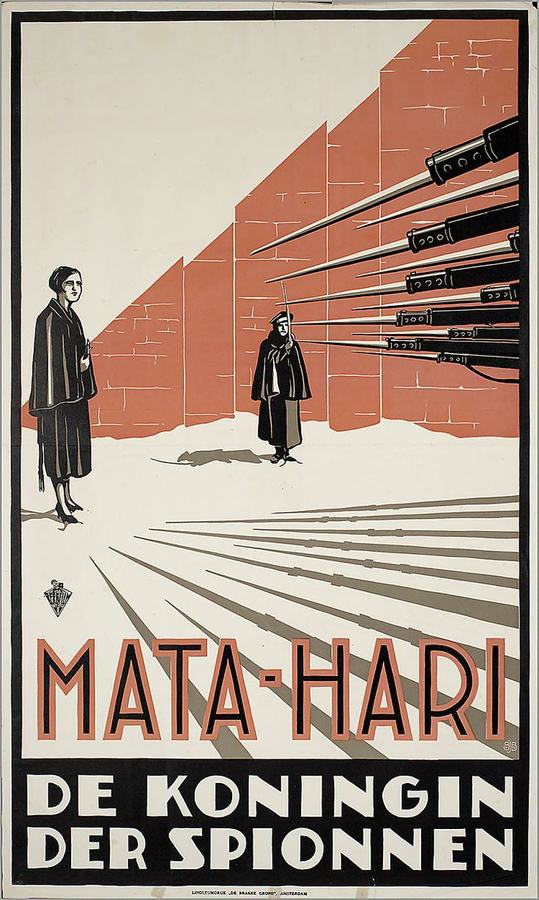
Asta Nielsen glides through the film like cigarette smoke curling inside a crystal decanter—weightless yet intoxicating. Director Maximilian Korda's camera fetishizes the negative spaces around her: the lacuna between gloved fingers, the breath-held pause before an eyelid flutters. The narrative, pared to the marrow, refuses biopic conventions; instead it renders Mata Hari as a mosaic of rumor, a patchwork stitched from intercepted letters, cabaret posters, and the fever dreams of frontline soldiers.
Viewers hoping for chronological fidelity will exit disoriented. The film begins at the end—a scaffold silhouetted against a zinc sky—then spirals backward through mirrored corridors where time folds like silk. One reel positions her as strategic temptress; the next whispers she was only a convenient scapegoat for France's 1917 military catastrophes. The refusal to land on a verdict is the movie's sharpest sting: history's lacquer dissolves beneath our gaze until only the abstract idea of betrayal remains.
Silent-era icons often erupt in broad pantomime; Nielsen inverts the practice, weaponizing micro-movement. Watch the sequence where she rehearses her Javanese temple dance: wrists flex, ankles pivot, yet her torso remains eerily static—a cobra in meditation. Intertitles never articulate her thoughts; instead a single iris-in on her pupils dilates narrative exposition more eloquently than dialogue ever could.
She seduces not through exposure but occlusion—every lifted veil reveals a newer veil.
Compare Nielsen's minimalism to the expressionist contortions of Birth or the flapper-era mania in La lussuria. Where those films externalize angst in caligari shadows, Nielsen bottles it behind the lacquer of her gaze, letting paranoia bloom in the spectator rather than the set design.
Cinematographer Theodor Sparkuhl renders Europe as a chiaroscuro battleground: Prussian blues bruise the horizon while Parisian nightclubs smolder in topaz. Note the recurring visual motif of grids—window lattices at military headquarters, the tessellated floor of the Folies Bergère, even the iron rivets of a Zeppelin hangar. They foreshadow the snare that will ultimately truss our protagonist: modernity's bureaucratic web masquerading as chivalric honor.
This visual stratagem resonates with The City of Failing Light, where architecture devours individuality, yet predates the noir aesthetic by a full decade. The tinting—cyan for German interiors, amber for French—subtly implants national branding onto skin and costume, so that geopolitics literally colors carnal desire.
Screenwriter Edmund Lustig strips John le Carré mechanics to their libidinal core: secrets aren't traded, they are ejaculated in post-coital sighs. Mata's tradecraft is reduced to three recurring gestures: the removal of a silk glove, the tracing of a monocle rim, the folding of a napkin into a chrysanthemum—each a codified signal to her German handler.
Yet the film flirts with absurdity: vital intelligence fits on a postage stamp hidden beneath a pasty. Such Lilliputian MacGuffins lampoon wartime hysteria, echoing the sardonic tone of Kak oni lgut but predating its Brechtian snark by several years.
Act III relocates the drama to the Conciergerie, transmuted here into a cavernous music hall complete with proscenium arch. Spectators sip absinthe while prosecutors waltz with witnesses. The judge's gavel doubles as a metronome for an off-screen orchestra; justice is choreographed, not deliberated. In one bravura shot, the camera pirouettes 360° as verdict is pronounced, implicating the viewer inside the whirlpool of collective bloodlust.
Historical aside: Actual trial transcripts reveal the military tribunal feared riots if they acquitted; the film indicts that cowardice by turning the gallery into a baying chorus straight out of a Grand Guignol matinee.
The movie refuses to slot Mata into prefab victimhood. She monetizes the male gaze—collecting banknotes inside her satin garter—but the same transaction brands her a conspirator against the state. The irony is circular: her body is sovereign territory until the instant the state decides it's contraband. This ouroboros recalls the sexual-political stalemates in Wife or Country yet reaches further back to the primal dread of Atavismo dell'anima.
When the firing squad finally exterminates that body, the camera tilts skyward, revealing a billboard recruiting women to factory jobs. The cut is surgical: one woman eliminated, another commodified—assembly-line femininity supplanting the courtesan.
Though bereft of Vitaphone, modern restorations marry Nielsen's choreography to Erik Satie gymnopedies and the intermittent crackle of shellac 78s. The juxtaposition is unnerving: languid piano notes underline artillery flashes onscreen, producing synesthetic dissonance. Cinephiles will detect anticipatory DNA of Twisted Souls' atonal horror, birthed here in embryonic form.
Contemporary Parisian censors hacked two full reels, convinced the footage would undermine troop morale. Lost fragments—believed to include Mata's alleged lesbian tryst with a Russian archduchess—survive only in a Soviet archival print discovered in 1998. Their inclusion reframes the trial as pansexual witch-hunt rather than patriotic purge, a nuance still absent from most commercial home-video versions.
Film historians rank the excised scenes alongside Der Sultan von Johore's missing banquet episode as holy-grail casualties of early censorship.
Modern audiences, jaded by reality-TV tribunals, may smirk at the film's grand guignol. Yet the final close-up—Nielsen's eyes boring through the lens into your living-room darkness—annihilates moral smugness. The stare demands we contemplate our own appetite for scandal, the Reddit threads, the Twitter cancellations, the algorithmic gallows.
In that sense, Mata Hari is less period artifact than prophetic indictment: a 1921 film that foresaw 21st-century voyeurism, deep-faked intimacy, the OnlyFans economy where sexuality and surveillance interlace ad infinitum.
To watch Mata Hari is to inhale a phial of wartime absinthe: heady, bitter, laced with metallic aftertaste of blood. It neither rehabilitates nor demonizes its subject; instead it dissolves biography into mythopoeia, letting the viewer ferment inside the ambiguity. Asta Nielsen doesn't act the role—she haunts it, slipping through history's keyhole like cigarette smoke, leaving only the scent of gunpowder and jasmine on your upholstery.
Seek it not for narrative closure but for the privilege of locking eyes with a ghost who recognizes you, across a century of similar hypocrisies, as her final co-conspirator.
IMDb 6.6
1923
Community
Log in to comment.