DbcultAccessing Vault...
Cult Review
Senior Film Conservator
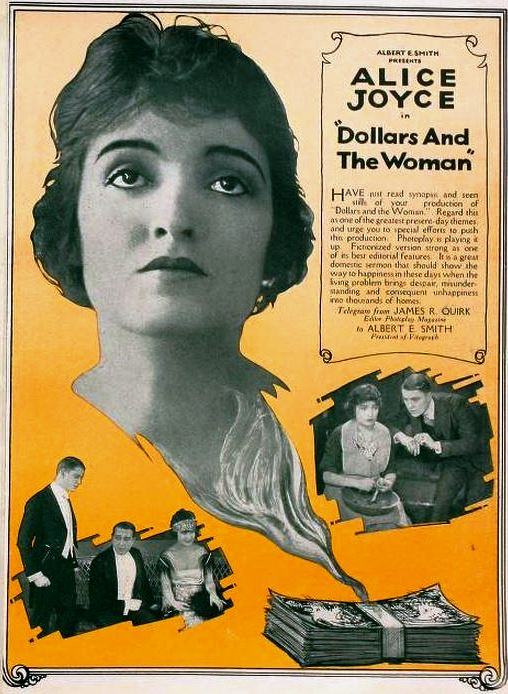
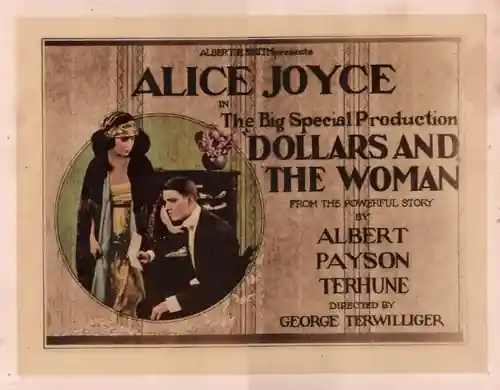
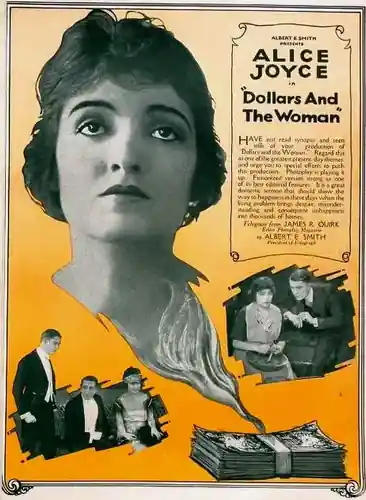
Imagine a film that begins not with title cards but with the metallic shriek of an elevated train scored only by your own anticipatory heartbeat—Dollars and the Woman is that kind of covert symphony. Shot through with sooty chiaroscuro by cinematographer Jules Cronjager, this 1920 Paramount release has slipped between the floorboards of film history, yet it detonates on contact like nitrate preserved too well.
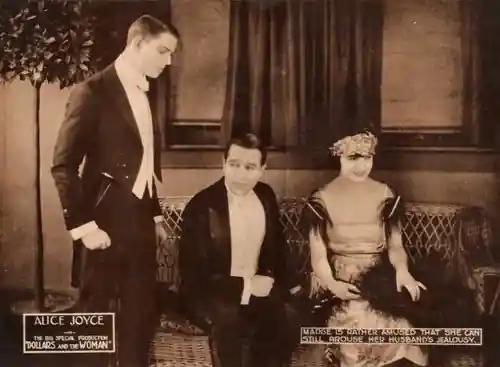
Crauford Kent’s Dan Hillyer is every inch the self-worshipping modern Icarus, forever brushing grease on his lapels as if lubricating the machinery of his own legend. Watch the way he fingers Madge’s wedding ring in close-up: it’s less a token of devotion than a washer he’ll repurpose if the prototype demands. Jessie Stevens, as Madge, operates in a register studios rarely allowed women that early—intelligent eyes that calculate faster than adding machines, shoulders squared for perpetual disappointment. Their apartment, wallpapered in faded newsprint stock reports, feels like a ledger where love is forever in the red.
When Madge exits the bank with enough wrinkled notes to jump-start a prairie boomtown, the camera tilts ever so slightly, turning Broadway into a funhouse corridor. The pickpocket’s assault is staged in a single unbroken take through a department-store window reflection—an early example of urban surveillance anxiety, predating similar paranoia in Burglar Proof by a full two years. The stolen savings drift across the pavement like urban snow; the city itself exhales predatory frost.
Cue Arthur Carewe—Robert Gordon in a career-best performance that is equal parts satin and scar tissue. Carewe enters the narrative through a doorway haloed by backlight, the brim of his homburg cutting a diagonal across the frame like a Bond villain’s slash. Yet Gordon refuses melodrama; instead he plays the banker as a man who has memorised every clause of the heart’s bankruptcy. The cheque he writes is for an amount we never see—an exquisite narrative ellipsis that makes the audience complicit in Madge’s moral slide.
Director Kenneth S. Webb cross-cuts Dan’s westbound odyssey with Madge’s collapsing corporeal empire. In one breathtaking match-cut, a cactus flower in the desert dissolves into the blood-spotted bedsheet Madge clutches during a hemorrhage. The film’s spatial dialectics anticipate the later ethnographic sweep of A Trip Through China, yet here every vista is emotional, not geographic. Dan sells his invention to a rail-thin mogul who signs contracts beside a rattlesnake cage—capitalism and venom sealed with the same quill.
The hospital sequence is lit like a cathedral—high-contrast beams carving white marble out of celluloid gloom. A nun-figure nurse (uncredited, but rumored to be a young Alice Joyce cameo) looms over Madge, rosary beads swinging like a metronome counting down both heartbeats and dollars. Carewe watches from behind glass, his reflection superimposed over the convulsing patient—an image that distills the film’s central thesis: every rescue is also a form of ownership.
When the infant finally cries, Webb inserts an intertitle that simply reads “A new creditor.” It’s a sly Marxist jab: the child as futures contract, a dividend neither parent has budgeted for. Compare this to the more sentimental nativity in The Heart of a Rose; here, birth is a leveraged buy-out of the soul.
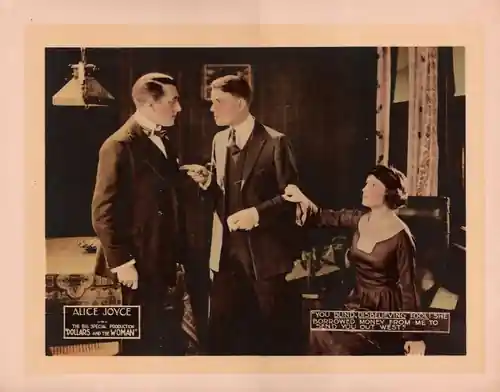
Dan’s homecoming is staged in a tenement hallway so narrow it resembles a throat. He brandishes a wad of cash thick as a plumber’s wrench, but Madge’s eyes flick past him to Carewe, who stands at the stair-rail like a creditor come to repossess joy. The ensuing confrontation is a master-class in silent-film acting: Kent’s shoulders square into petrified arrogance; Gordon’s fingers drum the brim of his hat, as if conducting an invisible orchestra of guilt; Stevens collapses slowly, vertebra by vertebra, until she is literally kneeling between the men’s ambitions.
Screenwriter Albert Payson Terhune, better known for canine adventures like Lad: A Dog, here proves a cynic of diamond-edged clarity. His intertitles eschew the florid for the surgical: “He had conquered the desert but lost the deed to his own bedroom.” The line guts you precisely because it refuses hysteria.
Though shot in black-and-white, the film’s visual rhetoric is drenched in implied color. Carewe’s monogrammed handkerchief appears in iris shots so luminous you swear it’s burgundy. The infant’s blanket is embroidered with a single yellow duck—when the camera closes in, the surrounding grayscale dims, allowing the mind to paint a sunrise hue. Expressionist shadows pool like spilled indigo ink, presaging the gothic carnivals of Nattens barn.
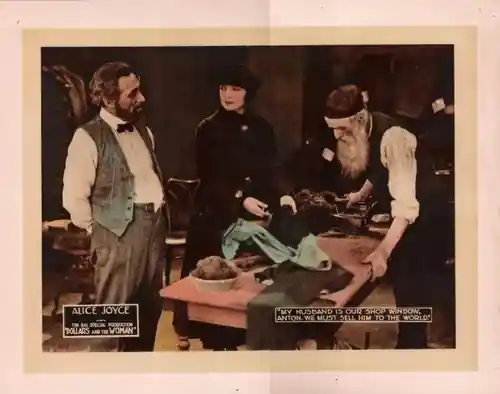
Crauford Kent walks a tightrope between charm and chlorinated ego; the moment when he finally crumples, pressing his forehead against the cold stove, feels like watching a steel bridge buckle in a hurricane. Jessie Stevens is even better—she lets the camera come to her, eyelids fluttering like moth wings, conveying a lifetime of swallowed retorts with a single blink. Robert Gordon, meanwhile, weaponizes stillness; the less he moves, the more dangerous he seems. Watch how he pockets his fob watch: the snap of the lid is a judge’s gavel on the marriage contract.
Modern audiences encountering a 4K restoration will hear whatever new score the archive commissions, yet the original exhibitors reportedly accompanied the hospital sequence with a single violin bowing a variant of “Auld Lang Syne” in a minor key. The effect, according to a 1920 Motion Picture News review, “turned the auditorium into a prayer meeting for agnostics.” Today, you can achieve the same frisson by syncing the film to Max Richter’s Infra—the marriage of plangent strings and Webb’s chiaroscuro yields goose-bumps calibrated to the micro-millimetre.
Where Allan Quatermain trades in imperial derring-do and Marta of the Lowlands wallows in peat-bog fatalism, Dollars and the Woman locates its tension in the claustrophobia of domestic accountancy. Its nearest tonal cousin might be The Reason Why, yet that film hinges on patriotic sacrifice; Webb’s picture insists that the true battlefield is the home ledger. Even The Twin Pawns with its doubling gimmick feels like a parlour trick beside the raw emotional mercantilism on display here.
Why has Dollars and the Woman vanished from syllabi while second-rate swashbucklers survive? Blame the absence of a marketable star (Kent never achieved the brand of Fairbanks), blame a title that sounds like a pulpy dime novella, blame archives that prioritise cowboy shoot-’em-ups over domestic trench warfare. Yet rediscovery is inevitable; cinephiles hungry for pre-Code moral ambiguity will eventually unearth this Trojan horse of proto-feminist finance.
Until then, seek out any regional festival brave enough to programme it—preferably in a venue where the projector’s click-clack becomes the film’s pulse. Sit close enough to see the grain swim like bacteria under a microscope. When Carewe’s silhouette finally dissolves into the hospital’s ether, you’ll feel the room tilt, as if someone has adjusted the cosmic ledger and found every one of us overdrawn.
If films are coins, most silent pictures are tarnished nickels. Dollars and the Woman is a gold certificate slipped between them—rare, weighty, and curiously tender. It will haunt your interior vault long after the final iris closes.
IMDb 6.1
1918
Community
Log in to comment.