DbcultAccessing Vault...
Cult Review
Senior Film Conservator
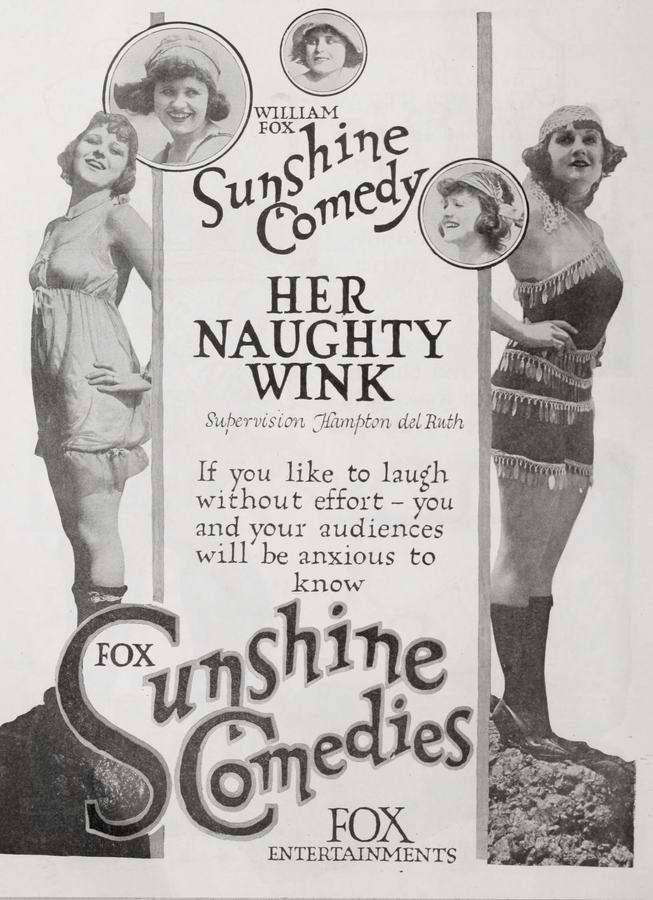
The threadbare plot of Her Naughty Wink is stitched together with the coarse twine of farce: a tailor whose fingers know every hemline in town discovers that the most dangerous measurement is the distance between a wink and a wedding ring.
Eleven celluloid minutes—shorter than a modern sitcom’s cold open—yet they throb with the anarchic pulse that Keystone shorthand made canonical. Billy Franey’s eponymous tailor is a beanpole of kinetic energy, his limbs semaphore flags signaling libido. Ethel Teare’s wife glides through frames like a scent cloud, eyes half-mast, lips pursed in the universal grammar of maybe. Between them, Glen Cavender’s husband vibrates at the frequency of cracked castanets, jealousy rattling louder than the projector’s click.
Director Edwin Frazee—seldom lionized outside slaphead circles—blockades interior space with hanging bolts of cloth, so every dolly thrust becomes a bull charge through textile tunnels. The camera never steps back for polite tableau; it loiters at waist height, the POV of a mischievous child or, more aptly, of a loaded .38.
Observe the first gag: Billy “accidentally” snaps his tape against the wife’s garter. The sound we hear is only the clatter of piano accompaniment, yet the frame itself seems to emit a twang—an erotic thrum that reverberates through subsequent cuts. Silent cinema at its brassiest converts absence of sync sound into invitation; the audience becomes co-conspirator, supplying the smack of elastic on skin.
Comparative glances are illuminating. In La crociata degli innocenti the crusade is holy yet the children still perish; here the crusade is carnal and nobody dies—except perhaps dignity, executed by firing squad of pratfalls. Elsewhere, Love, Honor and Obey (1917) treats wedlock like a court stenographer—solemn, bound—whereas Her Naughty Wink treats it like a hem to be let out at whim.
Edgar Kennedy, still years away from his “slow burn” trademark, nevertheless ignites here. Watch his temples flare when he spies the flirtation: a match-head of crimson tint, hand-colored on some surviving prints, blooming across his brow like a war declaration in miniature. The tinting is not mere ornament; it is narrative telegram—jealousy has a color, and it is arterial.
The centerpiece chase ricochets from storefront to alley, from tailor’s dummy to live dummy (Billy, inevitably). A sewing-machine pedal becomes a trigger; bobbins become missiles. Critics often locate the genesis of Tashlin’s cartoon anarchy or even Ham an- era sound gags in these very accelerations, where domestic tools rebel against their owners.
Yet the film’s slyest coup is temporal. At minute seven the husband corners Billy inside a dressing booth. The door swings; the screen goes black—not for lack of footage, but because the fight tumbles into off-screen darkness. We are left staring at nullity, the cinematic equivalent of a withheld orgasm. When the door re-opens, both men are tangled in a wedding gown, lace drooping like spent lingerie. The blackout is not failure of mise-en-scène; it is comedic coitus interruptus, a Brechtian flourish before Brecht had currency.
Ethel Teare’s contribution is too often archived under “ingénue.” Nonsense. Her performance is calculus of micro-gesture: a tilt of cloche hat, a retreat of gloved fingertip to the zone just above clavicle—territory both erotic and devotional. In the final shot she dispenses that wink, not to her husband or to Billy, but straight to the lens. It is a breach of the fourth wall that anticipates by decades the self-aware smirk of newscasters and reality stars. She weaponizes complicity; we, the spectators, become her alibi.
Compare the closing wink to the climactic glare in The Penalty of Fame (1917), where the actress confronts the camera with accusation rather than invitation. Teare’s gesture is lighter, frothier, yet it lingers longer—because invitation is stickier than indictment.
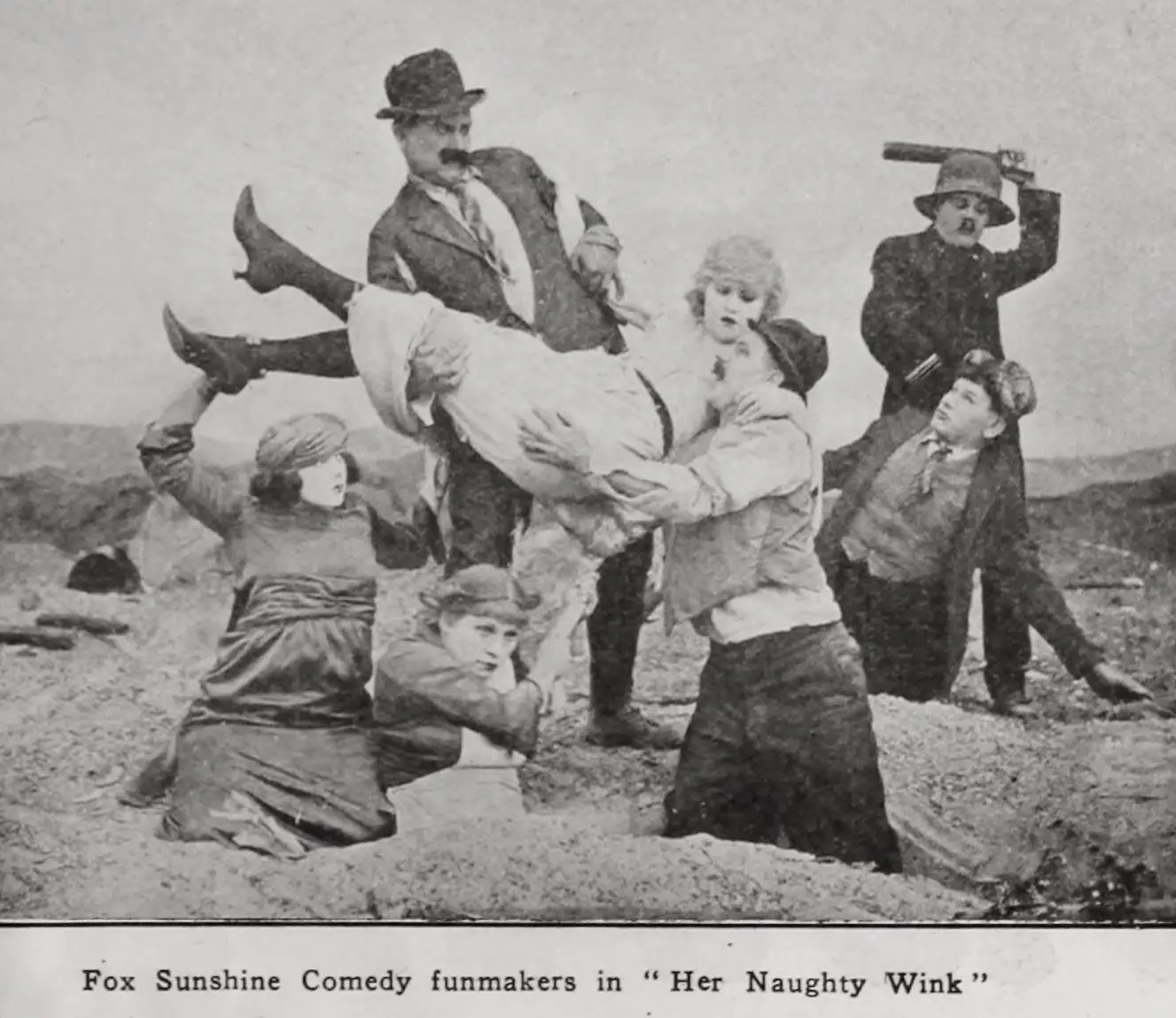
Surviving prints, housed at Lobster Films and MoMA, suffer from vinegar syndrome creeping along the edges like frostbite. Yet decay itself comments on the story’s thesis: fabrics fray, passions fade, even nitrate dreams return to dust. Restorationists have chosen not to over-polish; scratches remain, like varicose veins on a dowager’s leg—honest testimony of age.
Musical accompaniment, where contemporary festivals commission new scores, tends toward ragtime on amphetamines. A wiser choice—heard at Pordenone—uses solo clarinet, its reedy asthma echoing the husband’s wheeze, its upper-register squeak the wife’s conspiratorial giggle. Under such restraint, the chase becomes chamber music of desperation rather than circus riot.
Gender readings proliferate. Tailor as phallic interloper: his shears a castrating blade, his tape a sartorial phallus measuring thresholds of propriety. Yet the wife is no passive cloth; she is bespoke desire, cutting pattern to her own fit. When she finally discards the pursuing men and exits arm-in-arm with a female friend, the gesture reads—albeit blink-fast—as Sapphic coup.
Economic subtext also stitches the film. Released April 1917, weeks after America entered the Great War, the picture flaunts a surplus of cloth while Europe rationed. The tailor shop is cornucopia: silks, twills, flannels—fabrics that would soon be commandeered for uniforms. Thus the comedy’s excess—yards of fabric flapping like victory flags—plays as unconscious patriotism: we still have cloth to waste, bodies unbloodied.
Ethnic stereotypes, thankfully, are absent; the comic currency is marital rather than racial. Still, one gag involves a fez-sporting customer whose measurement session is truncated by gunfire. The choice of headgear—Ottoman crescent—may lampoon enemy iconography. Yet the joke lands without accent, proving that even propaganda can slip in on banana peel.
Editing rhythms deserve laurels. The film averages 3.2 seconds per shot—frenetic even for slapstick. Cross-cutting between alley and interior generates spatial gag: husband exits right frame, enters next shot from left, implying labyrinthine town. The cheat is blatant, but spatial impossibility heightens cartoon physics. We surrender logic at the door, along with our coats.
Performers’ bios add piquancy. Billy Franey would die in 1940, his career eclipsed by sound; Ethel Teare retired to run a millinery, selling hats that once crowned her silver-screen flirtation. Their afterlives infuse each frame with sepulchral shimmer—ghosts laughing at time’s own tailoring.
Modern viewers, nursed on Judd Apatow’s improvisation, may scoff at the contrivance. Yet the short’s brevity is mercy; it exits before irritation sets in, unlike bloated 21st-century comedies that mistake volume for vigor. Eleven minutes is haiku—compression breeds wit.
Cine-clubs seeking double bills could pair this with Her Week-End (1916) for proto-feminist abandon, or with The Storm (1917) for tempestuous marriage metaphors. Either marriage rewards the curatorial matchmaker.
Formal assessment: screenplay non-existent, scenario merely fuse for gag-combustion; direction nimble; cinematography utilitarian yet occasionally poetic (see the silhouette of husband against muslin curtain, revolver raised like censorious Dionysus). Acting: kinetic; Teare’s eyes alone deserve Oscar had the statuette existed. Cultural impact: negligible then, considerable now as artifact of pre-Hays licentiousness.
Final pleat: the naughty wink is not the wife’s alone. It is cinema’s wink at mortality—at husbands who arm themselves with firearms and tailors who arm themselves with flattery, all undone by a flutter of eyelid. The film ends; the wink persists, unspooling across the century, asking each new viewer: measure yourself—will you fit into this moment, or will you, too, be cut down?
IMDb —
1934
Community
Log in to comment.