DbcultAccessing Vault...
Cult Review
Senior Film Conservator
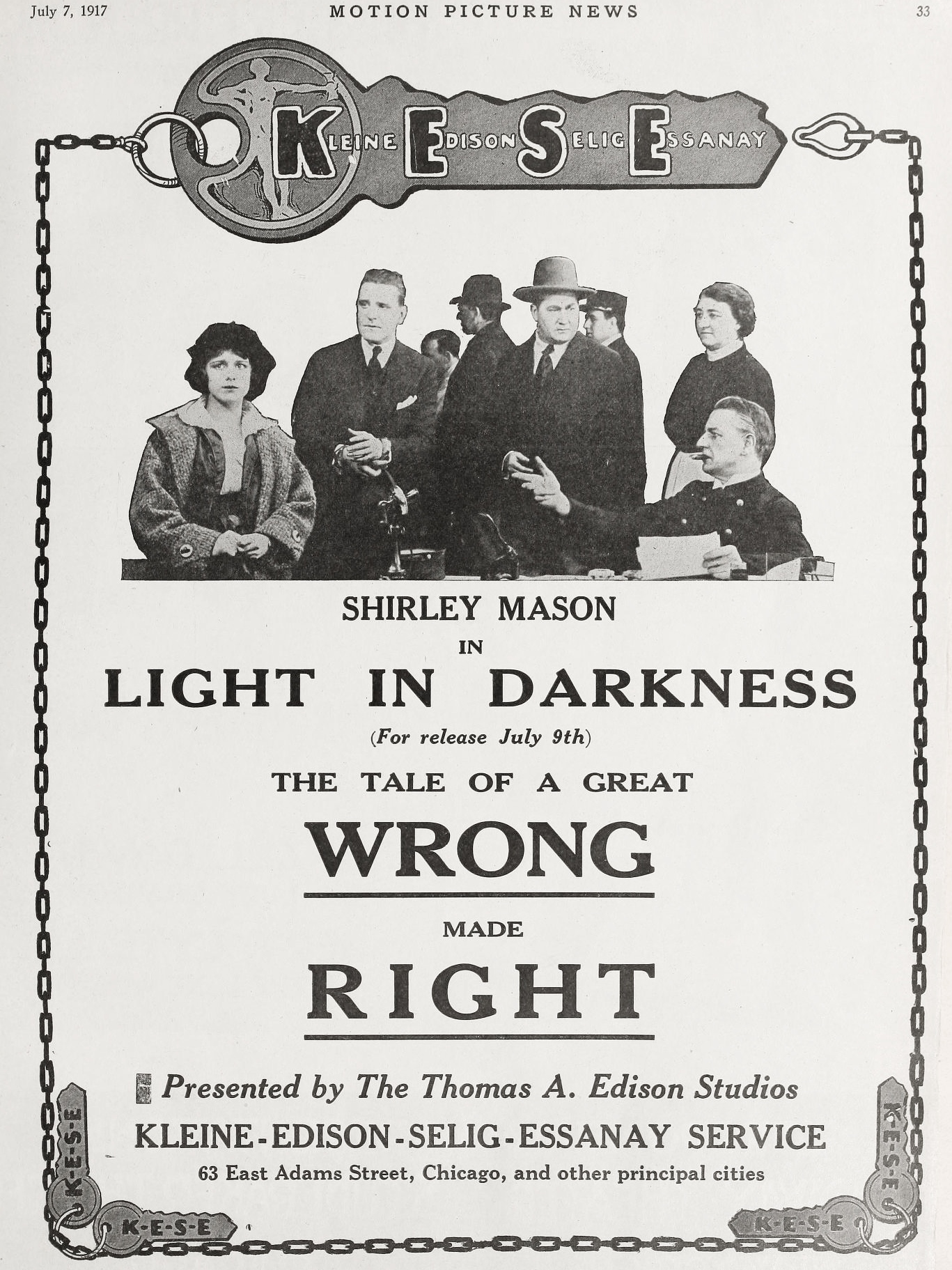
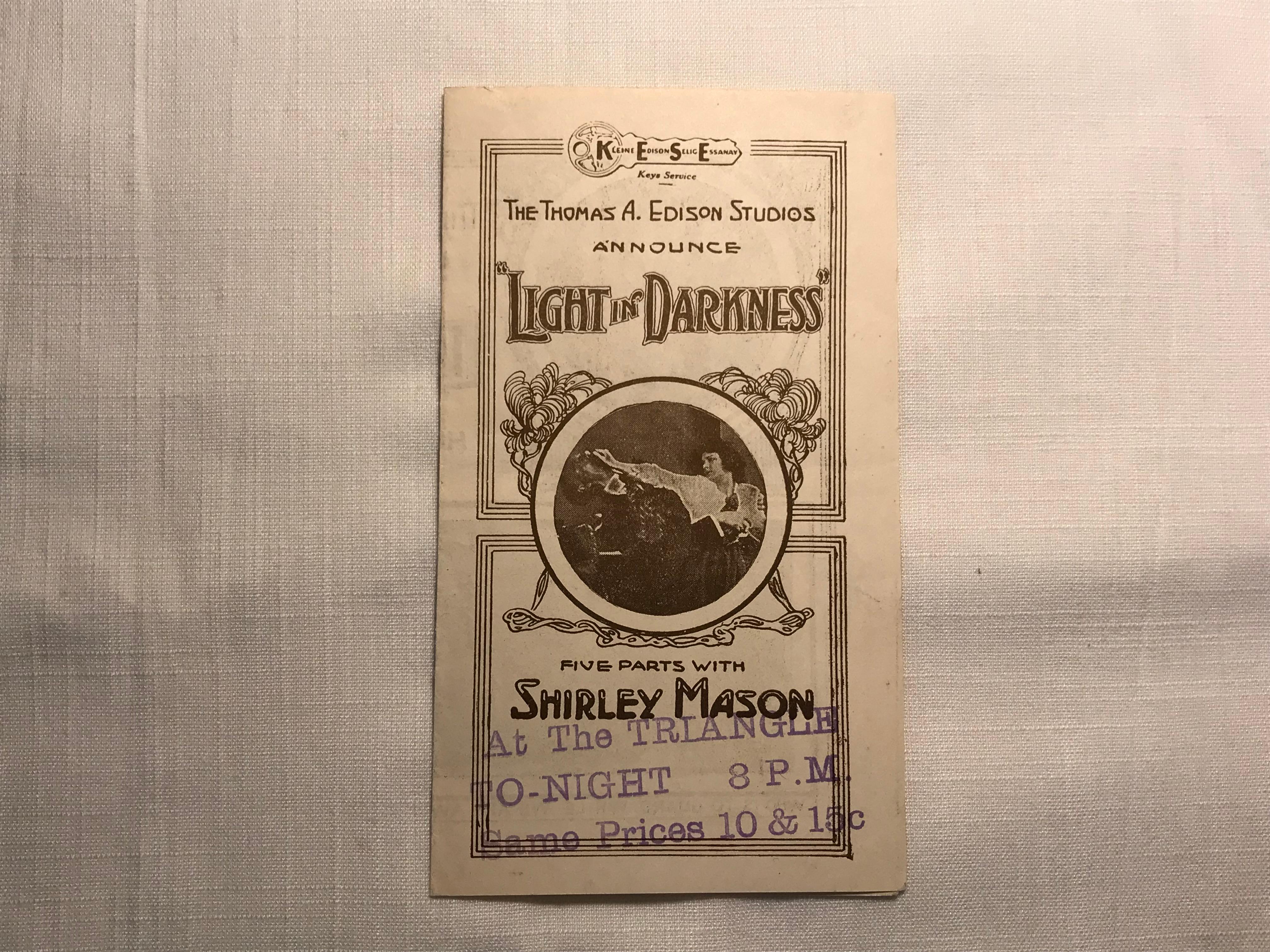
In the annals of early cinema, where moral allegories often served as both entertainment and incisive societal commentary, The Light in Darkness emerges as a profoundly resonant exploration of human resilience, the often-capricious nature of justice, and the enduring power of love against formidable odds. Directed by the visionary Alan Crosland and penned by the insightful Peter B. Kyne, this cinematic artifact transcends its era, offering a narrative tapestry rich with emotional depth and a nuanced social critique. It's a story that challenges the very foundations of punitive justice, daring to ask whether the rigid letter of the law should always supersede the compassionate spirit of human understanding and the sanctity of a hard-won second chance.
The film introduces us to Ramsey Latham, portrayed with an understated gravitas by Frank Morgan, a bank cashier whose life takes an irrevocable turn following a conviction for a violation of banking laws. His journey to the penitentiary is not merely a physical translocation but a symbolic descent into a societal abyss, where the weight of his transgression threatens to crush his spirit and extinguish his hope. It is during this grim passage that fate, in its peculiar wisdom, intercedes. He encounters Hilary Kenyon, brought to vivid life by the luminous Shirley Mason, a young woman whose presence, even under such dire circumstances, radiates an inexplicable encouragement. This initial, fleeting connection is soon amplified by a shocking revelation: Hilary herself is a fellow inmate, condemned for manslaughter after defending herself against a brutal assailant. This shared plight, a testament to the diverse and often tragic paths that lead individuals to the same institutional walls, lays the groundwork for a bond that defies the very confines designed to isolate them, hinting at a connection that transcends mere circumstance.
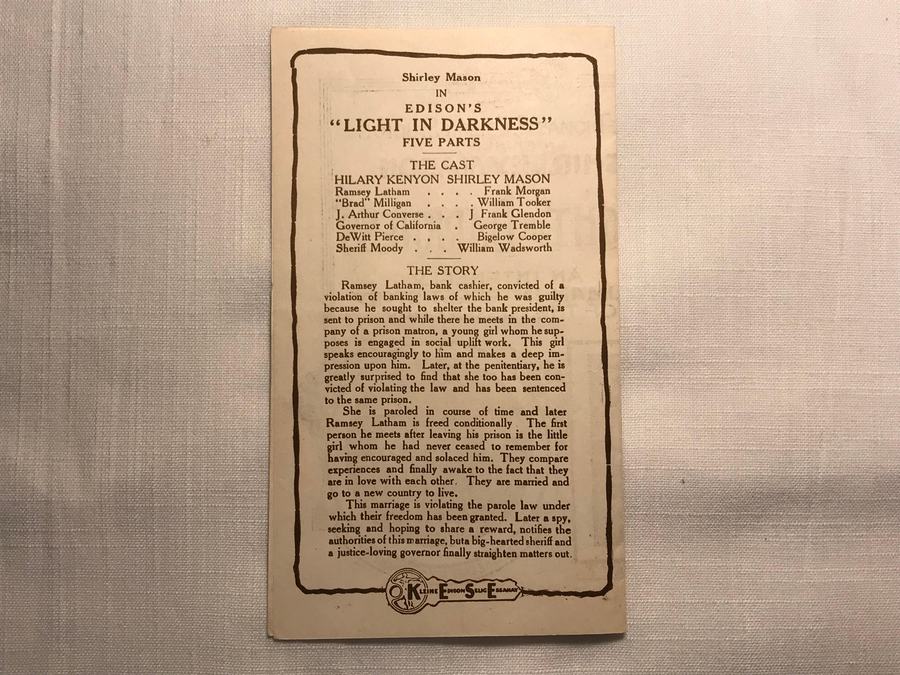
The narrative deftly navigates the passage of five arduous years, during which Ramsey and Hilary endure the crucible of incarceration. Their eventual parole marks not an end to their trials, but a new beginning, fraught with the subtle anxieties of reintegration into a society often unforgiving of past missteps. Their decision to marry and establish a life on a ranch is an act of profound hope, a defiant embrace of normalcy and domesticity against the backdrop of their shared history. For two idyllic years, they cultivate a life of peace and love, blessed with a baby boy, a tangible symbol of their redemption and renewed purpose. This pastoral serenity, however, proves tragically fragile. The specter of Ramsey’s past materializes in the form of an old cellmate, whose malevolent intent to blackmail Ramsey for a technical parole violation—specifically, the prohibition against marrying before the expiration of parole—threatens to shatter their carefully constructed world. This dramatic turning point underscores the insidious ways in which past mistakes can relentlessly pursue even the most reformed individuals, highlighting society's often-unyielding gaze upon ex-convicts. The sheer injustice of a family being torn apart for a rule that seems to prioritize bureaucratic procedure over human welfare is profoundly unsettling.
The ensemble cast, while perhaps less universally recognized today, contributes significantly to the film's compelling texture. Beyond the poignant performances of Shirley Mason and Frank Morgan, who anchor the emotional core of the story, figures like Bigelow Cooper as Sheriff Milligan, and others such as William H. Tooker, William Wadsworth, and Samuel N. Niblack, imbue the narrative with a sense of lived reality. Morgan, in particular, masterfully conveys Ramsey's quiet desperation and his fierce protective instincts, making his character’s journey from disgraced cashier to loving husband and father utterly convincing. Mason, meanwhile, brings a delicate strength to Hilary, portraying a woman who has faced unimaginable hardship yet retains an indomitable spirit, embodying the 'light' that penetrates Ramsey's 'darkness.' Her portrayal is a powerful testament to female resilience in an era that often pigeonholed women into more conventional roles. The world of the penitentiary, vividly rendered, owes much to the supporting portrayals by actors like William H. Tooker, William Wadsworth, and Samuel N. Niblack, whose collective presence lends an authentic grimness to the early scenes. Later, in the more idyllic, yet equally precarious, setting of the ranch, the sense of community and lurking threat is further solidified by the contributions of George S. Trimble, J. Frank Glendon, and Charles Martin, each adding a brushstroke to the canvas of Ramsey and Hilary's fragile new life, making the stakes feel incredibly real.
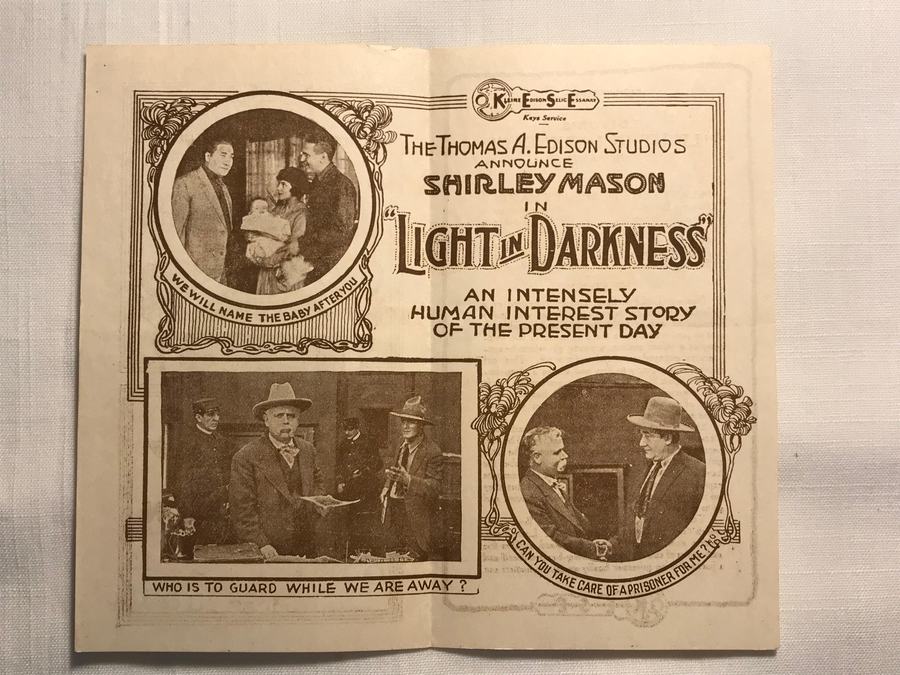
The true moral compass of The Light in Darkness emerges in the character of Sheriff Milligan, portrayed with a compelling blend of duty and profound empathy by Bigelow Cooper. Unlike the rigid adherence to legalistic dogma that characterizes the blackmailer, Milligan represents a more enlightened form of justice. When confronted with the potential destruction of Ramsey and Hilary's family due to a technicality, his indignation is palpable and morally righteous. He sees beyond the cold letter of the law to the profound human cost, recognizing the inherent injustice in tearing apart a loving family that has demonstrably reformed and contributed positively to society. His decision to escalate the case to the governor is not merely an act of bureaucratic process but a courageous stand against the dehumanizing aspects of legalism. This pivotal intervention elevates the film from a mere melodrama to a profound meditation on the societal responsibility to offer genuine pathways to redemption. It's a striking contrast to other films of the period that might have focused solely on the punitive aspects of justice, such as perhaps the somber tones found in The Penitentes, which often delved into the more severe forms of penance and societal condemnation, offering little solace or hope for rehabilitation.
The thematic core of the film resonates deeply with questions of legal versus moral justice. The banking laws that initially condemn Ramsey, and the parole stipulations that later threaten his family, stand in stark opposition to the natural law of human compassion and the inherent right to build a life free from perpetual judgment. This tension is brilliantly explored by Peter B. Kyne’s writing, which refuses to paint its characters in simplistic black and white. Ramsey’s crime, while a violation, is presented within a context that allows for empathy, particularly when contrasted with Hilary’s act of self-defense, which, though resulting in manslaughter, is fundamentally an act of survival. The film implicitly argues that true justice must consider rehabilitation and the transformative power of love, rather than merely the punitive enforcement of statutes that may no longer serve a constructive purpose. In this regard, it shares a philosophical kinship with works like The Natural Law, which similarly grappled with the inherent moral order versus man-made legal frameworks. The resolution, where the governor grants a pardon, is not a simple plot device but a profound statement on the potential for governmental authority to embody mercy and wisdom, thereby allowing the family to remain intact and their hard-won peace to endure, symbolizing a victory for humanity over cold bureaucracy.
From a directorial standpoint, Alan Crosland orchestrates a narrative that is both emotionally gripping and visually evocative, even considering the conventions of early cinema. His ability to draw nuanced performances from his cast, particularly Shirley Mason and Frank Morgan, speaks volumes about his understanding of human psychology and dramatic pacing. The visual language, typical of the era, likely relies on expressive acting, carefully composed frames, and perhaps symbolic lighting to convey the shifting fortunes of its protagonists. The stark contrast between the grim confines of the prison and the idyllic beauty of the ranch would have been a powerful visual metaphor for Ramsey and Hilary's journey from despair to hope, and the constant threat of that hope being extinguished by societal judgment. Crosland’s direction ensures that the audience remains deeply invested in the characters' plight, fostering a profound sense of empathy that is crucial for the film's ultimate message of clemency to land effectively. His approach avoids the melodramatic excesses often found in films of this period, opting instead for a more grounded, emotionally authentic portrayal of human struggle and triumph, making the narrative feel both immediate and timeless.
The film's exploration of societal judgment and the struggle for acceptance for those with a past also finds echoes in other cinematic works. While not explicitly about ex-convicts, the themes of societal ostracization and the fight for moral rectitude against public opinion can be seen in classics such as The Vicar of Wakefield (1917), where a virtuous family endures numerous trials and public scrutiny, battling to maintain their dignity. Similarly, the vulnerability of innocence and the harsh realities faced by women are present in films like Wildflower, though The Light in Darkness grounds these struggles in a specific legal and penal context, adding an extra layer of systemic challenge. The tension between personal happiness and the rigid dictates of society, particularly when a 'sinful' past is involved, could also draw parallels to the thematic undercurrents of a film like Sündige Liebe (Sinful Love), which might explore the boundaries of acceptable love and societal condemnation, forcing characters to confront deeply ingrained prejudices. These comparisons highlight The Light in Darkness's place within a broader cinematic tradition concerned with human ethics and the complexities of social integration, demonstrating its enduring relevance.
In conclusion, The Light in Darkness is far more than a simple period drama; it is a timeless testament to the human spirit's capacity for redemption and the imperative for a justice system that balances punishment with compassion. The journey of Ramsey and Hilary, from the confines of a prison cell to the precarious freedom of their ranch, is a powerful narrative arc that resonates with universal themes. It’s a compelling argument against the unforgiving nature of immutable laws when they clash with the profound realities of human experience and the transformative power of love. The film, through its compelling performances, thoughtful direction, and insightful writing, reminds us that true societal progress often lies not in stricter enforcement, but in the capacity for empathy, forgiveness, and the granting of genuine second chances. Its message remains as relevant today as it was in its initial release, urging us to consider the 'light' that can be found even in the darkest corners of human experience and legalistic frameworks, and to champion the cause of those striving for a new beginning.
IMDb 6.7
1918
Community
Log in to comment.