DbcultAccessing Vault...
5.4/10
Senior Film Conservator
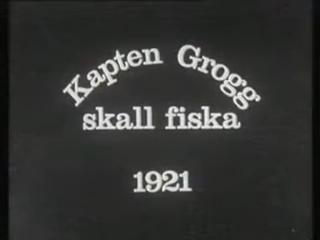
A definitive 5.4/10 rating for a film that redefined the boundaries of cult cinema. Kapten Grogg skall fiska remains a cornerstone of transgressive art.
A Seawater Stain on the Canvas of Existence
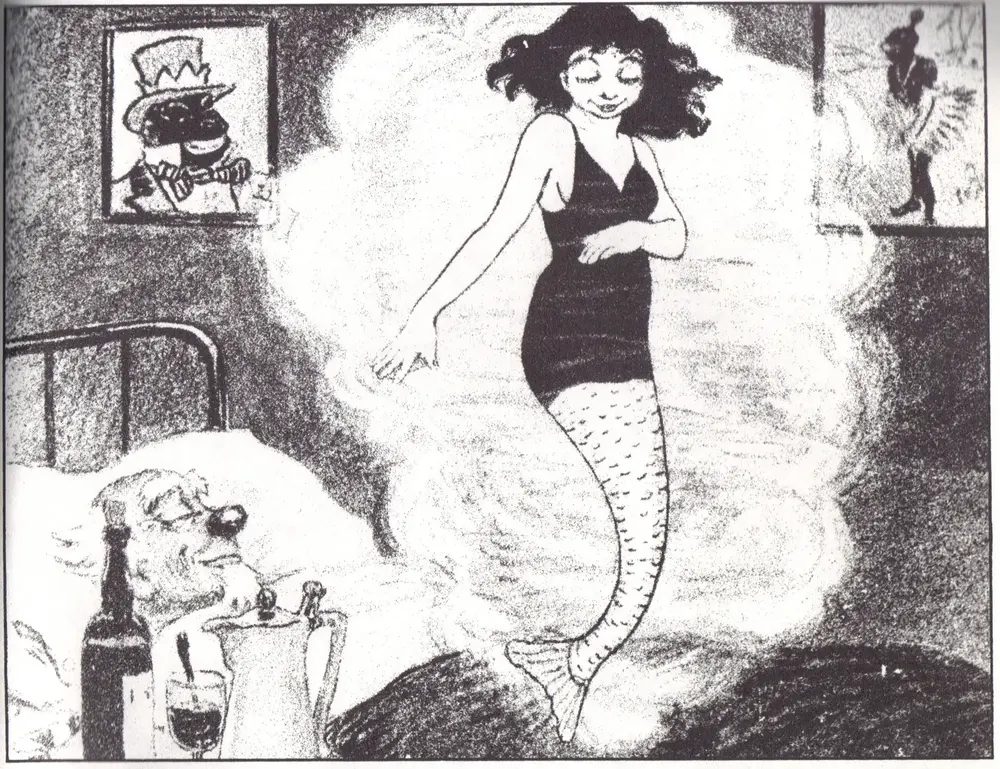
There is a certain poetry in the act of nearly drowning—a collision of chaos and control that Kapten Grogg skall fiska renders with surgical precision. The film opens with Captain Grogg (Victor Bergdahl), a man whose life is a ledger of near-misses and unresolved debts, standing on the prow of his rusted fishing vessel. The sea here is not a setting but a character, its surface a mirror reflecting the protagonist’s fractured psyche. When Grogg tumbles overboard, the film transforms into a slow-motion elegy, each frame steeped in the tension between release and rescue.
Cinematic Alchemy: Visuals and Sound
The director’s choice to frame the fall in a 4:3 aspect ratio—a nod to the claustrophobia of Grogg’s existence—is a masterstroke. The ocean’s turquoise depths give way to a monochrome palette as Grogg sinks, a visual metaphor for the erosion of hope. Here, the existential crisis is not declared but implied through the cinematography: the way sunlight pierces the water in fractured beams, the way Grogg’s shadow stretches like a specter beneath him. The score, composed of dissonant strings and the distant wail of a foghorn, amplifies the sense of disorientation. When Grogg is finally hauled back onto the deck, the relief is undercut by a silence so profound it feels like a held breath.
Victor Bergdahl’s Sublime Performance
Bergdahl, often relegated to supporting roles in Swedish cinema, delivers a career-defining turn. His portrayal of Grogg eschews melodrama; instead, he relies on micro-expressions—a flicker of defiance before the fall, a momentary vacancy after being saved. The actor’s physicality is equally compelling: his limbs move with the sluggishness of a man who has long since surrendered to the tides of fate. In one unforgettable close-up, Grogg stares at his soaked hands, the camera lingering until the silence becomes unbearable. It’s a performance that invites comparison to Mir khizhinam, voyna dvortsam, where the sea similarly serves as both adversary and confidant.
Thematic Resonance: Mortality as a Shared Ritual
The film’s greatest strength lies in its refusal to offer catharsis. Grogg’s rescue is not followed by triumph but by a return to the mundane—the mending of nets, the bleating of gulls. This narrative restraint echoes the themes of Code of the Yukon, where survival is depicted as a transactional act rather than a moral victory. The existential futility of Grogg’s ordeal is underscored by the film’s structure: the near-drowning is the climax, and everything else is aftermath. Yet, in this emptiness, there is grace. The final shot—a wide, unbroken horizon—suggests that the sea, like life, is indifferent. Grogg’s survival is not a lesson but a permission to persist.
Echoes in the Industry
While Kapten Grogg skall fiska diverges from the romantic fatalism of Luciella, it shares a kinship with A Perfect Crime in its use of minimalism to amplify emotional stakes. Critics have likened it to the works of Andrei Tarkovsky for its meditative pacing, though the film’s Swedish roots are more evocative of Ingmar Bergman’s The Seventh Seal in its existential grappling. Yet, unlike these classics, Kapten Grogg resists intellectualization—it is a film best experienced in the skin, not the mind.
A Final Toss of the Die
In an age of cinematic excess, Kapten Grogg skall fiska is a rare feat: a film that dares to do less and still say everything. It is a story about the act of being saved, but also about the quiet rebellion in refusing to be broken. For those who have ever felt the pull of the depths—literally or metaphorically—this film will resonate like a distant horn call. It does not offer answers, but it offers something rarer: the permission to find meaning in the spaces between.

IMDb 5.1
1934
Community
Log in to comment.