DbcultAccessing Vault...
Cult Review
Senior Film Conservator
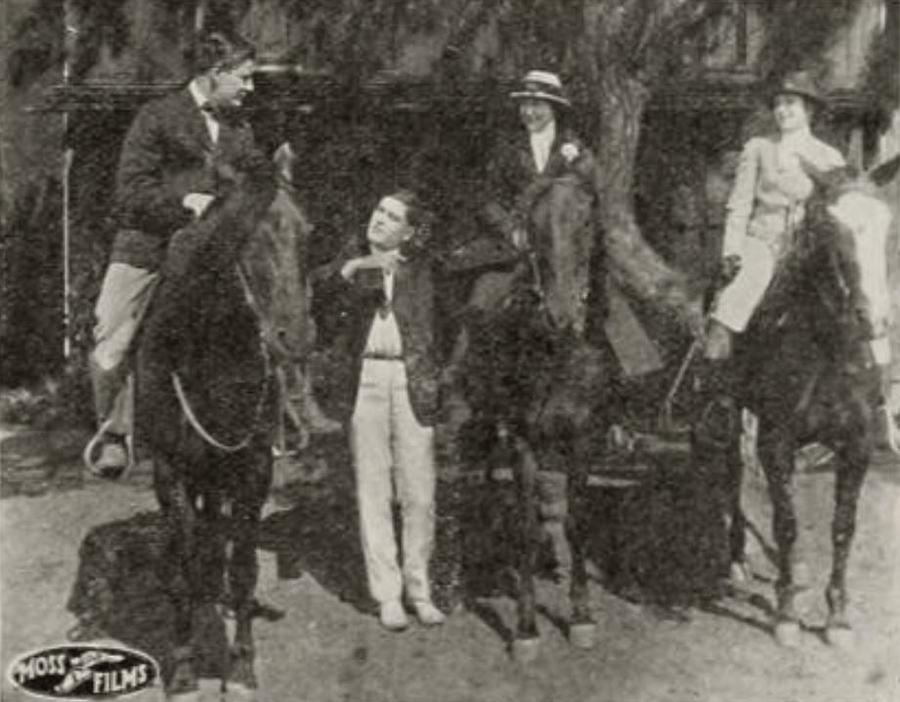
Ah, the silent era! A time when narratives unfolded through the sheer power of visual storytelling, where every gesture, every flicker of an eye, carried the weight of a thousand words. It was an epoch of grand ambition and nascent artistry, and among its many treasures, a film like 'Boots and Saddles' emerges as a compelling artifact, a testament to the enduring allure of the American Western. Penned by the insightful Eugene Walter, this cinematic endeavor, despite the passage of time, retains a certain rugged charm and a narrative thrust that belies its age. It’s more than just a historical curiosity; it’s a foundational stone in the genre, showcasing themes and archetypes that would resonate for decades to come. Viewing it now, one is struck by the earnestness of its performances and the straightforward, yet often poignant, depiction of frontier life.
'Boots and Saddles' plunges us headlong into the unforgiving crucible of the Arizona Territory, a landscape both breathtakingly vast and fraught with peril. It is here that Captain Jack Rawlins, portrayed with stoic gravitas by George Pheilen, makes his entrance. Pheilen, a formidable presence on screen, embodies the quintessential frontier hero: principled, resilient, and possessed of an unwavering moral compass. His mission, as the narrative artfully reveals, is not merely to maintain order but to reclaim justice in a region suffocating under the iron fist of Silas Kincaid. R. Henry Grey, in the role of Kincaid, delivers a performance that, even without spoken dialogue, conveys a chilling malevolence. Kincaid is not merely an antagonist; he is the embodiment of unchecked greed, a force of nature as destructive as any desert storm, systematically dispossessing homesteaders to expand his cattle empire. This struggle for land, for livelihood, forms the beating heart of Walter's script, echoing real-world conflicts that defined the American West.
The film deftly illustrates how Kincaid’s tendrils of corruption have seeped into every stratum of local society, most notably through his manipulation of Sheriff Jedediah Thorne, a character brought to life by Charles Dudley. Dudley’s portrayal of a lawman caught between duty and compromise adds a layer of tragic complexity to the unfolding drama. It’s a subtle yet powerful exploration of how power can corrupt, and how even those sworn to uphold the law can become unwitting pawns in a larger game. Rawlins, however, is no stranger to such machinations, and his arrival sets in motion a chain of events that will inevitably lead to a confrontation. He finds an unexpected, yet utterly vital, ally in Miss Eleanor Vance, played with luminous grace and steely resolve by Lillian West. West’s Eleanor is far from a damsel in distress; she is a beacon of intellect and compassion, a schoolteacher whose commitment to justice is as fierce as her loyalty to the struggling community. Her character is a refreshing counterpoint to the rugged masculinity of the frontier, representing the civilizing force of education and empathy.
The narrative gains further emotional resonance through Eleanor's younger brother, Billy, portrayed by Robyn Adair. Adair's youthful innocence and vulnerability become a potent plot device, drawing him into the orbit of Kincaid’s menacing gang and raising the stakes considerably for Eleanor and, by extension, Rawlins. This intertwining of personal stakes with the broader conflict elevates the film beyond a simple good-versus-evil Western. The supporting cast, too, plays a crucial role in grounding the story. Gordon Sackville as Sergeant O’Malley provides a reliable, if understated, presence as Rawlins’ loyal confidante, while Norman W. Luke and Claire Glenn, as homesteaders, lend authentic faces to the victims of Kincaid’s avarice, their struggles providing a poignant backdrop to the central conflict. Eugene Walter’s screenplay, even in its silent form, demonstrates a keen understanding of character motivation and plot progression, building tension with a methodical precision that keeps the audience captivated.
The performances in 'Boots and Saddles' are a masterclass in silent film acting, where expressions and physicality carry the narrative weight. George Pheilen, as Captain Rawlins, possesses a commanding screen presence. His furrowed brow and resolute gaze convey a profound sense of duty and determination, painting a portrait of a man burdened by responsibility yet unyielding in his pursuit of justice. One can almost hear the unuttered commands, the quiet contemplation of a leader facing insurmountable odds. His interactions with Lillian West’s Eleanor are particularly noteworthy. West imbues her character with a quiet strength and intellectual fire that challenges the prevailing cinematic tropes of the era. Her gestures are deliberate, her expressions articulate a deep empathy and an unshakeable moral core. This dynamic between Pheilen’s rugged stoicism and West’s spirited intellect forms the emotional anchor of the film, providing moments of genuine connection amidst the escalating tension.
R. Henry Grey’s portrayal of Silas Kincaid is a study in cinematic villainy. Without the aid of dialogue, Grey relies on menacing posture, a sneering countenance, and swift, decisive movements to convey Kincaid’s ruthless ambition. He is a truly memorable antagonist, a figure whose very presence casts a pall over the frontier town. Charles Dudley, as Sheriff Thorne, navigates the complexities of a conflicted character with commendable nuance. His internal struggle, the tug-of-war between his oath and his compromised position, is subtly but effectively communicated through his hesitant actions and troubled expressions. The youthful exuberance and subsequent terror conveyed by Robyn Adair as Billy add a crucial layer of pathos, making the viewer genuinely fear for his safety and highlighting the human cost of Kincaid's tyranny. Even the smaller roles, like Gordon Sackville’s reliable Sergeant O’Malley or the earnest homesteaders played by Norman W. Luke and Claire Glenn, contribute significantly to the film’s tapestry, each actor understanding the necessity of impactful, non-verbal communication.
Eugene Walter’s contribution to 'Boots and Saddles' cannot be overstated. As the writer, he crafts a narrative that, while adhering to many Western conventions, also delves into deeper thematic territory. Walter was known for his ability to infuse his stories with a sense of moral urgency and psychological depth, and this film is no exception. The screenplay explores the foundational American myth of the frontier, not merely as a physical landscape but as a moral battleground where civilization’s ideals clash with primal forces of greed and lawlessness. He masterfully constructs a plot where personal struggles mirror societal ones, where the fight for a small parcel of land becomes emblematic of the larger struggle for justice and community. His use of dramatic irony and carefully paced revelations builds suspense, culminating in a satisfying, if not entirely neat, resolution.
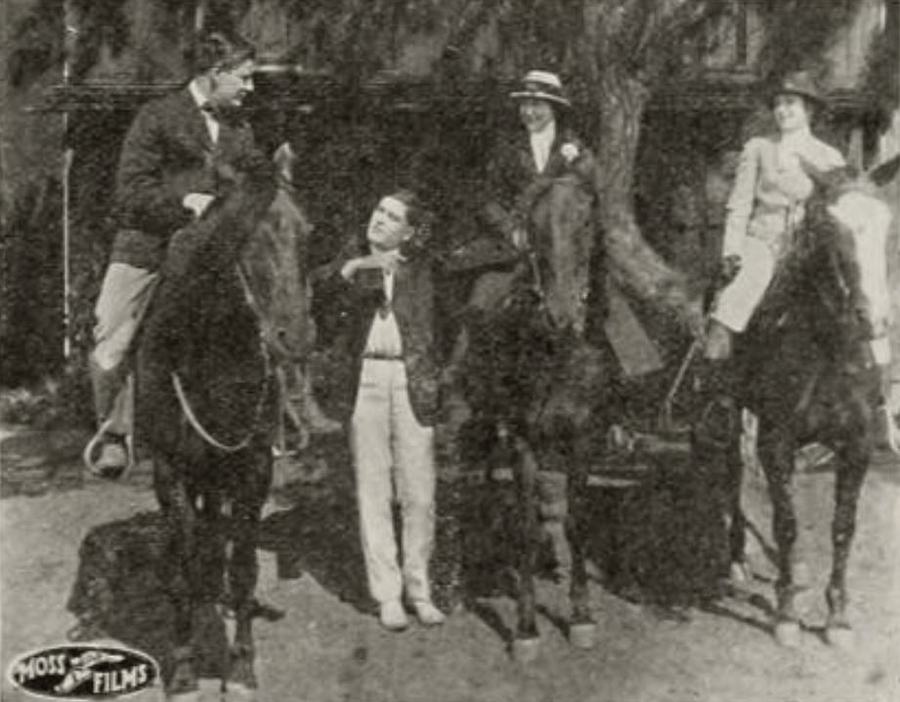
Walter’s script also showcases a nuanced understanding of character development. Rawlins isn't just a hero; he's a man of conviction, but one who must navigate a morally ambiguous world. Eleanor isn't just a love interest; she's an intellectual and ethical force. Kincaid isn't just a villain; he's a symbol of the dark side of ambition. This complexity, even in a silent film format, elevates 'Boots and Saddles' beyond mere entertainment, positioning it as a thoughtful commentary on the challenges of nation-building and the enduring fight for equity. His work here, like his other contributions to early cinema, demonstrates a nascent understanding of cinematic storytelling, translating literary drama into a visual medium with considerable skill.
To truly appreciate 'Boots and Saddles', it's helpful to contextualize it within the broader landscape of early cinema. The film shares thematic DNA with many of its contemporaries, yet carves out its own distinct identity. The struggle against a corrupt power structure, for instance, resonates with the intricate machinations found in The Eye of Envy, where hidden motives drive the plot forward, albeit in a different genre. Both films explore the insidious nature of greed, albeit with distinct narrative approaches. The raw heroism displayed by Captain Rawlins, his unwavering commitment to a cause greater than himself, brings to mind the valorous spirit encapsulated in a film like Fighting Bob, another tale of an individual standing firm against overwhelming odds. While 'Fighting Bob' might focus on political or social battles, the core human spirit of defiance and righteousness is a shared thread.
The character of Eleanor Vance, with her intelligence and agency, stands as a precursor to the strong female leads that would occasionally grace the screen, challenging gender norms, much like the titular character in Cora or even the more nuanced portrayal of female experience in A Woman of Impulse. These films, each in their own way, explored the inner lives and external struggles of women in a period often dominated by male narratives. Eleanor’s role as a schoolteacher, a beacon of civilization, is particularly symbolic, much like the quiet strength often found in characters from films such as The Small Town Girl, which often highlighted the moral fortitude found in ostensibly simple settings.
Furthermore, the depiction of a community under siege, forced to band together against an external threat, echoes the tension and suspense found in thrillers like The Burglar and the Lady, where societal structures are tested, or even the more intricate criminal underworld explored in A Romance of the Underworld, albeit with a different set of stakes. The stark contrast between law and lawlessness, a perennial theme in Westerns, is given a robust treatment here, perhaps with a less fatalistic outlook than some European counterparts like Der Fund im Neubau - 2. Teil: Bekenntnisse eines Mörders, which delved into the darker recesses of human morality. 'Boots and Saddles' offers a more optimistic, albeit hard-won, triumph of justice.
The very essence of adventure and the perils of transit, often a narrative driver in early cinema, can be glimpsed in the film's arduous journeys and confrontations, reminiscent of the episodic thrills of The Hazards of Helen, though 'Boots and Saddles' grounds its action in a singular, overarching conflict. The silent struggle for identity and survival, a theme also present in films like Snobs or Lost in Transit, finds its frontier expression in the homesteaders' fight for their homes. While the Hungarian film A tiszti kardbojt might explore honor and duty within a different cultural context, the underlying human desires for recognition and self-preservation are universal. Even the more dramatic and psychological elements, like betrayal and redemption, could draw faint parallels to the intricate moral dilemmas posed by Odin nasladilsya, drugoy rasplatilsya, which translates to 'One enjoyed, another paid for it,' highlighting consequences and karmic retribution, a subtle undercurrent in Walter's narrative where Kincaid eventually faces his reckoning.
In its broader scope, 'Boots and Saddles' contributes to a growing cinematic vocabulary that was being developed in the early 20th century. It stands as a testament to the power of a well-told story, regardless of the technological limitations of its time. The clear delineation of good and evil, the dramatic tension, and the ultimate triumph of justice were elements that audiences craved, and Walter, with his cast, delivered them with conviction. It's not a film that attempts to reinvent the wheel, but rather, perfects the craft of early Western storytelling, paving the way for countless successors. The quiet heroism of Rawlins and the courageous spirit of Eleanor are timeless, making this film a valuable piece of cinematic heritage that continues to resonate with its honest depiction of a bygone era.
In conclusion, 'Boots and Saddles' is far more than a simple relic of the silent film era. It is a vibrant, engaging piece of cinematic history that showcases the foundational elements of the Western genre with remarkable clarity and emotional depth. From George Pheilen’s commanding portrayal of Captain Rawlins to Lillian West’s spirited performance as Eleanor Vance, the cast breathes life into Eugene Walter’s compelling narrative. The film’s exploration of justice, corruption, and the enduring human spirit against the backdrop of a challenging frontier remains as relevant today as it was upon its initial release. It reminds us of the power of visual storytelling, where every gesture, every set piece, and every carefully composed frame contributed to a rich, immersive experience. For enthusiasts of early cinema, or anyone interested in the genesis of the Western, 'Boots and Saddles' offers a rewarding journey into a pivotal moment in film history. Its influence, though perhaps subtle compared to later blockbusters, helped shape the very language of the genre, proving that even in silence, a story can speak volumes and resonate across generations. It’s a film that demands to be rediscovered, a testament to the ingenuity and passion of early filmmakers who, with limited tools, crafted enduring sagas that continue to captivate and inspire.
IMDb 6.6
1934
Community
Log in to comment.